Georgian Sailors Released From Pirate Captivity In Nigeria – Georgian Maritime Agency

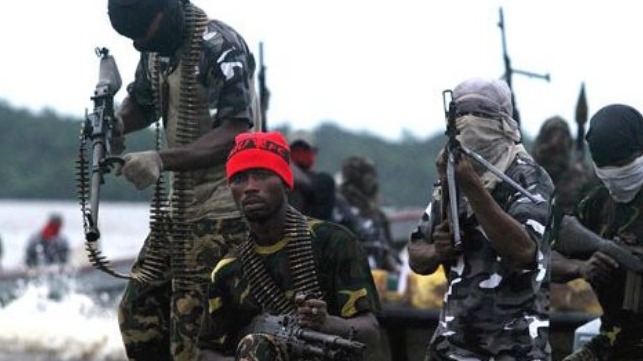
Four Georgian sailors kidnapped by pirates near the Nigerian city of Lagos in late February have been released from captivity and will soon return to their homeland, the Georgian Maritime Transport Agency said on Saturday.

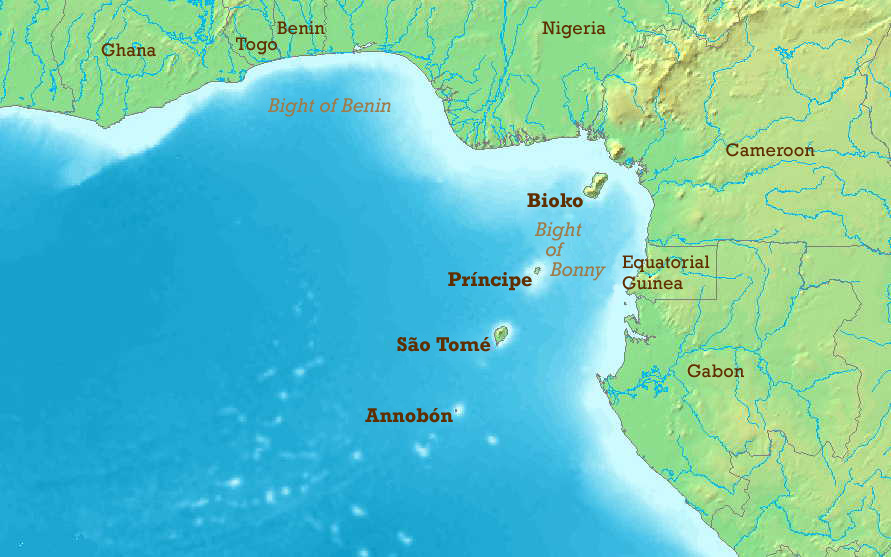
On February 20, pirates attacked a vessel sailing under the Liberian flag in the Gulf of Guinea near Nigeria and abducted 10 crew members, of whom four were Georgian nationals.

To continue reading, please click here.

Source: urdupoint.com

Nigeria: Fishing Threatened in Rivers As Bandits Take Over Waterways

Port Harcourt — Deepwater and artisanal fishing in the coastal region of Rivers State may soon go extinct as a result of the activities of sea pirates and other criminal elements on the waterways.

Environmental pollution, occasioned by the activities of illegal oil bunkers, is also hampering artisanal and deepwater fishing.

To continue reading, please click here.

Source: allafrica.com

Chinese cargo ship attacked, boarded in Gulf of Guinea UPDATE crew safe

Mar 9: General cargo ship HUANGHAI GLORY reached Lagos anchorage on Mar 7, escorted by Nigerian Navy patrol boat or ship. When pirates boarded the ship, crew mustered in citadel, and was locked there until, at last, Nigerian patrol boat approached the ship on Mar 6, and pirates fled. Crew cabins and service compartments, no doubt, were looted. Nigerian patrol boat was at the scene more than 24 hours after the alert, and attacked ship was in just 2-3 hours sailing time distance from Lagos. This is not the first case, when sheltered in citadel crew had to wait for help for 24+ hours.

To continue reading, please click here.

Source: maritimebulletin.net

The United States and Gabon Assume the Co-Secretariat of the Friends of Gulf of Guinea

The Department of State is pleased to announce that the United States and the Republic of Gabon have assumed the co-secretariat of the Friends of Gulf of Guinea, also known as the FoGG, for calendar year 2020.

Working together, we will promote unimpeded global commerce and freedom of navigation; strengthen sustainable marine ecosystems, including fish stocks and related seafood supply chains; and enhance maritime governance in the Gulf of Guinea.

The Gulf of Guinea is vital for the shipment of goods, but it is also a rich marine ecosystem that millions of Africans depend on for their livelihoods. We welcome the active participation of all the regional coastal states to make progress in these critical areas.

Source: state.gov

Ransomware-hit US gas pipeline shut for two days

A ransomware attack on a US natural gas facility meant a pipeline had to be shut down for two days, the US Department of Homeland Security (DHS) has said.

However, it did not name the facility or say when the attack happened.

A malicious link sent to staff at the facility eventually caused the shutdown “of the entire pipeline asset”.

It was so severe in part because the organisation was not prepared for such an attack, the DHS statement said.

The incident was detailed in a security alert., which revealed it to be a “spear-phishing” attack, in which individuals are sent fraudulent but believable scam messages.

That let the attacker into the company’s IT network.

How did that shut down a pipeline?

Often, the “operational network” which runs computers in the factory is separated from the office IT – but not in this case, meaning the ransomware infection was allowed to spread.

Ransomware typically encrypts files on a victim’s computer and demands payment before offering to unlock them again – although there is no guarantee that the cyber-criminals who develop such software will be true to their word.

A spate of ransomware attacks has troubled various US organisations recently – from local authorities to hospitals to a maritime base.

In the case of the natural gas facility, only one office was targeted, but others in different geographic locations were forced to close down, too.

The DHS said the affected organisation had not properly prepared for a cyber-attack of this kind – with its emergency plans being focused on all sorts of physical attacks instead.

“Consequently, emergency response exercises also failed to provide employees with decision-making experience in dealing with cyber-attacks,” the department added.

All organisations, regardless of what sector they are in, should prepare for the possibility of a ransomware attack, said Carl Wearn, head of e-crime at cloud email firm Mimecast.

Businesses could do this “by implementing offline back-ups with a fall-back email and archiving facility, as a minimum” he said.

Source: bbc.co.uk

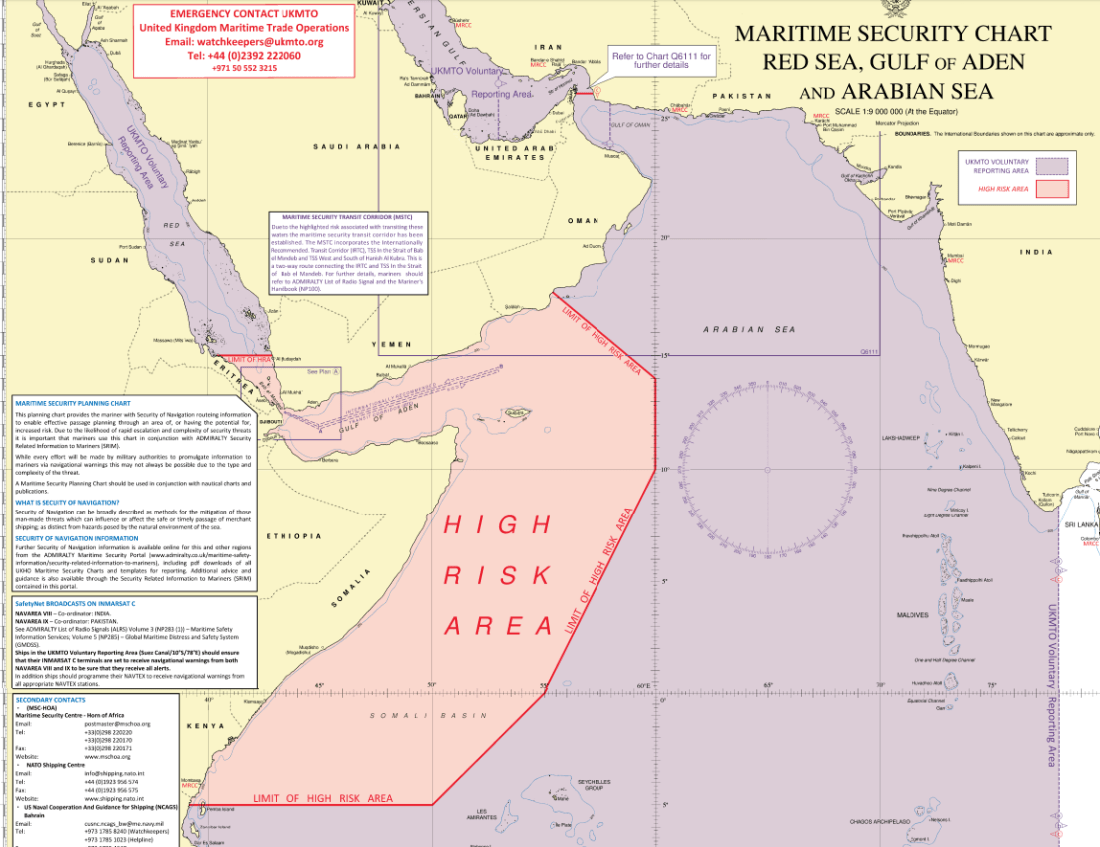
Iranian targeting of shipping in the Arabian Gulf ‘changes the game’ by raising risks to new levels

Insurance and shipping leaders said specific targeting of UK and US crew by Iran has left the industry to grapple with escalating tensions between Tehran and the West.

Nick Busvine, a partner at the strategic intelligence firm Herminius, told The National the drive from Tehran to take British and American hostages while targeting commercial shipping in the Arabian Gulf “changes the game” for the insurance industry.

To continue reading, please click here.

Source: hellenicshippingnews.com

U.S. puts Abu Sayyaf sub-leader Sawadjaan on global terror list

Along with Hatib Hajan Sawadjaan – who is said to be the leader of the Islamic State in the Philippines – a female named Almaida Marani Salvin is also included on the United States’ blacklist

Sofia Tomacruz

MANILA, Philippines – The United States has added Abu Sayyaff sub-leader Hatib Hajan Sawadjaan, who is said to be the leader of the Islamic State (ISIS) in the Philippines, to its list of global terrorists.

Along with Sawadjaan, a female named Almaida Marani Salvin was also included in the US Treasury’s sanctions blacklist. Salvin was said to have “materially assisted, sponsored, or provided financial, material, or technological support ” to ISIS-Philippines.

To continue reading, please click here.

Source: rappler.com

Germany ‘Reluctant’ On U.S. Plan For Naval Patrols Off Iran

Persian Gulf/SoH

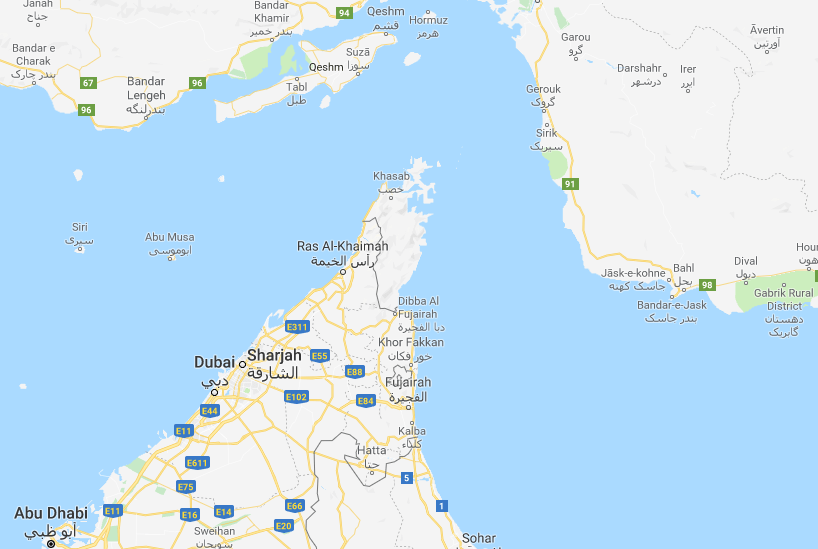
Germany is “reluctant” to join a proposed U.S.-led naval mission in the Strait of Hormuz but would consider participating in a European mission, Chancellor Angela Merkel’s government said July 31.

The government was responding to Washington’s proposal a day earlier “to help secure” the world’s busiest oil shipping lane and “combat Iranian aggression,” which came at a time of heightened tensions between the United States and Tehran.

To continue reading, please click here.

Source: en.radiofarda.com

Egypt, UAE, US Kick off Drills to Bolster Maritime Security

Egypt, the United Arab Emirates and the United States kicked off on Monday a joint drill aimed at bolstering regional maritime security.

Naval and air forces from the three countries will take part in the “Eagle Salute – Eagle Response 2019” exercise, taking place in the Red Sea. Saudi Arabia is participating as an observer, said Egypt’s military spokesman.

To continue reading, please click here.

Source: aawsat.com

US destroyed Iranian drone in Strait of Hormuz, says Trump

Persian Gulf/SoH

President Donald Trump has said the US Navy destroyed an Iranian drone in the Strait of Hormuz.

He said the USS Boxer amphibious assault ship “took defensive action” on Thursday after the drone came within about 1,000 yards (914m) of the vessel.

Iran said it had no information about losing a drone. In June, Iran downed a US military drone in the area.

Earlier, Tehran said it had seized a “foreign tanker” and its 12 crew on Sunday for smuggling fuel in the Gulf.

Iran has been blamed by the US for attacks on tankers which have happened in the world’s key shipping area since May. Tehran denies all the accusations.

The recent incidents have triggered fears of a military conflict in the region.

What have the US and Iran said about the incident?

Speaking at the White House, Mr Trump said: “I want to apprise everyone of an incident in the Strait of Hormuz today involving USS Boxer, a navy amphibious assault ship.

“The Boxer took defensive action against an Iranian drone which had closed into a very, very near distance, approximately 1,000 yards (914m), ignoring multiple calls to stand down and was threatening the safety of the ship and the ship’s crew. The drone was immediately destroyed.

“This is the latest of many provocative and hostile actions by Iran against vessels operating in international waters. The United States reserves the right to defend our personnel, facilities and interests.”

A defence department official quoted by the New York Times said the drone had been brought down using electronic jamming equipment.

Meanwhile, a senior Iranian official dismissed the US statement. In an English tweet posted on 19 July, Deputy Foreign Minister Abbas Araqchi even suggested the US may have downed its own drone by mistake.

Mr Araqchi’s comment came after Iranian Foreign Minister Mohammad Javad Zarif told reporters in New York on Thursday that “we have no information about losing a drone today”.

What about the seized oil tanker?

Iran’s Revolutionary Guards’ Sepah News site said on Thursday that an alleged fuel-smuggling ship was seized on Sunday during naval patrols aimed at “discovering and confronting organised smuggling”.

Iran’s state media quoted the Guards as saying the vessel had been smuggling one million litres (220,000 gallons) of fuel.

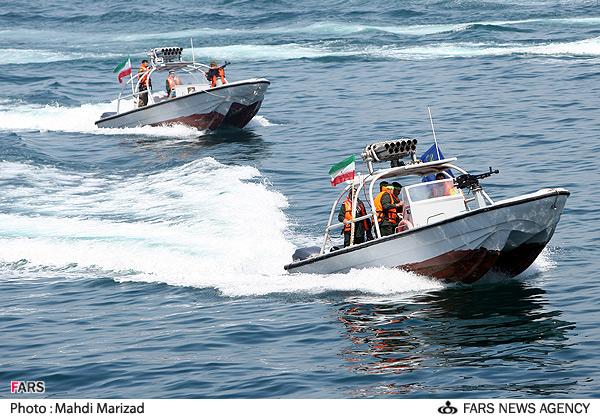
The state media later published footage of Iranian speedboats circling around the Panamanian-flagged Riah tanker.

The vessel was seized south of Iran’s Larak Island, Iran said. Washington called on Iran to immediately release the ship.

What’s the background to this?

Tensions have been high in the Gulf since the US tightened the sanctions that it reimposed on Iran’s oil sector after unilaterally withdrawing from a landmark 2015 nuclear deal.

The US has blamed Iran for two separate attacks on oil tankers in the Gulf of Oman in May and June – an allegation Tehran has denied.

Iran also shot down a US surveillance drone over the Strait of Hormuz. Tehran said the aircraft had violated Iranian airspace, and that the incident sent a “clear message to America”.

The US military said the drone had been over international waters at the time, and condemned what it called an “unprovoked attack”.

UK warships have meanwhile been shadowing British oil tankers in the area since Iran threatened to seize one in response to the impounding of an Iranian tanker off Gibraltar.

The UK said the tanker was suspected of breaching EU sanctions against Syria. Iran denied it was en route there.

US Central Command Chief General Kenneth McKenzie, speaking on a visit to Saudi Arabia on Thursday, said he was working “aggressively” to find a solution to free passage for ships through the Gulf region, Reuters news agency reports.

Source: bbc.co.uk