U.S. unsure about circumstances of tanker towed to Iran

DUBAI (Reuters) – U.S. officials say they are unsure whether an oil tanker towed into Iranian waters was seized by Iran or rescued after facing mechanical faults as Tehran asserts, creating a mystery at sea at a time of high tension in the Gulf.

The MT Riah disappeared from ship tracking maps when its transponder was switched off in the Strait of Hormuz on July 14. Its last position was off the coast of the Iranian island of Qeshm in the strait.

To continue reading, please click here.

Source: reuters.com

Threat level raised to ‘critical’ for UK ships in Iranian waters

The UK has raised the threat to British shipping in Iranian waters in the Gulf to the highest level – where the risk of attack is “critical”.

The step was taken on Tuesday, amid growing tensions in the region.

On Wednesday, Iranian boats tried to impede a British oil tanker in the region – before being driven off by a Royal Navy ship, the MoD said.

Iran had threatened to retaliate for the seizure of one of its own tankers, but denied any attempted seizure.

The Department for Transport said it regularly provided security advice to UK ships in high-risk areas.

The threat level means British ships are advised not to enter Iranian waters, BBC defence correspondent Jonathan Beale said.

Boats believed to belong to Iran’s Islamic Revolution Guard Corps (IRGC) approached the British Heritage tanker and tried to bring it to a halt as it was moving out of the Gulf into the Strait of Hormuz.

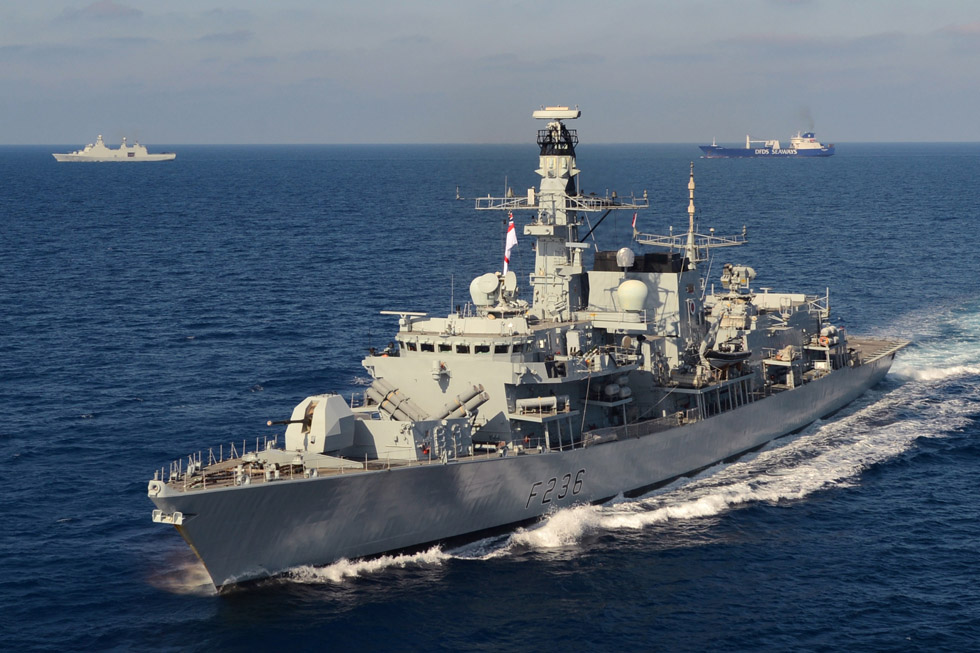
HMS Montrose, a British frigate shadowing the BP-owned tanker, was forced to move between the three boats and the ship, a Ministry of Defence spokesman said.

He described the Iranians’ actions as “contrary to international law”.

Guns on HMS Montrose were trained on the Iranian boats as they were ordered to back off, US media reported. The boats heeded the warning and no shots were fired.

Last week, British Royal Marines helped the authorities in Gibraltar seize an Iranian tanker because of evidence it was carrying oil to Syria in breach of EU sanctions.

A spokesman for the Royal Gibraltar Police said they had arrested the captain and chief officer of the Iranian tanker on Thursday, on suspicion of breaching EU sanctions, but neither had been charged.

The BBC has been told British Heritage was near the island of Abu Musa when it was approached by the Iranian boats.

Although Abu Musa is in disputed territorial waters, HMS Montrose remained in international waters throughout.

Defence Secretary Penny Mordaunt said the government was concerned by the incident and urged the Iranian authorities to “de-escalate the situation”.

Foreign Secretary Jeremy Hunt added the UK would monitor the situation “very carefully”.

Prime Minister Theresa May’s official spokesman said the government was “committed to maintaining freedom of navigation in accordance with international law”.

A spokesperson for the US State Department condemned Iran’s actions and said that Washington would continue to work closely with the UK.

Morgan Ortagus said: “We commend the actions of the Royal Navy in ensuring freedom of navigation and the free flow of commerce through this critically important waterway.”

Commander of the US Fifth Fleet Vice Adm Jim Malloy described the incident as “unlawful harassment” and said the fleet would continue to work closely with the Royal Navy to defend “the free flow of commerce”.

What does Iran say?

The navy of Iran’s Islamic Revolution Guard Corps has denied claims it tried to seize the tanker, Iranian news agencies reported. IRGC’s navy said there had been no confrontation with any foreign vessels in the past 24 hours.

Iranian foreign minister Mohammad Javad Zarif said the UK made the claims “for creating tension”.

“These claims have no value,” Mr Zarif added, according to the Fars news agency.

Why are UK-Iran tensions escalating?

The relationship between the UK and Iran has become increasingly strained, after Britain said the Iranian regime was “almost certainly” responsible for the attacks on two oil tankers in June.

Tensions grew after the seizure of an Iranian oil tanker by authorities in Gibraltar, assisted by British Royal Marines.

On Thursday an Iranian official told the BBC the seizure was “unnecessary and non-constructive escalation by the UK” and called for the tanker, Grace 1, to be released.

An Iranian official previously said a British oil tanker should be seized if Grace 1 was not released.

On Wednesday, Iranian President Hassan Rouhani called the UK “scared” and “hopeless” for using Royal Navy warships to shadow another British tanker in the Gulf.

“You, Britain, are the initiator of insecurity and you will realise the consequences later,” Mr Rouhani said.

The Royal Navy has a frigate, four minehunters and a Royal Fleet Auxiliary support ship already stationed in a permanent Naval Support Facility in the region, at Mina Salman in Bahrain.

This is enough to provide reassurance, but probably not to deal with a crisis, BBC defence correspondent Jonathan Beale said.

Ministers would now have to consider sending another Royal Navy ship to the region – but this could further escalate tensions with Iran, our correspondent said.

Foreign Office officials said they were keeping the UK’s military posture in the region under constant review but insisted they did not want to see tensions escalate.

Source: bbc.co.uk


Trump Questions Need to Protect Persian Gulf Shipping

Questioning the longstanding American policy of defending maritime security in the Persian Gulf, President Donald Trump said Tuesday that the United States does not “need to be there” for merchant shipping in the region. 

“China gets 91% of its Oil from the [Strait of Hormuz], Japan 62%, & many other countries likewise. So why are we protecting the shipping lanes for other countries (many years) for zero compensation. All of these countries should be protecting their own ships on what has always been a dangerous journey,” he wrote in a Twitter post on Tuesday morning. “We don’t even need to be there in that the U.S. has just become (by far) the largest producer of Energy anywhere in the world!” 

To continue reading, please click here.

Source: maritime-executive.com

U.S. seizes $1 billion worth of cocaine from ship in Philadelphia

(Reuters) – Federal authorities seized 16.5 tons of cocaine worth more than $1 billion from a ship in Philadelphia in one of the largest drug seizures in U.S. history, the U.S. Justice Department said on Tuesday.

Federal, state and local law enforcement agents on Monday boarded the MSC Gayane, a cargo ship docked in Philadelphia’s Packer Marine Terminal, and found cocaine in seven shipping containers, according to a criminal complaint filed in Philadelphia federal court.

To continue reading, please click here.

Source: reuters.com

Gulf of Oman tanker attacks: US says video shows Iran removing mine

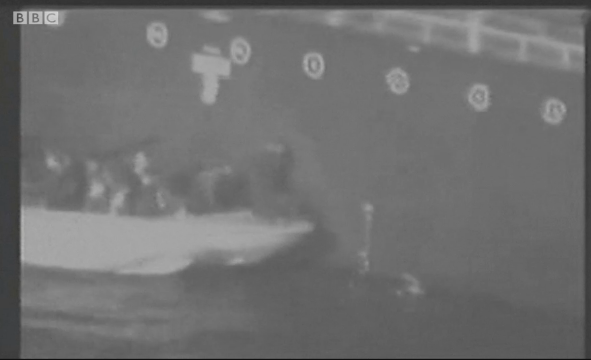
The US military has released a video which it says shows Iran’s Revolutionary Guard removing an unexploded mine from the side of an oil tanker damaged in an attack in the Gulf of Oman on Thursday.

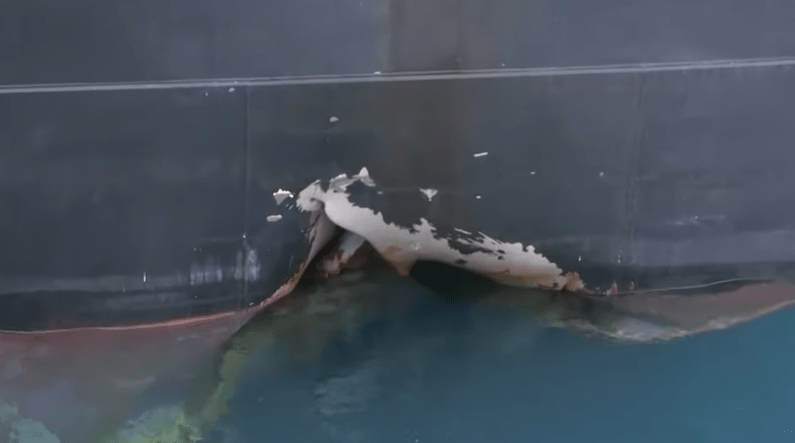
US officials also shared a photo of the Japanese tanker, apparently showing the unexploded mine before it was removed.

A Norwegian tanker was also damaged.

The US accused Iran of being behind the mine attacks. Iran said it “categorically rejects” the allegation.

The blasts came a month after four oil tankers were damaged in an attack off the coast of the United Arab Emirates. The US blamed Iran for that attack, but did not produce evidence. Iran also denied those accusations.

Tensions between the two countries have escalated significantly since US President Donald Trump took office in 2017. He abandoned a nuclear deal that was brokered by the Obama administration and imposed heavy sanctions on Iran.

Oil prices jumped as much as 4% after Thursday’s incident. The Gulf of Oman lies at one end of a vital shipping lane through which a third of the world’s transported oil – worth hundreds of millions of dollars – passes every year.

What we know about the explosions

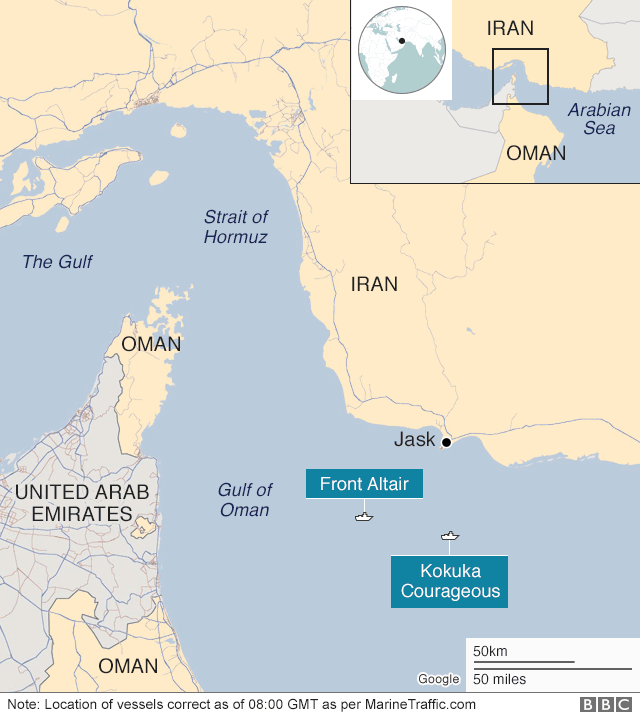
According to the US account of events, US naval forces in the region received distress calls from the Norwegian-owned Front Altair at 06:12 local time (02:13 GMT) and from the Kokuka Courageous at 07:00, following explosions, and moved towards the area.

It said the USS Bainbridge observed Iranian naval boats operating in the area in the hours after the explosions, and later removing the unexploded mine from the side of the Kokuka Courageous.

The crews of both vessels were evacuated to other ships nearby. Both Iran and the US later released pictures showing rescued crew members on board their vessels.

The operator of the Kokuka Courageous, BSM Ship Management, said its crew abandoned ship after observing a fire and an unexploded mine.

The Kokuka Courageous was about 20 miles off the Iranian coast when it sent its emergency call.

The Front Altair was carry naphtha, a petrol product, from the United Arab Emirates to Taiwan. The Kokuka Courageous was carrying methanol from Saudi Arabia to Singapore.

What did the US say?

US Secretary of State Mike Pompeo said at a news conference in Washington: “It is the assessment of the United States that the Islamic Republic of Iran is responsible for the attacks.

“This assessment is based on intelligence, the weapons used, the level of expertise needed to execute the operation, recent similar Iranian attacks on shipping, and the fact that no proxy group operating in the area has the resources and proficiency to act with such a high degree of sophistication.”

UK Foreign Secretary Jeremy Hunt said his country’s “starting point” was to “believe our US allies”.

“We are taking this extremely seriously and my message to Iran is that if they have been involved it is a deeply unwise escalation which poses a real danger to the prospects of peace and stability in the region,” Mr Hunt said.

How did Iran respond?

In a statement released on Friday, the Iranian mission to the United Nations said it rejected what it called an “unfounded” and “Iranophobic” allegation by the US.

“Iran categorically rejects the US’ unfounded claim with regard to 13 June oil tanker incidents and condemns it in the strongest possible terms,” the statement said.

Foreign Minister Javad Zarif on Twitter accused the US of making an allegation “without a shred of factual or circumstantial evidence” and attempting to “sabotage diplomacy”.

The alleged attacks took place as Iran’s Supreme Leader Ayatollah Ali Khamenei was meeting Japan’s Prime Minister Shinzo Abe during a two-day visit by Mr Abe to Iran.

Source: bbc.co.uk

Video released by the US purports to show IRGC personnel removing a mine.

UAE tanker attacks blamed on ‘state actor’

The United Arab Emirates has told the UN Security Council a “state actor” was most likely behind attacks on four tankers off its coast.

The 12 May attacks bore the hallmarks of a “sophisticated and co-ordinated operation”, according to its report.

The UAE did not say who it thought was behind the attacks, which also targeted vessels from Saudi Arabia and Norway.

The US has accused Iran of being behind the attacks but Tehran denies this and has called for an investigation.

The attacks took place within UAE territorial waters east of the emirate of Fujairah, just outside the strategically vital Strait of Hormuz, in what the UAE called a “sabotage attack”.

They exacerbated long-standing tensions between Iran, and the US and its allies in the Gulf.

What does the report say happened?

According to the UAE-led investigation, which was presented to a closed session of the UN Security Council in New York, the attacks showed a “high degree of sophistication”.

“The attacks required the expert navigation of fast boats” which “were able to intrude into UAE territorial waters”, the report’s preliminary findings say.

Divers were used to attack the ships using limpet mines in order to cause damage but not cause a major explosion, the presentation says.

There were no casualties but Saudi Arabia has said two of its ships suffered “significant” damage. Another tanker was Norwegian-registered, while the fourth was UAE-flagged.

Why is Iran being accused?

The attacks happened at a time of escalating tension between the US and Iran, long-time foes.

They took place days after the US sent warships and bombers to the region in response to what it said was an unspecified plan by Iran to attack US forces in the area.

While it is unclear why Iran would carry out a relatively low-level attack on the multinational tankers, observers have speculated that it could have been to send a signal to forces ranged against it that it is capable of disrupting shipping there without triggering a war.

Responding to the UAE report, the Saudi Ambassador to the UN, Abdallah Y al-Mouallimi, said the kingdom believed “that the responsibility for this action lies on the shoulders of Iran. We have no hesitation in making this statement,” Reuters news agency reported.

US National Security Adviser John Bolton previously said “naval mines almost certainly from Iran” were to blame for the damage, although he provided no evidence to support the allegation.

However, Mr Bolton, long known for his hawkish stance on Iran, denied the Trump administration was seeking to overthrow the Iranian government.

“The policy we’re pursuing is not a policy of regime change,” he told reporters last week during a visit to London. “That’s the fact and everybody should understand it that way.”

Iran’s foreign ministry has rejected the US accusations as “ludicrous” and accused Mr Bolton of being a “warmonger”.

What are the underlying tensions?

At the start of May, Washington ended exemptions from sanctions for countries still buying oil from Iran.

The decision was intended to bring Iran’s oil exports to zero, denying the government its main source of revenue.

US President Donald Trump reinstated the sanctions a year ago after abandoning the landmark 2015 nuclear deal that Iran agreed with six nations – the five permanent members of the UN Security Council and Germany.

Iran has now announced it will suspend several commitments under the deal.

Source: bbc.co.uk

Mossad intelligence helped link Iran to UAE tanker sabotage — report

US said set to present evidence on ‘pretty impressive’ attack — including materials gathered by Israel — to UN Security Council

Intelligence materials collected by Israel’s Mossad agency played a role in linking Iran to the sabotaging of four oil tankers off the coast of the United Arab Emirates last month, prompting the United States to accuse Tehran of carrying out the attack, according to a report on Monday.

The US is slated to present the intelligence — including evidence gathered by Israel — in the coming days, likely before the UN Security Council, the Kan public broadcaster said, as tensions between Washington and Tehran continued to simmer.

To continue reading, please click here.

Source: imesofisrael.com

Malaysia, Indonesia To Receive Six ScanEagle 2 UAS Each From Washington

Malaysia will receive six ScanEagle 2 Unmanned Air Systems (UAS) later this year while Indonesia will receive an equal number in 2022 under the United States funded Maritime Security Initiative (MSI).

US Assistant Secretary of Defense for Indo-Pacific Security Affairs Randall Schriver said during a media round-table in Kuala Lumpur last week that the Philippines had received six ScanEagle 2 UAS in 2018 as part of the MSI policy.

To continue reading, please click here.

Source: defenseworld.net

Congress Seen As Failing To Prioritize Maritime Cyber Risks

The United States Coast Guard (USCG) routinely responds to cybersecurity breaches on ships at the same time lawmakers are failing to devote the attention and resources needed to help lessen the threat, according to government officials.

“The problems are very severe,” said John Garamendi, a Democratic congressman from California, speaking on a panel on “Securing Maritime Commerce” at the Brookings Institution in Washington, D.C. this week.

To continue reading, please click here.

Source: benzinga.com

10,000 Personnel Arrive In UK For Exercise Joint Warrior

A total of 35 warships, five submarines and 59 aircraft, including helicopters, are also taking part. 

More than 10,000 military personnel from 13 countries have arrived in the UK ahead of Joint Warrior.

A total of 35 warships, five submarines and 59 aircraft, including helicopters, are also taking part in the NATO exercise.

To continue reading, please click here.

Source: forces.net