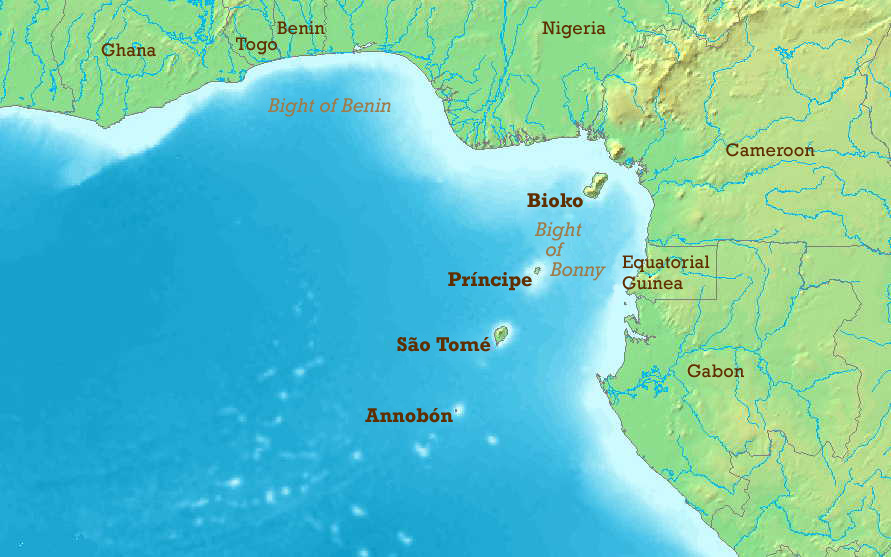
Rising activities of pirates in the Gulf of Guinea is posing serious threats to offshore oil storage model currently adopted by oil multinationals in the wake of supply glut.
This is even as speculations are rife that the coronavirus pandemic may lead to a spike in tanker vessel attacks and possible kidnappings.
Marsec News: I’m aware of anecdotal reports from friends in the oil and gas industry in the region of pirates buzzing facilities and oil platforms in the region. They happen frequently and are rarely reported. Partly, this is because the pirates are chased off by patrol boats without attacking and partly because incidents continue to be under reported in the Gulf of Guinea. If tankers are used as storage platforms in the region, then they will almost certainly be targeted by kidnap and ransom gangs looking for easy targets.
Three sailors, two Moroccans and an Equatorial Guinean, abducted nearly two months ago in the attack on their merchant ship off Gabon in the Gulf of Guinea, the epicentre of global maritime piracy, have been released in Nigeria, Equatorial Guinea announced.
On 21 March, an Equatorial Guinean-flagged merchant ship, the Elobey 6, was attacked by unidentified pirates off the Gabonese port of Port-Gentil. The three sailors had been kidnapped.
To continue reading (in original French language), please click here.
The Chinese fishing trawler Hailufeng 11, licensed to fish in Côte d’Ivoire, was taken by pirates on Thursday, May 14 in the Ivorian exclusive economic zone with 18 crewmembers aboard – eight Chinese, seven Ivorian and three Ghanaian. Through rapid and engaged cooperation among a number of different African states and institutions, the vessel was tracked, and the Nigerian Navy was able to interdict it 140 nautical miles south of the Lagos Fairway Buoy at about 2210 local time on the night of May 16.
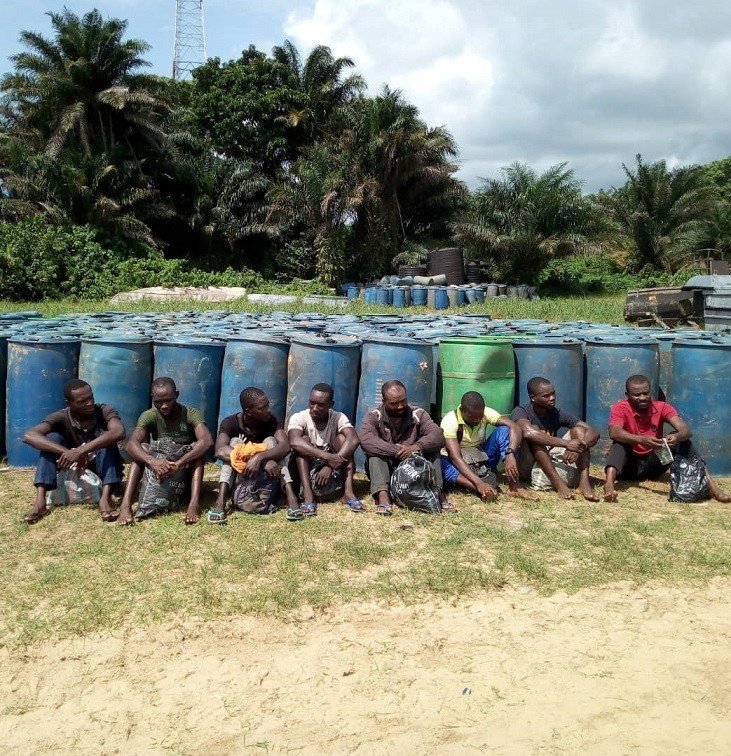
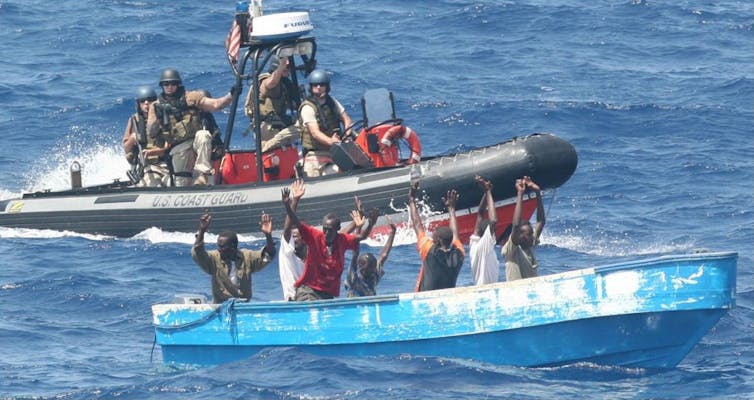
When approached, the pirates refused to stop, and the Nigerian Navy’s Special Boat Service, embarked on the NNS Nguru, performed an opposed boarding while underway at 9 knots. The dramatic rescue was hugely successful, as all 18 hostages were recovered, 10 pirates were arrested, and the vessel was safely escorted into Lagos.
MOSCOW (UrduPoint News / Sputnik – 15th May, 2020) No demands have yet been heard from pirates that are believed to have kidnapped several Russian nationals in the Gulf of Guinea, Russian Foreign Ministry spokeswoman Maria Zakharova said on Thursday.
“Until now, the pirates have not got in touch and have not put forward any requirements. The Russian embassy in Cameroon is actively working with the authorities of Equatorial Guinea and the shipowner company to help establish the whereabouts of the abducted Russian citizens and secure their speedy release.
Two crewmembers have been kidnapped from a general cargo vessel off Equatorial Guinea in the Gulf of Guinea, according to security company Dryad Global.
The incident occurred two nautical miles from Malabo on May 9. The pirates reportedly used ladders to board the Rio Mitong from a speedboat. A Russian and a Ukrainian are believed to have been kidnapped.
For Sudeep Choudhury, work on merchant ships promised adventure and a better life.
But a voyage on an oil tanker in West Africa, in dangerous seas far from home, would turn the young graduate’s life upside down.
His fate would come to depend on a band of drug-fuelled jungle pirates – and the whims of a mysterious figure called The King.
The MT Apecus dropped anchor off Nigeria’s Bonny Island shortly after sunrise. Sudeep Choudhury was at the end of a draining shift on deck. Looking towards land, he could make out dozens of other ships. On the shoreline beyond them, a column of white oil storage tanks rose out of the ground like giants.
He had breakfast and then made two phone calls. One to his parents – he knew they worried about him, their only child – and one to his fiancee, Bhagyashree. He told her that everything was going to plan and that he would call her again later that day. He then clambered into bed for a sleep.
It was 19 April, 2019. The small, ageing oil tanker and its crew of 15 had spent two days sailing south from the port of Lagos to the Niger Delta, where oil was discovered in the 1950s by Dutch and British businessmen seeking a swift fortune. Although he knew that vicious pirates roamed the labyrinthine wetlands and mangroves of the delta, Sudeep felt safe that tropical South Atlantic morning. Nigerian navy boats were patrolling and the Apecus was moored just outside Bonny, seven nautical miles from land, waiting for permission to enter port.
Nigeria is losing an average of 400,000 barrels amounting to $1.5billion monthly to the activities of sea pirates according the latest study of the International Maritime Bureau (IMB).
According to the IMB, the loss represents almost 5 per cent of the country’s Gross Domestic Product (GDP), even as it listed the Gulf of Guinea as the most dangerous piracy zone for oil companies, with huge record of attacks in recent years.
The report indicated that the first quarter of 2020 was marked by a peak in maritime piracy worldwide, where the Gulf of Guinea recorded 21 of the 47 reported attacks.
Fundamental gaps such as links to organised crime and dealing with the proceeds of piracy must be closed.
Nigeria’s June 2019 law on piracy and other maritime offences is an important step in securing the country’s coastline and seas. But the legislation fails to account for the links between piracy and other crimes, especially at the transnational level.
According to the ICC International Maritime Bureau, actual and attempted piracy and armed robberies against ships on Africa’s West Coast rose from 47 in 2011 to 64 in 2019. In 2019 the United Nations Office on Drugs and Crime reported that between 2015 and 2017, the total economic cost of piracy, kidnapping and armed robbery at sea incurred by all stakeholders involved in countering these activities, including Nigeria, was US$2.3 billion.
In early April, eight armed raiders boarded the container ship Fouma as it entered the port of Guayaquil, Ecuador. They fired warning shots toward the ship’s bridge, boarded the ship and opened several shipping containers, removing unknown items before escaping in two speedboats. Nobody was harmed.
Ecuador isn’t exactly a hot spot of global piracy, but armed robbers regularly attack ships in and around the port of Guayaquil. It’s the seventh-busiest port in Latin America, handling most of Ecuador’s agricultural and industrial imports and exports. Ships moored along the port’s quays or, like the Fouma, transiting its narrow river passages are easy prey for local criminal gangs.
Only a few short years ago the international community was celebrating the end of maritime piracy. Worldwide in 2019, there were fewer attacks and attempted attacks on ships than there had been in 25 years.
But as the Guayaquil attack hints, pirates may be getting more active. Already, the first three months of 2020 have seen a 24% increase in pirate attacks and attempted attacks, over the same period in 2019. As a scholar of sea piracy, I worry that the coronavirus pandemic may make piracy even more of a problem in the coming months and years.
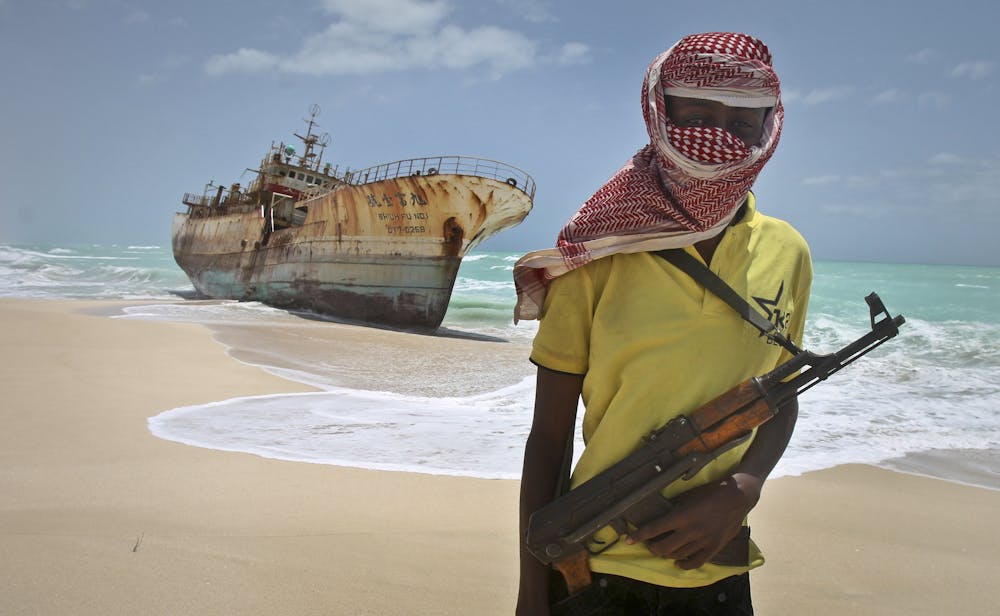
In a photo from 2012, masked Somali pirate Hassan stands near a Taiwanese fishing vessel that washed up on a Somali shore after the pirates were paid a ransom and released the crew. AP Photo/Farah Abdi Warsameh
Counter-piracy successes
Modern sea piracy often involves pirates in small fast boats approaching and boarding larger, slower-moving ships to rob them of cargo – such as car parts, oil, crew valuables, communication equipment – or to seize the ship and crew for ransom.
Beginning in 2008, the greater Gulf of Aden area off the coast of East Africa became the most dangerous waters in the world for pirate attacks. Somali pirates like those portrayed in the 2013 Tom Hanks movie “Captain Phillips” spent five years regularly hijacking large commercial vessels.
As a result of these efforts, the global number of attacks and attempted attacks dropped significantly over the past decade, from a high of nearly 450 incidents in 2010 to fewer than 165 incidents in 2019 – the lowest number of actual and attempted pirate attacks since 1994. Ship hijackings, the most severe and visible manifestation of sea piracy, also have declined since 2010.
A return of pirates?
However, the Fouma attack is a troubling sign. The sea robbers seem to have had detailed advance knowledge of the ship’s cargo, as well as its course and the personnel on board. Those are clues that the pirates planned the attack, likely with help from the crew or others with specific information about the ship.
The medical and economic fallout from the coronavirus pandemic seems likely to pose severe challenges for countries with few resources and weak governments. West African and South American countries already struggle to police their territorial waters. Those regions have not yet been severely affected by the coronavirus, though infections are growing on both continents.
As hospitals fill with COVID-19 patients, the regions’ governments will almost certainly shift their public safety efforts away from sea piracy and toward more immediate concerns on land. That will create opportunities for pirates.
The disease may make it harder for crews to protect ships as well. Most merchant vessel crews are already stretched thin. If crew members get sick, restrictions on international travel prevent their replacements from meeting the ship in whatever port it’s in.
Slowing consumer spending around the globe means less trade, which brings less revenue for shipping companies to spend on armed guards or other methods of protecting ships against pirates. As a result, ships will likely become easier targets for pirates.
Even with the early numbers suggesting an increase for 2020, global piracy still isn’t as high as it was during the Somali peak from 2009 to 2012. But if economic conditions worsen around the globe and ships look like easy targets, more desperate people may turn to piracy, or ramp up their existing efforts in an attempt to survive.
Pirates attacked two fishing vessels off Libreville on Sunday, abducting six crew members, a source close to Gabon’s government told AFP.
“The pirates abducted three Indonesians, two Senegalese and one South Korean,” the source said, without giving further details.
Contacted by AFP on Monday, Gabon’s defence ministry had not yet responded by early evening. This is the second pirate attack recorded since the beginning of the year off the coast of Gabon.




 Maritime Security News