KOTA KINABALU: Sabah’s dusk to dawn sea curfew has been extended for another two weeks until July 4.
Sabah Police Commissioner Datuk Zaini Jass said the extension of the 6pm to 6am curfew was needed due to continuous threats from cross-border criminals, including from kidnap-for-ransom groups.
ZAMBOANGA CITY — An alleged member of the Abu Sayyaf Group (ASG) was killed while three others arrested in separate anti-drug operations in Tawi-Tawi and Zamboanga Sibugay provinces, an official said Wednesday.
Philippine Drug Enforcement Agency-Region 9 (PDEA-9) Director Emerson Margate, identified the slain ASG member as Bensal Aradi, and the arrested individuals as Mahmud Ainal, 42; Najil Sangkula, 35; and, Madal Ladang.
ZAMBOANGA CITY, Philippines — Four Army Special Forces were killed while 17 others were wounded in a fight that erupted Friday as the government troops encountered 40 members of the Abu Sayyaf group in a jungle lair in Patikul town, Sulu, military official confirmed Saturday.
The military said two Abu Sayyaf members were also killed and others were wounded in the encounter.
KOTA KINABALU: The curfew in the waters off seven districts in the Eastern Sabah Security Zone (Esszone), which ends at 6pm tomorrow, has been extended until June 19, said Sabah Police Commissioner, Datuk Zaini Jass.
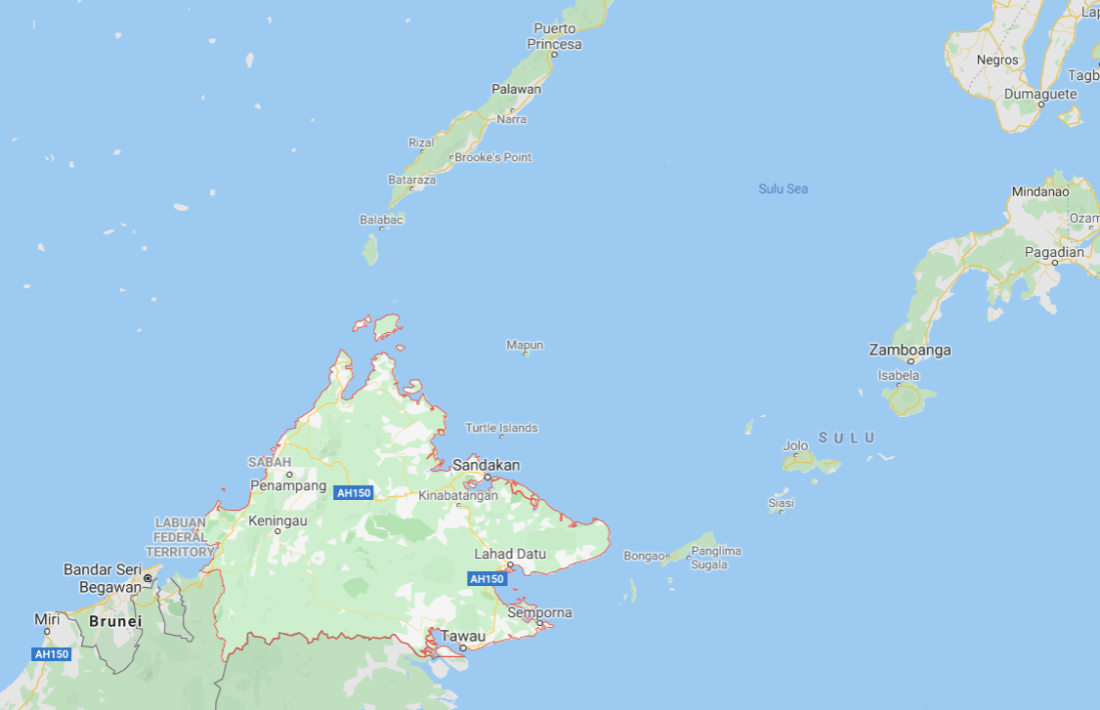
Zaini said the curfew covered the waters off Tawau Semporna, Kunak, Lahad Datu, Kinabatangan, Sandakan and Beluran and residents were required to remain at home throughout the curfew period.
An Australian man has been rescued after being robbed by pirates on speed boats off the coast of Bali.
Tadeusz Nowicki, 70, spent three days stranded at sea near Tanjung Menjangan, South Sumatra, after the horrifying incident on May 22. He was alone of his yacht, named Hoopla, when up to ten pirates armed with guns swarmed him.
LAHAD DATU: The Eastern Sabah Security Command (ESSCom) is on high alert after receiving intelligence information of a possible kidnap for ransom plan by the militant Abu Sayyaf Group (ASG) in the waters of the Eastern Sabah Security Zone (ESSZone).
ESSCom commander Datuk Hazani Ghazali said yesterday ESSCom has taken the necessary measures, such as stepped-up patrols and readiness, following receipt of the information which has been shared with the Philippine authorities.
On 22 May, the ReCAAP ISC received information from the Philippine Coast Guard (ReCAAP Focal Point) that a group of approximately five ASG (Abu Sayyaf Group) members armed with assorted firearms is planning to conduct kidnapping activities in undisclosed areas in Sabah, Malaysia. They are targeting wealthy businessmen or crew of fishing boats and other slow moving ships plying within the waters off Sabah, Malaysia. The group came from Sulu and was monitored to have landed at Omapoy Island, Sipangkot, Sitangkai, Tawi Tawi.
The curfew in the waters off seven districts in the Eastern Sabah Security Zone (ESSZone), which ends tomorrow, has been extended until June 4.
Sabah Police Commissioner Datuk Zaini Jas said the curfew covered the waters off Tawau, Semporna, Kunak, Lahad Datu, Kinabatangan, Sandakan and Beluran.
The Malaysia-Philippines’ co-operation contributes in efforts to tackle cross-border crime threats such as the kidnap for ransom (KFR) by the Abu Sayyaf Group and its network from southern Philippines on the east coast waters of Sabah, Malaysia.
Eastern Sabah Security Command (ESSCom) commander Datuk Hazani Ghazali said sharing of intelligence information with the Philippines enabled monitoring of KFR elements for interception at sea.
In early April, eight armed raiders boarded the container ship Fouma as it entered the port of Guayaquil, Ecuador. They fired warning shots toward the ship’s bridge, boarded the ship and opened several shipping containers, removing unknown items before escaping in two speedboats. Nobody was harmed.
Ecuador isn’t exactly a hot spot of global piracy, but armed robbers regularly attack ships in and around the port of Guayaquil. It’s the seventh-busiest port in Latin America, handling most of Ecuador’s agricultural and industrial imports and exports. Ships moored along the port’s quays or, like the Fouma, transiting its narrow river passages are easy prey for local criminal gangs.
Only a few short years ago the international community was celebrating the end of maritime piracy. Worldwide in 2019, there were fewer attacks and attempted attacks on ships than there had been in 25 years.
But as the Guayaquil attack hints, pirates may be getting more active. Already, the first three months of 2020 have seen a 24% increase in pirate attacks and attempted attacks, over the same period in 2019. As a scholar of sea piracy, I worry that the coronavirus pandemic may make piracy even more of a problem in the coming months and years.
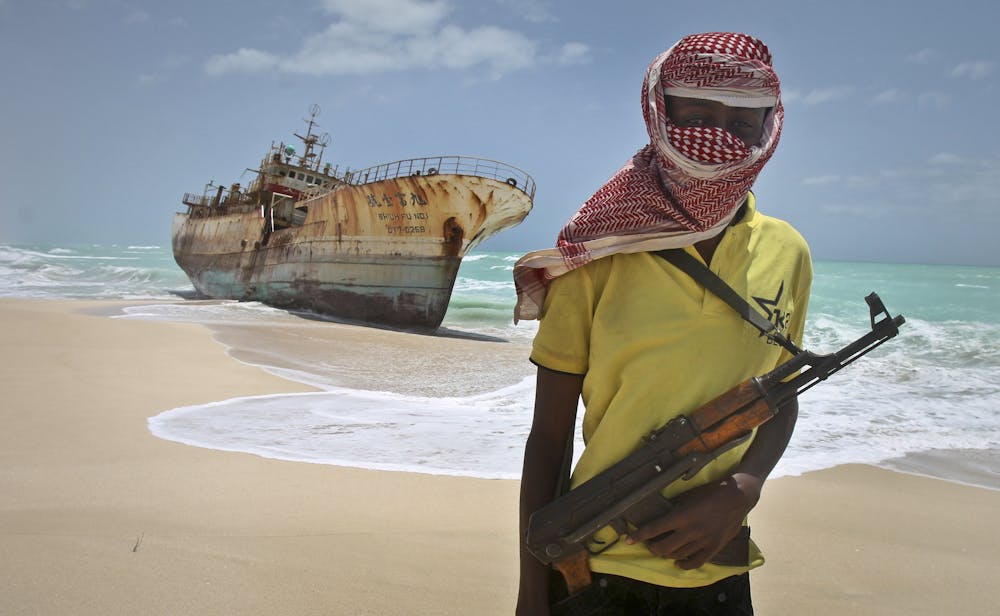
In a photo from 2012, masked Somali pirate Hassan stands near a Taiwanese fishing vessel that washed up on a Somali shore after the pirates were paid a ransom and released the crew. AP Photo/Farah Abdi Warsameh
Counter-piracy successes
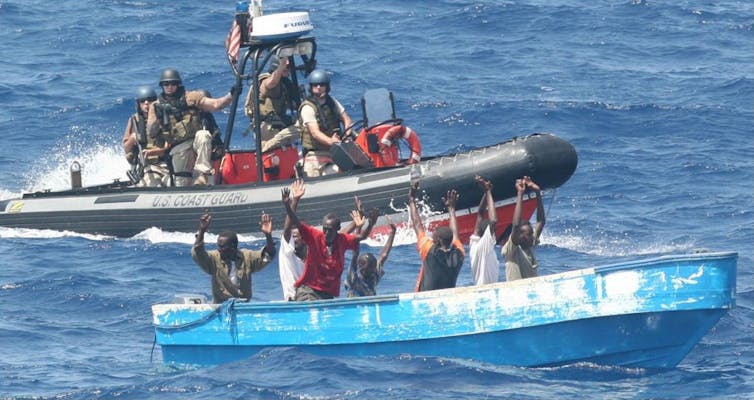
Modern sea piracy often involves pirates in small fast boats approaching and boarding larger, slower-moving ships to rob them of cargo – such as car parts, oil, crew valuables, communication equipment – or to seize the ship and crew for ransom.
Beginning in 2008, the greater Gulf of Aden area off the coast of East Africa became the most dangerous waters in the world for pirate attacks. Somali pirates like those portrayed in the 2013 Tom Hanks movie “Captain Phillips” spent five years regularly hijacking large commercial vessels.
As a result of these efforts, the global number of attacks and attempted attacks dropped significantly over the past decade, from a high of nearly 450 incidents in 2010 to fewer than 165 incidents in 2019 – the lowest number of actual and attempted pirate attacks since 1994. Ship hijackings, the most severe and visible manifestation of sea piracy, also have declined since 2010.
A return of pirates?
However, the Fouma attack is a troubling sign. The sea robbers seem to have had detailed advance knowledge of the ship’s cargo, as well as its course and the personnel on board. Those are clues that the pirates planned the attack, likely with help from the crew or others with specific information about the ship.
The medical and economic fallout from the coronavirus pandemic seems likely to pose severe challenges for countries with few resources and weak governments. West African and South American countries already struggle to police their territorial waters. Those regions have not yet been severely affected by the coronavirus, though infections are growing on both continents.
As hospitals fill with COVID-19 patients, the regions’ governments will almost certainly shift their public safety efforts away from sea piracy and toward more immediate concerns on land. That will create opportunities for pirates.
The disease may make it harder for crews to protect ships as well. Most merchant vessel crews are already stretched thin. If crew members get sick, restrictions on international travel prevent their replacements from meeting the ship in whatever port it’s in.
Slowing consumer spending around the globe means less trade, which brings less revenue for shipping companies to spend on armed guards or other methods of protecting ships against pirates. As a result, ships will likely become easier targets for pirates.
Even with the early numbers suggesting an increase for 2020, global piracy still isn’t as high as it was during the Somali peak from 2009 to 2012. But if economic conditions worsen around the globe and ships look like easy targets, more desperate people may turn to piracy, or ramp up their existing efforts in an attempt to survive.




 Maritime Security News