Israeli maritime intelligence and predictive analytics company Windward is using artificial intelligence to identify and pinpoint Europe-boundvessels that might be illicitly carrying drugs for distribution in the continent.
Spearheaded by CEO Ami Daniel, a local entrepreneur with a background serving in the navy, the company bids to speed up the digitalisation of the maritime sector by offering a predictive intelligence solution that relies on AI and big data for a range of applications including safety, security and finance.
The Turkish-led Combined Task Force 151 (CTF 151) held a recent engagement with the Assistant Chief of Naval Staff (Ops) of the Pakistan Navy, two months ahead of the Pakistan takeover of CTF 151 command.
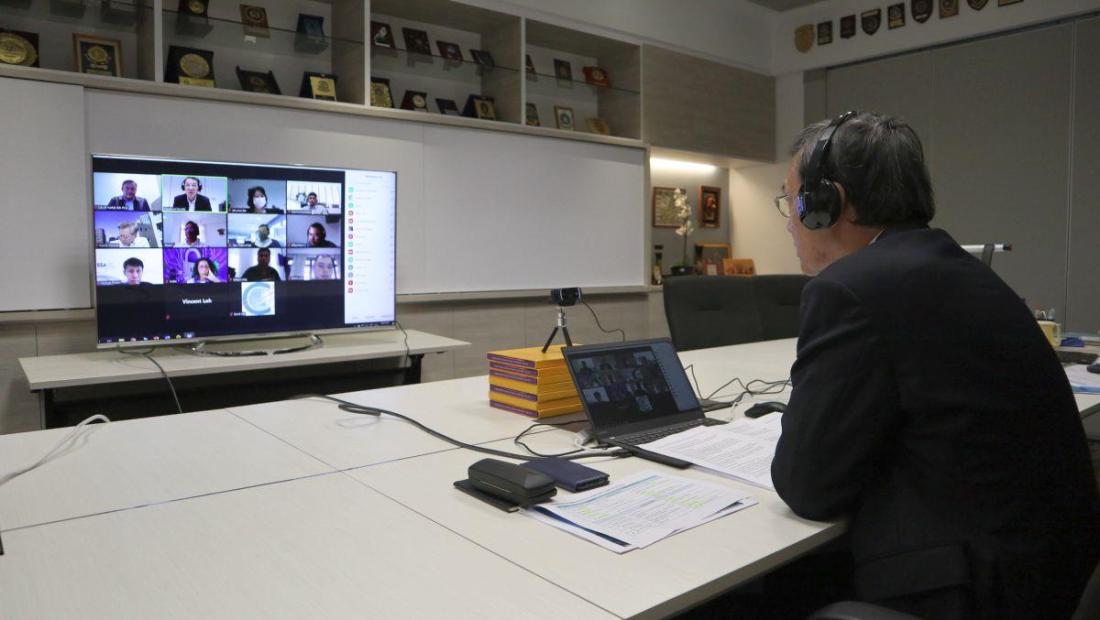
Rear Admiral Nejat Inanir of the Turkish Navy, the Commander of the Combined Maritime Forces’ CTF 151, followed the current Covid-19 trend of using Zoom conference calling to discuss matters of mutual cooperation and security in the region. Pakistan will be assuming command of CTF 151 in December for a record ninth time, marking this time as a key preparation period.
RAdm Inanir thanked the longstanding support and contribution of the Pakistan Navy to the Combined Maritime Forces for its provision of personnel and maritime assets which contribute to counter piracy operations in the region.
“I am so pleased to see Pakistan contribute to CMF so effectively. Their support aids how we maintain maritime security and ensure the free flow of commercial maritime trade,” said RAdm Inanir said. “We are seeing a large increase in small vessel activity now that the monsoon season is transitioning and it’s vital that CTF 151 continues to suppress any piracy activity early.”
Cdre Faisal commended the strong leadership of Turkish-led CTF 151: “All support will be provided to CTF 151 for Counter Piracy Operations as and when required,” he said.
Both Commanders agreed to provide further assistance and collaboration to achieve their common goal of providing maritime security in the region and making the seas safe for legitimate mariners and seafarers.
The Combined Maritime Forces (CMF) is a multinational maritime partnership which exists to counter illicit non-state actors on the high seas, promoting security, stability and prosperity in the Arabian Gulf, Red Sea, Gulf of Aden, Indian Ocean and Gulf of Oman. CTF 151 is one of three CMF task forces with the mission to deter piracy across the Arabian Gulf, Red Sea, Gulf of Aden and the Gulf of Oman, protecting the free flow of maritime commerce. Pakistan last led CTF 151 in 2016.
A total of 75 incidents of piracy and armed robbery against ships (comprising 73 actual incidents and two attempted incidents) were reported in Asia during January-September 2020 compared to 54 incidents (comprising 49 actual incidents and five attempted incidents) during January-September 2019. This accounts for an increase of 39% in the total number of incidents reported during January-September 2020 compared to the same period in 2019.
Of the 75 incidents, 71 were incidents of armed robbery against ships and four were piracy incidents. The increase of incidents during January-September 2020 occurred in Bangladesh, India, Indonesia, the Philippines, Vietnam, South China Sea and Singapore Strait. However, there was improvement at the ports/anchorages in China and Malaysia during January-September 2020 compared to the same period in 2019.
Despite the coronavirus pandemic, piracy and other crimes have surged in Asian waters in the first seven months of the year, many committed by a Philippines-based Islamist group linked to Islamic State, according to a report released on Wednesday.
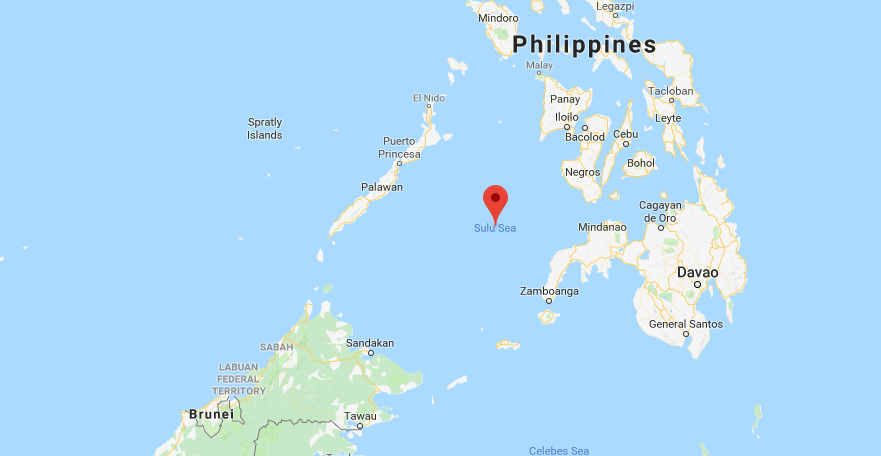
Especially hard hit have been the Sulu Sea and coastal areas of the southern Philippines, said the report by Babel Street, an open source data analysis company based in Virginia.
Late at night in the Singapore Strait, the five men quietly pulled their small speedboat alongside the bulk cargo vessel Vega Aquarius and climbed aboard the much larger ship. The men, armed with knives, were noticed by an on-duty crewman while they were on the stern of the deck.
The men rushed the crewman, who managed to escape after his cell phone was seized. Alarms were raised throughout the ship, deck lights came on and the ship’s full crew was mustered. A ship-wide search failed to find the thieves but revealed that two sets of breathing apparatus were stolen. The attacked seaman sustained minor head injuries.
ReCAAP Information Sharing Centre Holds Dialogue with Shipping Industry to Strengthen Maritime Situation Awareness and Deepen Cooperation in Fight against Piracy and Sea Robbery in Asia
Dialogue comes on the back of almost two-fold increase in incidents of piracy and sea robbery from January to June 2020 compared to the same period in 2019 ReCAAP Information Sharing Centre (ISC) today held a virtual dialogue with representatives of shipping associations and companies based in Singapore and Malaysia.
ReCAAP Information Sharing Centre (ISC) today held a virtual dialogue with representatives of shipping associations and companies based in Singapore and Malaysia. During the dialogue, ReCAAP ISC presented the Half-Yearly Report 2020 (January to June) during which a total of 51 incidents of piracy and armed robbery against ships (comprising 50 actual incidents and one attempted incident) were reported in Asia. Following the presentation, the participants had discussions on two main areas of concern; the increase of incidents in the Singapore Strait and the threat of abduction of crew in the Sulu-Celebes Seas and off Eastern Sabah. They exchanged their assessment of the situation and their views on how to address these incidents. The participants of the shipping industry also provided views on how the COVID-19 pandemic is affecting the industry, particularly safety measures against piracy and sea robbery incidents.
“As a provider of timely and accurate information, ReCAAP ISC is making efforts in understanding the challenges the shipping industry is facing—particularly in this unprecedented time of the COVID-19 pandemic—and incorporating their views in our activities,” said Mr. Masafumi Kuroki, Executive Director of ReCAAP ISC. “With regard to COVID-19, what we are hearing during the dialogue is that the pandemic has posed severe challenges to the shipping industry, particularly on the well-being of the seafarers. Despite these challenges, we ask the shipping industry to continue to uphold vigilance and the enforcement agencies to enhance patrol and law enforcement particularly in the areas of concern.,” concluded Mr. Masafumi Kuroki.
The organisations represented at the dialogue included the Asian Shipowners’ Association (ASA), the Baltic and International Maritime Council (BIMCO), the International Association of Independent Tanker Owners (INTERTANKO), the Sarawak & Sabah Shipowners’ Association (SSSA), the Singapore Shipping Association (SSA), the Federation of ASEAN Shipowners’ Association (FASA), BP Shipping, NYK Ship Management, Thome Group, Teekay Tankers, and Anglo Eastern Ship Management.
The British Ports Association and the UK-based risk management firm Astaara have released a new study on the wave of cyberattacks seen by maritime stakeholders over the past four months.
In one high profile attack in May, computer systems at Iran’s Shahid Rajaee port facility at Bandar Abbas, creating traffic jams and serious operational disruption. Astaara believes that the attack came in direct response to a failed Iranian cyberattack on an Israeli water facility in April. (Iran has denied any involvement in the earlier incident.) U.S. officials told the Washington Post that Israeli forces orchestrated the retaliatory hack on Shahid Rajaee.
In early April, eight armed raiders boarded the container ship Fouma as it entered the port of Guayaquil, Ecuador. They fired warning shots toward the ship’s bridge, boarded the ship and opened several shipping containers, removing unknown items before escaping in two speedboats. Nobody was harmed.
Ecuador isn’t exactly a hot spot of global piracy, but armed robbers regularly attack ships in and around the port of Guayaquil. It’s the seventh-busiest port in Latin America, handling most of Ecuador’s agricultural and industrial imports and exports. Ships moored along the port’s quays or, like the Fouma, transiting its narrow river passages are easy prey for local criminal gangs.
Only a few short years ago the international community was celebrating the end of maritime piracy. Worldwide in 2019, there were fewer attacks and attempted attacks on ships than there had been in 25 years.
But as the Guayaquil attack hints, pirates may be getting more active. Already, the first three months of 2020 have seen a 24% increase in pirate attacks and attempted attacks, over the same period in 2019. As a scholar of sea piracy, I worry that the coronavirus pandemic may make piracy even more of a problem in the coming months and years.
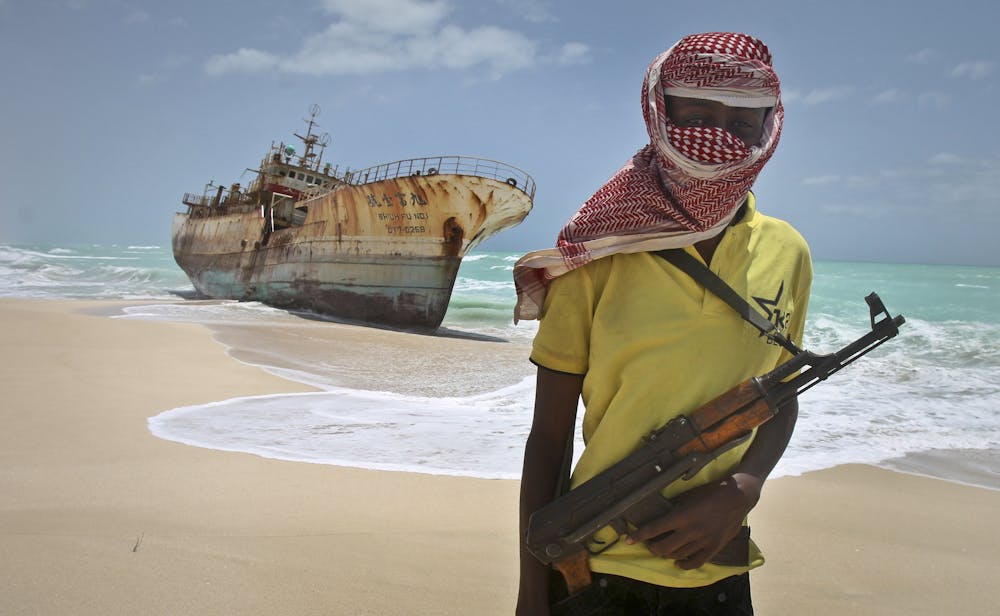
In a photo from 2012, masked Somali pirate Hassan stands near a Taiwanese fishing vessel that washed up on a Somali shore after the pirates were paid a ransom and released the crew. AP Photo/Farah Abdi Warsameh
Counter-piracy successes
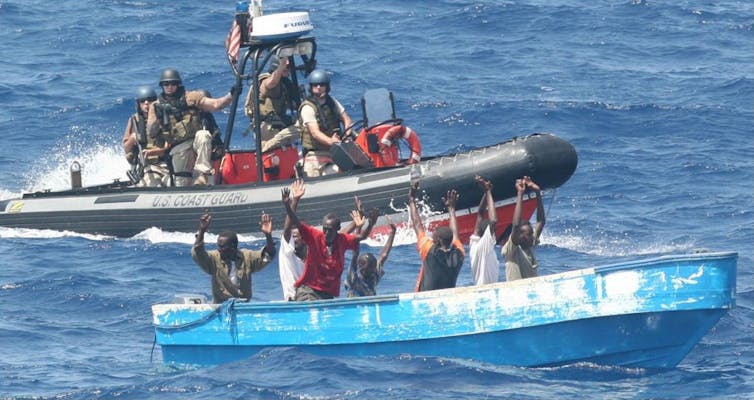
Modern sea piracy often involves pirates in small fast boats approaching and boarding larger, slower-moving ships to rob them of cargo – such as car parts, oil, crew valuables, communication equipment – or to seize the ship and crew for ransom.
Beginning in 2008, the greater Gulf of Aden area off the coast of East Africa became the most dangerous waters in the world for pirate attacks. Somali pirates like those portrayed in the 2013 Tom Hanks movie “Captain Phillips” spent five years regularly hijacking large commercial vessels.
As a result of these efforts, the global number of attacks and attempted attacks dropped significantly over the past decade, from a high of nearly 450 incidents in 2010 to fewer than 165 incidents in 2019 – the lowest number of actual and attempted pirate attacks since 1994. Ship hijackings, the most severe and visible manifestation of sea piracy, also have declined since 2010.
A return of pirates?
However, the Fouma attack is a troubling sign. The sea robbers seem to have had detailed advance knowledge of the ship’s cargo, as well as its course and the personnel on board. Those are clues that the pirates planned the attack, likely with help from the crew or others with specific information about the ship.
The medical and economic fallout from the coronavirus pandemic seems likely to pose severe challenges for countries with few resources and weak governments. West African and South American countries already struggle to police their territorial waters. Those regions have not yet been severely affected by the coronavirus, though infections are growing on both continents.
As hospitals fill with COVID-19 patients, the regions’ governments will almost certainly shift their public safety efforts away from sea piracy and toward more immediate concerns on land. That will create opportunities for pirates.
The disease may make it harder for crews to protect ships as well. Most merchant vessel crews are already stretched thin. If crew members get sick, restrictions on international travel prevent their replacements from meeting the ship in whatever port it’s in.
Slowing consumer spending around the globe means less trade, which brings less revenue for shipping companies to spend on armed guards or other methods of protecting ships against pirates. As a result, ships will likely become easier targets for pirates.
Even with the early numbers suggesting an increase for 2020, global piracy still isn’t as high as it was during the Somali peak from 2009 to 2012. But if economic conditions worsen around the globe and ships look like easy targets, more desperate people may turn to piracy, or ramp up their existing efforts in an attempt to survive.
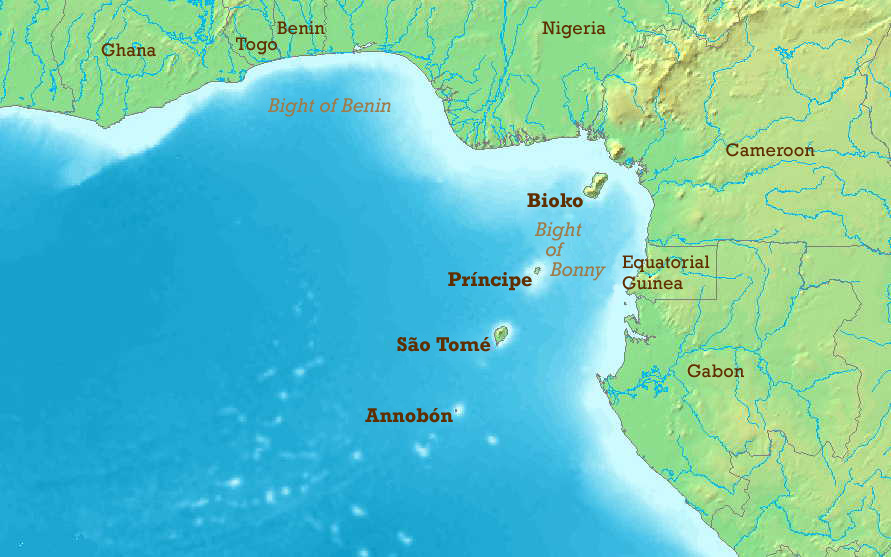
The Italian Navy (Marina Militare) dispatched for the first time one of its FREMM Frigates to patrol the Gulf of Guinea while the French Navy (Marine Nationale) suspended its maritime security mission off West Africa.
For the first time the French Navy has suspended its permanent Mission Corymbe off West Africa due to the COVID-19 epidemic and withdrawn a vessel from the area.
The patrol vessel Lieutenant de Vaisseau Le Henaff, which started a scheduled deployment in early March for Mission Corymbe, returned to France at the end of the month.
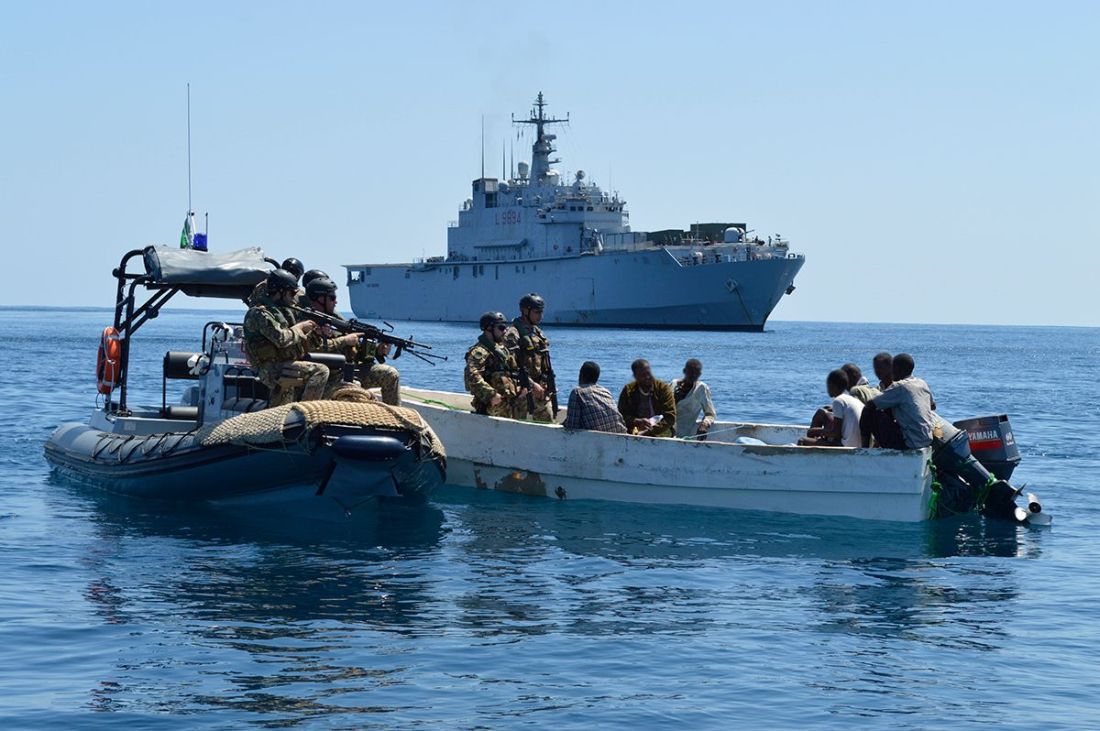
EU NAVFOR Somalia Operation ATALANTA units have few opportunities to collaborate with ships of other navies and Combined Task Forces (CTF) at sea. However, Operation ATALANTA always tries to increase synergies with regional states and military actors present in the region to be ready to deter, prevent and repress piracy and armed robbery at sea.
Operation ATALANTA had the opportunity to receive the support of the TF 53, a flexible and efficient unit that provides logistics support to the US fleet. In an excellent manoeuvre, Spanish frigate Numancia and US Navy ship Wally Schirra accomplished Replenishment at Sea (RAS) in only 2 hours.
Thanks to this support, not only can EU NAVFOR units extend their range of operation without entering a port, but also EU NAVFOR remains ready to accomplish his mandate even under COVID-19 crisis, reducing the risk of infection and protecting their crew. Risk mitigation measures are in place in order to ensure the continuation of the operation under the current circumstances.
EU NAVFOR remains full mission capable and ready to deter, prevent, and repress piracy. COVID-19 crisis has not reduced the capability of ATALANTA to fight against piracy and ATALANTA´s units are all fully operational.





 Maritime Security News