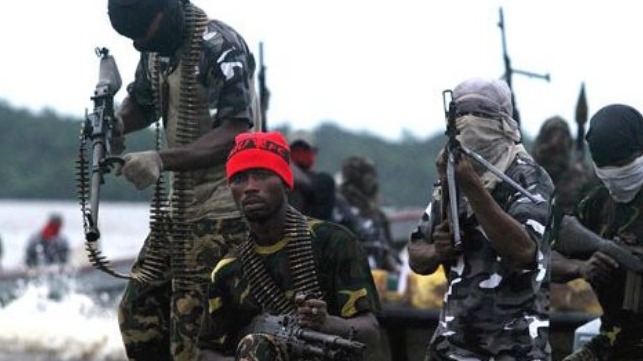
U.S. Navy Sends Second Ship to Gulf of Guinea

NAVAL STATION ROTA, Spain —

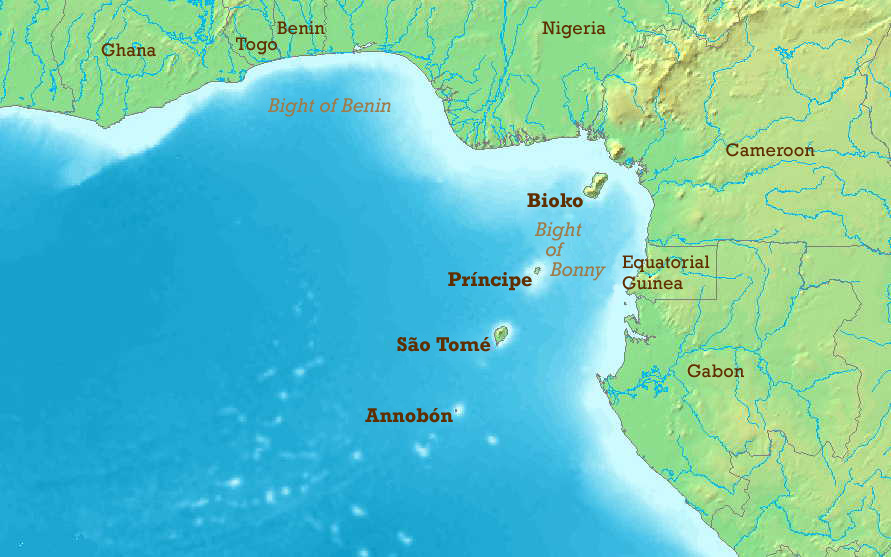
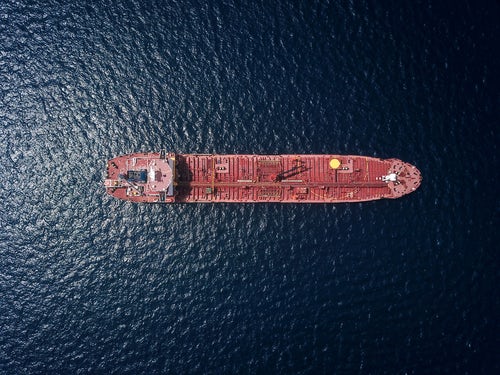
USNS Carson City (T-EFP 7), a Military Sealift Command Spearhead-class expeditionary fast transport ship, departed Rota, Spain, on July 2, as part of the Navy’s second deployment to the Gulf of Guinea this year.

Sailors and embarked personnel will work alongside regional partners on an Africa Partnership Station (APS) mission to provide small boat maintenance assistance, maritime law enforcement engagement, and medical and community relations outreach.

“The deployment of USNS Carson City to the Gulf of Guinea enables our partners to improve maritime security along their coastlines, territorial seas, and exclusive economic zones,” said Adm. James G. Foggo III, commander, U.S. Naval Forces Europe-Africa. “Maritime security is critical for coastal nations as seaborne trade is the lifeblood of global trade. When maritime trade freely sails across the seas, economic development and opportunities for prosperity are possible.”

U.S. Coast Guard (USCG) cutter Thetis (WMEC 910) was the first U.S. ship to deploy to the Gulf of Guinea in 2019.

“Thetis conducted training with our African partners on maritime law enforcement throughout exercise Obangame Express 2019 and continued training with our partners in the region during its deployment,” said Foggo. “Carson City’s deployment will enhance Gulf of Guinea nations’ maritime capabilities through workshops and collaboration. The presence of U.S. ships such as Thetis and Carson City helps address some of the challenges our African navies and coast guards have requested assistance with, including law enforcement and maritime resource management.”

During Carson City’s deployment, U.S. military personnel will work alongside U.S. partners in Cabo Verde, Cote d’Ivoire, Ghana, Nigeria, and Senegal to provide assistance based on host nation requests during previous APS exercise and engagements. The crew and the embarked European allies will provide host nation-requested, needs-based assistance through engagements as part of our enduring friendship and partnership with our African partners.

Mission personnel traveling with Carson City include a small boat maintenance and repair team, a medical team, United States Coast Guard Maritime Law Enforcement personnel, and the U.S. Naval Forces Europe band, who will conduct performances for local communities.

“We have a lot of experts embarked aboard Carson City to work alongside our Gulf of Guinea partners in areas they have asked for assistance such as maintenance and medical engagements,” said U.S. Navy Cmdr. Howard Gray, lead planner for Carson City deployment.

These experts include service members from other regional partners and allies, who are also joining Carson City for the deployment.

“Not only do we have U.S. service members from the Navy and Coast Guard, but we also have members of the Portuguese, Spanish, and Italian navies embarked to help ensure our African partners are getting the assistance and mentorship they need to succeed,” said Foggo. “We are also embarking members of the Ghana Navy for a brief period. Together, we are promoting progress through partnership.”

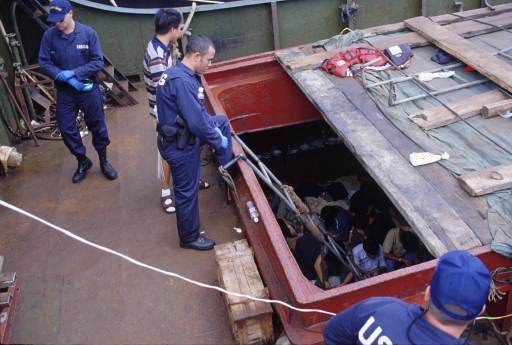
Thetis’ deployment earlier this year, like the Carson City deployment, was part of the APS program. The cutter was in Africa theater for three months, conducting training with regional countries on law enforcement tactics and techniques to combat illegal fishing, human and narcotics trafficking, piracy, and pollution.

APS is U.S. Naval Forces Africa’s flagship maritime security cooperation program focusing on maritime safety and security through increased maritime awareness, response capabilities, and infrastructure. It consists of the various exercises and operations conducted by U.S., European, and African partners and allies throughout the U.S. Africa Command area of operations.

U.S. Naval Forces Europe-Africa/U.S. 6th Fleet, headquartered in Naples, Italy, conducts the full spectrum of joint and naval operations, often in concert with allied and interagency partners, in order to advance U.S. national interests, security and stability in Europe and Africa.

Source: c6f.navy.mil
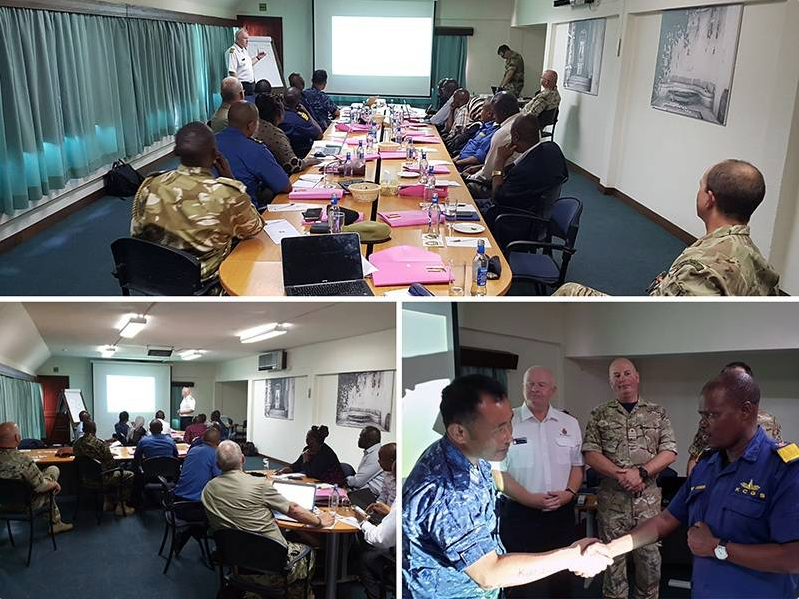
Supporting Kenya’s coast guard

Senior officials from the newly established Kenya Coast Guard Services are undergoing training on coast guard functions at a national workshop in Mombasa, Kenya (24-28 June).

Fifteen participants are taking part in the training, which is using scenario development methodology and plenary discussions to highlight issues, identify insights and develop deeper understanding of effective ways to meet coastguard functions – with a view to enhancing maritime security in Kenya.

The training is organised by the United Kingdom and IMO, under the auspices of the Jeddah Amendment to the Djibouti Code of Conduct. It is supported by a joint team from the UK Maritime Coastguard Agency (MCA), Royal Navy International Defence Training (RNIDT), and facilitated by the British Peace Support Team Africa (BPST(A)) and IMO. Other international partners supporting the implementation of the Djibouti code of Conduct (Japan, Denmark and the International Committee of the Red Cross) are also in attendance and contributing to the discussions.

Source: imo.org

Piracy is back to infest West African waters, but what’s driving it?

ABHISHEK MISHRA

What makes the waters of the Gulf of Guinea vulnerable to piracy?

When it comes to discussing the concept of maritime security, the concept can be discussed in a variety of contexts. Broadly defined, maritime security concerns the protection of states’ land and maritime territories, and is affected by a broad range of illegal activities, including arms, drugs, and human trafficking, illegal, unreported, and unregulated (IUU) fishing, and pollution at sea. But, such acts only tends to get media coverage when pirates are involved.

African maritime security is particularly severely affected by maritime piracy and armed robbery at sea. Maritime piracy is not a new phenomenon; it has existed for as long as people and commodities have traversed the oceans. Under article 101 of UN Convention on the Law of the Sea, piracy is defined as:

Any acts of violence, detention, or depredation committed on the high seas by the crew or passengers of a private ship or aircraft against another ship, aircraft, persons, or property in a place outside the jurisdiction of any state for private ends.”

To continue reading, please click here.

Source: orfonline.org

‘Dark ship’ detection exposes sanction-busting ships

The use of synthetic aperture radar technology means ships can be detected even if they turn off Automatic Identification System transponders. Satellites can see through clouds to detect vessels using microwave pulses

Michelle Wiese Bockmann

VESSELS failing to comply with international sanctions will not be able to avoid being tracked in real time as technology used to detect illegal fishing is fully adapted for commercial shipping.

Iran’s fleet of 36 very large crude carriers and eight suezmax tankers have finessed and expanded the so-called practice of ‘going dark’ by establishing complicated logistics chains to avoid detection and thus disguise the origin and destination of oil cargoes.

To continue reading, please click here.

Source: lloydslist.maritimeintelligence.informa.com

Need for greater maritime collaboration in the Indian Ocean Region: Indian Navy Deputy Chief

Issues related to human and drug trafficking, maritime piracy and the legal aspects of combating these challenges are being discussed by experts at the Maritime Information Sharing Workshop, (MISW).

Stressing on the need for greater maritime collaboration, Deputy Chief of the Naval Staff Vice Admiral MS Pawar said there is a need to forge bonds based on trust, between partner countries in the region.

To continue reading, please click here.

Source: financialexpress.com

Nigeria ranks highest in piracy, vessel stowaways — Insurance report

Nike Popoola

Nigeria overtook Indonesia in global piracy incidents in the maritime sector, accounting for one out of every four reported cases in 2018, according to the latest report by Allianz Global Corporate & Specialty, a global corporate insurance carrier and a key business unit of Allianz Group.

The report also revealed that Nigeria’s port saw the highest number of reported cases of stowaways on commercial vessels.

To continue reading, please click here.

Source: punchng.com

Kenya wins accolades from France for establishing Coast Guard

Philip Mwakio

The French Government has commended Kenya for establishing a Coast Guard Unit to police its vast Coastal maritime waters.

President Uhuru Kenyatta late last year unveiled the Kenya Coast Guard Service (KCGS) and launched into service its first offshore patrol boat christened Doria in Mombasa.

To continue reading, please click here.

Source: standardmedia.co.ke

Thales’ Gecko system to combat pirates in the Caribbean

David Ing, Madrid – Jane’s Navy International

The Jamaica Defence Force is to acquire a Thales Gecko electro-optical tracking sensor system as part of a wider national programme to counter sea pirates, the company announced on 30 May.

The system will be used in conjunction with the Coast Watcher 100 radar, which is also being supplied by Thales, to help protect against “contraband operations in difficult scenarios”, including monitoring in high seas and heavy rainfall conditions, and providing additional cover from low-altitude air threats.

To continue reading, please click here.

Source: janes.com

Indian Navy steps up anti-piracy patrol

Dinakar Peri

In an expansion of its Mission Based Deployments (MBD) in the Indian Ocean Region (IOR), the Navy deployed its P-8I long-range maritime surveillance aircraft for anti-piracy sorties from Salalah in Oman to patrol the Gulf of Aden.

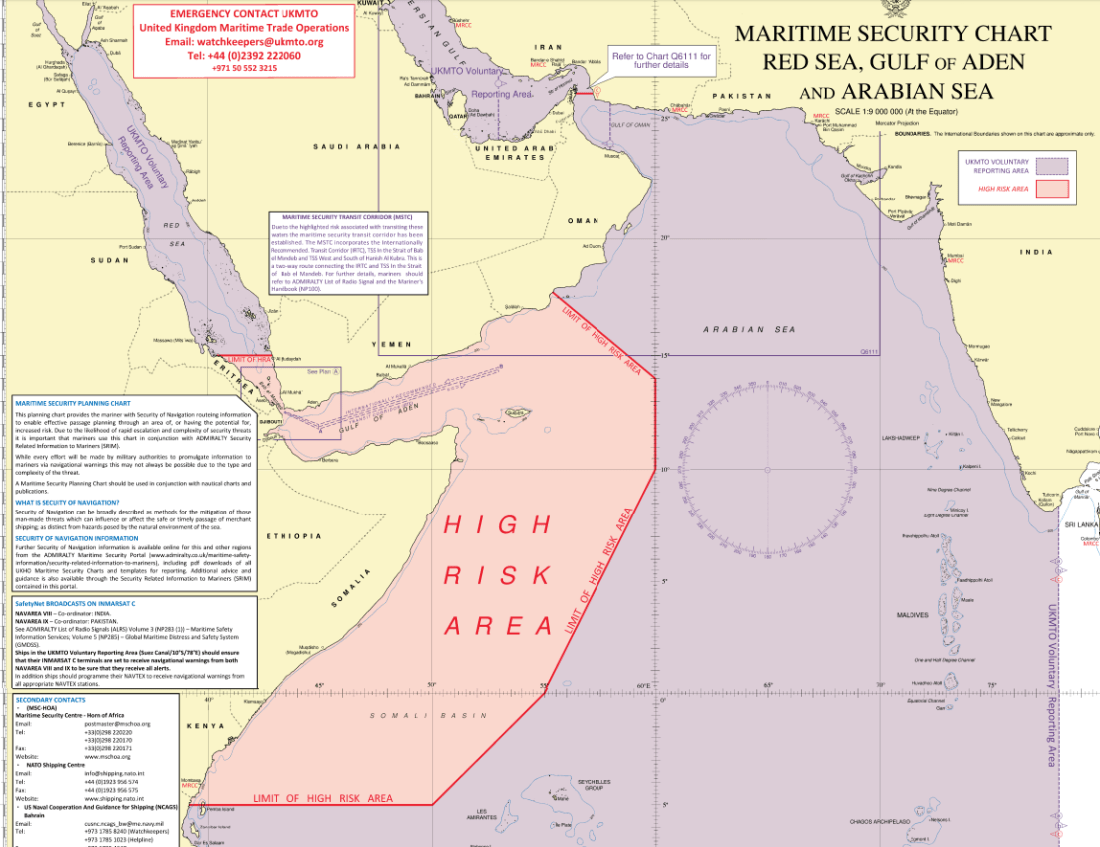
“Long-range maritime reconnaissance Anti-Submarine Warfare aircraft P-8I undertakes anti-piracy patrol sorties from Salalah in the Gulf of Aden and other piracy prone areas in keeping with our MBD philosophy, to keep IOR safe and secure for all,” Navy spokesperson Captain D.K. Sharma said in a tweet on Saturday.

To continue reading, please click here.

Source: thehindu.com

Navy Recruits 1,176 To Fight Sea Pirates

The Nigerian Navy has recruited 1,176 young men and women to aid the fight against sea pirates and oil bunkers in the nation’s maritime domain.

The Chief of Defence Staff, General Abayomi Olonisakin, stated this in a statement made available to The Tide shortly after the passing out parade of Batch 28, Basic Training School in Onne. He said the trainees underwent rigorous physical and mental training for seven months to prepare them for internal security operations across the country.

To continue reading, please click here.

Source: thetidenewsonline.com