Any illegal provocative action to be responded strongly

TEHRAN, Apr. 27 (MNA) – In a statement on Monday, the Armed Forces of the Islamic Republic of Iran announced that any provocative action will be responded strongly and noted that Iran considers the presence of the US and its allies as a source of evil and insecurity in the region.

In a statement, the Iranian Armed forces described the US military presence in the Persian Gulf, the Strait of Hormuz, and the Sea of ​​Oman as a threat to regional security and said, “Establishing fake coalitions led by the US claiming to safeguard shipping security not only failed to serve its purpose but also is a dangerous move that disturbs regional peace and security.”

To continue reading, please click here.

Source: en.mehrnews.com

Iran vows to target U.S. warships if security threatened

Iranian Navy ships in Velayat-90 military exercise, by Mohammad Sadegh Heydari via Wikipedia

TEHRAN, April 23 (Xinhua) — Iran will target the U.S. military vessels in the Gulf if they threaten Iran’s security, the chief commander of Iran’s Islamic Revolution Guards Corps (IRGC) said Thursday, Tasnim news agency reported.

“We are fully determined and serious in defending our national security, maritime borders, maritime interests, maritime security and security of our forces at sea and any (wrong) move will trigger our decisive, effective and prompt response,” Hossein Salami said.

To continue reading, please click here.

Source: china.org.cn

Donald Trump instructs Navy to ‘destroy’ Iranian gunboats harassing US ships

Taylor Heyman

The US Navy has been instructed to “shoot down and destroy” Iranian gunboats if they harass its ships, US President Donald Trump said.

Mr Trump’s order followed a US accusation last week that Iranian fast vessels were “harassing” US Navy ships in the Arabian Gulf.

To continue reading, please click here.

Source: thenational.ae

Covid-19: Indian Navy remains ‘combat ready’ despite spread of coronavirus

The Indian Navy (IN) has emphasised that it remains “combat-ready, mission-capable, and in full readiness”, after 26 of its personnel were quarantined after testing positive for Covid-19 coronavirus.

“All missions for coastal and offshore security continue as before. Operational units are being maintained in readiness by following a 14-day quarantine routine to meet immediate contingencies, including assistance to civil authorities and friendly maritime neighbours, said India’s Press Information Bureau (PIB) on 18 April. “Our naval assets continue to be mission-deployed in three dimensions, with all the networks and space assets functioning optimally,” it added.

To continue reading, please click here.

Source: janes.com

Iran will give a decisive response to any “mistake” by the U.S. in the Gulf- Revolutionary Guards navy

Iran will give a decisive response to any mistake by the United States in the Gulf, the Revolutionary Guards navy said in a statement published on the Guards’ news site Sepah News.

The U.S. military said on Wednesday that 11 vessels from the Revolutionary Guards navy had come dangerously close to U.S. Navy and Coast Guard ships in the Gulf, calling the moves “dangerous and provocative”.

To continue reading, please click here.

Source: yahoo.com

Brexit: how the UK is preparing to secure its seas outside the EU

Scott Edwards, University of Bristol et Timothy Edmunds, University of Bristol

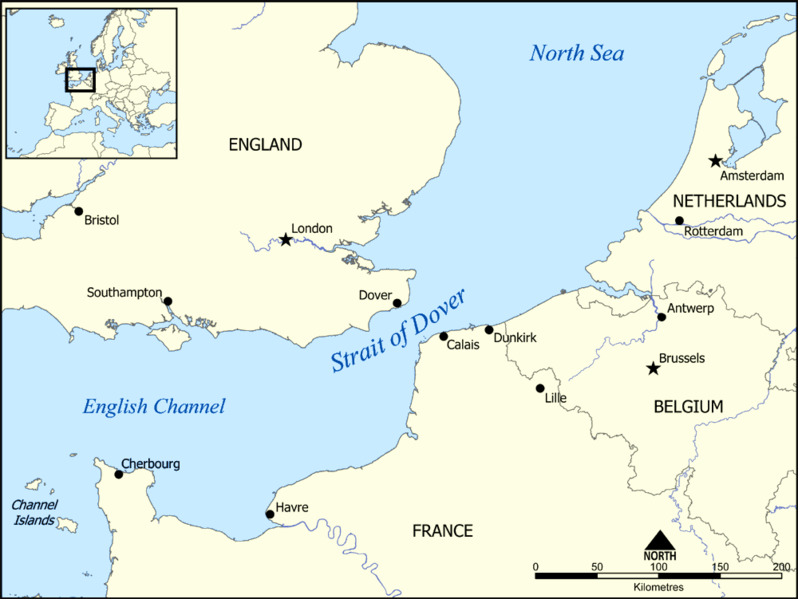
Four dinghies carrying 53 migrants who tried to cross the English Channel from France were intercepted by British and French authorities in early April. The crossings are a reminder of the importance of maritime security and safety to the UK.

Brexit has led to many uncertainties, including over the governance of the UK’s seas in the future. Withdrawal from EU regulations at the end of the Brexit transition period on December 31 2020 raises questions over how to face the difficult task of managing maritime risks which are currently managed alongside the EU.

Uncertainty has also spurred new government efforts by shining a light on the need to secure UK waters, something we’ve written about in a new report.

The UK faces rapidly evolving risks to its shipping lanes, fishing grounds and marine infrastructure. These risks include illegal fishing, human trafficking, organised crime such as smuggling, terrorism, and the potential for protests at sea.

Terrorist attacks could cause significant loss of life if targeted against ferries and cruise liners. Illegal fishing could affect the livelihoods of fishers and marine biodiversity, while other risks could have an impact on the wider economy in a context where 95% of Britain’s trade flows via the ocean.

These risks tend to interlink with each other in ways that are increasingly well documented in other regions of the world. In Somalia, for example, local fishers losing their stock as a result of illegal fishing have turned to piracy. What unintended consequences of new risks might appear in UK waters is still not fully understood.

Maritime security threats can also take place simultaneously. Without greater understanding of these risks, it’s difficult to know which should be prioritised.

Added complication of Brexit

These issues have been complicated by the UK’s withdrawal from the EU. During the current transition period the UK manages its waters within a wider EU maritime governance framework and under EU regulations, as it did while it was an EU member. While the UK isn’t expected to cease all cooperation with the EU when this comes to an end, it will be required to depend more on national enforcement and regulations.

This shift is most visible in the fisheries sector. As part of the EU, British fisheries were managed under the Common Fisheries Policy meaning both UK and EU fishing boats had access to quotas in UK waters. Such arrangements are likely to come to an end with the UK choosing to regulate its own waters.

UK ports are also a hotspot for change as they seem likely to withdraw from EU port legislation. This could lead to new national regulatory challenges such as a need to balance harmonisation with the EU with the pursual of British priorities like the creation of freeports, aimed to give British trade a competitive edge.

Taking sole responsibility is made difficult by other complicating factors. In the UK, different risks are managed by different government agencies, with problems of jurisdictional overlap.

Depending where it takes place, multiple agencies could be involved in illegal fishing, for example. This could include the Marine Management Organisation, Marine Scotland, and the Royal Navy’s Fishery Protection Squadron. Other agencies may contribute boats or intelligence, such as the National Maritime Information Centre, Border Force and the National Crime Agency.

Yet, a common understanding of the threats and consistent communication between departments is lacking in some areas. This is more of a problem for devolved issues such as fisheries, which add even more authorities, departments and agencies to the picture. The relationships between these different organisations are likely to be further tested by the challenges posed by Brexit.

Opportunity for reform

But Brexit also offers the UK an opportunity to improve its maritime security. The leak of Operation Yellowhammer in 2019 raised the public profile of maritime issues such as delayed freight in ports, the illegal entry of EU fishing boats into UK waters and potential clashes between fishing vessels. This came at a time where there were high profile landings of illegal migrants along the south coast of the UK, while Operation Yellowhammer warned of stretched maritime enforcement capabilities.

The UK has started off well. In 2019, the UK government created the Joint Maritime Security Centre (JMSC) to coordinate all the different agencies involved and foster interaction between them. The JMSC conducted a joint UK maritime security exercise at the end of 2019, highlighting how coordination can improve enforcement. It is also preparing a new UK maritime security strategy.

Interactions between the different government agencies involved in managing the risks to the UK seas need to become more frequent and overcome existing divides to create habits of cooperation and communication. Other groups such as fishing communities need to be included in deliberations. Transparency and information sharing in the process of drafting a new maritime security strategy can help to identify common goals, encourage involvement, and establish a shared basis for action.

A review of resources would also be worthwhile to identify the means the UK has to secure its waters, what gaps exist, and how these means can best be shared.The Conversation

Scott Edwards, Research Associate, University of Bristol et Timothy Edmunds, Professor of International Security at University of Bristol and Director of the Centre for Global Insecurity, University of Bristol

Cet article est republié à partir de The Conversation sous licence Creative Commons. Lire l’article original.

Iranian vessels come close to U.S. military ships

Idrees Ali

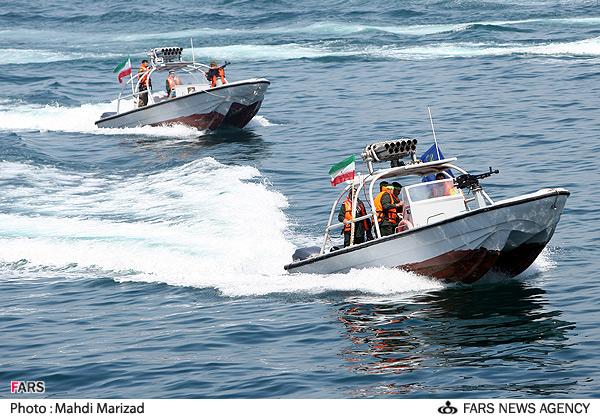
WASHINGTON (Reuters) – Eleven vessels from Iran’s Islamic Revolutionary Guard Corps Navy (IRGCN) came dangerously close to U.S. Navy and Coast Guard ships in the Gulf, the U.S. military said on Wednesday, calling the moves “dangerous and provocative.”

While such interactions had occurred occasionally a few years ago, they had stopped, and this incident comes at a time of increased tensions between the two countries.

To continue reading, please click here.

Source: reuters.com

UKMTO: Vessel boarded by armed men in Gulf of Oman

Boarded – UKMTO-IO #112

Date: 14th April 2020

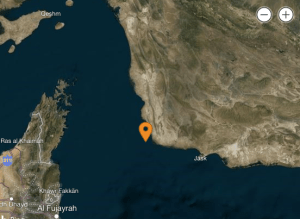
Location: 254800N, 0571400E

ADVISORY NOTICE 001/APR/2020 – UPDATE Reference Incident #112 The vessel previously reported has now been released and is now under the control of the Master. Vessel and crew are safe. All vessels in the vicinity are to stay vigilant and to report any incidents to UKMTO ADVISORY NOTICE 001/APR/2020 UKMTO was advised on 14th Apr 2020 at 1228UTC that a vessel had been boarded by armed men, while at anchor in position 25-41N 056-59E. The vessel is now reported to be at anchor approx. 3nm of Ras Al Kuh, in vicinity of 25-48N 057-14E. UKMTO is continuing to monitor the situation All vessels in the vicinity are to stay vigilant and to report any incidents to UKMTO VESSELS TRANSITING THE AREA ARE ADVISED TO EXERCISE CAUTION

Source: ukmto.org

2 fisherman injured in firing by Pak marine agency

THE PAKISTAN Marine Security Agency (PMSA) allegedly opened fire on two Indian fishing trawlers near the notional International Maritime Boundary Line (IMBL) off the Gujarat coast, injuring a fisherman on Sunday. However, the fishermen were handed over to Indian Coast Guard (ICG) with their boats.

Rohan Anand, Superintendent of Police of Devbhumi Dwarka district, said that two fishing trawlers from Okha port were fired upon by the PMSA when the latter were operating near the IMBL, the notional maritime boundary in the Arabian Sea. One fisherman was injured in the firing even as PMSA apprehended Indian fishermen with their boats.

To continue reading, please click here.

Source: indianexpress.com

Piracy and armed robbery a threat to ships’ crews, warns IMB

Seafarers face continuing threats from pirates and armed robbers on the world’s seas, says the International Chamber of Commerce’s (ICC) International Maritime Bureau (IMB), reporting 46 attacks in the first three months of 2020, up from 38 in the same period last year. Pirates boarded 37 ships in the first quarter of 2020.

The Gulf of Guinea remains the world’s piracy hotspot. Seventeen crew were kidnapped in three incidents in these waters, at distances of between 45 and 75 nautical miles from the coast.

IMB’s latest global piracy report shows zero hijackings in the last two quarters, and no incidents around Somalia. But with no sign of a reduction in attacks worldwide, IMB encourages shipowners to stay vigilant, calling for continued international cooperation.

“Navy patrols, onboard security measures, cooperation and transparent information exchange between authorities, are all factors which help address the crimes of piracy and armed robbery,” said IMB Director Michael Howlett.

“The threat to crew is, however still real – whether from violent gangs, or opportunistic armed thieves inadvertently coming face-to-face with the crew. Ships’ masters must continue to follow industry best practice diligently and maintain watches. Early detection of an approaching pirate skiff is often key to avoiding an attack,” he added.

Gulf of Guinea kidnappings persist

IMB’s 24-hour Piracy Reporting Centre (PRC) recorded 21 attacks in the Gulf of Guinea in the first quarter of 2020. Of these, 12 were on vessels underway at an average of 70 nautical miles off the coast. All vessel types are at risk. The perpetrators are usually armed. They approach in speedboats, boarding ships in order to steal stores or cargo and abduct crewmembers to demand a ransom.

While 10 vessels were fired upon worldwide for the whole of 2019, four already reported being fired at within Nigerian Exclusive Economic Zone (EEZ) in the first quarter of 2020. This includes a container ship underway around 130 nm southwest of Brass. In another incident around 102 nm northwest of Sao Tome Island, another container ship was boarded by pirates. The crew retreated into the citadel and raised the alarm. On receiving the alert, the IMB PRC liaised with Regional Authorities and the vessel operator until the vessel was safe and the crew had emerged from the citadel.

“The IMB PRC commends Regional coastal state response agencies and international navies in the Gulf of Guinea region for actively responding to reported incidents,” said Mr Howlett.

With many more attacks going unreported, IMB advises seafarers in the region to follow the recently published Best Management Practices West Africa – BMP WA.

Indonesia: dialogue pays dividends 

Strategic deployment of Marine Police patrol vessels has resulted in a continued decline in attacks on ships in most Indonesian anchorages and waterways – thanks to positive cooperation between the IMB PRC and the Indonesian Marine Police (IMP). In the first quarter of 2020, just five anchored vessels were reported boarded. These are often low-level armed robbery attacks. The IMB PRC is monitoring the situation and continues to liaise with the IMP as well as other local and regional authorities.

Singapore Straits 

Five ships were boarded while underway in the Singapore Straits – where no attacks were reported in the first quarter of 2019. These low-level armed robbery attacks are a distraction to crews navigating in congested waters. In one incident the crew managed to lock their assailants in the storeroom, which enabled their later arrest.

Elsewhere 

Other violence against seafarers includes the kidnapping of five crew for ransom in an attack on a fishing vessel off Sabah, Malaysia in January 2020. In March, at Macapa Anchorage, Brazil, a watchman was confronted while on duty and held temporarily by a group of robbers. Meanwhile, in the anchorage of Callao, Peru, three crew were apprehended by nine robbers who boarded their vessel to steal ship’s stores. Two crew were injured during the incident. Callao recorded five incidents in the last quarter of 2019 and three this quarter.

IMB Piracy Reporting Centre 

Founded in 1991, IMB’s 24-hour manned Piracy Reporting Centre (PRC) remains a single point of contact to report the crimes of piracy and armed robbery. The Centre has not only assisted ships in a timely manner, it also provides the maritime industry, response agencies and governments with transparent data – received directly from the Master of the vessel under attack – or its owners.

The IMB PRC’s prompt forwarding of reports and liaison with response agencies, its broadcasts to shipping via GMDSS Safety Net Services and email alerts to ships’ Company Security Officers (CSOs), all provided free of charge, has helped the response against piracy and armed robbery and the security of seafarers, globally.

Source: iccwbo.org