Multi-million Rand narcotics seizure at Port Elizabeth harbour

PRETORIA – More than R85 million worth of narcotics was seized at Port Elizabeth Harbour (Ngqura Port) over the weekend following an intelligence-driven multi-disciplinary integrated operation by the Ports of Entry team on a vessel from Ecuador, South America.

The operation was conducted from intelligence that two containers were suspected of having narcotics on board.

The suspected containers were on-board a vessel that had docked in Port Elizabeth at the Ngqura Port. The team which included Customs Investigations, the K9 unit and SAPS Border Police, were duly activated and the process initiated to trace and secure the two containers.

The inter-agency teams worked together and ensured that the targeted containers were removed to the container depot and upon opening the containers it was found that the contents were bananas as described on the bill of lading and which also indicated that the container was destined for Cape Town.

The cartons of bananas were physically checked both inside and outside of the container.  Upon inspecting the rear refrigeration unit, a hidden compartment was discovered.

Upon removing some of the panelling the team discovered packages wrapped in brown tape. The panelling was removed and a total of 40 packages, which tested positive for cocaine, were discovered in both the containers. Further profiling was conducted and discovered that there were a further two (2) containers that were linked to the product type and packaging methodology on the same vessel.  The team immediately decided to secure the containers. In the early hours of Sunday morning at around 01:00, the sniffer dog reacted positively to the same rear refrigeration panelling as the previous two containers earlier.  All role players jointly then removed the panelling and discovered a further 45 bricks wrapped in brown packaging tape which tested positive for cocaine with an estimated weight of 45 kilograms in both containers. A total of 85 bricks with an approximate weight of 85 kilograms and an estimated street value of R85 Million were seized. 

High levels of collaboration between stakeholders at the port have once again paid off.

There have been breakthroughs made as a result of the on-going proactive fight against crime especially the proliferation of drugs coming into and through the port.  Investigations are continuing.

Source: saps.gov.za
MOFA Japan, MPA & ReCAAP ISC Collaborate to Combat Piracy

Ministry of Foreign Affairs of Japan and Maritime and Port Authority of
Singapore, in cooperation with ReCAAP Information Sharing Centre, Join
Efforts to Build Region’s Capabilities in Combating Piracy and Sea Robbery
The Ministry of Foreign Affairs of Japan (MOFA Japan) and the Maritime and Port
Authority of Singapore (MPA), in cooperation with the ReCAAP Information Sharing
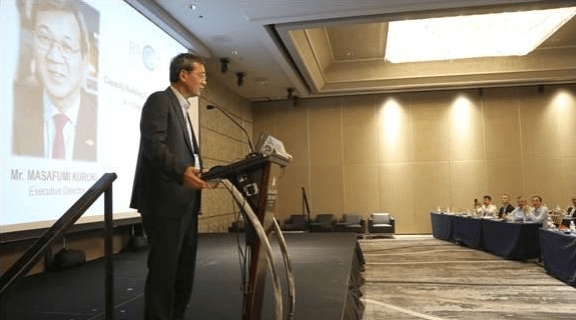
Centre (ReCAAP ISC), jointly organised the 3rd Capacity Building Executive
Programme (CBEP) in Singapore. The one-week programme begins today, and will
end on 13 September 2019.

Since the inaugural edition in 2017 held in both Singapore and Japan, CBEP has
become the region’s flagship counter-piracy and sea robbery capacity building
programme, with all 20 ReCAAP Contracting Parties as well as Indonesia and
Malaysia having participated in previous editions.

This year’s edition will see senior officials and international experts address a broad
spectrum of piracy and sea robbery issues including:

• Situation Update on Piracy and Armed Robbery against Ships in Asia
• Evolving Situation and Advisory in the Sulu-Celebes Seas
• Situation in the East and West Africa
• Sharing of best practices and experiences of participating countries
• UNCLOS, SUA Convention, Hostage Convention as applied to Piracy and Sea
Robbery
• Maritime Cybersecurity

The lectures will be supplemented by in-depth discussions of case studies from
regulatory/law-enforcement agencies from across the region.

A dialogue session between regulatory/law enforcement agencies and the shipping
industry will be held to promote exchange of views and mutual cooperation.

“With 13 years of efforts and contributions by the ISC and the contracting parties,
ReCAAP has proved itself as a successful model of regional cooperation which has
made significant progress in mitigating piracy and sea robbery in Asia. Despite the
recent trend of decreasing number of piracy incidents, new challenges such as
terrorism and cyber attacks have been observed in the maritime domain. Against this
backdrop, Japan is pleased to co-host the 3rd programme with Singapore and the
ReCAAP ISC, which aims to provide the participants with opportunities to enhance
law enforcement capabilities in the efforts of counter-piracy and to learn how to
address emerging threats, as well as to exchange views and ideas with regional
partners and experts,” said Mr. Hideki Yamaji, Director, Maritime Security Policy
Division, MOFA Japan and Acting Japanese Governor to the ReCAAP ISC Governing
Council.

“Singapore is pleased to once again partner Japan to co-host this year’s ReCAAP
Capacity Building Executive Programme. Capacity building is one of the pillars of
ReCAAP. The sharing of best practices and experiences, and building the collegiality
among fellow practitioners, strengthens the network we have. This Programme has
contributed greatly to our collective effort in the fight against piracy and armed robbery
against ships in Asia,” said Ms. Quah Ley Hoon, MPA’s Chief Executive and Singapore
Governor to the ReCAAP ISC Governing Council.

“A distinguishing factor of ReCAAP ISC that has led to its success in reducing both
the number and severity of incidents in Asia in recent years is the incident reporting
and response framework attributing the primary role to the coastal States. The CBEP
builds on this framework to enhance the effectiveness of the coastal States in
addressing piracy and sea robbery in Asia,” said Mr. Masafumi Kuroki, Executive
Director of ReCAAP ISC.

Source: recaap.org

Pirate Attacks Continue Worldwide Despite Efforts to Control Them

ASIA – AFRICA – Although the rash of serious pirate attacks off the Somalian coast which we reported on almost a daily basis in the years leading up to 2017 have since diminished, that does not mean the seas of the world are now always a safe place to ply one’s trade. It was a concentrated, internationally coordinated policy of increased naval surveillance which managed to largely control the hijacking of container ships and tankers in the Indian Ocean, but elsewhere every day brings the risk of assault on the innocent.

The Information Fusion Centre (IFC) is a division of the Indian Navy and its semi-annual report for South East Asia shows the state of play in the region. What should be made clear here is that the vast bulk of incidents worldwide are not truly ‘piracy’. To qualify for that title the vessel being assaulted must be at sea, therefore only one true pirate attack has taken place recently according to the IFC, that of the South Korean flagged bulk carrier CK Bluebell on July 22 near the Singapore Strait which passes Indonesia, Malaysia and Singapore.

To continue reading, please click here.

Source: handyshippingguide.com

Piracy in Asia sees reduced incidents in first half: ReCAAP

A total of 28 incidents of piracy and armed robbery against ships in Asia were reported in the first half of this year, marking the lowest number in 13 years since the first half of 2007, according to data by ReCAAP Information Sharing Centre (ISC).

While there was a year-on-year drop in first half incidents, 18 incidents were reported in the second quarter, up from 10 incidents in the first quarter.

To continue reading, please click here.

Source: seatrade-maritime.com

Libya halts loading at key oil terminal as pipeline closed

Tripoli (AFP) – Libya’s National Oil Company said it had stopped loading crude at a key government-controlled shipping terminal, declaring “force majeure” after a pipeline closure halted operations at its main oil field.

The NOC “hereby declares a state of force majeure on crude oil loadings at Zawiya port,” it said in a statement on its website late Saturday.

To continue reading, please click here.

Source: news.yahoo.com

Saudi Arabia moves to secure Yemen Red Sea ports after UAE drawdown

Aziz El YaakoubiMohamed Ghobari

DUBAI/ADEN (Reuters) – Saudi Arabia’s military in Yemen has moved in to secure two strategic Red Sea ports and the Bab al-Mandeb Strait after its leading ally the United Arab Emirates substantially reduced its presence there, four sources familiar with the matter said.

The UAE has drawn down its numbers in some parts of Yemen, where it had set up large bases amid a four-year-old multi-layered war that is widely seen as a proxy battle between regional rivals Saudi Arabia and Iran.

To continue reading, please click here.

Source: reuters.com

Renewed Clashes in Hodeidah as Peace Talks Continue

Despite a U.N.-backed ceasefire agreement, fighting between Houthi rebels and government forces has resumed on the south side of the port city of Hodeidah, Yemen. Pro-government militia leaders told Xinhua that Houthi units had shelled several neighborhoods, damaging homes and destroying part of a hospital. 

Under the terms of an agreement negotiated in Stockholm last December, Iranian-backed Houthi rebels were to withdraw from the port, and Saudi- and UAE-backed Yemeni government forces were to pull back from their positions surrounding the city. Houthi security units at the port have transferred control to the Yemeni Coast Guard, but the head of the UN mission in Hodeidah, Lt. Gen. Michael Lollesgaard, said last month that considerable work remains to demilitarize the port complex. 

To continue reading, please click here.

Source: maritime-executive.com

U.S. seizes $1 billion worth of cocaine from ship in Philadelphia

(Reuters) – Federal authorities seized 16.5 tons of cocaine worth more than $1 billion from a ship in Philadelphia in one of the largest drug seizures in U.S. history, the U.S. Justice Department said on Tuesday.

Federal, state and local law enforcement agents on Monday boarded the MSC Gayane, a cargo ship docked in Philadelphia’s Packer Marine Terminal, and found cocaine in seven shipping containers, according to a criminal complaint filed in Philadelphia federal court.

To continue reading, please click here.

Source: reuters.com

Hack The Sea: Bridging the gap between hackers and the maritime sector

Zeljka Zorz

There’s a not a lot of researchers probing the security of computer systems underpinning the maritime industry.

The limitations that keep that number low are obvious: both the specialized knowledge and equipment is difficult to come by. And, as Ken Munro of UK-based Pen Test Partners told us a year ago, not many people move from shipping into pentesting (and into information security in general).

But things are looking up for those who are interested: at this year’s DEF CON conference in Las Vegas, a maritime hacking village dubbed Hack The Sea will welcome them and offer all kinds of help.

To continue reading, please click here.

Source: .helpnetsecurity.com

Only international action will stop increase in piracy: BIMCO

A fresh annual report from the International Maritime Bureau shows that attacks in West Africa helped push piracy numbers up in 2018. In terms of military and law enforcement, an international operation is not complicated, so what is needed above all is the will to act.

According to the bureau’s report, there were 201 incidents in total* reported to the bureau last year. That is a rise from 180 incidents in 2017 and from 191 in 2016. Of this, 48 incidents took place in Nigeria, up from 33 in 2017 and 36 incidents in 2016.

The report also showed that the region saw a considerable spike in violence in the last quarter of the year, with 40 kidnappings in the waters off Nigeria alone. In West Africa, there appears to be challenges with underreporting, which is estimated at as much as 40%, the report says.

To continue reading, please click here.

Source: hellenicshippingnews.com

Maritime Security News: It’s worth noting that the IMB only collates reports submitted to them directly by CSOs and Masters. To gain a full picture of maritime crime, it is necessary to collate reports from all agencies.