Why has piracy off Somalia’s coast plummeted while in West Africa pirates remain undefeated?
BY PETER FABRICIUS
A few years ago piracy off the east coast of Africa, focusing on Somalia, was a major crisis, attracting extensive international attention. Now it has plummeted. Meanwhile across the continent in the Gulf of Guinea, the piracy problem, which never attracted quite the same attention, has persisted at much the same high levels.
The reasons are numerous, though the greater prioritisation of Western Indian Ocean sea routes to the international community is probably near the heart of it. Another reason seems to be the relatively greater capacity of individual West African states to fight piracy.
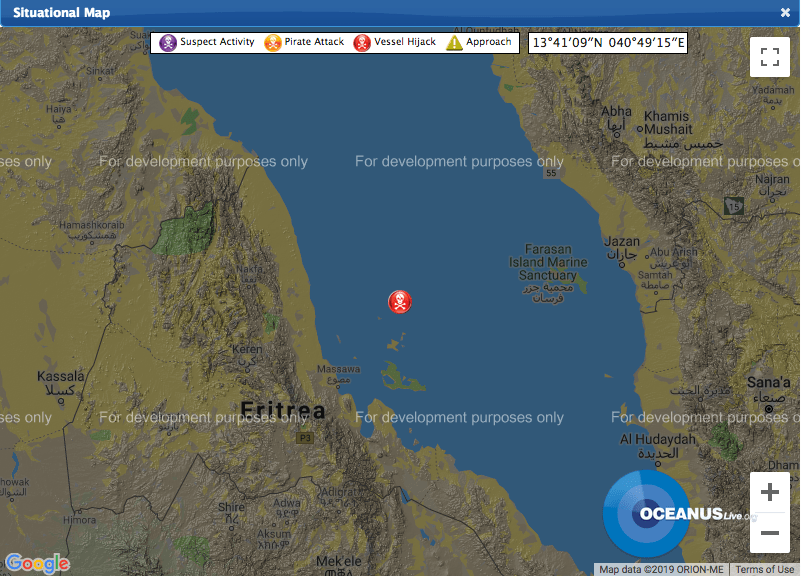
Pirate attacks off Somalia’s coast have dropped dramatically over the past eight years – from 237 incidents in 2011 to nine in 2017 and just three attempted attacks in 2018, Denys Reva reported in a June ISS Today article.
So much so that the Contact Group on Piracy off the Coast of Somalia has started discussing broadening the group’s mandate to include combating other maritime security problems like trafficking. This complements similar changes occurring in other prominent maritime security initiatives such as the Djibouti Code of Conduct.
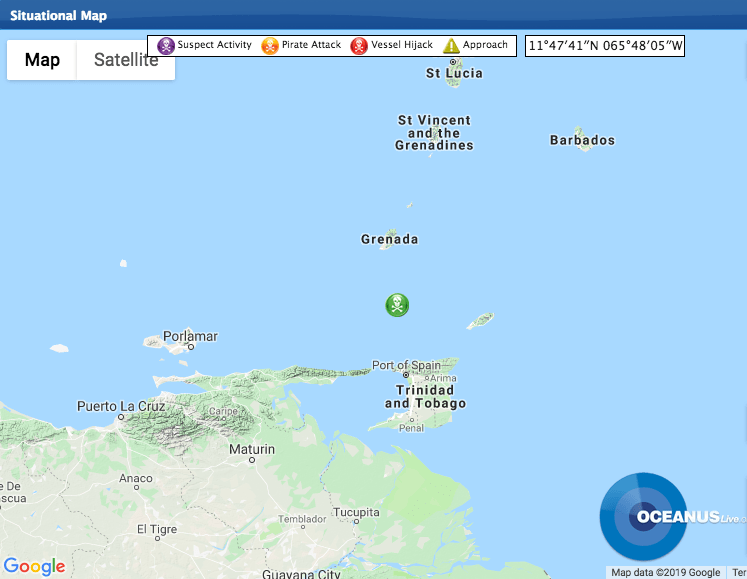
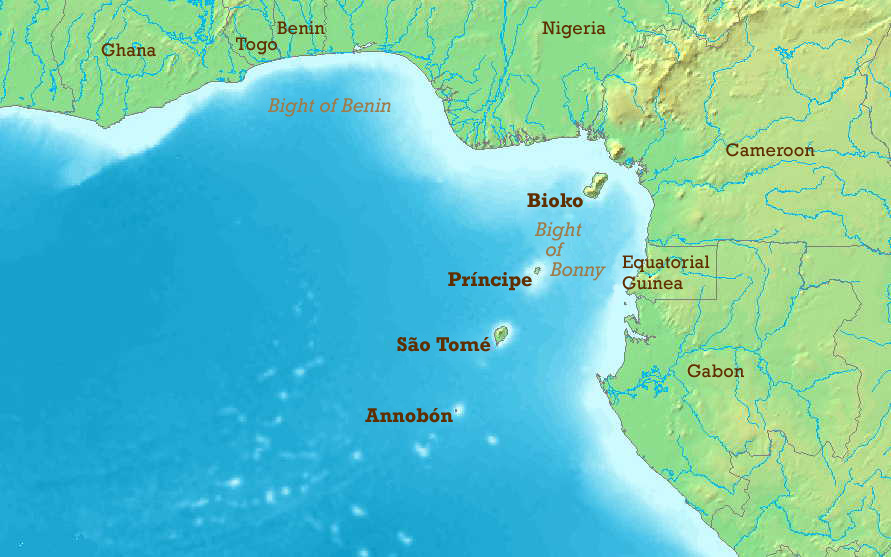
By contrast, on 8 July this year the International Maritime Bureau Piracy Reporting Centre (IMB-PRC) said the seas around West Africa remained ‘the world’s most dangerous for piracy.’ Of the 75 seafarers taken hostage on board or kidnapped for ransom worldwide so far this year, 62 were captured in the Gulf of Guinea – off the coasts of Nigeria, Guinea, Togo, Benin and Cameroon.
The bureau said 73% of all kidnappings at sea, and 92% of hostage takings, happened in the Gulf of Guinea. It nonetheless notes ‘a welcome and marked decrease’ in attacks in the gulf for the second quarter of 2019, commending the Nigerian navy in particular for actively responding to reported incidents by dispatching patrol boats. While recognising that many attacks go unreported, the maritime bureau recorded 21 incidents around Nigeria so far in 2019, down from 31 in the same period of 2018.
Timothy Walker, Senior Researcher and specialist in maritime issues at the Institute for Security Studies, says however that despite the improvement recorded by the IMB-PRC, the general incidence of piracy in the Gulf of Guinea seems to have remained fairly constant over the past decade.
He suggests this is because the high seas off Somalia generally carry shipping heading to and from the Suez Canal and linking the huge markets of Europe, India and East Asia. They are also of greater global interest as they carry ships of almost every flag state and generally of greater size.
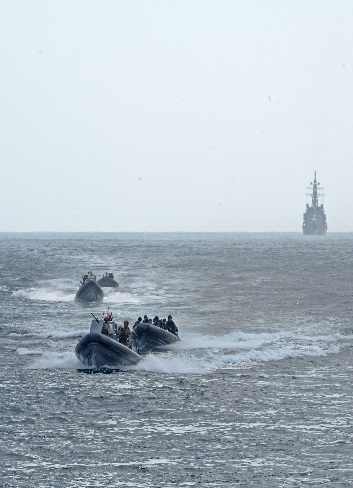
While there is also a huge volume of international shipping in the Gulf of Guinea, most attacks are happening in territorial waters, against localised shipping to and from West Africa. Because of this geographic difference, a larger international operation was mobilised to counter Somali-based piracy, pulling in powerful navies from the United States, China, Russia, India and France, among others, and notably the European Union’s Operation Atalanta.
These nations have coordinated their efforts through the Contact Group on Piracy off the Coast of Somalia and the Shared Awareness and De-confliction (SHADE) Conference. Their success seems to have been enhanced by natural competition among themselves for the greatest competence in combating piracy and projecting national maritime power. It was precisely the absence of a functioning national authority in relatively ungoverned Somalia that brought these international navies into the fight against piracy.
Walker notes that the many West African nations with shores on the Gulf of Guinea could better fight piracy through pooling their capacity and strengthening their law enforcement institutions. Such cooperation between and within the economic communities of West African States and Central African States is improving maritime security to a degree.
There is also an Interregional Coordination Centre in Yaoundé steering many of these efforts, complementing national and regional actions. But such efforts struggle with capacity shortages and the low political priority many governments still attach to maritime security.
One manifestation of the need for coordination is that while private security guards on ships have been an effective, albeit controversial, means to combat pirates off Somalia, this hasn’t worked in the Gulf of Guinea. Countries such as Nigeria insist on shipping companies manning their vessels with Nigerian naval teams in their national waters.
Another downside of the many different national jurisdictions fighting piracy in the west is that pirates can shift to different national maritime jurisdictions when one country steps up the pressure against them. This displacement of piracy could be a major factor in maintaining high overall piracy rates, Walker suggests.
He also notes that those fighting Somali piracy have been able to institutionalise their efforts more effectively than their Gulf of Guinea counterparts. However the institutions in the west are working as well as their member states empower them to, he says.
Reva notes that companies sailing off Somalia have together developed effective safety guidelines for ships travelling through a well-defined High Risk Area. For example, ships navigating through the region are urged to increase their speed and install protective systems on board. They are also asked to follow the protected Maritime Security Transit Corridor, making it harder for pirates to attack. These guidelines were key to bringing down piracy off Somalia’s coast, Reva said.
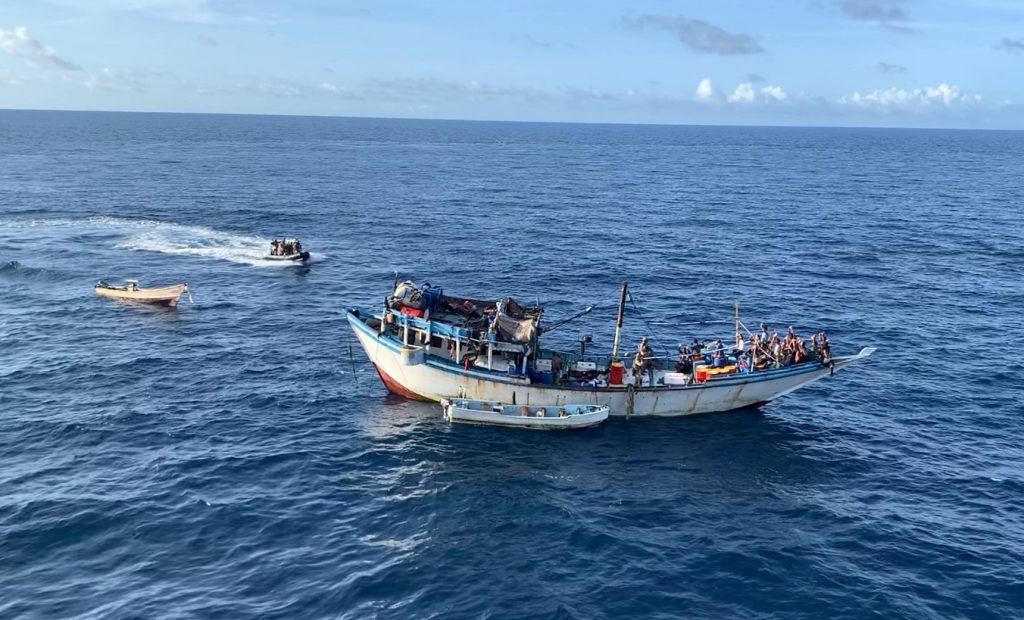
Another difference is the east’s legal approach. Walker says at the height of piracy in the Western Indian Ocean many were caught off Somalia and brought to court in countries such as Kenya and the Seychelles. They were then incarcerated in Somalia itself or its semi-autonomous Puntland region to be prosecuted, convicted and imprisoned. This has been a strong deterrent to piracy in the east.
By contrast there is little record of incarceration, prosecution or conviction of pirates in the Gulf of Guinea, he says. Through this ‘lack of legal finish’, as Walker puts it, the west is missing an opportunity to visibly deter piracy.
Overall, the problem in the east has now become how to avoid complacency in the face of success. In the west, the problem remains the need to reduce the incidence of piracy. It would seem that greater regional coordination – if necessary with international assistance, including guidance from those who have succeeded on the other side of the continent – is called for.
Peter Fabricius, ISS Consultant
Source: issafrica.org



 Maritime Security News