Oman – Cooperation is paramount for maritime security: Sayyid Badr

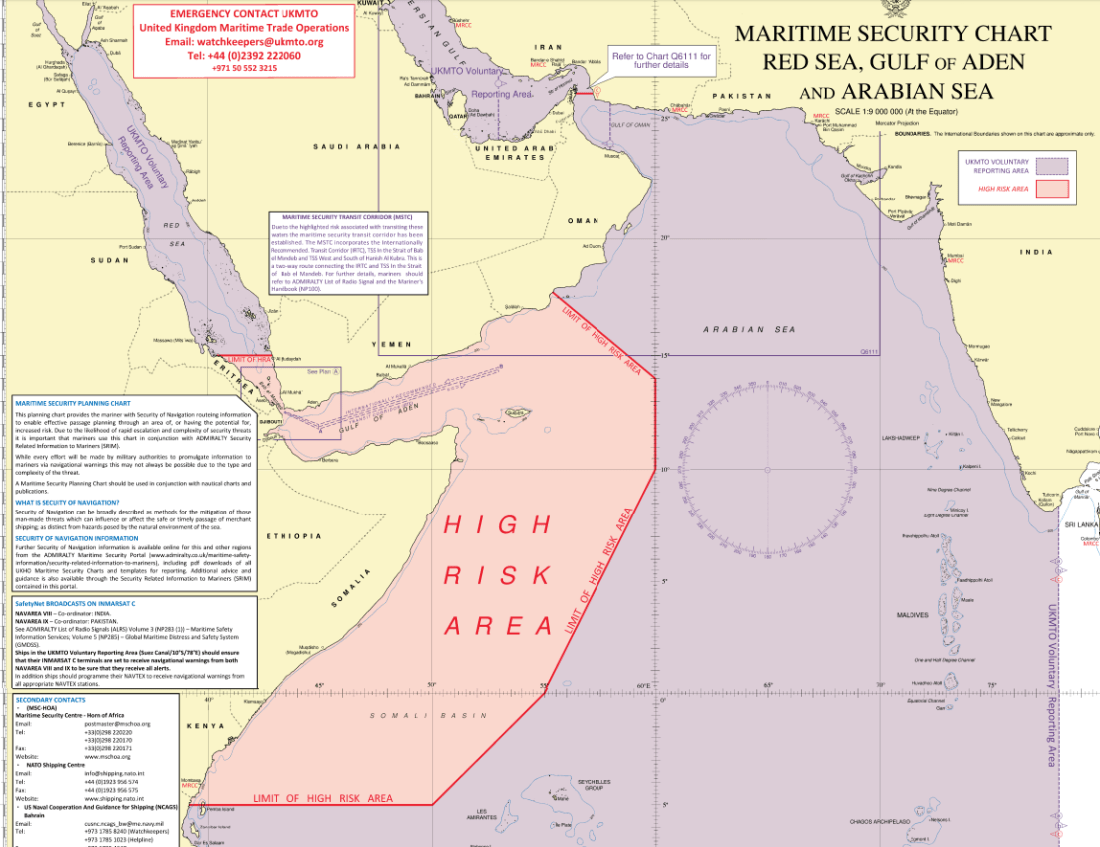
Oman remains at the forefront of maritime security in the region in league with navies from around the world. It is cooperating with agencies such as the EU Navfor for free flow of international trade in the region as well as around the Horn of Africa.

Speaking at the Indian Ocean Conference in the Maldives recently on the topic of ‘Securing the Indian Ocean Region: Traditional and Non-Traditional Challenges’, Sayyid Badr bin Hamad al Busaidi, Secretary General in Oman’s Ministry of Foreign Affairs, said that maritime security is built upon the foundations of law and operational security.

To continue reading, please click here.

Source: menafn.com

India hands over interceptor boats to Mozambique

India has handed over two fast interceptor boats to Mozambique as part of an agreement to strengthen defence cooperation between the two countries.

The boats were handed over on 29 July during a ceremony at Mozambican Naval Headquarters, coinciding with a visit by India’s Defence Minister Shri Rajnath Singh. It was Singh’s first visit abroad as Defence Minister and the first-ever visit of an Indian Defence Minister to Mozambique.

To continue reading, please click here.

Source: defenceweb.co.za

Ghana, Cote D’Ivoire and other ECOWAS members sign MOU for maritime operations

The Chiefs of Navies of Ghana, Cote d’Ivoire, Sierra Leone and Guinea, the Chief of Coast Guard of Liberia and the high Commander of the National Gendarmerie of Burkina Faso have signed a Memorandum of understanding (MoU) for joint Maritime operations in ECOWAS maritime zone F.

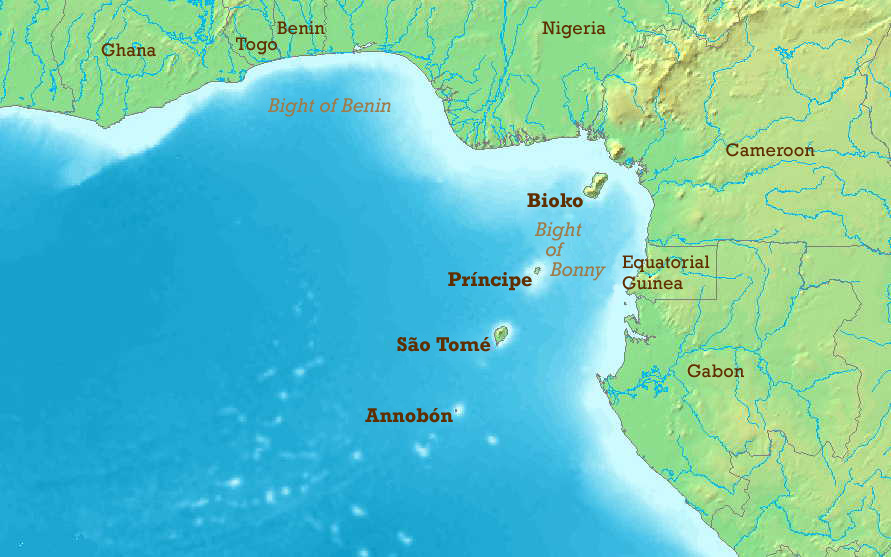
Collaboration, Coordination and the pooling of resources for collective security and safety of Zone F Maritime Domain were the core engagements that was agreed in the MoU signed in Accra. With this MoU, ECOWAS intends to provide an important response to any sort of threat to maritime security in the Gulf of Guinea and specifically in zone F.

To continue reading, please click here.

Source: ghanaweb.com

U.S. Navy Sends Second Ship to Gulf of Guinea

NAVAL STATION ROTA, Spain —

USNS Carson City (T-EFP 7), a Military Sealift Command Spearhead-class expeditionary fast transport ship, departed Rota, Spain, on July 2, as part of the Navy’s second deployment to the Gulf of Guinea this year.

Sailors and embarked personnel will work alongside regional partners on an Africa Partnership Station (APS) mission to provide small boat maintenance assistance, maritime law enforcement engagement, and medical and community relations outreach.

“The deployment of USNS Carson City to the Gulf of Guinea enables our partners to improve maritime security along their coastlines, territorial seas, and exclusive economic zones,” said Adm. James G. Foggo III, commander, U.S. Naval Forces Europe-Africa. “Maritime security is critical for coastal nations as seaborne trade is the lifeblood of global trade. When maritime trade freely sails across the seas, economic development and opportunities for prosperity are possible.”

U.S. Coast Guard (USCG) cutter Thetis (WMEC 910) was the first U.S. ship to deploy to the Gulf of Guinea in 2019.

“Thetis conducted training with our African partners on maritime law enforcement throughout exercise Obangame Express 2019 and continued training with our partners in the region during its deployment,” said Foggo. “Carson City’s deployment will enhance Gulf of Guinea nations’ maritime capabilities through workshops and collaboration. The presence of U.S. ships such as Thetis and Carson City helps address some of the challenges our African navies and coast guards have requested assistance with, including law enforcement and maritime resource management.”

During Carson City’s deployment, U.S. military personnel will work alongside U.S. partners in Cabo Verde, Cote d’Ivoire, Ghana, Nigeria, and Senegal to provide assistance based on host nation requests during previous APS exercise and engagements. The crew and the embarked European allies will provide host nation-requested, needs-based assistance through engagements as part of our enduring friendship and partnership with our African partners.

Mission personnel traveling with Carson City include a small boat maintenance and repair team, a medical team, United States Coast Guard Maritime Law Enforcement personnel, and the U.S. Naval Forces Europe band, who will conduct performances for local communities.

“We have a lot of experts embarked aboard Carson City to work alongside our Gulf of Guinea partners in areas they have asked for assistance such as maintenance and medical engagements,” said U.S. Navy Cmdr. Howard Gray, lead planner for Carson City deployment.

These experts include service members from other regional partners and allies, who are also joining Carson City for the deployment.

“Not only do we have U.S. service members from the Navy and Coast Guard, but we also have members of the Portuguese, Spanish, and Italian navies embarked to help ensure our African partners are getting the assistance and mentorship they need to succeed,” said Foggo. “We are also embarking members of the Ghana Navy for a brief period. Together, we are promoting progress through partnership.”

Thetis’ deployment earlier this year, like the Carson City deployment, was part of the APS program. The cutter was in Africa theater for three months, conducting training with regional countries on law enforcement tactics and techniques to combat illegal fishing, human and narcotics trafficking, piracy, and pollution.

APS is U.S. Naval Forces Africa’s flagship maritime security cooperation program focusing on maritime safety and security through increased maritime awareness, response capabilities, and infrastructure. It consists of the various exercises and operations conducted by U.S., European, and African partners and allies throughout the U.S. Africa Command area of operations.

U.S. Naval Forces Europe-Africa/U.S. 6th Fleet, headquartered in Naples, Italy, conducts the full spectrum of joint and naval operations, often in concert with allied and interagency partners, in order to advance U.S. national interests, security and stability in Europe and Africa.

Source: c6f.navy.mil

Supporting Kenya’s coast guard

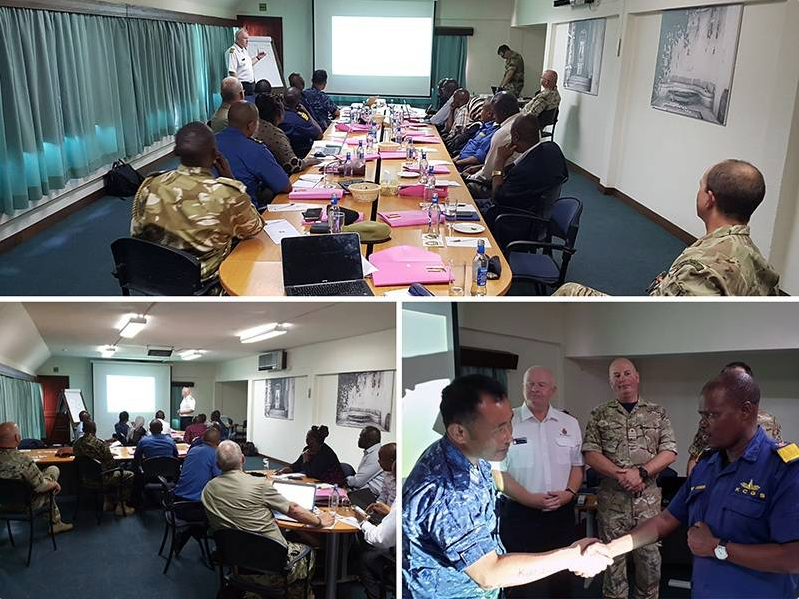
Senior officials from the newly established Kenya Coast Guard Services are undergoing training on coast guard functions at a national workshop in Mombasa, Kenya (24-28 June).

Fifteen participants are taking part in the training, which is using scenario development methodology and plenary discussions to highlight issues, identify insights and develop deeper understanding of effective ways to meet coastguard functions – with a view to enhancing maritime security in Kenya.

The training is organised by the United Kingdom and IMO, under the auspices of the Jeddah Amendment to the Djibouti Code of Conduct. It is supported by a joint team from the UK Maritime Coastguard Agency (MCA), Royal Navy International Defence Training (RNIDT), and facilitated by the British Peace Support Team Africa (BPST(A)) and IMO. Other international partners supporting the implementation of the Djibouti code of Conduct (Japan, Denmark and the International Committee of the Red Cross) are also in attendance and contributing to the discussions.

Source: imo.org

‘Dark ship’ detection exposes sanction-busting ships

The use of synthetic aperture radar technology means ships can be detected even if they turn off Automatic Identification System transponders. Satellites can see through clouds to detect vessels using microwave pulses

Michelle Wiese Bockmann

VESSELS failing to comply with international sanctions will not be able to avoid being tracked in real time as technology used to detect illegal fishing is fully adapted for commercial shipping.

Iran’s fleet of 36 very large crude carriers and eight suezmax tankers have finessed and expanded the so-called practice of ‘going dark’ by establishing complicated logistics chains to avoid detection and thus disguise the origin and destination of oil cargoes.

To continue reading, please click here.

Source: lloydslist.maritimeintelligence.informa.com

Mozambique Loses as Foreigners Plunder Its Coast

Comprising one-fifth of the earth’s population, China consumes more than a third of the fish pulled from the planet’s waters. With its demand outpacing supply, fisheries from China have joined other nations and set their eyes and their nets on African waters without concern for sovereignty or law. 

Africans struggling to emerge from poverty are paying the price for these predations. Mozambique alone has lost 300,000 badly-needed jobs and as much as $3.3 billion in revenue – 10 times the amount East African nations make in legally licensing fishing by foreign vessels, according to the non-profit Stop Illegal Fishing.

To continue reading, please click here.

Source: maritime-executive.com

Need for greater maritime collaboration in the Indian Ocean Region: Indian Navy Deputy Chief

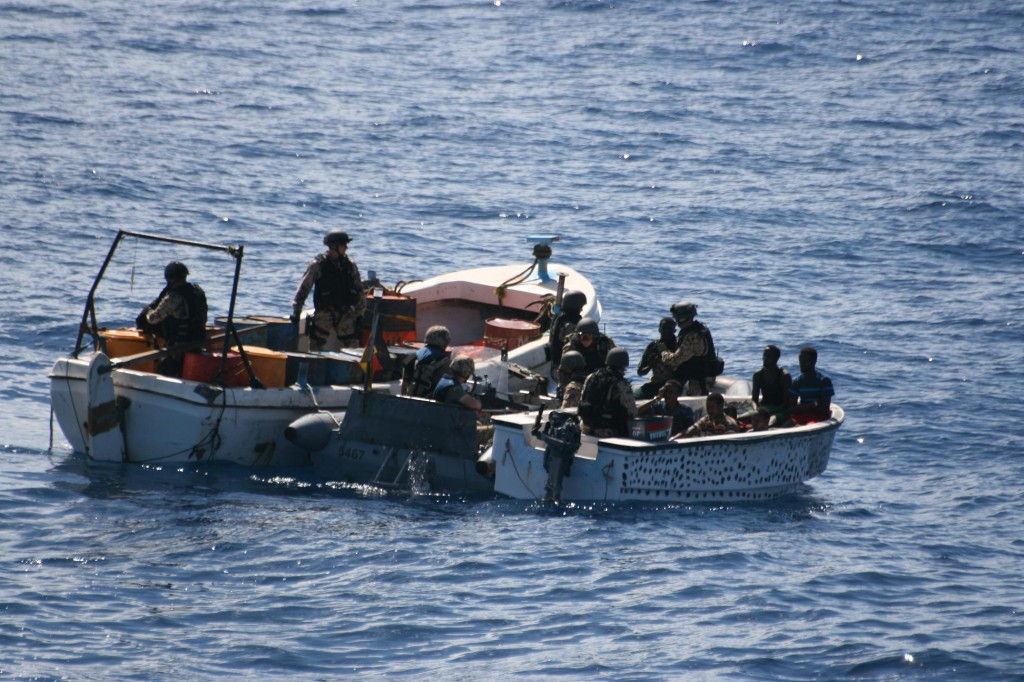
Issues related to human and drug trafficking, maritime piracy and the legal aspects of combating these challenges are being discussed by experts at the Maritime Information Sharing Workshop, (MISW).

Stressing on the need for greater maritime collaboration, Deputy Chief of the Naval Staff Vice Admiral MS Pawar said there is a need to forge bonds based on trust, between partner countries in the region.

To continue reading, please click here.

Source: financialexpress.com

Kenya wins accolades from France for establishing Coast Guard

Philip Mwakio

The French Government has commended Kenya for establishing a Coast Guard Unit to police its vast Coastal maritime waters.

President Uhuru Kenyatta late last year unveiled the Kenya Coast Guard Service (KCGS) and launched into service its first offshore patrol boat christened Doria in Mombasa.

To continue reading, please click here.

Source: standardmedia.co.ke

Senate approves Philippines-Indonesia maritime boundary treaty

Camille Elemia

Under the treaty, there will be a clear boundary between the two nations, helping Filipino and Indonesian fishermen to operate peacefully and properly

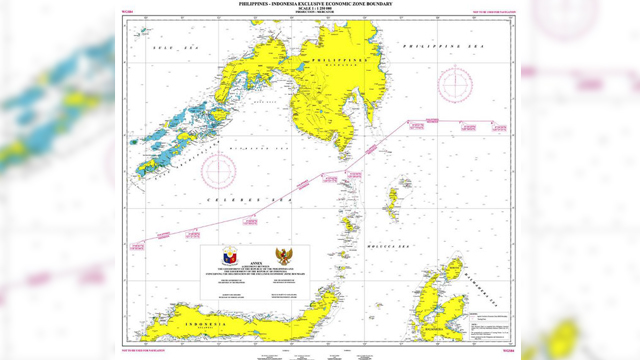
MANILA, Philippines – The Senate on Monday, June 3, concurred with the ratification of the treaty that draws a boundary between the overlapping exclusive economic zones (EEZs) of the Philippines and Indonesia.

Voting 20-0, senators adopted Senate Resolution No. 1048, which concurs with the historic agreement signed in May 2014. It was the Philippines’ first maritime boundary treaty.

To continue reading, please click here.

Source: rappler.com


MARITIME BOUNDARY DEAL. The map shows the exclusive economic zone boundary between the Philippines and Indonesia. Photo from the Department of Foreign Affairs