Icacos fishermen freed after US$13,000 ransom paid

by Sharlene Rampersad

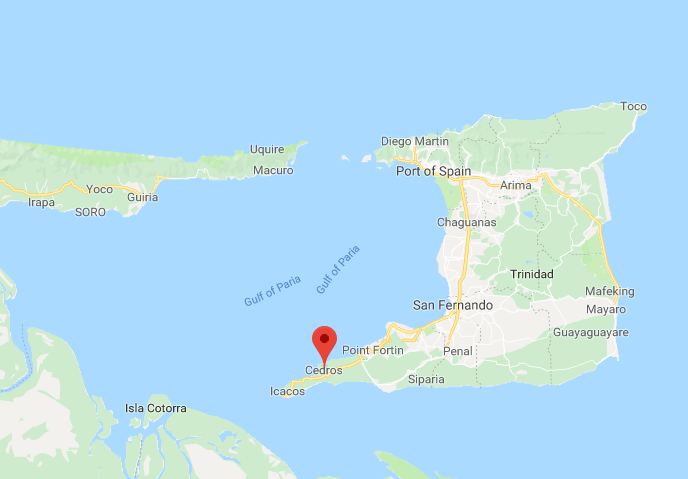
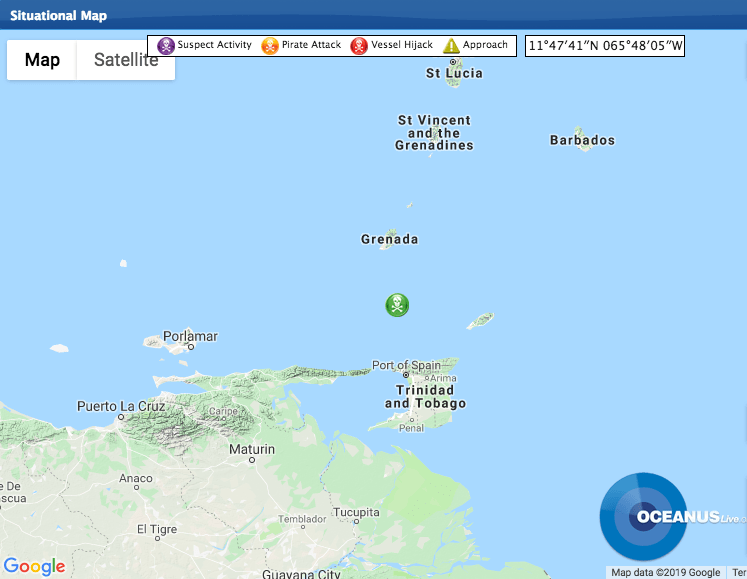
Three fish­er­men kid­napped by Venezue­lan ban­dits and held for ran­som were re­leased late Wednes­day night af­ter US$13,000 was paid for their safe re­turn.

Fish­er­men Ramkissoon Har­richa­ran, 64, Car­lo Snei­der, 61, of Lovers Lane, Ica­cos and a 24-year-old Venezue­lan man iden­ti­fied as Amelto were re­leased by their cap­tors on Wednes­day night, shak­en but in oth­er­wise good health.

The three were snatched at gun­point around 7 am on Tues­day while fish­ing off Gal­fa Point in Ica­cos about half a mile from the shore.

To continue reading, please click here.

Source: guardian.co.tt

Kidnappers now want US$20,000 for missing fishermen

POLICE on Wednesday confirmed that US$20,000 is now being demanded for the safe release of three Icacos fishermen who were abducted at sea on Tuesday morning.

But Sgt Rishi Ramsaran told Newsday, reports that relatives of the men were robbed when they went to pay the initial ransom of US$10,000 were untrue. “It was discovered that it is a hoax. But a family member reported that they received a telephone call that the captors increased the ransom from US$10,000 to US$20,000,” Ramsaran said.

To continue reading, please click here.

Source: newsday.co.tt

T&T: Three fishermen kidnapped

Venezue­lan pi­rates who op­er­ate out of Patos Is­land, one of Venezuela’s small un­in­hab­it­ed is­land, have re­port­ed­ly kid­napped three Ica­cos fish­er­men for ran­som.

The is­land is lo­cat­ed in the north­west­ern Gulf of Paria and is said to be one of the hide­outs for des­per­ate Venezue­lan pi­rates who kid­nap and smug­gle drugs and guns in ex­change for ba­sic ne­ces­si­ties.

To continue reading, please click here.

Source: guardian.co.tt

Maritime security training for Trinidad and Tobago

Trinidad and Tobago is the latest IMO Member State to receive maritime security training. A self-assessment and audit training workshop took place in in Port of Spain, Trinidad (23-27 September).

Participants were trained in self-assessing how two key IMO maritime security instruments – SOLAS Chapter XI-2 and the International Ship and Port Facility Security (ISPS) Code – are implemented at the port facility level. This is done using established, industry-standard IMO and ISO procedures to identify areas for improvement.

The course addressed outcomes of a previous workshop on ISPS Code responsibilities delivered by IMO in Port of Spain last year.

The workshop included theoretical lessons for participants to understand the certification process involved in obtaining the Statement of Compliance of a Port Facility, presentations on audit processes and techniques, and practical exercises on role playing the review of a port facility security plan.

Source: imo.org

Mexican pirates posing greater risk in Gulf of Mexico to oil workers, tourists

By Hollie McKay

MEXICO CITY – In the calm waters of the Gulf of Mexico, drilling platforms hum away under the sunshine. But, in the dark of the night, they are becoming more and more subject to vicious attacks launched by modern-day pirates.

“Although oil and diesel stealing has been going on for decades, there has been an increase in criminal activity reported in the last four years,” Johan Obdola, founder of the Global Organization for Security and Intelligence, told Fox News. “It is estimated that the stealing in Mexico is up to 1.18 million barrels a day, bringing millions to criminal organizations, and making it very difficult to control.”

To continue reading, please click here.

Source: foxnews.com

US Coast Guard interdicts $165 million in cocaine

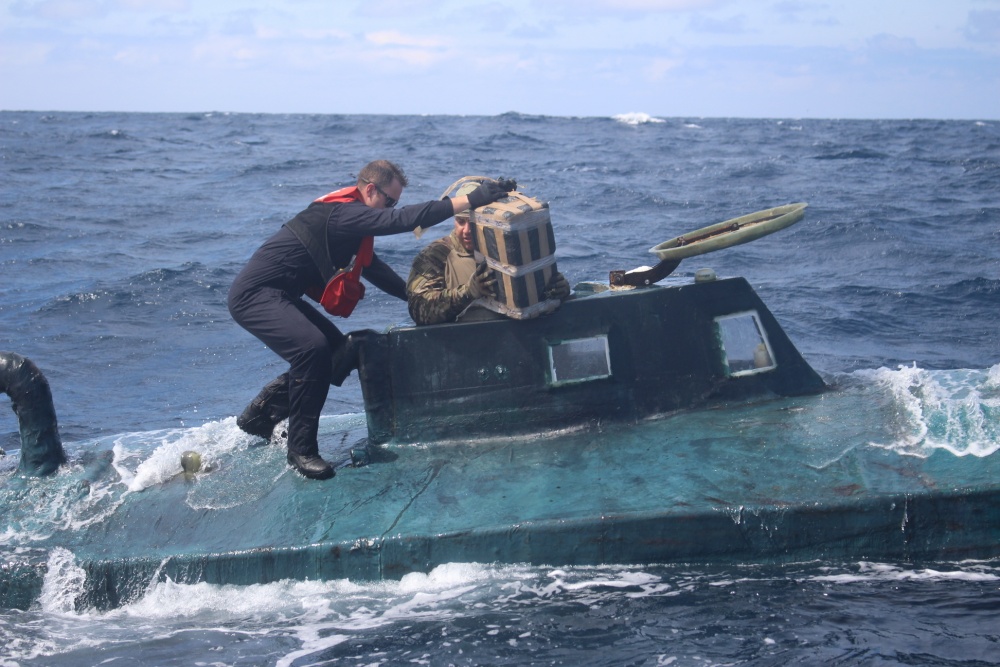
JACKSONVILLE— The Coast Guard Cutter Valiant crew intercepted a drug-laden, 40-foot self-propelled semi-submersible (SPSS) in the Eastern Pacific. 

While on routine patrol in the Eastern Pacific, Valiant’s crew interdicted a self-propelled semi-submersible in international waters carrying approximately 12,000 pounds of cocaine, worth over $165 million and apprehended four suspected drug smugglers.

The semi-submersible was originally detected and monitored by maritime patrol aircraft (MPA), and the Valiant crew was diverted by Joint Interagency Task Force South (JIATF-S) to interdict the semi-submersible, arriving after sunset. The Valiant crew launched two small boats with boarding teams made up of Valiant crew and two members of the Coast Guard Pacific Tactical Law Enforcement Team, successfully interdicting the semi-submersible in the early morning hours, who subsequently led and conducted a full law enforcement boarding with the assistance of Colombian Naval assets that arrived on scene shortly after.

Approximately over 1,100 pounds of cocaine were recovered and offloaded to the Valiant during the operations. The remaining cocaine on the semi-submersible could not be safely extracted due to stability concerns of the vessel. The joint boarding successfully stopped a drug smuggling vessel and also strengthened international relations and communications between the two partner nations.

According to Valiant’s commanding officer, the interdiction coincided with a time-honored mariner’s milestone and tradition of crossing the equator which made both events even more meaningful part of the ship’s patrol.

“There are no words to describe the feeling Valiant crew is experiencing right now,” said Cmdr. Matthew Waldron, Valiant’s Commanding Officer. “In a 24-hour period, the crew both crossed the equator and intercepted a drug-laden self-propelled semi-submersible vessel. Each in and of themselves is momentous events in any cutterman’s career. Taken together, however, it is truly remarkably unprecedented This interdiction was an all-hands-on-deck evolution, and each crew member performed above and beyond the call of duty. Additionally, we could not have successfully completed this interdiction without the love and support of our families back home, many of whom evacuated from Jacksonville this week for Hurricane Dorian. To the Valiant families, a heartfelt ‘Thank You!’”

The Valiant is a multi-mission 210-foot Medium-Endurance Cutter commissioned in 1967. Missions include search and rescue, maritime law enforcement, marine environmental protection, homeland security, and national defense operations.

Source: content.govdelivery.com

Top Cop recommends changes to maritime, piracy acts

Commissioner of Police Leslie James yesterday gave testimony at the Commission of Inquiry into the piracy attack in which over a dozen fishermen were killed off the coast of Suriname last year May.

As part of his testimony in Berbice, he recommended changes to the maritime and piracy acts in order to better enforce the acts as well as improve the fishing sector. He also stressed the need for aerial surveillance of the high seas.

To continue reading, please click here.

Source: stabroeknews.com

MOFA Japan, MPA & ReCAAP ISC Collaborate to Combat Piracy

Ministry of Foreign Affairs of Japan and Maritime and Port Authority of
Singapore, in cooperation with ReCAAP Information Sharing Centre, Join
Efforts to Build Region’s Capabilities in Combating Piracy and Sea Robbery
The Ministry of Foreign Affairs of Japan (MOFA Japan) and the Maritime and Port
Authority of Singapore (MPA), in cooperation with the ReCAAP Information Sharing
Centre (ReCAAP ISC), jointly organised the 3rd Capacity Building Executive
Programme (CBEP) in Singapore. The one-week programme begins today, and will
end on 13 September 2019.

Since the inaugural edition in 2017 held in both Singapore and Japan, CBEP has
become the region’s flagship counter-piracy and sea robbery capacity building
programme, with all 20 ReCAAP Contracting Parties as well as Indonesia and
Malaysia having participated in previous editions.

This year’s edition will see senior officials and international experts address a broad
spectrum of piracy and sea robbery issues including:

• Situation Update on Piracy and Armed Robbery against Ships in Asia
• Evolving Situation and Advisory in the Sulu-Celebes Seas
• Situation in the East and West Africa
• Sharing of best practices and experiences of participating countries
• UNCLOS, SUA Convention, Hostage Convention as applied to Piracy and Sea
Robbery
• Maritime Cybersecurity

The lectures will be supplemented by in-depth discussions of case studies from
regulatory/law-enforcement agencies from across the region.

A dialogue session between regulatory/law enforcement agencies and the shipping
industry will be held to promote exchange of views and mutual cooperation.

“With 13 years of efforts and contributions by the ISC and the contracting parties,
ReCAAP has proved itself as a successful model of regional cooperation which has
made significant progress in mitigating piracy and sea robbery in Asia. Despite the
recent trend of decreasing number of piracy incidents, new challenges such as
terrorism and cyber attacks have been observed in the maritime domain. Against this
backdrop, Japan is pleased to co-host the 3rd programme with Singapore and the
ReCAAP ISC, which aims to provide the participants with opportunities to enhance
law enforcement capabilities in the efforts of counter-piracy and to learn how to
address emerging threats, as well as to exchange views and ideas with regional
partners and experts,” said Mr. Hideki Yamaji, Director, Maritime Security Policy
Division, MOFA Japan and Acting Japanese Governor to the ReCAAP ISC Governing
Council.

“Singapore is pleased to once again partner Japan to co-host this year’s ReCAAP
Capacity Building Executive Programme. Capacity building is one of the pillars of
ReCAAP. The sharing of best practices and experiences, and building the collegiality
among fellow practitioners, strengthens the network we have. This Programme has
contributed greatly to our collective effort in the fight against piracy and armed robbery
against ships in Asia,” said Ms. Quah Ley Hoon, MPA’s Chief Executive and Singapore
Governor to the ReCAAP ISC Governing Council.

“A distinguishing factor of ReCAAP ISC that has led to its success in reducing both
the number and severity of incidents in Asia in recent years is the incident reporting
and response framework attributing the primary role to the coastal States. The CBEP
builds on this framework to enhance the effectiveness of the coastal States in
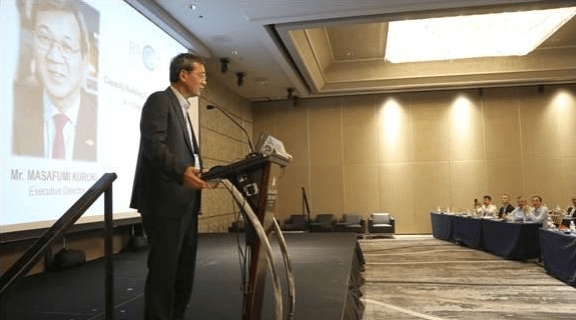
addressing piracy and sea robbery in Asia,” said Mr. Masafumi Kuroki, Executive
Director of ReCAAP ISC.

Source: recaap.org

Trinidad & Tobago Orders 2 Cape-Class Patrol Boats From Austal

Xavier Vavasseur

Austal has signed a contract worth approximately A$126 million to construct two Cape Class Patrol Boats (CCPB) for the Government of the Republic of Trinidad & Tobago (GORTT). The vessels will be delivered in the second half of 2020.

Austal Chief Executive Officer David Singleton said the award of the contract confirmed an important defence export opportunity for Austal and consequent workflow for the Company’s Henderson operations.

To continue reading, please click here.

Source: navalnews.com

TTCG continues search for missing fishermen

The Trinidad and Tobago Coast Guard (TTCG) has given the assurance that they are searching for the fishermen that were stranded at sea after being forced into the water by pirates that stole their vessel in the vicinity of Orange Valley in the Gulf of Paria on Tuesday.

In a release, the TTCG said at 3:08 pm on July 23rd, they received a report of a robbery at sea involving seven vessels with potentially five people still in the water. The informant indicated that he, along with other fishermen, were beaten and ordered to enter the water.

To continue reading, please click here.

Source: looptt.com