A royal father in Bille Kingdom of Degema Local Government Area of Rivers state, Alabo Bennett Okpokiye-Dokubo, has raised the alarm over incessant attacks by sea Pirates on Bille waterways.
Dokubo, who cried out to newsmen in Port Harcourt, the State capital on Tuesday, said the activities of the criminals led to the death of one Abraham Anthony Alex, while some others sustained different degrees of injury. He disclosed that the armed criminals who dressed in Army camouflage have constantly attacked travelers on the middle of the high sea, dispossess them of their belongings and the passenger boat they were travelling in, leaving them stranded at the middle of nowhere.
Curfew in the waters off seven districts in the Eastern Sabah Security Zone (Esszone), which ends today, will be extended until July 25.
Sabah police commissioner Omar Mammah said in a statement today that the curfew from 6pm to 6am covers the waters off Tawau, Semporna, Kunak, Lahad Datu, Kinabatangan, Sandakan and Beluran.
A commercial vessel suffered a significant malware attack in February, prompting the US Coast Guard to issues an advisory to all shipping companies: Here be malware.
In February 2019, a large ship bound for New York City radioed the US Coast Guard warning that the vessel was “experiencing a significant cyber incident impacting their shipboard network.”
The Coast Guard led an incident-response team to investigate the issue and found that malware had infected the ships systems and significantly degraded functionality. Fortunately, essential systems for the control of the vessel were unimpeded.
The Nigerian Maritime Administration and Safety Agency has described as unverified, reports stating that Nigeria had again taken the lead in piracy attacks in the second quarter of 2019.
The report released by the International Maritime Bureau, indicated that between January and June, Nigeria led the table of pirate attacks with 21 recorded incidents, beating Indonesia that recorded 11, Venezuela with six attacks and Peru with four attacks.
The debate on the drilling of huge oil and gas reserves discovered in the Eastern Mediterranean continues. The reason for the dispute is the thesis that only the southern administration represents the island, which is divided between the Turkish Republic of Northern Cyprus (TRNC) and the Greek Cypriot Administration of Cyprus. Thus, EU countries question Turkey’s presence in the Mediterranean. The EU High Commission for Foreign Policy said in a statement that it is a “major source of concern” that the Yavuz, the second drilling ship that Turkey sent to the Eastern Mediterranean, has reached the area off the coast of Karpasia, claiming that Turkey has “violated the sovereignty of Cyprus.”
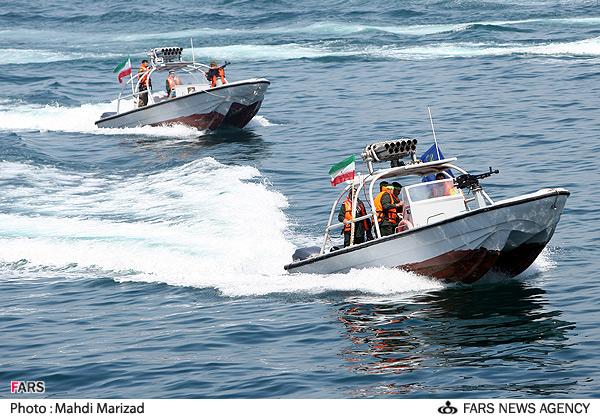
Iranian boats tried to impede a British oil tanker near the Gulf – before being driven off by a Royal Navy ship, the Ministry of Defence has said.
HMS Montrose moved between the three boats and the tanker British Heritage before issuing verbal warnings to the Iranian vessels, a spokesman said.
He described the Iranians’ actions as “contrary to international law”.
Iran had threatened to retaliate for the seizure of one of its own tankers, but denied any attempted seizure.
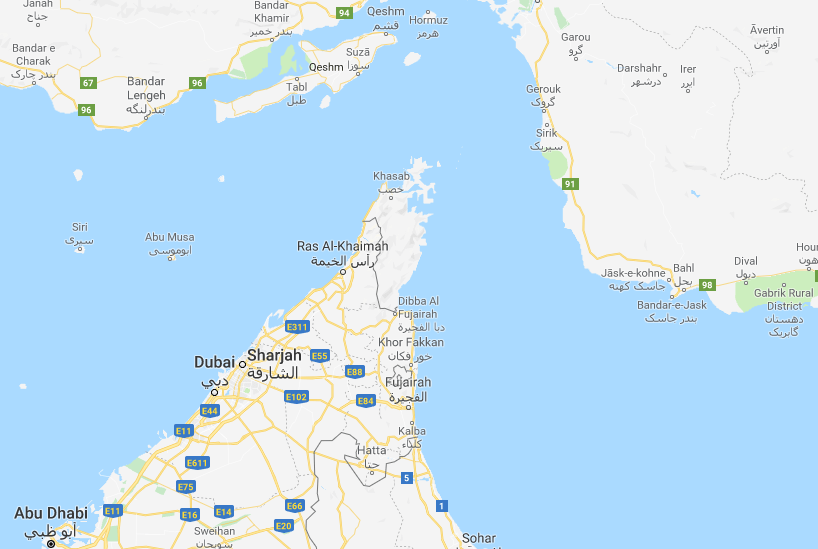
Boats believed to belong to Iran’s Islamic Revolution Guard Corps (IRGC) approached the British Heritage tanker and tried to bring it to a halt as it was moving out of the Gulf into the Strait of Hormuz.
Guns on HMS Montrose, the British frigate escorting the tanker, were reportedly trained on the Iranian boats as they were ordered to back off. They heeded the warning and no shots were fired.
The BBC has been told British Heritage was near the island of Abu Musa when it was approached and harassed by the Iranian boats.
Although the island is in disputed territorial waters, HMS Montrose remained in international waters throughout.
A UK government spokesman said: “Contrary to international law, three Iranian vessels attempted to impede the passage of a commercial vessel, British Heritage, through the Strait of Hormuz.
“We are concerned by this action and continue to urge the Iranian authorities to de-escalate the situation in the region.”
What does Iran say?
Quoting the public relations office of the IRGC’s Navy, the Fars news agency said, in a tweet, the IRGC “denies claims by American sources” that it tried to seize British Heritage.
“There has been no confrontation in the last 24 hours with any foreign vessels, including British ones,” the IRGC added, according to the AFP news agency.
Iranian foreign minister Mohammad Javad Zarif said the UK made the claims “for creating tension”.
“These claims have no value,” Mr Zarif added, according to Fars.
Last week, British Royal Marines helped the authorities in Gibraltar seize an Iranian oil tanker because of evidence it was heading to Syria in breach of EU sanctions.
Iran also summoned the British ambassador in Tehran to complain about what it said was a “form of piracy”.
On Wednesday, Iranian President Hassan Rouhani mocked the UK, calling it “scared” and “hopeless” for using Royal Navy warships to shadow a British tanker in the Gulf.
HMS Montrose had shadowed British tanker the Pacific Voyager for some of the way through the Strait of Hormuz, but that journey had passed without incident.
“You, Britain, are the initiator of insecurity and you will realise the consequences later,” Mr Rouhani said.
The UK has also been pressing Iran to release British-Iranian mother Nazanin Zaghari-Ratcliffe who was jailed for five years in 2016 after being convicted for spying, which she denies.
RIYADH (Reuters) – Naval forces from the Saudi-led coalition fighting in Yemen foiled an attempted attack on an unidentified commercial ship in the southern Red Sea on Monday by the Iran-aligned Houthis, which the group denied.
Spokesman Colonel Turki al-Malki said the Western-backed military alliance had destroyed an unmanned boat laden with explosives which the militants had used for the attack, Saudi state news agency SPA reported without providing more details.
A report by Bloomberg says that a British oil tanker is staying in the Persian Gulf in fear of being seized by Iran in retaliation for an Iranian tanker impounded by the British and Gibraltar authorities since July 4.
The mid-size oil tanker capable of carrying one million barrels of oil was reportedly moving toward one of Iraq’s oil terminals when it changed course and is currently anchored close to Saudi Arabia.
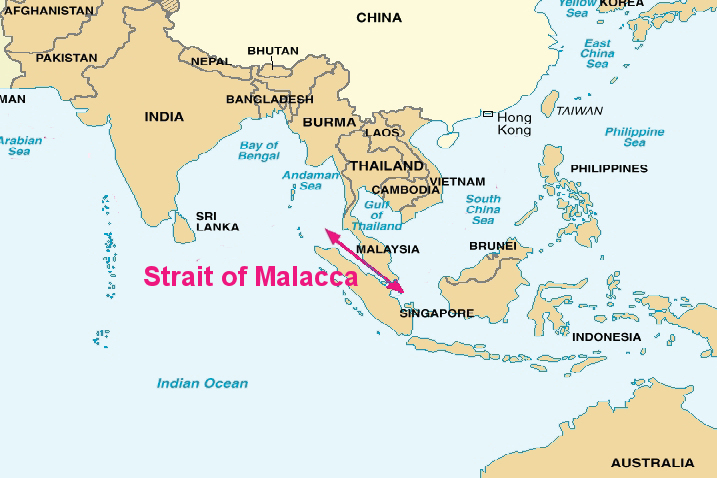
The Maritime and Port Authority of Singapore (MPA) has responded to China’s decision to raise the security level for its vessels heading through the Strait of Malacca, asserting that no information has been received about an immediate threat.
According to Bloomberg, a notice was served by China’s transport ministry on July 2, advising Chinese-flagged vessels to adopt heightened security measures and raise their security warning to level three.
The seas around West Africa remain the world’s most dangerous for piracy, the International Maritime Bureau’s (IMB) latest report reveals.
Of the 75 seafarers taken hostage onboard or kidnapped for ransom worldwide so far this year, 62 were captured in the Gulf of Guinea – off the coasts of Benin, Cameroon, Guinea, Nigeria and Togo. Worldwide, the International Chamber of Commerce’s IMB Piracy Reporting Centre recorded 78 incidents of piracy and armed robbery against ships in the first half of 2019, compared with 107 incidents for the same period of 2018. Overall, 57 vessels were boarded successfully, representing 73% of all attacks.
Pirates killed one person, took 38 crewmembers hostage, and kidnapped a further 37 for ransom.
Gulf of Guinea world piracy hotspot
The IMB report reveals 73% of all kidnappings at sea, and 92% of hostage-takings, took place in the Gulf of Guinea. Armed pirates in these high-risk waters kidnapped 27 crewmembers in the first half of 2019 and 25 in the same period in 2018. Two chemical tankers were hijacked, as well as a tug that was then used in another attack. Of the nine vessels fired upon worldwide, eight were off the coast of Nigeria, Africa’s top oil producer. These attacks took place on average 65 nautical miles off the coast – meaning they are classified as acts of piracy.
But there are some encouraging signs of improvement. The IMB Piracy Reporting Centre reports “a welcome and marked decrease” in attacks in the Gulf of Guinea for the second quarter of 2019, commending the Nigerian navy for actively responding to reported incidents by dispatching patrol boats. While recognising that many attacks go unreported, IMB recorded 21 incidents around Nigeria so far in 2019, down from 31 in the same period of 2018.
Naval vessels from Equatorial Guinea and Spain also intervened in May 2019 when a Nigerian tug was hijacked 41 nautical miles off Luba, Equatorial Guinea. Soon after, the pirates used the tug to launch an attack on a Maltese heavy load carrier. The crew retreated into the ship’s citadel, a safe room for protection against attackers. When the navies responded, the pirates left the vessel and the crew were freed. The IMB Piracy Reporting Centre thanks the naval vessels for their prompt assistance.
Warning to stay alert
Despite the recent fall in Gulf of Guinea attacks, IMB is urging seafarers in the region to remain vigilant and report all suspicious activity to regional response centres and the Piracy Reporting Centre. “Early detection of an approaching suspicious craft is key to prevent boarding and give time to raise the alarm and retreat into a citadel, if needed,” said an IMB spokesperson.
Meanwhile, in Malaysia, 10 crew were kidnapped from two fishing boats off eastern Sabah in June. Of these, nine crew are reported to have been released.
Around Indonesia, on-going information-sharing cooperation between the Indonesian Marine Police and the IMB Piracy Reporting Centre continues to show positive results. The 11 incidents reported in Indonesian waters remains the lowest Q2 figure since 2009 when three incidents were reported.
Violent attacks in South America
A vessel was fired upon in the Guayas River after departing from Guayaquil, Ecuador’s second largest city. This is the first time an incident involving the firing of weapons has been reported to the IMB Piracy Reporting Centre in Ecuador.
Elsewhere in South America, incidents of violent armed theft against ships at anchor have been reported in Callao in Peru, Jose Terminal in Venezuela and Macapa in Brazil. On 2 May 2019, when armed robbers boarded a yacht in San Ignacio de Tupile, Panama, shooting and killing a family member and injuring another, the IMB Piracy Reporting Centre liaised with the victims and authorities. The surviving family members including two children were rescued by Panamanian Marine Police.
Global anti-piracy support
Since 1991 the Piracy Reporting Centre’s 24-hour manned centre, has provided the maritime industry, governments and response agencies with timely and transparent data on piracy and armed robbery incidents – received directly from the Master of the vessel or its owners. This important work promotes the purpose of the International Chamber of Commerce to enable business to secure peace, prosperity and opportunity for all.
The IMB Piracy Reporting Centre’s prompt forwarding of reports and liaison with response agencies, its broadcasts to shipping via Global Maritime Distress and Safety System (GMDSS) Safety Net Services and email alerts to Company Security Officers, all provided free of charge, has helped the response against piracy and armed robbery and the security of seafarers, globally.
IMB strongly urges all shipmasters and owners to report all actual, attempted and suspected piracy and armed robbery incidents to the IMB Piracy Reporting Centre globally. This first step in the response chain is vital to ensuring that adequate resources are allocated by authorities to tackle piracy. Transparent statistics from an independent, non-political, international organisation can act as a catalyst to achieve this goal.



 Maritime Security News