Covid-19: Indian Navy remains ‘combat ready’ despite spread of coronavirus

The Indian Navy (IN) has emphasised that it remains “combat-ready, mission-capable, and in full readiness”, after 26 of its personnel were quarantined after testing positive for Covid-19 coronavirus.

“All missions for coastal and offshore security continue as before. Operational units are being maintained in readiness by following a 14-day quarantine routine to meet immediate contingencies, including assistance to civil authorities and friendly maritime neighbours, said India’s Press Information Bureau (PIB) on 18 April. “Our naval assets continue to be mission-deployed in three dimensions, with all the networks and space assets functioning optimally,” it added.

To continue reading, please click here.

Source: janes.com

Health worker injured as suspected sea pirates attack passenger boat in Bayelsa

By Emem Idio

Suspected sea pirates over the weekend attacked a passenger boat along the Akasssa-Brass-Nembe waterways in Bayelsa State injuring one health worker returning from a coronavirus sensitization campaign.

The sea pirates shot sporadically, injuring the health worker, who had to stay in water for about forty-five minutes before getting help from security operatives as the driver of the boat managed to escape with other travellers.

To continue reading, please click here.

Source: vanguardngr.com

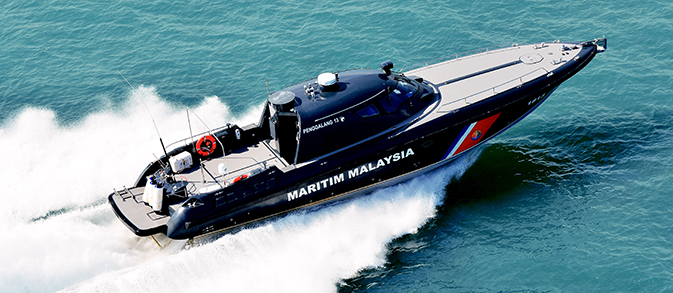
MMEA beefs up patrol at hotspots

MMEA vessel. Image via diabgroup.com

By IMRAN HILMY

LANGKAWI: The Malaysian Maritime Enforcement Agency (MMEA) has deployed more of its assets at sea and air to beef up patrols and increase enforcement during the movement control order (MCO) period nationwide.

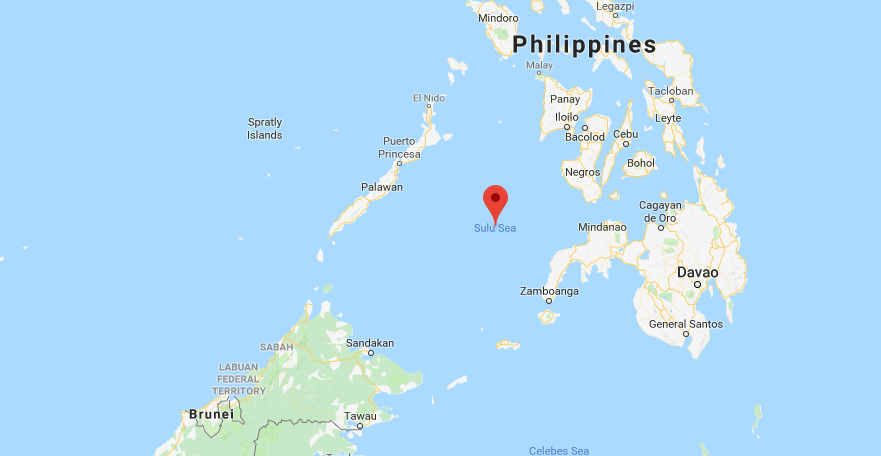
Kedah and Perlis MMEA deputy operations director Kapt Zulinda Ramly said the increase of the assets was meant to prevent cross-border criminal activities, which include human trafficking, contraband smuggling, piracy and encroachment of foreign fishermen, especially at hotspots in the maritime zone along the Straits of Malacca, South China Sea and Sulu Sea.

To continue reading, please click here.

Source: thestar.com.my

Navy, MMEA to chase out illegal fishing vessels

MMEA vessel. Image via diabgroup.com

By MAZWIN NIK ANIS

PUTRAJAYA: The Royal Malaysian Navy and the Malaysian Maritime Enforcement Agency have stepped up their surveillance to check encroachment by foreign fishing vessels which could potentially spread Covid-19.

Senior Minister Datuk Seri Ismail Sabri Yaakob said the two agencies would chase out any fishing vessels found encroaching Malaysian waters.

To continue reading, please click here.

Source: thestar.com.my

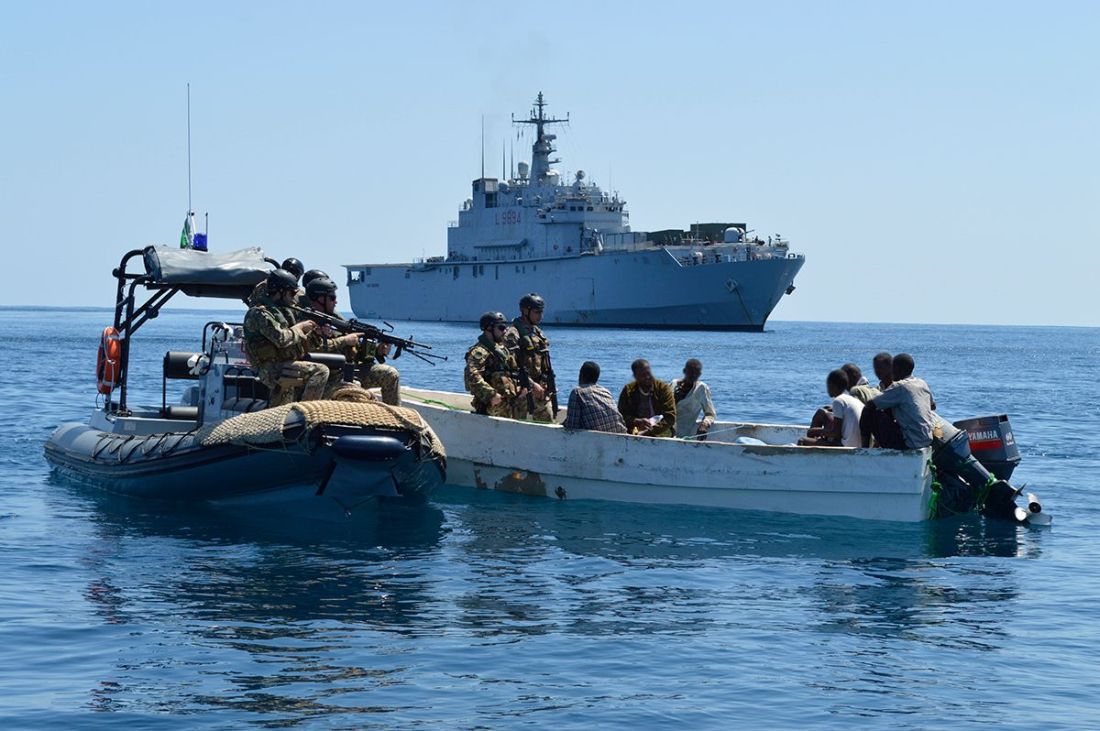
Piracy and armed robbery a threat to ships’ crews, warns IMB

Seafarers face continuing threats from pirates and armed robbers on the world’s seas, says the International Chamber of Commerce’s (ICC) International Maritime Bureau (IMB), reporting 46 attacks in the first three months of 2020, up from 38 in the same period last year. Pirates boarded 37 ships in the first quarter of 2020.

The Gulf of Guinea remains the world’s piracy hotspot. Seventeen crew were kidnapped in three incidents in these waters, at distances of between 45 and 75 nautical miles from the coast.

IMB’s latest global piracy report shows zero hijackings in the last two quarters, and no incidents around Somalia. But with no sign of a reduction in attacks worldwide, IMB encourages shipowners to stay vigilant, calling for continued international cooperation.

“Navy patrols, onboard security measures, cooperation and transparent information exchange between authorities, are all factors which help address the crimes of piracy and armed robbery,” said IMB Director Michael Howlett.

“The threat to crew is, however still real – whether from violent gangs, or opportunistic armed thieves inadvertently coming face-to-face with the crew. Ships’ masters must continue to follow industry best practice diligently and maintain watches. Early detection of an approaching pirate skiff is often key to avoiding an attack,” he added.

Gulf of Guinea kidnappings persist

IMB’s 24-hour Piracy Reporting Centre (PRC) recorded 21 attacks in the Gulf of Guinea in the first quarter of 2020. Of these, 12 were on vessels underway at an average of 70 nautical miles off the coast. All vessel types are at risk. The perpetrators are usually armed. They approach in speedboats, boarding ships in order to steal stores or cargo and abduct crewmembers to demand a ransom.

While 10 vessels were fired upon worldwide for the whole of 2019, four already reported being fired at within Nigerian Exclusive Economic Zone (EEZ) in the first quarter of 2020. This includes a container ship underway around 130 nm southwest of Brass. In another incident around 102 nm northwest of Sao Tome Island, another container ship was boarded by pirates. The crew retreated into the citadel and raised the alarm. On receiving the alert, the IMB PRC liaised with Regional Authorities and the vessel operator until the vessel was safe and the crew had emerged from the citadel.

“The IMB PRC commends Regional coastal state response agencies and international navies in the Gulf of Guinea region for actively responding to reported incidents,” said Mr Howlett.

With many more attacks going unreported, IMB advises seafarers in the region to follow the recently published Best Management Practices West Africa – BMP WA.

Indonesia: dialogue pays dividends 

Strategic deployment of Marine Police patrol vessels has resulted in a continued decline in attacks on ships in most Indonesian anchorages and waterways – thanks to positive cooperation between the IMB PRC and the Indonesian Marine Police (IMP). In the first quarter of 2020, just five anchored vessels were reported boarded. These are often low-level armed robbery attacks. The IMB PRC is monitoring the situation and continues to liaise with the IMP as well as other local and regional authorities.

Singapore Straits 

Five ships were boarded while underway in the Singapore Straits – where no attacks were reported in the first quarter of 2019. These low-level armed robbery attacks are a distraction to crews navigating in congested waters. In one incident the crew managed to lock their assailants in the storeroom, which enabled their later arrest.

Elsewhere 

Other violence against seafarers includes the kidnapping of five crew for ransom in an attack on a fishing vessel off Sabah, Malaysia in January 2020. In March, at Macapa Anchorage, Brazil, a watchman was confronted while on duty and held temporarily by a group of robbers. Meanwhile, in the anchorage of Callao, Peru, three crew were apprehended by nine robbers who boarded their vessel to steal ship’s stores. Two crew were injured during the incident. Callao recorded five incidents in the last quarter of 2019 and three this quarter.

IMB Piracy Reporting Centre 

Founded in 1991, IMB’s 24-hour manned Piracy Reporting Centre (PRC) remains a single point of contact to report the crimes of piracy and armed robbery. The Centre has not only assisted ships in a timely manner, it also provides the maritime industry, response agencies and governments with transparent data – received directly from the Master of the vessel under attack – or its owners.

The IMB PRC’s prompt forwarding of reports and liaison with response agencies, its broadcasts to shipping via GMDSS Safety Net Services and email alerts to ships’ Company Security Officers (CSOs), all provided free of charge, has helped the response against piracy and armed robbery and the security of seafarers, globally.

Source: iccwbo.org

MCO: Police tighten security, increase personnel patrolling borders, national waters

THE Royal Malaysian Police (PDRM) has tightened border security nationwide and increased the number of personnel patrolling the national waters and borders throughout the imposition of the Movement Control Order (MCO).

Bukit Aman Internal Security and Public Order Department (JKDNKA) director, Datuk Seri Acryl Sani Abdullah Sani said to date, a total of 2,197 officers and personnel of the General Operations Force (GOF) had been deployed at the country’s border checkpoints to prevent the entry of illegal immigrants.

To continue reading, please click here.

Source: themalaysianreserve.com

France pulls vessel from West Coast maritime security mission due to coronavirus

The French Navy has suspended its Mission Corymbe off West Africa due to the COVID-19 coronavirus, and withdrawn a vessel from the area.

The patrol vessel Lieutenant de Vaisseau Le Henaff, which departed Brest on 3 March for West Africa, returned to France at the end of the month. During its return voyage it stopped in Conakry and Dakar.

To continue reading, please click here.

Source: defenceweb.co.za

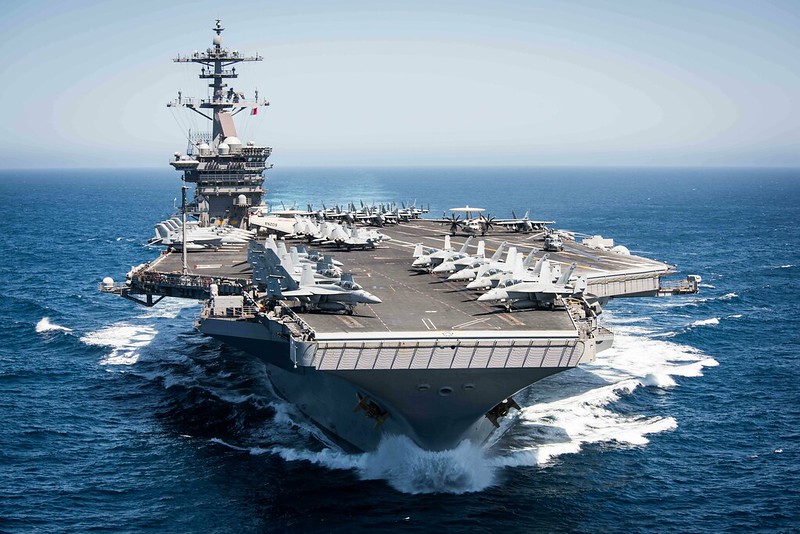
Coronavirus: US Navy captain pleads for help over outbreak

The captain of a US aircraft carrier carrying more than 4,000 crew has called for urgent help to halt a coronavirus outbreak on his ship.

Scores of people on board the Theodore Roosevelt have tested positive for the infection. The carrier is currently docked in Guam.

“We are not at war. Sailors do not need to die,” Captain Brett Crozier wrote in a letter to the Pentagon.

Captain Crozier recommended quarantining almost the entire crew.

In the letter Captain Crozier said that with large numbers of sailors living in confined spaces on the carrier isolating sick individuals was impossible.

The coronavirus’ spread was now “ongoing and accelerating”, he warned, in the letter dated 30 March.

“Decisive action is needed,” he said.

“Removing the majority of personnel from a deployed US nuclear aircraft carrier and isolating them for two weeks may seem like an extraordinary measure. This is a necessary risk.”

It is not clear how many crew members on the Theodore Roosevelt have the coronavirus. The San Francisco Chronicle, which first reported on the letter, said at least 100 sailors were infected.

Speaking to Reuters news agency, a US Navy spokesman said the service was “moving quickly to take all necessary measures to ensure the health and safety of the crew of USS Theodore Roosevelt”.

Source: bbc.co.uk

IMSC Enforces Safety Measures to Protect Members from COVID-19

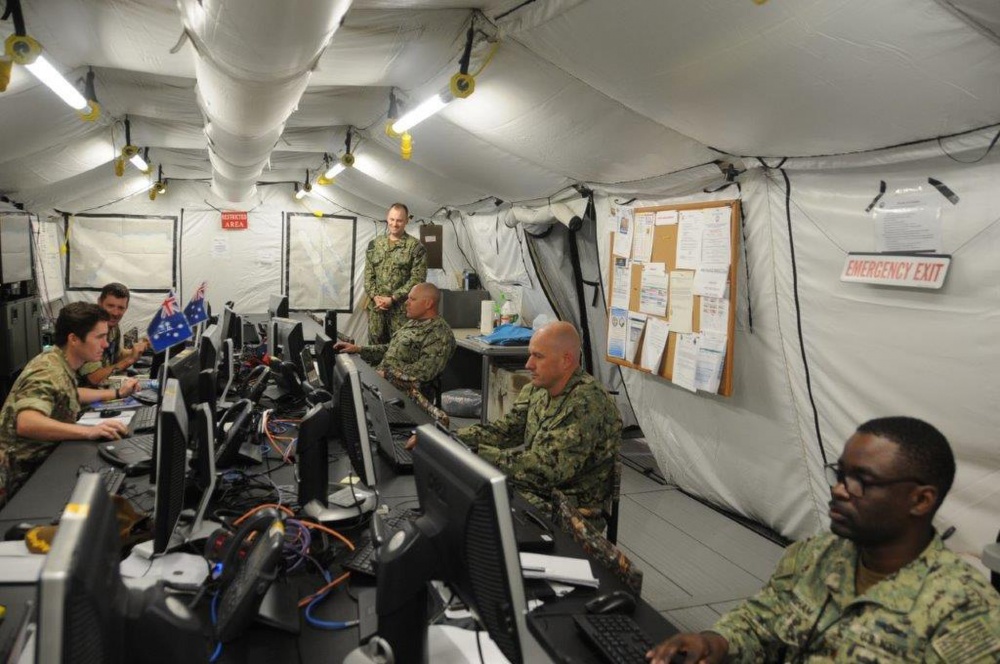
Photo By NAVCENT Public Affairs | 200330-N-NO146-1002 MANAMA Bahrain (March 30, 2020) Service members assigned to the International Maritime Security Construct (IMSC) practice social distancing in the workspace. The IMSC ensures freedom of navigation and free flow of commerce in international waters throughout the Arabian Gulf, Strait of Hormuz, the Bab el-Mandeb Strait, and the Gulf of Oman.

MANAMA, BAHRAIN

03.30.2020

Courtesy Story

The International Maritime Security Construct (IMSC) has been practicing several safety precautions to promote the health and safety of all its members with the recent COVID-19 outbreak.

No members of the IMSC have fallen ill to COVID-19 as of current.

“The well-being of IMSC personnel is critical to our mission,” said Commodore James Parkin, commander of Combined Task Force Sentinel, headquartered in Bahrain. “However, with a pandemic such as this, our people become the mission. We must ensure good health for the sake of their families and each other.”

Personnel supporting IMSC headquarters typically work in close quarters, however, as the need for social distancing has increased, so have the rules for how the day-to-day operations are conducted.

“Our operational tempo remains constant,” said Parkin. “fortunately our ships are unaffected and their mission continues. On shore, we have rescheduled meetings for mission-critical members only, reconfigured our work stations to allow a six-foot distance, and pay particular attention to the cleanliness of work stations and personal hygiene.”

Hand sanitizer, bleach wipes, anti-viral cleaning sprays, and soap and water are readily available throughout the work area. The team breaks at least four times per day to conduct cleaning stations.

The Multi-national, British-led IMSC deploys advanced capabilities through the region as part of a surveillance and detection effort, leading to de-escalation and deterrence through transparency. The IMSC ensures freedom of navigation and free flow of commerce in international waters throughout the Arabian Gulf, Strait of Hormuz, the Bab el-Mandeb Strait, and the Gulf of Oman.

Source: dvidshub.net

Covid-19: Nigerian regulator asks for offshore workforce reduction

Nigeria’s Department of Petroleum Resources has instructed oil and gas firms to reduce the workforce on offshore platforms. The measure is part of the government’s plans to contain the spread of the Covid-19 coronavirus in the country.

The restrictions come after the Nigerian Ports Authority (NPA) announced six workers on the Siem Marlin offshore rig were diagnosed with Covid-19 late last week, according to Reuters.

To continue reading, please click here.

Source: offshore-technology.com