Pirates are kidnapping more seafarers off West Africa, IMB reports

ICC International Maritime Bureau (IMB) figures show a rise in piracy and armed robbery on the world’s seas in the first nine months of 2020, with a 40% increase in the number of kidnappings reported in the Gulf of Guinea. Pirates armed with guns and knives are abducting bigger groups of seafarers at further distances off the West African coast.

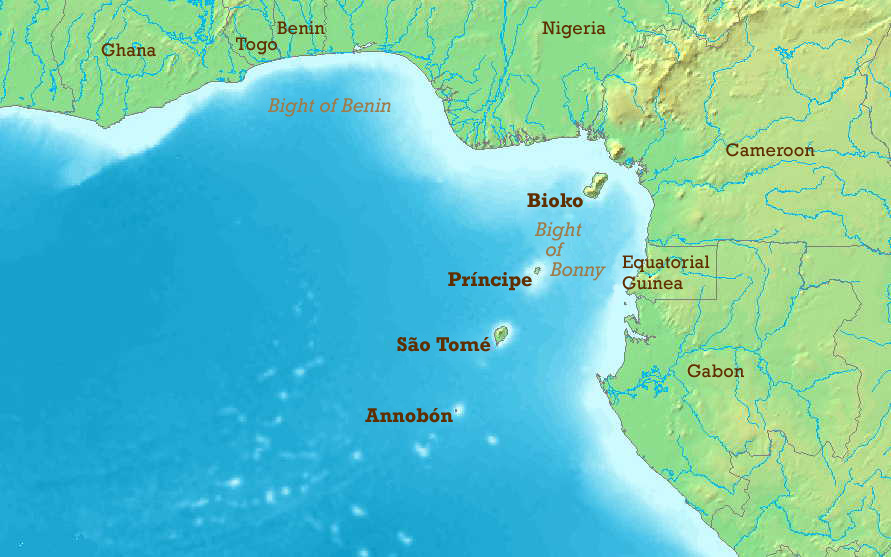
IMB’s latest global piracy report details 132 attacks since the start of 2020, up from 119 incidents in the same period last year. Of the 85 seafarers kidnapped from their vessels and held for ransom, 80 were taken in the Gulf of Guinea – in 14 attacks reported off Nigeria, Benin, Gabon, Equatorial Guinea and Ghana.

In the first nine months of 2020, seafarers reported 134 cases of assault, injury and threats, including 85 crewmembers being kidnapped and 31 held hostage onboard their ships. A total of 112 vessels were boarded and six were fired upon, while 12 reported attempted attacks. Two fishing vessels were hijacked, both in the Gulf of Guinea.

“Crews are facing exceptional pressures due to Covid-19, and the risk of violent piracy or armed robbery is an extra stress,” said Michael Howlett, Director of IMB, whose Piracy Reporting Center (IMB PRC) has responded to reports and shared data since 1991, supporting seafarers and fishers worldwide. “While IMB liaises with authorities swiftly in case of a pirate attack, we encourage all Coastal states and Regional Cooperations to take responsibility for ensuring maritime security within their EEZ to achieve safer seas and secure trade.”

Gulf of Guinea the world’s piracy hotspot

With approximately 95% of global kidnappings reported from within Gulf of Guinea waters, IMB warns that pirate gangs in the area are “well organized and targeting all vessel types over a wide range”.

The furthest attack from shore also involved the most crew kidnapped from a single vessel in 2020. On 17 July 2020, eight pirates armed with machine guns boarded a product tanker underway around 196 nautical miles southwest of Bayelsa, Nigeria. They held all 19 crewmembers hostage, stole ship’s documents and valuable items, and escaped with 13 kidnapped crew. The tanker was left drifting with limited and unqualified navigational and engine crew onboard. A nearby merchant vessel later helped the tanker to sail to a safe port. Regional Authorities were notified and the 13 kidnapped crewmembers were released safely one month later.

A more recent example was on 8 September 2020, when armed pirates attacked a refrigerated cargo ship underway around 33nm south-southwest of Lagos, Nigeria. Two crewmembers were kidnapped, but the rest of the crew managed to retreat into the citadel – one of the industry’s recommended best practices endorsed by IMB. A Nigerian naval team was dispatched, who boarded, conducted a search, and then escorted the ship to a safe anchorage for investigations.

The IMB piracy report includes a special thanks to the Nigerian Authorities, particularly the Nigerian Navy and Nigerian Maritime Administration and Safety Agency NIMASA who “continue to provide timely information, actions and valuable cooperation between Agencies”.

Knife attacks in Singapore Straits

The piracy center recorded 15 attacks to ships underway in the Singapore Straits. While most are considered low level crimes, two crew were threatened, one injured and another taken hostage, indicating a continued risk to the crew. Knives were reported in at least ten of the incidents.

Indonesia brighter

There has been a sharp quarterly decrease in the number of incidents within the Indonesian archipelagic, with four reported in Q3, down from 14 in Q2. These are viewed as low level opportunistic thefts with most reported on anchored vessels.

Call for more reporting

All vessel types in the Caribbean, Central and South America – including Brazil, Colombia, Ecuador, Haiti, Mexico and Peru are being targeted at anchor as well as underway, and during river passages under pilotage. On 26 September 2020, a container vessel was boarded by armed perpetrators during its river passage at Guayaquil. The attackers fired their weapons towards the accommodation and bridge, then opened containers and stole the contents before leaving.

However, as many more cases go unreported, IMB is urging all ship masters and operators to inform, in a timely manner, the 24-hour IMB Piracy Reporting Center of any attacks to their vessels or crew.

Howlett said the IMB PRC has always believed in the power of sharing and exchanging information: “Understanding the true risk in the area is an important step towards improving safety for all seafarers. IMB PRC not only relays reports to appropriate response agencies and broadcasts incident information to ships via GMDSS, but we also use the reported statistics to raise awareness of these crimes and be a catalyst of change.”

Somali piracy remains under control

No incidents of piracy have been reported around Somalia since 2018. In August 2020, pirates freed the last three of the thousands of hostages who have been held captive in the region over the years since ship hijackings peaked in 2011.

Despite this, as Somali pirates are still capable of carrying out further attacks, IMB urges vessels to continue implementing the industry’s best management practices (BMP5), and encourages the continued, stabilising presence of navies the region.

IMB Piracy Reporting Center

Since its founding in 1991, IMB PRC remains a single point of contact to report all crimes of maritime piracy and armed robbery, 24 hours a day. Their prompt forwarding of reports, and liaison with response agencies, broadcasts to shipping via GMDSS Safety Net Services and email alerts to CSOs, all provided free of cost, help the response against piracy and armed robbery and the security of seafarers, globally.

Source: iccwbo.org
NIMASA DG claims Somali pirate involvement in Gulf of Guinea

Over the last decade of reporting on maritime security and piracy, I’ve seen some quite remarkable things. Nothing, however, quite as special as the headlines emerging from the Nigerian press on Monday October 12th.

According to an article in Nigeria’s Ships and Ports, the Director-General, Nigerian Maritime Administration and Safety Agency (NIMASA), Bashir Jamoh, “has raised the alarm that Somali pirates are now active in Nigerian waters and the Gulf of Guinea.”

The website further states that:

A statement by NIMASA spokesman, Philip Kyanet on Sunday, quoted the NIMASA DG as saying that the pirates often navigated through Nigeria’s maritime boundaries, and sometimes came through the land borders.

While I’m used to seeing Western media outlets conflate Somali and West African piracy, using the wrong images to illustrate articles and so forth, this is a remarkable claim.

Setting aside the language issues, the societal and familial/clan issues and so on, I just cannot get over the initial premise that Somali pirates are travelling 7,000km to target shipping, when their own country borders some of the world’s busiest shipping lanes.

What I can believe, however, is  that the financial backers of Somali piracy, illegal arms and human trafficking have somehow made contact with organised criminal groups in West Africa. But that’s not what the article states.

Piracy and maritime crime in the waters of West Africa are an ongoing issue, despite the best efforts of regional naval forces to address it. Suggestions that foreign actors from countries thousands of kilometers away could be involved, however, are really not helpful.

As with all things in life, however, I’ll happily admit I’m wrong when the first Somali pirates are arrested off the Niger Delta…

Troops Rescue 5 Foreign Expatriates Kidnapped by Sea Pirates

By JOHN ENENCHE

Recall that on 9 May 2020 some foreign expatriates onboard MT RIO MITONG and MT DJIBLOHO were kidnapped by unknown militants group in Yellow Island. Acting on credible intelligence a joint team from Forward Operating Base Bonny, Nigerian Navy Ship PATHFINDER and troops of 146 Battalion swiftly combed the creeks in search of the kidnapped victims. After a thorough search and rescue operation, the gallant troops raided 4 identified sea pirates/militants hideout at Ibiakafemo, Idinkiri, Tombie and Ogboma.

The identified camps were subsequently destroyed to deny the pirates freedom of action. Consequently, on the early hours of 6 October 2020, the pirates/militants compelled by the ongoing operation surrendered to the gallant troops and handed over the 5 kidnapped foreign expatriates at Iwofe Waterfront. The 5 expatriates comprising 3 Russians, one Ukranian and one Equatorial Guinean are presently at NNS PATHFINDER medical centre receiving medical attention.

To continue reading, please click here.

Source: prnigeria.com

Is the media guilty of exaggerating West African piracy threat?

By Gary Dixon

West African piracy remains a threat but attacks are not becoming more frequent despite headline-grabbing abduction stories in the media.

That is the view of Dirk Siebels, senior analyst at Danish security consultancy company Risk Intelligence.

To continue reading, please click here.

Source: tradewindsnews.com

EFCC begins probe of eight suspected oil thieves, vessel in Port Harcourt

By Matthew Ogune

The Port Harcourt Zonal Office of the Economic and Financial Crimes Commission (EFCC) has commenced investigation of eight suspected oil thieves and a vessel, Miracle Worker, handed over to it by the Nigerian Navy.

The EFCC spokesperson, Wilson Uwujaren, who disclosed this, yesterday, in Abuja, said that the suspects were handed over to the commission by the Nigerian Navy Forward Operating Base, Bonny, Port Harcourt, Rivers State, after being intercepted for suspected involvement in illegal oil bunkering.

To continue reading, please click here.

Source: guardian.ng

Two oil thieves bag three years jail term in Lagos

A Federal High Court in Lagos has sentenced two oil thieves, Jacob Momodu and Onutu Anthony, to three years imprisonment each.

The convicts were arraigned on a three-count charge bordering on dealing in petroleum product without appropriate license, after they were arrested by officers of the Nigerian Navy and handed over to the Commission for investigation.

To continue reading, please click here.

Source: guardian.ng

CEMLAWS reveals alarming trends of wide spread of piracy incidents in Gulf of Guinea

The Executive Director of the Centre for Maritime Law and Security (CEMLAWS) and a Retired Naval Captain, Dr. Kamal-Deen Ali, has revealed alarming trends in its new report concerning the dark shades of piracy in the Gulf of Guinea, indicating an exponential spread of attacks across the Gulf, where Ghana was not spared.

The retired Naval Captain indicated that “as the month of August came to an end, pirates registered their presence in Ghana’s Exclusive Economic Zone, with an attack on the Ghanaian-flag fishing vessel AP 703 where two foreign crew members were kidnapped.”

To continue reading, please click here.

Source: ghanaweb.com

Why sea piracy is rampant now in Nigeria

By Godfrey Bivbere

THE spate of pirate attacks ​​ in Nigeria’s maritime domain has been attributed to dearth of ships to engage the growing number of unemployed seafarers.

Linked to this is also the problem of lack of sea-time training for the cadets being produced annually from various maritime academies in the country.

To continue reading, please click here.

Source: vanguardngr.com

Nigerian Navy deploys 6 warships, 60 gunboats against pirates, oil thieves

BY Desmond Ejibas

The Nigerian Navy has deployed troops on board six warships, including 60 gunboats, in a special military exercise to tackle pirates, oil smugglers and other criminals in the nation’s waters.

Rear Adm. David Adeniran, Flag Officer Commanding Eastern Naval Command (ENC), Calabar, announced the deployment at the flag-off of the exercise in Onne, Rivers.

To continue reading, please click here.

Source: pmnewsnigeria.com

MDAT-GoG issues alert

This morning (Tuesday 22nd), MDAT-GoG issued an alert that stated a merchant vessel had been approached by a skiff with 8 persons on board, in position 03°5501N / 001°0300W (121 Nm southwest of Accra).

The vessel was able to evade the suspected pirates and any attempted boarding and was later identified as the MT Hafnia Phoenix by Tradewinds. They reported that a ladder had been sighted in the skiff.