Face-to-face with ruthless pirates who rule high seas

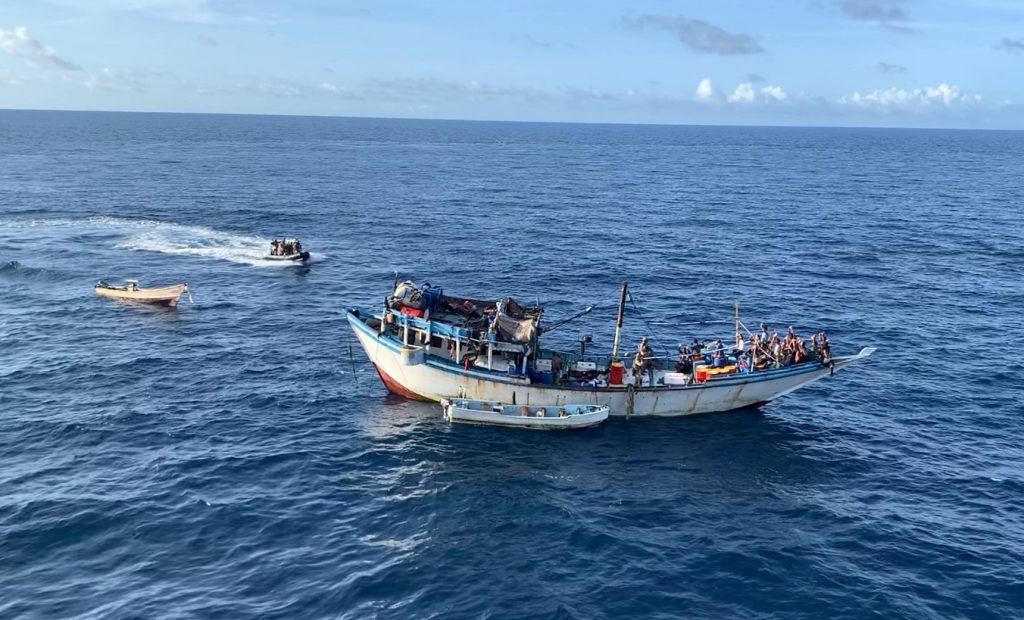
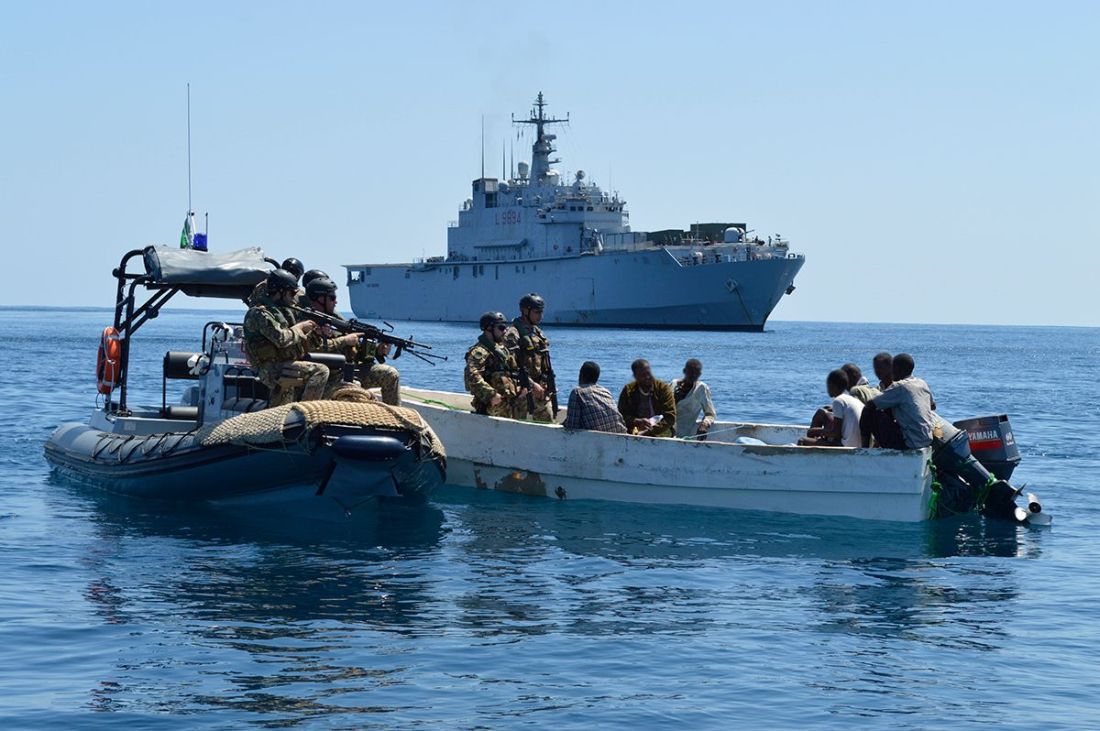
File image of an approach on a dhow

Ishaq Jumbe

In 2010, the Indian Ocean waters were a no go zone for merchant ships. Pirates ruled the waves and often, ships plying the lucrative and historic trade route would find themselves in the wrong hands.

But as the lawlessness went on, one group of pirates found themselves on the wrong end of the gun barrel one night in September 2012. On this day, their seawater-beaten Kalashnikovs met their match and by the time dawn broke, most of them lay dead, with others scattered in the high seas.

To continue reading, please click here.

Source: standardmedia.co.ke

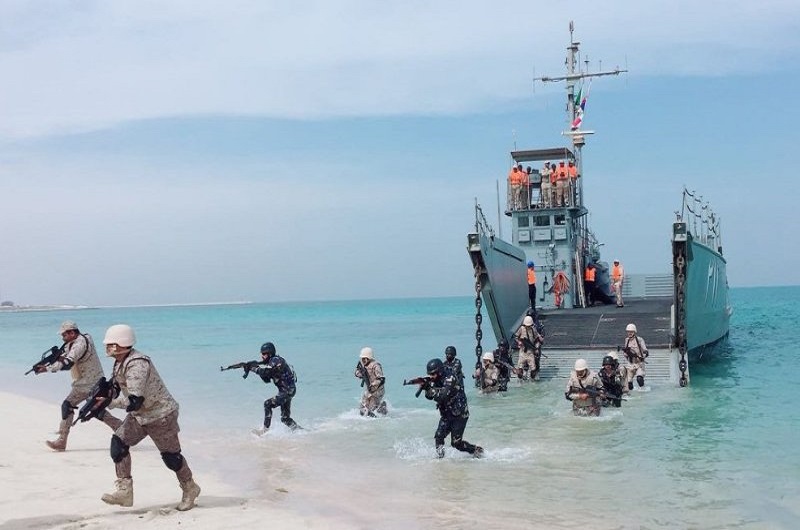
Iranian Naval Flotilla Begins Overseas Mission

Iranian Navy ships in Velayat-90 military exercise, by Mohammad Sadegh Heydari via Wikipedia

TEHRAN (Tasnim) – The Iranian Navy’s 64th flotilla departed the country’s southern coast on Tuesday for a mission in international waters.

The Iranian “intelligence-combat” flotilla includes a destroyer, dubbed Alvand, and the Bandar Abbas logistical warship.

The flotilla set sail for the high seas immediately after the return of the 63rd naval flotilla, which traveled 15,000 nautical miles in international waters during a 100-day mission.

To continue reading, please click here.

Source: tasnimnews.com


EU-funded exercise to boost maritime security cooperation

Through the MASE programme funded by the European Union, the Indian Ocean Commission organised the first MASE POLMAR 2019 wide-ranging regional exercise from 16 to 20 October in Madagascar.

The event brought together representatives of the MASE agreements’ signatories countries: Comoros, Djibouti, France, Reunion Island, Madagascar, Mauritius, Seychelles and Somalia as an observer, International liaison officers and watch-standers from the Regional Maritime Information Fusion Centre and the Regional Coordination of Operation Centre, as well as a representative of the European Navy – EUNAVFOR.

To continue reading, please click here.

Source: neweurope.eu

Operation ATALANTA Assists Somali Navy Personnel Stranded off the Coast of Cadale

EU NAVFOR Somalia Operation ATALANTA's ESPS Canarias towed the vessel belonging to Somali Navy personnel back to the Somali shore.

On the morning of 20 October 2019, EU NAVFOR Somalia Operation ATALANTA received a request to assist a vessel belonging to the Somali Navy in distress some 60 km north of Cadale. The vessel had reportedly experienced mechanical difficulties and the crew was concerned for their safety.

EU NAVFOR Somalia launched a maritime patrol reconnaissance aircraft (MPRA) to determine the location of the Somali Naval vessel in distress. After contact and coordination with the Somali Navy Headquarters and the Mogadishu Port Police, Operation ATALANTA decided to send its closest vessel to assist the Somali Navy personnel. The Spanish frigate ESPS Canarias had been on its way to make a scheduled port visit nearby when the distress call altered the mission.

The Canarias’ boarding and medical teams reached the Somali vessel early Monday morning and provided the sailors with food, water and technical assistance. After The seven Somali Navy sailors were brought to safety they thanked EU NAVFOR Somalia for their efforts.

“Our team has headed the ESPS Canarias with great tact and efficiency upon reacting on this emergency request,” said Operation ATALANTA Commander Major-General Antonio Planells Palau.

“Operation ATALANTA remains committed to maintaining security in the waters off the Somali coast and supporting other actors with shared objectives in the region. We are proud to have assisted these Somali Navy sailors to safety. Well done everyone.”

EU NAVFOR Somalia operates in an Area of Operations that covers the Southern Red Sea, the Gulf of Aden and a large part of the Indian Western Ocean.

In addition to deterring piracy and contributing to the free flow of commerce, Operation ATALANTA’s mandate includes monitoring of fishing activity off the coast of Somalia, protecting vessels of the World Food Programme (WFP) and African Union Mission in Somalia (AMISOM) and supporting other EU missions and international organisations working to strengthen maritime security and capacity in the region.

Source: eunavfor.eu

Japan notifies US of plan to send defence forces to Middle East

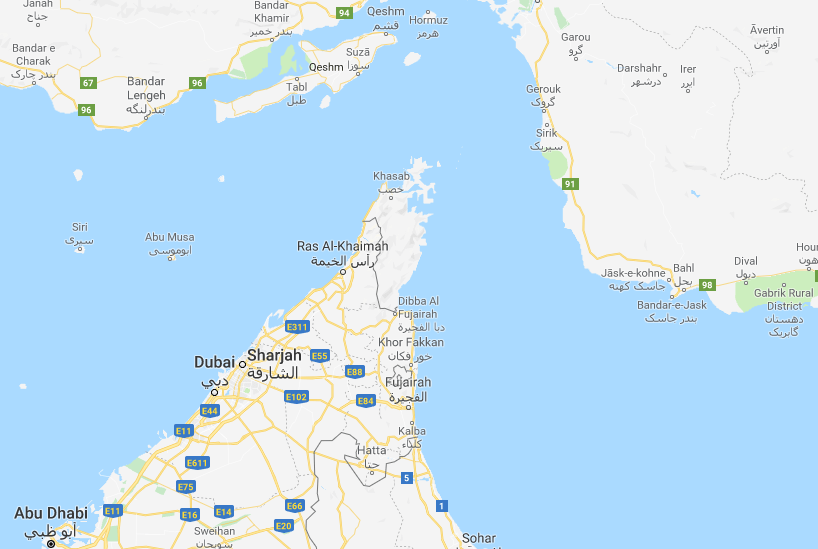
Persian Gulf/SoH

TOKYO — Japanese Foreign Minister Toshimitsu Motegi on Tuesday informed the United States’ government that Tokyo plans to send defence forces to help safeguard waterways in the Middle East without joining a US-led maritime security coalition, Japanese officials said.

During phone talks between Motegi and US Secretary of State Mike Pompeo, the two also pledged close co-operation on Middle East issues so as to ease tensions, which remain high amid a standoff between the US and Iran.

To continue reading, please click here.

Source: vietnamnews.vn


Pakistan Navy joins Trans Regional Maritime Network

Pakistan Navy

Pakistan Navy joined 32-member Trans Regional Maritime Network (T-RMN), based in Italy. Chief of the Naval Staff Admiral Zafar Mahmood Abbasi formally signed the ‘Note of Accession’ for joining the organization at Naval Headquarters, Islamabad. Ambassador of the Italian Republic Stefano Pontecorvo was also present at the occasion.

Trans Regional Maritime Network (T-RMN) was established in 2008 to facilitate exchange of maritime information at Trans Regional level amongst the participating nations. By joining T-RMN community, Pakistan Navy will have access to maritime related information which will augment the comprehensive maritime picture already being maintained at Joint Maritime Information Coordination Center (JIMCC) of Pakistan Navy at Karachi.

To continue reading, please click here.

Source: brecorder.com

Maritime piracy incidents down in Q3, yet Gulf of Guinea remains a hot spot

The International Chamber of Commerce International Maritime Bureau’s (IMB) report for the third quarter of 2019 demonstrates fewer incidents of piracy and armed robbery against ships than the first nine months of 2018.

119 incidents of Piracy and Armed Robbery Against Ships have been reported to the IMB Piracy Reporting Centre (IMB PRC) in 2019, compared to 156 incidents for the same period in 2018. Overall, the 2019 incidents include 95 vessels boarded, 10 vessels fired upon, 10 attempted attacks, and four vessels hijacked. The number of crew taken hostage through the first nine months has declined from 112 in 2018 to 49 in 2019.

While the overall number of incidents has dropped, incidents involving guns and knives remain consistent. There have been 24 knife-related and 35 gun-related incidents reported in 2019, compared to 25 and 37 for the first nine months of 2018. These statistics confirm IMB’s concerns over continued threats to the safety and security of seafarers.

Gulf of Guinea

The Gulf of Guinea remains a high risk area  for piracy and armed robbery. The region accounts for 86% of crew taken hostage and nearly 82% of crew kidnappings globally.

In July a general cargo vessel was hijacked approximately 120nm SW from Brass. Ten crew members were kidnapped from the vessel and released four weeks later. In August a bulk carrier and a general cargo vessel were boarded within hours of each other at Douala anchorage, Cameroon and a total of seventeen crew were kidnapped from the vessels. Within six weeks all kidnapped crew were released.  This incident demonstrates the range of piracy activity in the Gulf of Guinea and that all types of ships are vulnerable to attack. Lagos recorded 11 incidents in 2019, the highest number for any port.

Lagos recorded 11 incidents in 2019 – the highest number of any port in the world. Despite reporting more attacks than any other country, Nigeria has reduced Q3 piracy attacks from 41 in 2018 to 29 in 2019.

“Although incidents are down, the Gulf of Guinea continues to be a concern for piracy and armed robbery-related activities with kidnappings of crew members increasing in both scale and frequency,” said Pottengal Mukundan, Director, ICC IMB. “It is important that shipmasters and owners continue to report all actual, attempted, and suspected incidents to ensure that an accurate picture of these attacks emerge and  action is taken against these criminals before the incidents further escalate.”

Continued improvement in Indonesia

Meanwhile, Indonesia reported a decline in overall piracy related incidents with 20 actual and attempted attacks for the first nine months of 2019. Over the past five years, Indonesia has gradually reduced its share of piracy related incidents. As recent as 2015, Indonesia reported 86 actual and attempted piracy incidents through Q3. Indonesia’s impressive gains can be attributed to continued information sharing between the Indonesian Marine Police and the IMB PRC.

No incidents in Somalia, but threats remain

Meanwhile, Somalia has no piracy-related incidents recorded for the first nine months of 2019. Although no incidents have been reported, Somali pirates continue to possess the capacity to carry out attacks in the Somali basin and wider Indian Ocean. As a result, the IMB PRC advises ship owners to remain cautious when transitting these waters.

Global anti‐piracy support

Since 1991 the IMB PRC’s 24-hour manned centre, has provided the maritime industry,  governments and response agencies with timely and transparent data on piracy and armed  robbery incidents – received directly from the Master  of the vessel or its owners.

The  IMB  PRC’s  prompt  forwarding  of  reports  and  liaison  with  response  agencies,  its  broadcasts to shipping via Global Maritime Distress and Safety System (GMDSS) Safety Net  Services and email alerts to Company Security Officers, all provided free of cost, has helped  the response against piracy and armed robbery and the security of seafarers, globally.

IMB strongly urges all shipmasters and owners to report all actual, attempted and suspected  piracy and armed robbery incidents to the IMB PRC globally. This first step in the response  chain is vital to ensuring that adequate resources are allocated by authorities to tackle piracy.  Transparent statistics from an independent, non- political, international organization can act  as a catalyst to achieve this goal.

Source: iccwbo.org

High Court: “Pirate Attack” was Attempted Fraud

In a ruling issued Monday, the High Court of London ruled that the tanker Brillante Virtuoso was irreparably damaged not by pirates, as her owner and banker claimed, but by a group of conspirators. Justice Nigel Teare found that the owner’s claims of piracy were improbable, and he reached the “firm conclusion” that the attackers intended to destroy the vessel, that they had the assistance of the master and chief engineer as they went about the task, and that the owner orchestrated the scheme in order to defraud his insurer. 

On July 6, 2011, Brillante Virtuoso was drifting off Aden, awaiting a team of unarmed security contractors before transiting Bab el-Mandeb. A small boat approached carrying seven masked, armed men. The men informed the crew that they were “security,” and they came aboard with the master’s permission. (The disputants in the case agreed that the boarding party’s members were likely current or former Yemeni Coast Guard or Navy servicemenbers.) They ordered the crew to the day room, and escorted the master to the bridge and the chief engineer to the engine room. 

To continue reading, please click here.

Source: maritime-executive.com

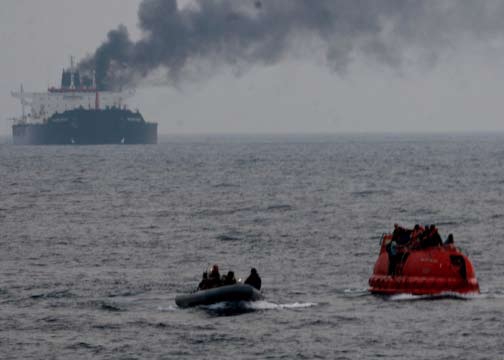
Sailors from USS Philippine Sea rescue the crew of the Brillante Virtuoso

Safety in the Red Sea corridor can’t be taken for granted

by Omar S Mahmood

The Red Sea and the adjacent Gulf of Aden face many potential threats to free movement, ranging from the presence of non-state armed groups (such as the Houthis in Yemen) and organised crime outfits, to ongoing territorial disputes and environmental concerns. Yet maritime traffic has largely gone undisrupted in recent years.

The hitherto safe passageway of the Red Sea should not be taken for granted though, and the area has attracted significant geopolitical interest. New initiatives concerned with the shared maritime space are being conceived, including a Red Sea Forum championed by Saudi Arabia and Egypt. The African Union (AU) and Intergovernmental Authority on Development (IGAD) are also taking a greater interest. All these actors aim to address a perceived gap in management of the Red Sea space.

To continue reading, please click here.

Source: issafrica.org

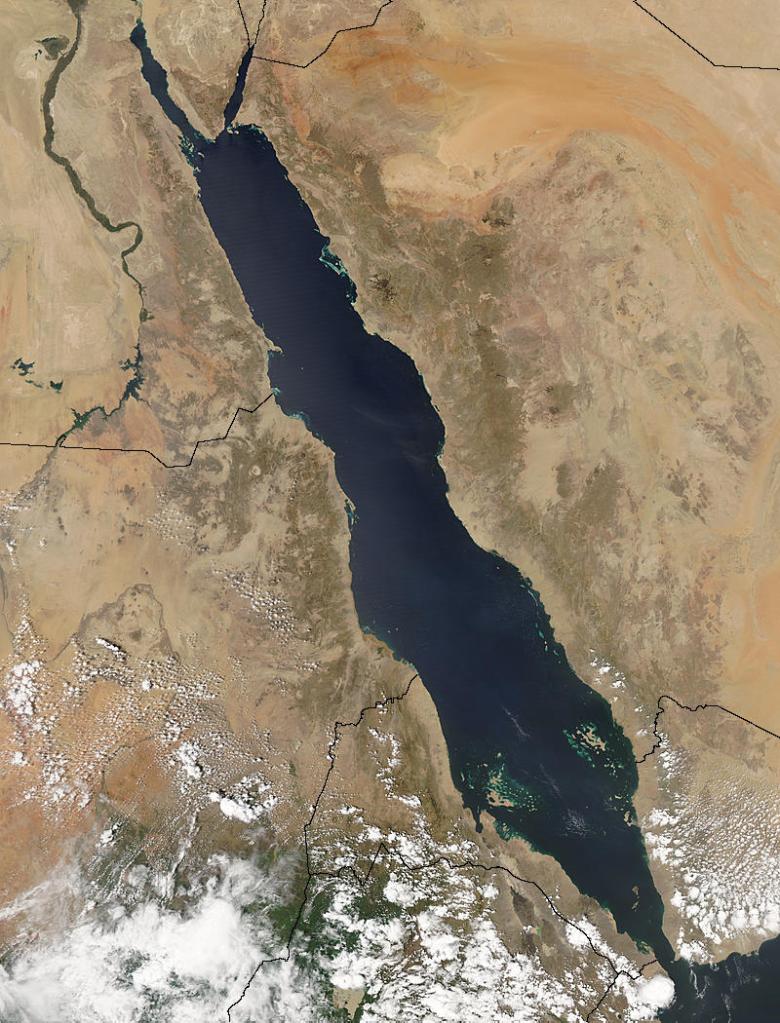
Red Sea, via NASA
Red Sea (NASA)

EU NAVFOR Somalia MPRAs Fly In Support of CTF-151 Focused Operation

This week, EU NAVFOR Somalia Operation ATALANTA’s German Maritime Patrol Reconnaissance Aircraft supported a multi-national counter-piracy operation led by Combined Task Force 151 (CTF 151) in the Gulf of Aden.

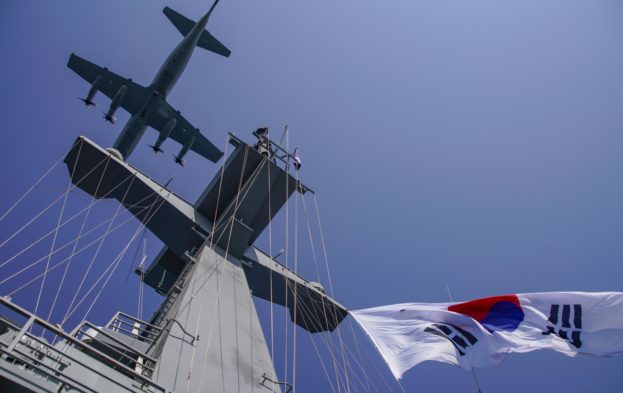
The assets involved in Focused Operation “King Crab” were from nine different nations, and included the Republic of Korea Ship (ROKS) Kang Gam Chan; the Japanese Ship (JS) Sazanami and the Royal Navy of Oman Vessel (RNOV) Al-Dhafreh in support.

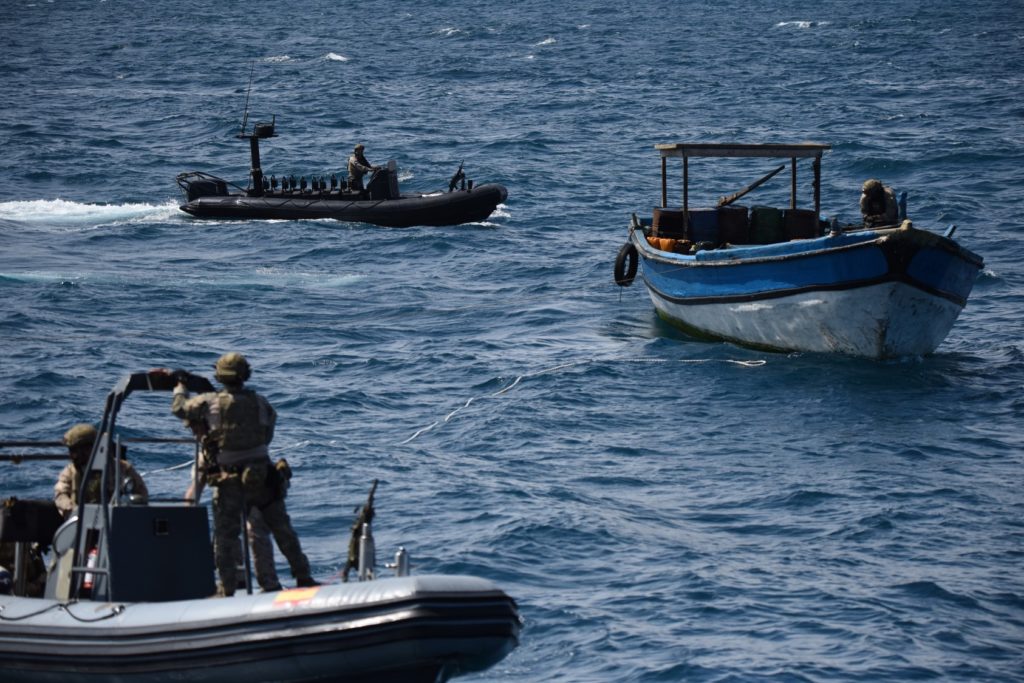
The operation was a concentrated effort that spanned over four days and saw the counter-piracy task force and its partners undertake increased counter-piracy patrols and maritime engagement visits to merchant vessels and local dhows. The participating assets also partook in joint training and boarding exercises.

The exercises also reinforced the importance of information-sharing amongst the wide combination of counter-piracy partners.

“Ultimately we all have the same goal of promoting security and stability in the region to legitimate seafarers by defeating piracy and criminal attacks,” said Commander CTF 151, Rear Admiral Byeong-Ju Yu, ROKN. “Focused Operations such as King Crab greatly increase our ability to do this.”

Operation ATALANTA’s MPRAs have now returned to regular operations, patrolling the Indian Ocean, Gulf of Aden, Red Sea and Arabian Sea alongside other EU NAVFOR naval Assets.

Source: eunavfor.eu