Saudi Arabia identifies tanker attacked in Gulf of Aden

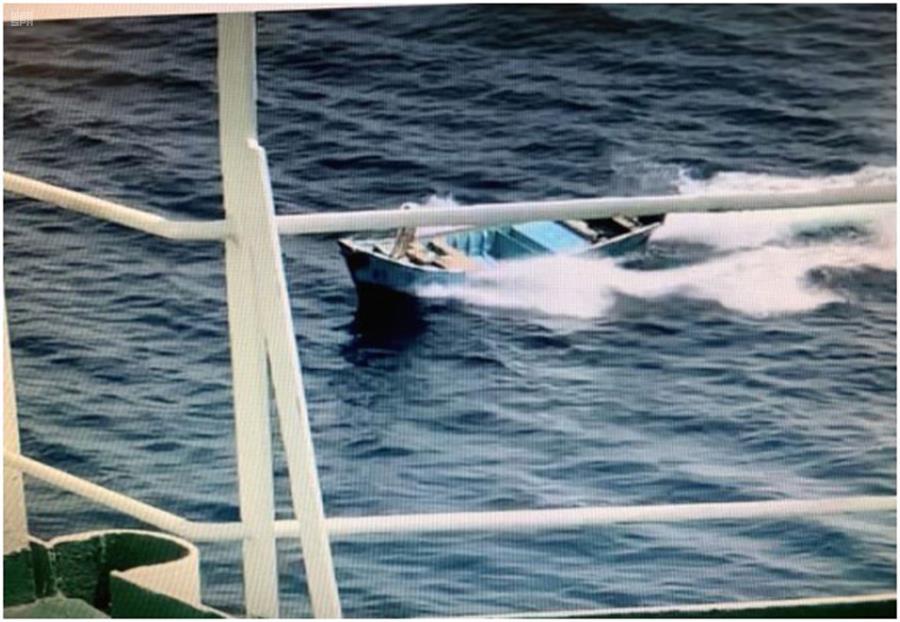
The Joint Forces Command of the Coalition to Restore Legitimacy in Yemen: Thwarting a Terrorist Attack Targeting an Oil Tanker in the Arabian Sea. Image via Saudi Press Agency

Jeremy Binnie, London – Jane’s Defence Weekly

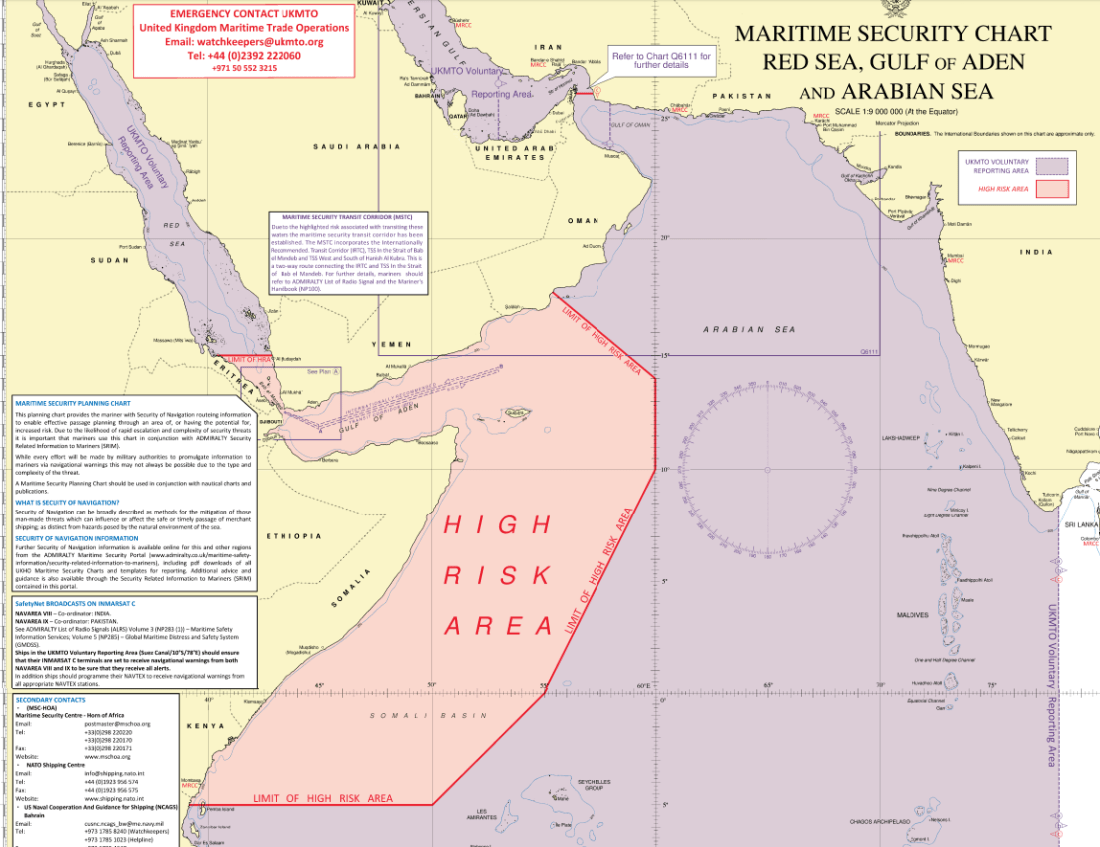
Saudi Arabia’s ambassador to the United Nations has identified the tanker that was attacked with a remotely controlled boat carrying explosives in the Gulf of Aden on 3 March as Gladiolus (IMO: 9169548), a Saudi-flagged vessel.

At the time, Colonel Turki al-Maliki, the spokesman for the Saudi-led coalition fighting the Ansar Allah (Houthi) group in Yemen, said a tanker that was heading towards Aden was attacked 90 n miles southeast of the Yemeni coastal town of Nishtun by four boats, at least one of which was unmanned and carrying explosives.

Col Maliki did not say how the attack was thwarted or identify the perpetrators but the Saudi Press Agency (SPA) released photographs showing what appeared to be an armed man on a large vessel observing approaching skiffs, one of which then swerved away to reveal that no one was on board.

To continue reading, please click here.

Source: janes.com

HMAS Toowoomba, FS Guépratte exercise in Gulf of Aden

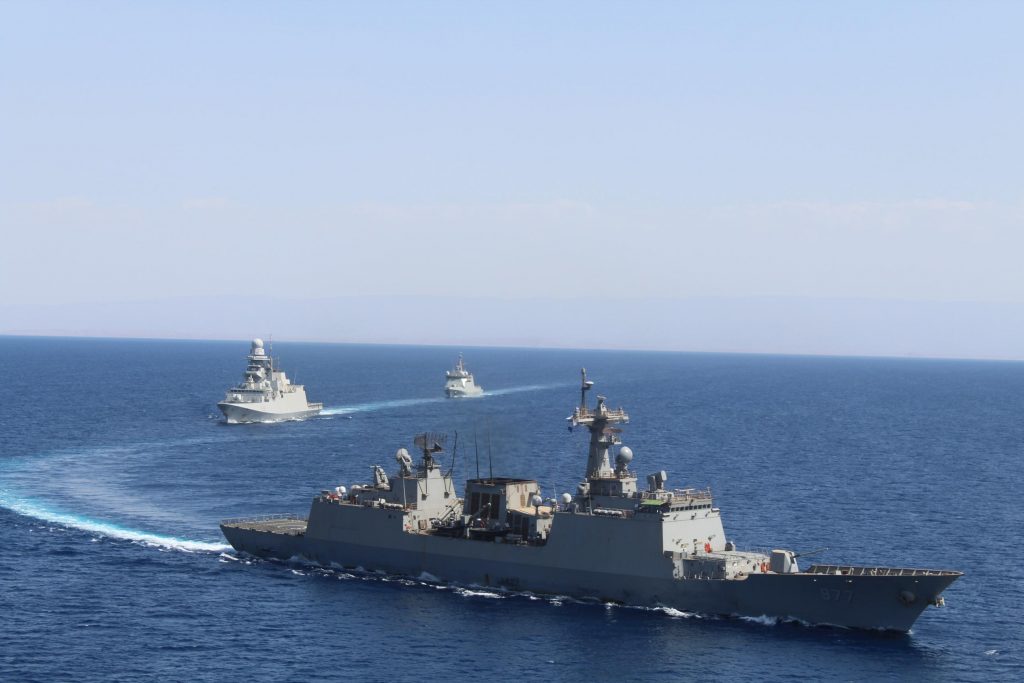
HMAS Toowoomba, via Wikipedia

By: Sandy Milne

HMAS Toowoomba has exercised with French frigate FS Guépratte in the Gulf of Aden as part of the Australian warship’s support to Combined Task Force 150.

The CTF 150 mission is to stabilise the region by disrupting piracy operations, as well as seeking to counter weapon and narcotic smugglers. During the exercise, Toowoomba and Guépratte conducted ship handling training including Officer of the Watch manoeuvres and replenishment at sea (RAS) approaches, which form core components of a CTF deployment.

To continue reading, please click here.

Source: defenceconnect.com.au

India: Customs cracks down on fishing boats with Chinese tracking devices

By Toby Antony

KOCHI: To ensure the security of the coastline and prevent smuggling activities through the sea route, the Customs has launched a crackdown on fishing vessels operating from Kerala shores using China-made Automatic Identification System-tracking devices which are mandatory for vessels now.The decision was taken after multiple agencies raised concerns regarding security issues following fishing boats fitted with the Chinese AIS were found on the Kerala coast.

Recently, Customs Commissioner Sumit Kumar directed its marine units to intensify checking on fishing vessels which are not using the standard AIS recommended by the government.The marine units have already tracked down 18 such vessels operating from various harbours in Kerala.

To continue reading, please click here.

Source: newindianexpress.com

Covid-19 and the threat to maritime and port security

As the UK becomes the latest country to adopt a policy of restricted movement for its citizens, following (at least two metres behind) France, Spain and Italy in Europe, it’s important that we do not lose sight of the risks this presents.

Criminals and non-state threat actors do not necessarily follow health warnings and lockdown measures. If anything, they thrive in an environment like that. One example would be during WWII in the UK, where the German bombing of London turned the city into a criminals’ playground. During the four months of the London Blitz from September to December 1941, a total of 4,584 cases of looting were heard by the Old Bailey court, for example.

Organised crime and the black market flourished, and we should expect something similar to occur in maritime crime hot spots and High Risk Areas.

Over the weekend, seven crew were kidnapped in the Gulf of Guinea, which underlines the risk. In the coming weeks, we should expect further incidents and, should food and energy supply lines be further affected by the pandemic, port and terminal security should be stepped up to mitigate any risk at ports from criminal gangs. It is likely that oil theft will increase in the Delta, although the Nigerian Navy is already making efforts to mitigate this.

In the Indian Ocean, the risks presented by Somali pirates remain low, but still present. An increase in Covid-19 cases in the country could potentially lead to further economic issues which will then drive criminals on to the water to look for ‘easy’ money. Combine this with the current issues being experienced by maritime security companies trying to embark armed security teams and it’s easy to see just how badly wrong things could go.

Organised criminal gangs will be aware that regional and international naval forces will have difficulties with crew rotations, bunkering etc. and may choose to exploit the situation by increasing smuggling operations in the Arabian Sea.

In Yemen, Houthi rebels, already making their presence felt in recent weeks with SVBIEDs (boat bombs), may attempt to disrupt crucial shipping lanes in order to focus world attention on their plight.

It’s a long list of maybes. But mitigation and prevention should be a paramount concern for anyone involved in maritime security.

Finally, thank you all for continuing to support the blog. We’ve had a sharp increase in readers from around the world, and I appreciate your support, even if I’m not in a position to earn any money from this (and that would be rather useful at the moment, as I’ve also lost earnings due to the virus).

Keep well, keep apart and stay safe.

In a first, India, France conduct joint patrols from Reunion Island

File image of US Navy P-8A Poseidon

Dinakar Peri

India and France, For the first time, have conducted joint patrols from the Reunion Island, signalling New Delhi’s intent to engage with friendly foreign partners in expanding its footprint in the Indian Ocean, focusing on the stretch between the East African coastline and the Malacca straits.

India has so far carried out Coordinated Patrols (CORPAT) only with maritime neighbours and had rejected a similar offer by the US.

To continue reading, please click here.

Source: thehindu.com

Saudi coalition destroys Houthi SVBIEDs

The Joint Forces Command of the Coalition to Restore Legitimacy in Yemen: Thwarting a Terrorist Attack Targeting an Oil Tanker in the Arabian Sea. Image via Saudi Press Agency

The Joint Forces Command of the Coalition to Restore Legitimacy in Yemen: Interception and Destruction of (2) Remote-Controlled Exploding Boats Launched by the Terrorist Iran-backed Houthi militia from (Hodeida) Governorate

Riyadh, March 17, 2020, SPA — Statement by the Official Spokesman of the Coalition to Restore Legitimacy in Yemen COL Turki Al-Malki

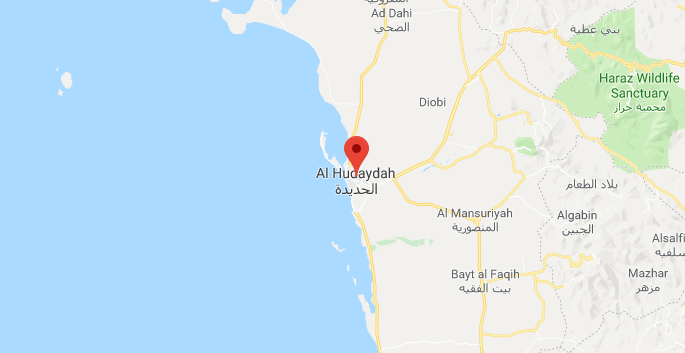
“This morning, Tuesday 17 March 2020, Coalition Naval forces detected an attempt by the terrorist Iran-backed Houthi militia to conduct an imminent hostile, terrorist act in Southern Red Sea using (2) R/C exploding boats launched from Hodeida governorate.
The two boats, representing a threat to regional and international security as well as SLOCs and international trade in Southern Red Sea and Bab-el-Mandeb strait, were totaled and destroyed.

To continue reading, please click here.

Source: spa.gov.sa

IMO: Tackling COVID-19 – a voyage together

IMO Secretary-General stresses vital need to maintain commerce by sea and protect seafarers’ welfare in face of coronavirus shut down.

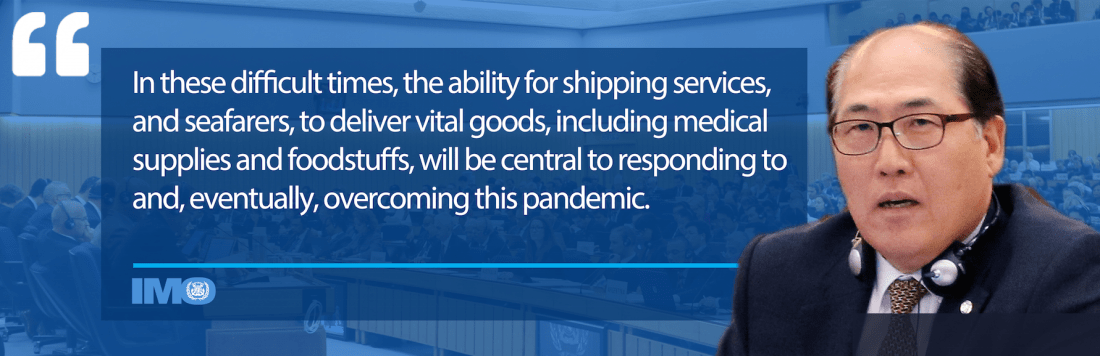
IMO Secretary-General Kitack Lim has issued the following statement addressing the effect of the coronavirus pandemic on the shipping industry and the global supply chain.

“The spread of the coronavirus has placed the entire world in an unprecedented situation. To slow the spread of the disease and mitigate its impacts, travel is being curtailed and borders are being closed. Transport hubs are being affected. Ports are being closed and ships denied entry.

In these difficult times, the ability for shipping services and seafarers to deliver vital goods, including medical supplies and foodstuffs, will be central to responding to, and eventually overcoming, this pandemic.

It is, therefore, crucially important that the flow of commerce by sea should not be unnecessarily disrupted. At the same time, the safety of life at sea and protection of the marine environment must also remain paramount.

One of the goals of the IMO, as stated in its Convention, is to ensure availability of shipping services to the commerce of the world, for the benefit of humanity. I urge all IMO Member States to bear this in mind when framing their policy decisions with regard to the coronavirus. Defeating the virus must be the first priority, but global trade, in a safe, secure and environmentally friendly manner must be able to continue, too.

We must also remember the hundreds of thousands of seafarers on ships. They are, unwittingly, on the front line of this global calamity. Their professionalism ensures that the goods we all need are delivered – safely and with minimal impact on our precious environment. These are people, usually far from home and family. Their own health and welfare is as important as that of anyone else.

Again, I urge a practical and pragmatic approach, in these unusual times, to issues like crew changeovers, resupply, repairs, survey and certification and licensing of seafarers.

Together with our industry partners and colleagues in the World Health Organization, IMO has been developing and issuing practical advice and guidance on a variety of technical and operational matters related to the coronavirus. You can find this on our website, and we will be updating this as appropriate as the situation develops.

I will personally be initiating a series of meetings and consultations with leaders from shipping, ports and other key related sectors so that we can all better understand the issues being faced and develop sensible, practical and unified solutions.

I have spoken many times of our “voyage together”. Never has the spirit of those words been more important than it is now.”

Source: imo.org

Arabs Push Yemen’s Houthis to Allow UN to Assess Oil Tanker

Six Arab countries are urging the UN Security Council to exercise “maximum efforts” to persuade Yemen´s Houthi militias to allow the United Nations to inspect a tanker moored in the Red Sea while loaded with over a million barrels to prevent “widespread environmental damage, a humanitarian disaster, and the disruption of maritime commerce.”

In a letter to the council circulated Thursday, they warned that in the event of an explosion or leak “the possibility of a spill of 181 million liters of oil in the Red Sea would be four times worse than the oil disaster of the Exxon Valdez Exxon, which took place in Alaska in 1989.”

To continue reading, please click here.

Source: aawsat.com

Yemen security forces seize weapons onboard UAE aid ship

Yemeni security services in Socotra have seized an Emirati humanitarian ship carrying weapons and armoured vehicles, local sources said.

According to the sources, the “aid” ship belonged to the Khalifa Foundation for Humanitarian Affairs which is run by the UAE delegate in Socotra, Brigadier Khalfan Al-Mazroui.

To continue reading, please click here.

Source: middleeastmonitor.com

Somalia set to join the list of port states

Somalia is set to join the list of port States for the first time after it completed development of Somali shipping code. The development of the code will enable the country to discharge its responsibilities as flag, port and coastal state.

Maritime development in Somalia announced the completion of the shipping code early this week after six years of work, supported by International Maritime Organisation (IMO) and the United Nations Assistance Mission in Somalia (UNSOM).

To continue reading, please click here.

Source: businessdailyafrica.com