Three sailors kidnapped by pirates off Gabon released

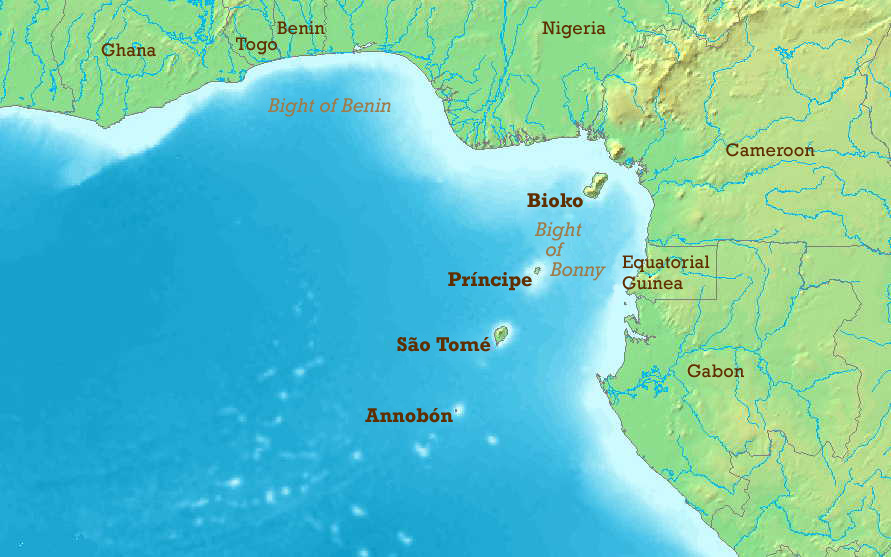
Three sailors, two Moroccans and an Equatorial Guinean, abducted nearly two months ago in the attack on their merchant ship off Gabon in the Gulf of Guinea, the epicentre of global maritime piracy, have been released in Nigeria, Equatorial Guinea announced.

On 21 March, an Equatorial Guinean-flagged merchant ship, the Elobey 6, was attacked by unidentified pirates off the Gabonese port of Port-Gentil. The three sailors had been kidnapped.

To continue reading (in original French language), please click here.

Source: voaafrique.com

Nigerian Navy Thwarts Hijacking of Chinese Fishing Vessel

The Chinese fishing trawler Hailufeng 11, licensed to fish in Côte d’Ivoire, was taken by pirates on Thursday, May 14 in the Ivorian exclusive economic zone with 18 crewmembers aboard – eight Chinese, seven Ivorian and three Ghanaian. Through rapid and engaged cooperation among a number of different African states and institutions, the vessel was tracked, and the Nigerian Navy was able to interdict it 140 nautical miles south of the Lagos Fairway Buoy at about 2210 local time on the night of May 16.

When approached, the pirates refused to stop, and the Nigerian Navy’s Special Boat Service, embarked on the NNS Nguru, performed an opposed boarding while underway at 9 knots. The dramatic rescue was hugely successful, as all 18 hostages were recovered, 10 pirates were arrested, and the vessel was safely escorted into Lagos.

To continue reading, please click here.

Source: maritime-executive.com

Somali pirates attack UK-flagged tanker in Gulf of Aden

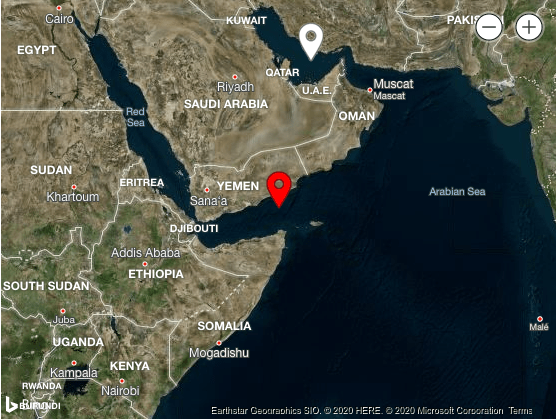
UKMTO and media outlets report that on May 17th, the UK-flagged Stolt Apal was attacked by suspected Somali pirates in two skiffs, in the IRTC, Gulf of Aden.

The initial UKMTO report stated that at approximately 1230UTC a MV was attacked in position 1343N 05037.4E. Follow up media reports added that Stolt-Nielsen had confirmed the incident, reporting that two skiffs with six persons on board had approached the ship at high speed.

The tanker’s armed security team fired warning shots, which the pirates ignored and fired on the vessel. The ship’s security team returned fire, apparently disabling one of the skiffs which ended the attack.

The Stolt Apal’s bridge sustained minor gunshot damage but the vessel was otherwise unharmed and no injuries were reported.

The attack comes after a long period of calm in the Indian Ocean as far as piracy is concerned. However, analysts have long warned that the economic and social conditions for piracy remain in Somalia, and these could potentially be exarcerbated  by the impact of the coronavirus both ashore and at sea in terms of maritime security provision.

It is imperative that the shipping industry avoids becoming complacent and continues to follow BMP 5 measures while transiting the region.

Iranian tankers head to Venezuela as US warships deploy to Caribbean

BEIRUT, LEBANON (12:00 A.M.) – At least five Iranian fuel tankers are on the way to Venezuela to help the South American nation with their fuel crisis.

According to reports, the first Iranian tanker, Fortune, has already entered Atlantic waters while the last tanker, Clavel, crossed the Suez Canal and entered the Mediterranean Sea. These shipments mark one of the first times in recent memory that Iran has sent such a large amount of fuel to Venezuela.

To continue reading, please click here.

Source: almasdarnews.com

Pirates Still Make No Demands Regarding Russians Kidnapped In Gulf Of Guinea – Moscow

MOSCOW (UrduPoint News / Sputnik – 15th May, 2020) No demands have yet been heard from pirates that are believed to have kidnapped several Russian nationals in the Gulf of Guinea, Russian Foreign Ministry spokeswoman Maria Zakharova said on Thursday.

“Until now, the pirates have not got in touch and have not put forward any requirements. The Russian embassy in Cameroon is actively working with the authorities of Equatorial Guinea and the shipowner company to help establish the whereabouts of the abducted Russian citizens and secure their speedy release.

To continue reading, please click here.

Source: urdupoint.com

U.S. Maritime Stakeholders Launch Cyber Threat Clearinghouse

A group of American seaports and maritime stakeholders have decided to address cybersecurity threats by launching a new non-profit, the Maritime Transportation System Information Sharing and Analysis Center (MTS-ISAC).

The new organization’s objective is to promote cybersecurity information sharing throughout the maritime community. A group of leaders from seaports, shipowners and terminal operators recognized the need to improve their own cybersecurity resiliency, and since resources are limited, they realized the best approach was to work with their peers to identify, protect against, and detect cyber threats. Information sharing and analysis efforts will focus on threats to both information technology (IT) and operational technology (OT) systems, which stakeholders can use to prevent or minimize potential cyber incidents.

To continue reading, please click here.

Source: maritime-executive.com

Iran reports failed cyber-attack on Strait of Hormuz port

Iranian officials said hackers infiltrated and damaged a small number of computers at the port of Shahid Rajaei in the city of Bandar Abbas.

By

Iranian officials said on Sunday that hackers damaged a small number of computers in a failed cyber-attack against the port of Bandar Abbas, the country’s largest port in the Strait of Hormuz.

Details about the cyber-attack’s nature remain unknown.

To continue reading, please click here.

Source: zdnet.com

ESSCom chief: Intelligence sharing helps tackle kidnap threats

The Malaysia-Philippines’ co-operation contributes in efforts to tackle cross-border crime threats such as the kidnap for ransom (KFR) by the Abu Sayyaf Group and its network from southern Philippines on the east coast waters of Sabah, Malaysia.

Eastern Sabah Security Command (ESSCom) commander Datuk Hazani Ghazali said sharing of intelligence information with the Philippines enabled monitoring of KFR elements for interception at sea.

To continue reading, please click here.

Source: malaymail.com

Two Kidnapped Off Equatorial Guinea

Two crewmembers have been kidnapped from a general cargo vessel off Equatorial Guinea in the Gulf of Guinea, according to security company Dryad Global.

The incident occurred two nautical miles from Malabo on May 9. The pirates reportedly used ladders to board the Rio Mitong from a speedboat. A Russian and a Ukrainian are believed to have been kidnapped.

To continue reading, please click here.

Source: maritime-executive.com

The day the pirates came

For Sudeep Choudhury, work on merchant ships promised adventure and a better life.

But a voyage on an oil tanker in West Africa, in dangerous seas far from home, would turn the young graduate’s life upside down.

His fate would come to depend on a band of drug-fuelled jungle pirates – and the whims of a mysterious figure called The King.

The MT Apecus dropped anchor off Nigeria’s Bonny Island shortly after sunrise. Sudeep Choudhury was at the end of a draining shift on deck. Looking towards land, he could make out dozens of other ships. On the shoreline beyond them, a column of white oil storage tanks rose out of the ground like giants.

He had breakfast and then made two phone calls. One to his parents – he knew they worried about him, their only child – and one to his fiancee, Bhagyashree. He told her that everything was going to plan and that he would call her again later that day. He then clambered into bed for a sleep.

It was 19 April, 2019. The small, ageing oil tanker and its crew of 15 had spent two days sailing south from the port of Lagos to the Niger Delta, where oil was discovered in the 1950s by Dutch and British businessmen seeking a swift fortune. Although he knew that vicious pirates roamed the labyrinthine wetlands and mangroves of the delta, Sudeep felt safe that tropical South Atlantic morning. Nigerian navy boats were patrolling and the Apecus was moored just outside Bonny, seven nautical miles from land, waiting for permission to enter port.

To continue reading, please click here.

Source: bbc.co.uk