MOFA Japan, MPA & ReCAAP ISC Collaborate to Combat Piracy

Ministry of Foreign Affairs of Japan and Maritime and Port Authority of
Singapore, in cooperation with ReCAAP Information Sharing Centre, Join
Efforts to Build Region’s Capabilities in Combating Piracy and Sea Robbery
The Ministry of Foreign Affairs of Japan (MOFA Japan) and the Maritime and Port
Authority of Singapore (MPA), in cooperation with the ReCAAP Information Sharing
Centre (ReCAAP ISC), jointly organised the 3rd Capacity Building Executive
Programme (CBEP) in Singapore. The one-week programme begins today, and will
end on 13 September 2019.

Since the inaugural edition in 2017 held in both Singapore and Japan, CBEP has
become the region’s flagship counter-piracy and sea robbery capacity building
programme, with all 20 ReCAAP Contracting Parties as well as Indonesia and
Malaysia having participated in previous editions.

This year’s edition will see senior officials and international experts address a broad
spectrum of piracy and sea robbery issues including:

• Situation Update on Piracy and Armed Robbery against Ships in Asia
• Evolving Situation and Advisory in the Sulu-Celebes Seas
• Situation in the East and West Africa
• Sharing of best practices and experiences of participating countries
• UNCLOS, SUA Convention, Hostage Convention as applied to Piracy and Sea
Robbery
• Maritime Cybersecurity

The lectures will be supplemented by in-depth discussions of case studies from
regulatory/law-enforcement agencies from across the region.

A dialogue session between regulatory/law enforcement agencies and the shipping
industry will be held to promote exchange of views and mutual cooperation.

“With 13 years of efforts and contributions by the ISC and the contracting parties,
ReCAAP has proved itself as a successful model of regional cooperation which has
made significant progress in mitigating piracy and sea robbery in Asia. Despite the
recent trend of decreasing number of piracy incidents, new challenges such as
terrorism and cyber attacks have been observed in the maritime domain. Against this
backdrop, Japan is pleased to co-host the 3rd programme with Singapore and the
ReCAAP ISC, which aims to provide the participants with opportunities to enhance
law enforcement capabilities in the efforts of counter-piracy and to learn how to
address emerging threats, as well as to exchange views and ideas with regional
partners and experts,” said Mr. Hideki Yamaji, Director, Maritime Security Policy
Division, MOFA Japan and Acting Japanese Governor to the ReCAAP ISC Governing
Council.

“Singapore is pleased to once again partner Japan to co-host this year’s ReCAAP
Capacity Building Executive Programme. Capacity building is one of the pillars of
ReCAAP. The sharing of best practices and experiences, and building the collegiality
among fellow practitioners, strengthens the network we have. This Programme has
contributed greatly to our collective effort in the fight against piracy and armed robbery
against ships in Asia,” said Ms. Quah Ley Hoon, MPA’s Chief Executive and Singapore
Governor to the ReCAAP ISC Governing Council.

“A distinguishing factor of ReCAAP ISC that has led to its success in reducing both
the number and severity of incidents in Asia in recent years is the incident reporting
and response framework attributing the primary role to the coastal States. The CBEP
builds on this framework to enhance the effectiveness of the coastal States in
addressing piracy and sea robbery in Asia,” said Mr. Masafumi Kuroki, Executive
Director of ReCAAP ISC.

Source: recaap.org
Trinidad & Tobago Orders 2 Cape-Class Patrol Boats From Austal

Xavier Vavasseur

Austal has signed a contract worth approximately A$126 million to construct two Cape Class Patrol Boats (CCPB) for the Government of the Republic of Trinidad & Tobago (GORTT). The vessels will be delivered in the second half of 2020.

Austal Chief Executive Officer David Singleton said the award of the contract confirmed an important defence export opportunity for Austal and consequent workflow for the Company’s Henderson operations.

To continue reading, please click here.

Source: navalnews.com

Pirate Attacks Continue Worldwide Despite Efforts to Control Them

ASIA – AFRICA – Although the rash of serious pirate attacks off the Somalian coast which we reported on almost a daily basis in the years leading up to 2017 have since diminished, that does not mean the seas of the world are now always a safe place to ply one’s trade. It was a concentrated, internationally coordinated policy of increased naval surveillance which managed to largely control the hijacking of container ships and tankers in the Indian Ocean, but elsewhere every day brings the risk of assault on the innocent.

The Information Fusion Centre (IFC) is a division of the Indian Navy and its semi-annual report for South East Asia shows the state of play in the region. What should be made clear here is that the vast bulk of incidents worldwide are not truly ‘piracy’. To qualify for that title the vessel being assaulted must be at sea, therefore only one true pirate attack has taken place recently according to the IFC, that of the South Korean flagged bulk carrier CK Bluebell on July 22 near the Singapore Strait which passes Indonesia, Malaysia and Singapore.

To continue reading, please click here.

Source: handyshippingguide.com

Nigeria wants to adopt Kenya’s strategy in bolstering maritime security

The Gulf of Guinea is a hub of illegal activities resulting in tremendous threats to global trade and security. It is the most dangerous stretch of sea for pirate attacks over the planet. To overcome the challenge, a two-day International Maritime Defence Exhibition and Conference took place in Ghana’s capital, Accra. It attracted experts from various countries who discussed the issues of armed robbery and piracy and the solutions. The conference focused on dealing with multiple security-related issues like piracy, illegal fishing, abducting for ransom, illegal oil bunkering and drug trafficking in the Gulf of Guinea.

To continue reading, please click here.

Source: devdiscourse.com

Coastal communities in Akwa Ibom protest over attacks by sea pirates

By Lovina Anthony

Residents of fishing communities in Oron Local Government Area of Akwa Ibom State, on Tuesday protested over incessant attacks and killings of fishermen and boat owners on waterways by suspected sea pirates.

It was gathered that security agents drafted to protect the waterways were incapacitated to salvage the situation as pirates seemed to have overpowered them.

To continue reading, please click here.

Source: dailypost.ng

Navy seeks inter-agency cooperation against piracy

The Nigerian Navy has called for inter-agency cooperation to curb cases of piracy in the maritime sector which affects oil activities, fishing and cargo shipping.
The Commandant of Naval War College Nigeria, Rear Adm. Adeseye Ayobanjo, made the call on Monday in Calabar during the presentation of the report of Naval Warfare Course 3 International Study Tour to the Republic of Kenya.

Ayobanjo explained that participants of the NWC Course 3 embarked on the study tour between June 29 and July 6 with a view for better understanding of Kenya’s operating environment.

To continue reading, please click here.

Source: theeagleonline.com.ng

New base and vessels for Ghana’s Navy

Ghana has recently signed a contract worth $200 million to construct a Forward Operating Base (FOB) at Edzinlibo in the Western Region in order to protect the country’s oil and gas infrastructure.

The contract will also include offshore patrol boats for Ghana’s Navy. The forward operating base, according to a statement released by the Ghanaian government, will improve the military’s reaction time during operations. It will allow for the protection of Ghana’s offshore oil and gas infrastructure.

To continue reading, please click here.

Source: defenceweb.co.za

Gulf of Guinea must look east to solve its pirate problem

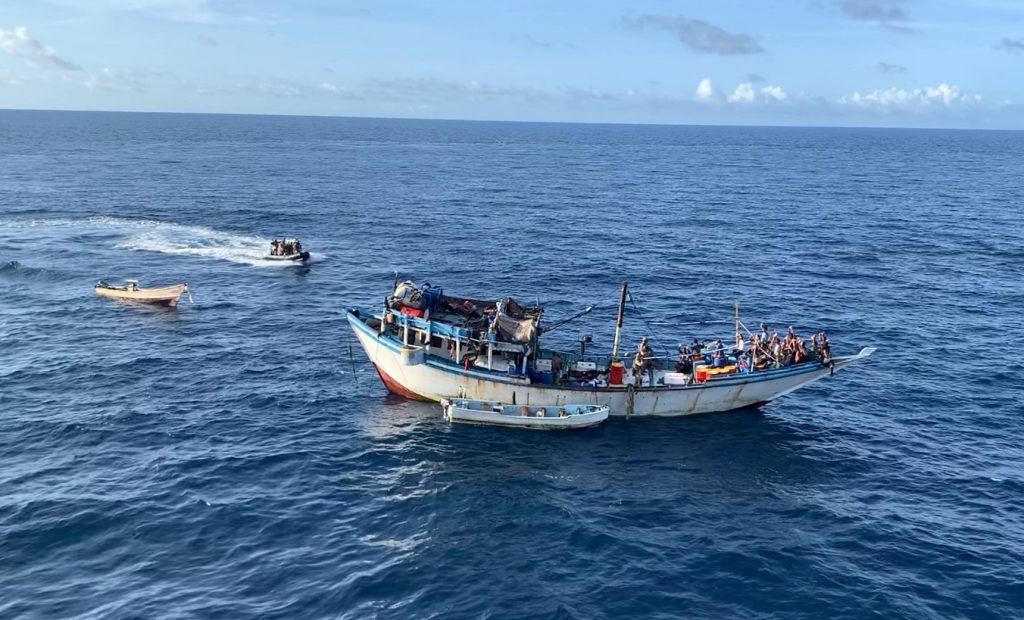
File image of an approach on a dhow

Why has piracy off Somalia’s coast plummeted while in West Africa pirates remain undefeated?

BY PETER FABRICIUS

A few years ago piracy off the east coast of Africa, focusing on Somalia, was a major crisis, attracting extensive international attention. Now it has plummeted. Meanwhile across the continent in the Gulf of Guinea, the piracy problem, which never attracted quite the same attention, has persisted at much the same high levels.

The reasons are numerous, though the greater prioritisation of Western Indian Ocean sea routes to the international community is probably near the heart of it. Another reason seems to be the relatively greater capacity of individual West African states to fight piracy.

Pirate attacks off Somalia’s coast have dropped dramatically over the past eight years – from 237 incidents in 2011 to nine in 2017 and just three attempted attacks in 2018, Denys Reva reported in a June ISS Today article.

So much so that the Contact Group on Piracy off the Coast of Somalia has started discussing broadening the group’s mandate to include combating other maritime security problems like trafficking. This complements similar changes occurring in other prominent maritime security initiatives such as the Djibouti Code of Conduct.

By contrast, on 8 July this year the International Maritime Bureau Piracy Reporting Centre (IMB-PRC) said the seas around West Africa remained ‘the world’s most dangerous for piracy.’ Of the 75 seafarers taken hostage on board or kidnapped for ransom worldwide so far this year, 62 were captured in the Gulf of Guinea – off the coasts of Nigeria, Guinea, Togo, Benin and Cameroon. 

The bureau said 73% of all kidnappings at sea, and 92% of hostage takings, happened in the Gulf of Guinea. It nonetheless notes ‘a welcome and marked decrease’ in attacks in the gulf for the second quarter of 2019, commending the Nigerian navy in particular for actively responding to reported incidents by dispatching patrol boats. While recognising that many attacks go unreported, the maritime bureau recorded 21 incidents around Nigeria so far in 2019, down from 31 in the same period of 2018.

Timothy Walker, Senior Researcher and specialist in maritime issues at the Institute for Security Studies, says however that despite the improvement recorded by the IMB-PRC, the general incidence of piracy in the Gulf of Guinea seems to have remained fairly constant over the past decade.

He suggests this is because the high seas off Somalia generally carry shipping heading to and from the Suez Canal and linking the huge markets of Europe, India and East Asia. They are also of greater global interest as they carry ships of almost every flag state and generally of greater size.

While there is also a huge volume of international shipping in the Gulf of Guinea, most attacks are happening in territorial waters, against localised shipping to and from West Africa. Because of this geographic difference, a larger international operation was mobilised to counter Somali-based piracy, pulling in powerful navies from the United States, China, Russia, India and France, among others, and notably the European Union’s Operation Atalanta.

These nations have coordinated their efforts through the Contact Group on Piracy off the Coast of Somalia and the Shared Awareness and De-confliction (SHADE) Conference. Their success seems to have been enhanced by natural competition among themselves for the greatest competence in combating piracy and projecting national maritime power. It was precisely the absence of a functioning national authority in relatively ungoverned Somalia that brought these international navies into the fight against piracy.

Walker notes that the many West African nations with shores on the Gulf of Guinea could better fight piracy through pooling their capacity and strengthening their law enforcement institutions. Such cooperation between and within the economic communities of West African States and Central African States is improving maritime security to a degree.

There is also an Interregional Coordination Centre in Yaoundé steering many of these efforts, complementing national and regional actions. But such efforts struggle with capacity shortages and the low political priority many governments still attach to maritime security.

One manifestation of the need for coordination is that while private security guards on ships have been an effective, albeit controversial, means to combat pirates off Somalia, this hasn’t worked in the Gulf of Guinea. Countries such as Nigeria insist on shipping companies manning their vessels with Nigerian naval teams in their national waters.

Another downside of the many different national jurisdictions fighting piracy in the west is that pirates can shift to different national maritime jurisdictions when one country steps up the pressure against them. This displacement of piracy could be a major factor in maintaining high overall piracy rates, Walker suggests.

He also notes that those fighting Somali piracy have been able to institutionalise their efforts more effectively than their Gulf of Guinea counterparts. However the institutions in the west are working as well as their member states empower them to, he says.

Reva notes that companies sailing off Somalia have together developed effective safety guidelines for ships travelling through a well-defined High Risk Area. For example, ships navigating through the region are urged to increase their speed and install protective systems on board. They are also asked to follow the protected Maritime Security Transit Corridor, making it harder for pirates to attack. These guidelines were key to bringing down piracy off Somalia’s coast, Reva said.

Another difference is the east’s legal approach. Walker says at the height of piracy in the Western Indian Ocean many were caught off Somalia and brought to court in countries such as Kenya and the Seychelles. They were then incarcerated in Somalia itself or its semi-autonomous Puntland region to be prosecuted, convicted and imprisoned. This has been a strong deterrent to piracy in the east.

By contrast there is little record of incarceration, prosecution or conviction of pirates in the Gulf of Guinea, he says. Through this ‘lack of legal finish’, as Walker puts it, the west is missing an opportunity to visibly deter piracy.

Overall, the problem in the east has now become how to avoid complacency in the face of success. In the west, the problem remains the need to reduce the incidence of piracy. It would seem that greater regional coordination – if necessary with international assistance, including guidance from those who have succeeded on the other side of the continent – is called for.

Peter Fabricius, ISS Consultant

Source: issafrica.org

Growing maritime insecurity raises question on NIMASA’s $195m maritime security contract to Israeli firm

By Samson Echenim

Despite a running $195 million maritime security contract awarded to Israeli firm, Messrs HLSI Security Systems and Technologies by the Nigerian Maritime Administration and Safety Agency, Nigeria is seeing growing incidences of piracy attacks and vessel hijacking.

The situation has led to shipping companies now spending millions of dollars in providing security onboard the vessels while in Nigerian waters.

To continue reading, please click here.

Source: businessamlive.com

Maritime Union Report on the Dangers Seafarers Face on Ships in the Persian Gulf

Persian Gulf/SoH

First Hand Report on Transiting the Strait of Hormuz in a Merchant Vessel

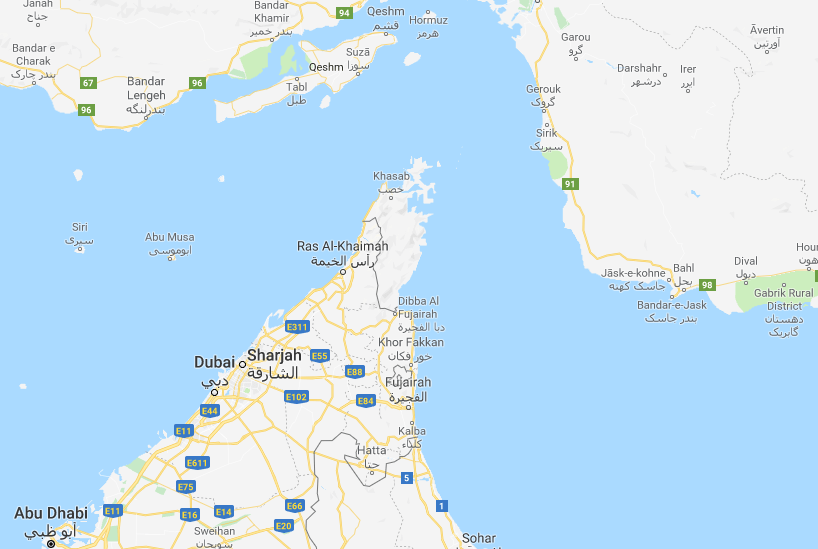
PERSIAN GULF – As with the case of piracy in the waters off the Somali Coast, nothing brings the realities of dangers at sea whilst transiting the seas in the region like the first-hand accounts of those who have experienced the terrors of passing through the Strait of Hormuz whilst anticipating an attack from armed forces.

With security levels raised by the British government following the seizure of the UK-flagged tanker Stena Impero the focus of the maritime unions has been on the welfare of their members and now Nautilus International, the trade union for maritime professionals, has released the testimony of one of its members, via a report by Helen Kelly, illustrating the circumstances faced by seafarers in the region.

To continue reading, please click here.

Source: handyshippingguide.com