Philippines: Kidnappers Demand Ransom for British Man and Wife

The gunmen who abducted a British national and his Filipina wife have demanded 50 million pesos (almost U.S. $1 million) in exchange for their freedom, a Philippine military official said Thursday.

This came as the Philippine Coast Guard announced it had deployed its anti-terror unit and a high-speed boat to beef up the military’s search-and-rescue mission in the porous coastlines of the Zamboanga peninsula in the southern Philippines.

To continue reading, please click here.

Source: benarnews.org

Maritime piracy incidents down in Q3, yet Gulf of Guinea remains a hot spot

The International Chamber of Commerce International Maritime Bureau’s (IMB) report for the third quarter of 2019 demonstrates fewer incidents of piracy and armed robbery against ships than the first nine months of 2018.

119 incidents of Piracy and Armed Robbery Against Ships have been reported to the IMB Piracy Reporting Centre (IMB PRC) in 2019, compared to 156 incidents for the same period in 2018. Overall, the 2019 incidents include 95 vessels boarded, 10 vessels fired upon, 10 attempted attacks, and four vessels hijacked. The number of crew taken hostage through the first nine months has declined from 112 in 2018 to 49 in 2019.

While the overall number of incidents has dropped, incidents involving guns and knives remain consistent. There have been 24 knife-related and 35 gun-related incidents reported in 2019, compared to 25 and 37 for the first nine months of 2018. These statistics confirm IMB’s concerns over continued threats to the safety and security of seafarers.

Gulf of Guinea

The Gulf of Guinea remains a high risk area  for piracy and armed robbery. The region accounts for 86% of crew taken hostage and nearly 82% of crew kidnappings globally.

In July a general cargo vessel was hijacked approximately 120nm SW from Brass. Ten crew members were kidnapped from the vessel and released four weeks later. In August a bulk carrier and a general cargo vessel were boarded within hours of each other at Douala anchorage, Cameroon and a total of seventeen crew were kidnapped from the vessels. Within six weeks all kidnapped crew were released.  This incident demonstrates the range of piracy activity in the Gulf of Guinea and that all types of ships are vulnerable to attack. Lagos recorded 11 incidents in 2019, the highest number for any port.

Lagos recorded 11 incidents in 2019 – the highest number of any port in the world. Despite reporting more attacks than any other country, Nigeria has reduced Q3 piracy attacks from 41 in 2018 to 29 in 2019.

“Although incidents are down, the Gulf of Guinea continues to be a concern for piracy and armed robbery-related activities with kidnappings of crew members increasing in both scale and frequency,” said Pottengal Mukundan, Director, ICC IMB. “It is important that shipmasters and owners continue to report all actual, attempted, and suspected incidents to ensure that an accurate picture of these attacks emerge and  action is taken against these criminals before the incidents further escalate.”

Continued improvement in Indonesia

Meanwhile, Indonesia reported a decline in overall piracy related incidents with 20 actual and attempted attacks for the first nine months of 2019. Over the past five years, Indonesia has gradually reduced its share of piracy related incidents. As recent as 2015, Indonesia reported 86 actual and attempted piracy incidents through Q3. Indonesia’s impressive gains can be attributed to continued information sharing between the Indonesian Marine Police and the IMB PRC.

No incidents in Somalia, but threats remain

Meanwhile, Somalia has no piracy-related incidents recorded for the first nine months of 2019. Although no incidents have been reported, Somali pirates continue to possess the capacity to carry out attacks in the Somali basin and wider Indian Ocean. As a result, the IMB PRC advises ship owners to remain cautious when transitting these waters.

Global anti‐piracy support

Since 1991 the IMB PRC’s 24-hour manned centre, has provided the maritime industry,  governments and response agencies with timely and transparent data on piracy and armed  robbery incidents – received directly from the Master  of the vessel or its owners.

The  IMB  PRC’s  prompt  forwarding  of  reports  and  liaison  with  response  agencies,  its  broadcasts to shipping via Global Maritime Distress and Safety System (GMDSS) Safety Net  Services and email alerts to Company Security Officers, all provided free of cost, has helped  the response against piracy and armed robbery and the security of seafarers, globally.

IMB strongly urges all shipmasters and owners to report all actual, attempted and suspected  piracy and armed robbery incidents to the IMB PRC globally. This first step in the response  chain is vital to ensuring that adequate resources are allocated by authorities to tackle piracy.  Transparent statistics from an independent, non- political, international organization can act  as a catalyst to achieve this goal.

Source: iccwbo.org

AFP eyes Abus in kidnap of British man, wife

Jaime Laude

MANILA, Philippines — With still no contact or proof of life, authorities believe that a British businessman and his wife who were snatched in a coastal village in Tukuran, Zamboanga del Sur and their captors are constantly on the move.

Lt. Gen. Cirilito Sobejana, Western Mindanao Command (Westmincom) chief, said the kidnappers are on the run with their victims to evade government forces.

To continue reading, please click here.

Source: philstar.com

Sabah police will not negotiate ransom demands made by Abu Sayyaf-linked kidnappers

KOTA KINABALU — The Malaysian police are working with their Philippine counterparts to secure the release of three Indonesian fishermen kidnapped by Abu Sayyaf-linked gunmen off Lahad Datu on Sept 23.

Sabah Police Commissioner Datuk Omar Mammah said the kidnappers made their ransom demand during a call to one of the victim’s sisters in Sandakan on Sept 30.

To continue reading, please click here.

Source: globalnation.inquirer.net

Sabah east coast still on high alert for Abu Sayyaf kidnappers

By STEPHANIE LEE

KOTA KINABALU: Security forces in Sabah’s east coast remain on high alert a week into intelligence information saying that Abu Sayyaf-linked gunmen were on their way to Sabah to kidnap high-value targets.

Eastern Sabah Security Command (Esscom) Datuk Hazani Ghazali said they had mobilised their assets to high-risk areas and the alleged target area of Mataking and Pom-Pom island in Semporna, famed among tourists, following the information on Sept 30.

To continue reading, please click here.

Source: thestar.com.my

British trader, Pinay wife kidnapped in Zamboanga del Sur

Roel Pareño

ZAMBOANGA CITY, Philippines — A British businessman and his Filipino wife were snatched by at least four gunmen in a coastal village in Tukuran, Zamboanga del Sur on Friday.

 Allan Hyrons, 70, and his wife Wilma were seized at Hyrons Beach Resort, which the couple own, in Baran­gay Alindahaw at around 6:50 p.m., Maj. Helen Galvez, Zamboanga peninsula police spokesperson, said.

To continue reading, please click here.

Source: philstar.com

MarsecNews: Although there has so far been no confirmation of the kidnappers’ identity, the Abu Sayyaf Group remain the most likely suspects. Of key concern is their violence; they are known to execute hostages if ransoms are withheld. We hope for a speedy resolution. Reports in the last 24 hours indicate that the AFP organised a naval blockade in an attempt to prevent the suspects from escaping. It would appear that this was unsuccessful.

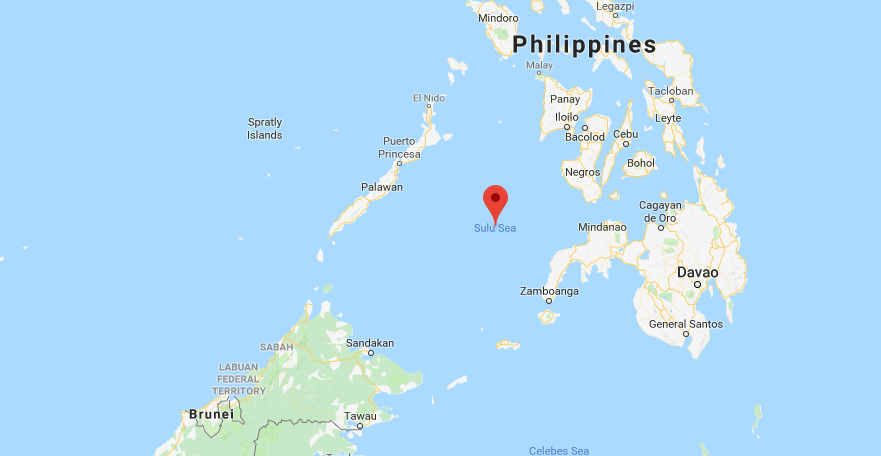
Kidnapping in the Sulu Sea: Implications on Terrorism in the Philippines

In the Sulu Seas, kidnap-for-ransom activities perpetrated by Islamic State-linked terrorist networks are on the rise again.

By Kenneth Yeo

On September 23, a group of seven gunmen aboard two pump boats ambushed and seized three fishermen off the coast of East Sabah, in a sign of how the Islamic State (IS) and its affiliated networks continue to trouble the Southeast Asian region. The latest attack follows a surge in ambushes and kidnappings in the last two years along the Sulu Seas, which encompasses the waters around Indonesia, Malaysia’s eastern Sabah state and the Philippines, and has long been a hotspot for piracy and sea robbery. Although there was no claim of responsibility, the attackers are said to be members of an Abu Sayyaf splinter group affiliated with the Islamic State (IS) in Sulu province. It is believed the seven gunman, who were masked, boarded two fishing vessels around midday local time, and abducted three crew members. 

To continue reading, please click here.

Source: thediplomat.com

Ransom demand made for kidnapped fishermen

By STEPHANIE LEE

KOTA KINABALU: The family of one of three recently abducted Indonesians fishermen has received a ransom demand from their kidnappers.

Sabah Police Commissioner Datuk Omar Mammah said according to their Philippines counterparts, the kidnappers had made the call a few days after the Sept 23 incident.

To continue reading, please click here.

Source: thestar.com.my

Military seizes bomb-making material in Sulu

By CNN Philippines Staff

Metro Manila (CNN Philippines, September 17)— The military recovered nearly a ton of a bomb-making inputs during an operation in Sulu on Saturday.

In a statement Tuesday, the Joint Task Force Sulu said authorities have seized at least 700 kilograms of ammonium nitrate and another bomb component, an 81-mm mortar fuse in Barangay Latih in Patikul town over the weekend.

To continue reading, please click here.

Source: cnnphilippines.com

The future of Philippine maritime enforcement

Michael van Ginkel

Illicit activity in the Sulu and Celebes Seas continues to pose a daunting maritime security challenge for the Philippines. The recent kidnapping of nine fishermen off the coast of Borneo and the increasingly violent modus operandi of the militant Abu Sayyaf Group (ASG) have raised safety concerns amongst Philippine policy makers and local communities. Although the Philippines has initiated several maritime enforcement initiatives, including the extensive National Coastal Watch System (NCWS), the government needs to enhance cooperation between land-based and maritime operations and increase engagement between military and civilian agencies to improve regional maritime stability.

To continue reading, please click here.

Source: theaseanpost.com