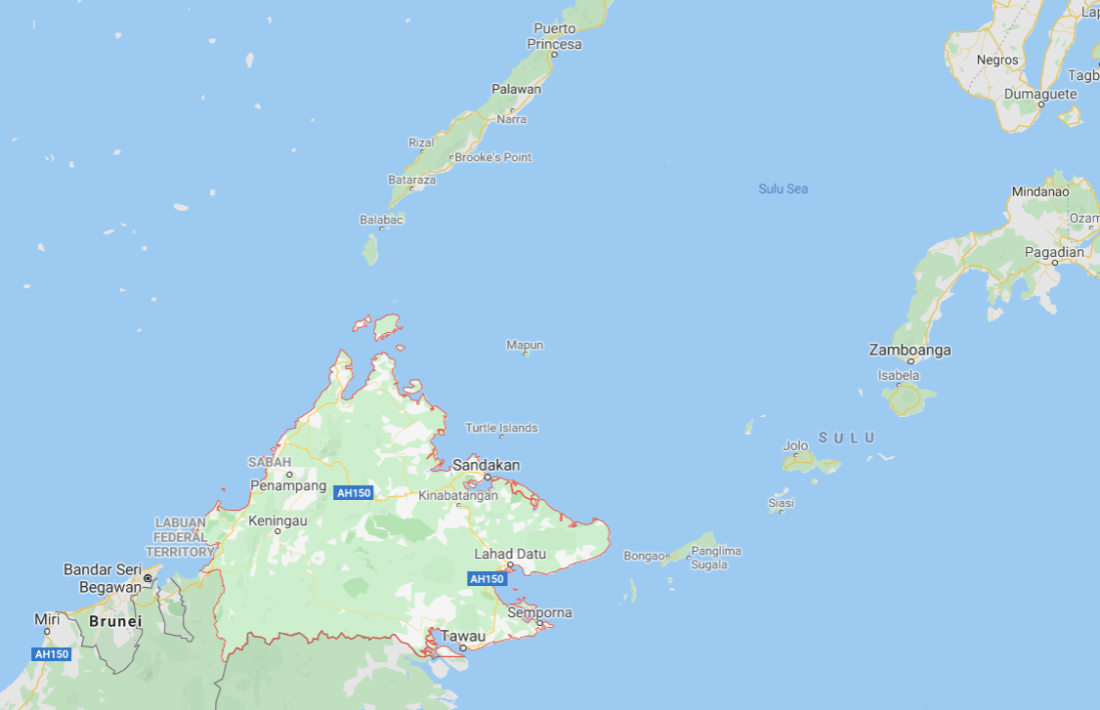
Police are monitoring the remaining few hostage ‘spotters’ or lookouts working in cohorts with the kidnap-for-ransom group (KFRG) responsible for the kidnapping incidents in Sabah’s east coast.
Sabah Police Commissioner Omar Mammah (above) said the spotters under surveillance were fishermen.
KOTA KINABALU: Two of the six men suspected to have kidnapped five Indonesian fishermen in Malaysian waters earlier this month have been shot dead by Philippine security forces.
Eastern Sabah Security Command (Esscom) commander Hazani Ghazali said the suspects were killed in a shootout with Philippine security forces two days ago.
LAHAD DATU: The captors of the five Indonesian workers off Tambisan waters on Jan 15 have not made any ransom demand, said Sabah police commissioner Omar Mammah.
“Until today, we have not received any demand for ransom money from the kidnappers. We are investigating to find out who the masterminds are,” he said during a visit to the Lahad Datu police headquarters today.
LABUAN: Labuan marine police thwarted smuggling activities with a total seizure worth more than RM17 million last year, compared to RM1.5 million in 2018.
Sabah marine police (Region 4) commander, ACP Mohamad Pajeri Ali said Labuan marine police also foiled several attempts of illegal fishing by foreign fishermen and intrusion by illegal immigrants.
Despite ongoing incidents of piracy in Asia, international co-operation efforts are having genuine success at containing the issue. Various policy initiatives are showing promise for the security of the region’s sea lanes, now and into the future, Sam Bateman writes.
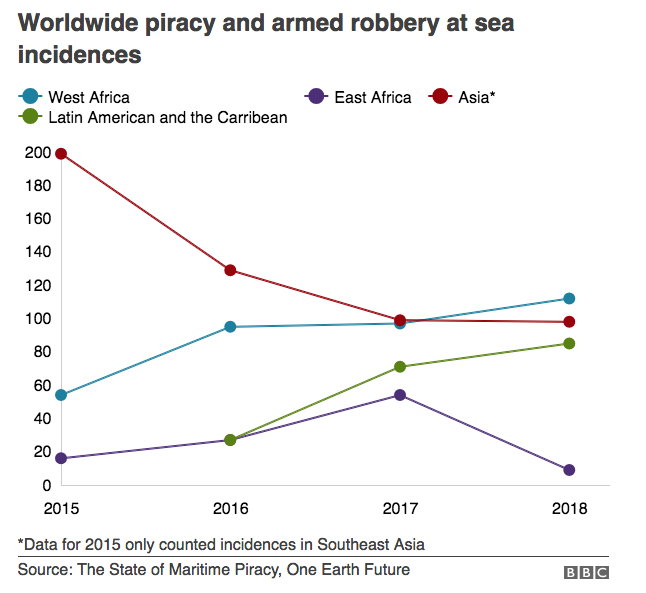
Since I wrote on the subject of piracy in Asia for Policy Forum in 2016, the situation has shown marked improvement. According to the Regional Cooperation Agreement on Combating Piracy and Armed Robbery against Ships in Asia (ReCAAP), there were 76 incidents in Asia in 2018 as compared with 203 in 2015. In the first nine months of 2019, 54 incidents occurred in the region as compared with 64 in the same period of 2018, a significant drop by any measure.
Twenty-eight Incidents Reported to ReCAAP Information Sharing Centre from January to June 2019, Marking 32% Year-on-Year Decrease, and the Lowest in Number among 13-Year Period of January to June
The ReCAAP Information Sharing Centre (ISC) today released its Half-Yearly (January to June 2019) Report. Highlights of the report, whose information is verified by the respective government agencies, also known as Focal Points, and regional authorities, include:
Overall Summary
Total of 28 incidents reported from January to June 2019, of which 25 were actual incidents while 3 were attempted cases
Of the 28 incidents reported, 26 (93%) were armed robbery against ships and two (7%) were piracy
This marks a 32% decrease compared to the same period in 2018 in the number of incidents reported
This is also the lowest number among the 13-year period (2007-2019) of January to June
In terms of severity, there was one Category 1 incident, two Category 2 incidents, two Category 3 incidents and 20 Category 4
The seas off West Africa’s oil-rich coastline are now the most dangerous in the world for shipping, according to a new report.
One Earth Future, which produces an annual State of Maritime Piracy, says that while attacks have been falling substantially in some regions of the world, in West Africa they’ve been on the rise and are now more frequent than anywhere else.
So why the increase in West Africa, and what shipping is being targeted?
What is piracy?
A strict definition of maritime piracy only includes attacks on shipping on the high seas – that is, more than 12 nautical miles off the coastline and not under the jurisdiction of any state.
Inside a country’s territorial waters and within port facilities, these attacks are defined as armed robberies at sea.
However, the data we’ve used from this latest report combines these two sets of data to give an overall picture of incidents at sea both inshore and offshore.
In 2018, there were 112 such incidents in West African waters.
It’s not just the huge tankers exporting oil and gas from Nigeria and Ghana that are targeted.
Commercial ships from smaller countries are also in the sights of the pirates.
At a recent event in London, President Faure Gnassingbé of Togo – a country sandwiched between these two regional giants – highlighted his own concerns at the rise in attacks on regional shipping.
“Our region is distinguished by the resurgence of transnational criminality on the high seas in the Gulf of Guinea,” said Mr Gnassingbé.
Why are attacks rising?
Most of the attacks have been against ships involved in oil and gas transportation, such as tankers, bulk carriers and tugs. Fishing vessels have also been targeted.
The coastline off Nigeria saw the most attacks in 2018. This is partly because of “petro-piracy”, targeting tankers from Nigeria’s rich oil and gas fields.
There were also incidents reported at the loading and anchorage facilities in the Nigerian port of Lagos.
Piracy in the form of hijacking and kidnapping for ransom payments was also common off the coasts of Benin, Ghana, Nigeria, Congo-Brazzaville and Cameroon.
Rich pickings at sea, political instability, the lack of law enforcement and poverty on land are all factors which have contributed to the increase in piracy.
Most of the seafarers affected are not from the region. Around half are from the Philippines, followed by India, Ukraine and Nigeria.
One of the reasons West Africa is now the number one spot for piracy is because of of the downward trends recorded elsewhere.
The East African shipping routes along the Somali coastline have been notorious for hijackings and robberies.
But since peaking in 2011, rates of piracy there have fallen off dramatically in recent years.
Local efforts on land in Somalia to change attitudes towards permitting piracy and building legal capacity to prosecute criminals have also helped improve the situation.
In Asia, the Malacca Strait, a busy, commercially important stretch of water between Malaysia and Indonesia, experienced a high number of attacks in 2015.
Concerted action by regional naval forces has reduced the problem there, but piracy still persists.
Attacks against shipping in the Caribbean and off the coast of Latin American have, however, risen.
Venezuela in particular has become a hotspot for piracy.
“Political and economic instability is a big factor there,” says Lydelle Joubert, an expert on piracy at One Earth Future.
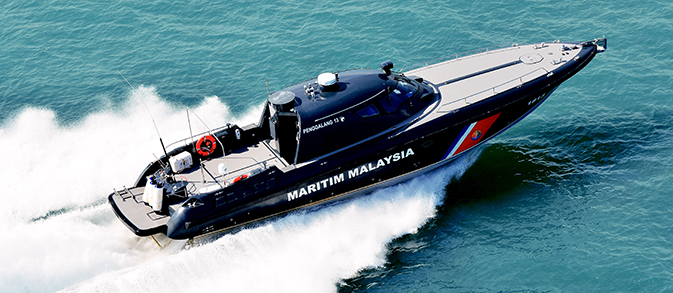
KOTA TINGGI: The Malaysian Maritime Enforcement Agency (MMEA) thwarted an attempt by a group of foreign men to steal items on board a commercial vessel in Teluk Ramunia waters, off Pengerang, early yesterday.
Johor MMEA deputy operations director Sanifah Yusof said at 3am on Sunday, an MMEA patrol team from the Tanjung Sedili Maritime Zone came across two wooden boats, both named ‘Lima Sore’ secured to the ‘M.T. Ponier’ vessel that was anchored about 2.9 nautical miles south of Teluk Ramunia.
Reports coming from Sabah suggest that Abu Sayyaf Group terrorists have kidnapped 10 crew from two fishing boats early on Tuesday 18th.
Media reports state that the incidents near Borneo Island, when two speedboats approached two fishing vessels. “Pirates” boarded the boats at around 2am LT, confiscated documents likely to relate to the nationality of the crew members, and then took 10 hostages before fleeing towards Sitangkai Island in the Philippines. The fishing boats were believed to be operating during curfew hours without a permit, according to a report in The Straits Times. The remaining crew were picked up by the MMEA.
The incident comes after a prolonged lull in kidnapping activities by the group. However, the loss of hostages in recent rescues and killings would suggest that the group is now looking to increase its funds by further Kidnap For Ransom efforts.
The incident prompted Sabah Chief Minister Datuk Seri Mohd Shafie Apdal to call for further security measures in Sabah, an area which has seen cross border criminality and kidnapping at sea in recent years.
MIRI: The Malaysian Maritime Enforcement Agency (MMEA) District 13 (D13) seized 5,000 litres of diesel worth RM11,000 and arrested four Indonesian crew members of a tugboat aged between 23 and 30 during an operation here on April 25.
In a statement to the media on Friday night, MMEA D13 director Captain Md Fauzi Othman said the suspicious tugboat was first sighted two nautical miles from the MMEA boat which was carrying out operation in Kuala Baram waters.



 Maritime Security News