Libyan court cancels maritime border deal with Turkey, report says

The Libyan parliament announced that an appeals court in the east of the country canceled the border demarcation and security cooperation agreements between the Government of National Accord (GNA) and Turkey, according to English language news website Egypt Today on Wednesday, which cited Al Arabiya news channel.

To continue reading, please click here.

Source: ekathimerini.com

France accuses Turkey of taking arms to Libya

France has pulled out of Nato-led anti-smuggling patrols in the Mediterranean, accusing Turkey, a fellow member of the Western military alliance, of taking arms to Libya.

In a statement, the French defence ministry said it was suspending its participation in Operation Sea Guardian to shine a spotlight on an anti-trafficking operation, of which the smugglers were a part.

It said that regardless of a clash at sea between the allies’ navies last month, the real problem was that Turkey, a Nato member, was repeatedly violating the arms embargo on Libya.

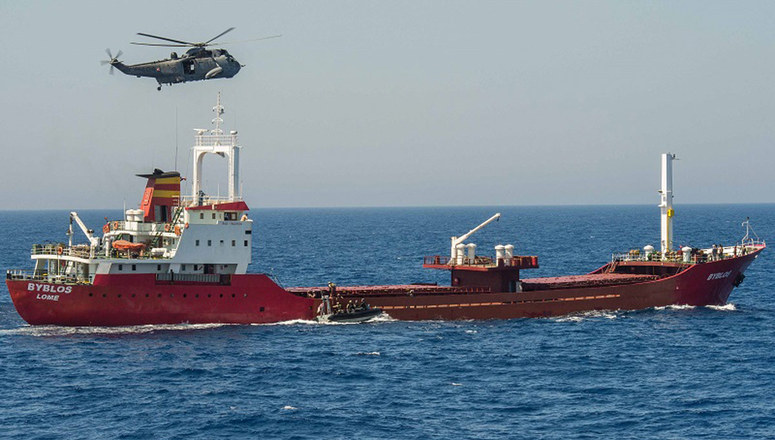
Tensions have escalated since a Turkish warship prevented a French frigate inspecting a suspected arms cargo aboard a Tanzanian vessel last month.

Turkey supports the UN-backed government in Tripoli, while France is seen as a backer of General Khalifa Haftar’s rival force.

Source: bbc.co.uk

Brexit: how the UK is preparing to secure its seas outside the EU

Scott Edwards, University of Bristol et Timothy Edmunds, University of Bristol

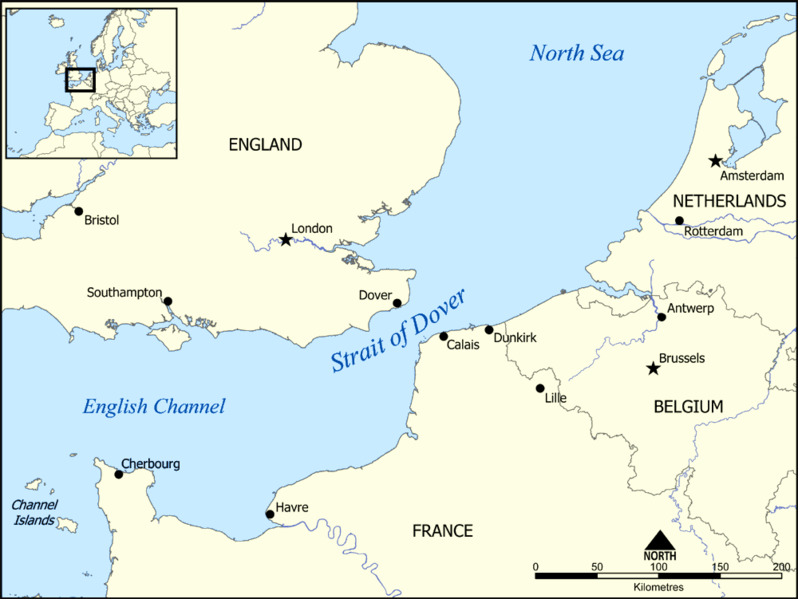
Four dinghies carrying 53 migrants who tried to cross the English Channel from France were intercepted by British and French authorities in early April. The crossings are a reminder of the importance of maritime security and safety to the UK.

Brexit has led to many uncertainties, including over the governance of the UK’s seas in the future. Withdrawal from EU regulations at the end of the Brexit transition period on December 31 2020 raises questions over how to face the difficult task of managing maritime risks which are currently managed alongside the EU.

Uncertainty has also spurred new government efforts by shining a light on the need to secure UK waters, something we’ve written about in a new report.

The UK faces rapidly evolving risks to its shipping lanes, fishing grounds and marine infrastructure. These risks include illegal fishing, human trafficking, organised crime such as smuggling, terrorism, and the potential for protests at sea.

Terrorist attacks could cause significant loss of life if targeted against ferries and cruise liners. Illegal fishing could affect the livelihoods of fishers and marine biodiversity, while other risks could have an impact on the wider economy in a context where 95% of Britain’s trade flows via the ocean.

These risks tend to interlink with each other in ways that are increasingly well documented in other regions of the world. In Somalia, for example, local fishers losing their stock as a result of illegal fishing have turned to piracy. What unintended consequences of new risks might appear in UK waters is still not fully understood.

Maritime security threats can also take place simultaneously. Without greater understanding of these risks, it’s difficult to know which should be prioritised.

Added complication of Brexit

These issues have been complicated by the UK’s withdrawal from the EU. During the current transition period the UK manages its waters within a wider EU maritime governance framework and under EU regulations, as it did while it was an EU member. While the UK isn’t expected to cease all cooperation with the EU when this comes to an end, it will be required to depend more on national enforcement and regulations.

This shift is most visible in the fisheries sector. As part of the EU, British fisheries were managed under the Common Fisheries Policy meaning both UK and EU fishing boats had access to quotas in UK waters. Such arrangements are likely to come to an end with the UK choosing to regulate its own waters.

UK ports are also a hotspot for change as they seem likely to withdraw from EU port legislation. This could lead to new national regulatory challenges such as a need to balance harmonisation with the EU with the pursual of British priorities like the creation of freeports, aimed to give British trade a competitive edge.

Taking sole responsibility is made difficult by other complicating factors. In the UK, different risks are managed by different government agencies, with problems of jurisdictional overlap.

Depending where it takes place, multiple agencies could be involved in illegal fishing, for example. This could include the Marine Management Organisation, Marine Scotland, and the Royal Navy’s Fishery Protection Squadron. Other agencies may contribute boats or intelligence, such as the National Maritime Information Centre, Border Force and the National Crime Agency.

Yet, a common understanding of the threats and consistent communication between departments is lacking in some areas. This is more of a problem for devolved issues such as fisheries, which add even more authorities, departments and agencies to the picture. The relationships between these different organisations are likely to be further tested by the challenges posed by Brexit.

Opportunity for reform

But Brexit also offers the UK an opportunity to improve its maritime security. The leak of Operation Yellowhammer in 2019 raised the public profile of maritime issues such as delayed freight in ports, the illegal entry of EU fishing boats into UK waters and potential clashes between fishing vessels. This came at a time where there were high profile landings of illegal migrants along the south coast of the UK, while Operation Yellowhammer warned of stretched maritime enforcement capabilities.

The UK has started off well. In 2019, the UK government created the Joint Maritime Security Centre (JMSC) to coordinate all the different agencies involved and foster interaction between them. The JMSC conducted a joint UK maritime security exercise at the end of 2019, highlighting how coordination can improve enforcement. It is also preparing a new UK maritime security strategy.

Interactions between the different government agencies involved in managing the risks to the UK seas need to become more frequent and overcome existing divides to create habits of cooperation and communication. Other groups such as fishing communities need to be included in deliberations. Transparency and information sharing in the process of drafting a new maritime security strategy can help to identify common goals, encourage involvement, and establish a shared basis for action.

A review of resources would also be worthwhile to identify the means the UK has to secure its waters, what gaps exist, and how these means can best be shared.The Conversation

Scott Edwards, Research Associate, University of Bristol et Timothy Edmunds, Professor of International Security at University of Bristol and Director of the Centre for Global Insecurity, University of Bristol

Cet article est republié à partir de The Conversation sous licence Creative Commons. Lire l’article original.

EU launches Operation IRINI to enforce Libya arms embargo

The European Union is stepping up its efforts to enforce the UN arms embargo on Libya, thereby contributing to the peace process in the country, through the launch of a new CSDP (Common Security and Defence Policy) military operation in the Mediterranean.

The Council today adopted a decision launching Operation EUNAVFOR MED IRINI.

Only political solutions and the full respect of the UN arms embargo will bring a solution to the Libyan crisis. But diplomacy cannot succeed unless it is backed by action. This operation will be essential and a clear contribution to promoting peace in our immediate neighbourhood through a permanent ceasefire.

Josep Borrell, High Representative of the Union for Foreign Affairs and Security Policy and President of the Council

IRINI, (Greek for “peace”), will have as its core task the implementation of the UN arms embargo through the use of aerial, satellite and maritime assets. In particular the mission will be able to carry out inspections of vessels on the high seas off the coast of Libya suspected to be carrying arms or related material to and from Libya in accordance with United Nations Security Council Resolution  2292 (2016).

As secondary tasks, EUNAVFOR MED IRINI will also:

  • monitor and gather information on illicit exports from Libya of petroleum, crude oil and refined petroleum products
  • contribute to the capacity building and training of the Libyan Coast Guard and Navy in law enforcement tasks at sea
  • contribute to the disruption of the business model of human smuggling and trafficking networks through information gathering and patrolling by planes

IRINI will be led by Rear Admiral Fabio Agostini as EU Operation Commander, and its headquarters will be located in Rome, Italy.

The mandate of Operation IRINI will initially last until 31 March 2021, and will be under the close scrutiny of EU Member States, that will exercise political control and strategic direction through the Political and Security Committee (PSC), under the responsibility of the Council and the High Representative of the Union for Foreign Affairs and Security Policy.

In parallel with the launch of Operation IRINI, the existing EUNAVFOR MED operation in the Mediterranean, SOPHIA, will permanently cease its activities.

Background

Participants at the Berlin Conference on Libya on 19 January 2020 committed in particular to fully respect and implement the arms embargo established by the United Nations Security Council Resolutions (UNSCR) 1970 (2011), 2292 (2016) and 2473 (2019).

Against this background, the Council reached a political agreement to launch a new operation in the Mediterranean, aimed at implementing the UN arms embargo on Libya by using aerial, satellite and maritime assets on 17 February 2020.

EUNAVFOR MED operation SOPHIA was launched on 22 June 2015 as part of the EU’s comprehensive approach to migration, and will cease permanently on 31 March.

Source: consilium.europa.eu

First P-8A Poseidon Arrives in U.K.

File image of US Navy P-8A Poseidon

The first of nine Boeing P-8A Poseidon maritime patrol aircraft (MPAs) intended for the Royal Air Force (RAF) arrived in Scotland on February 4. The arrival of this aircraft marks another step in the reconstitution of the RAF’s fixed-wing MPA capability, which was  controversially abandoned for a decade under the Conservative-led government’s Strategic Defense and Security Review (SDSR) in 2010. During the interim, the U.K. relied upon the U.S., France, and Canada to plug a capabilities gap in the airborne reconnaissance and anti-submarine warfare (ASW) roles.

To continue reading, please click here.

Source: dsm.forecastinternational.com

Former Irish naval vessel sold to Libyan civil war leader

LE Aisling, via Wikipedia and https://www.flickr.com/people/bcie

UN Security Council traces ownership via UAE to Libya, contrary to sanctions

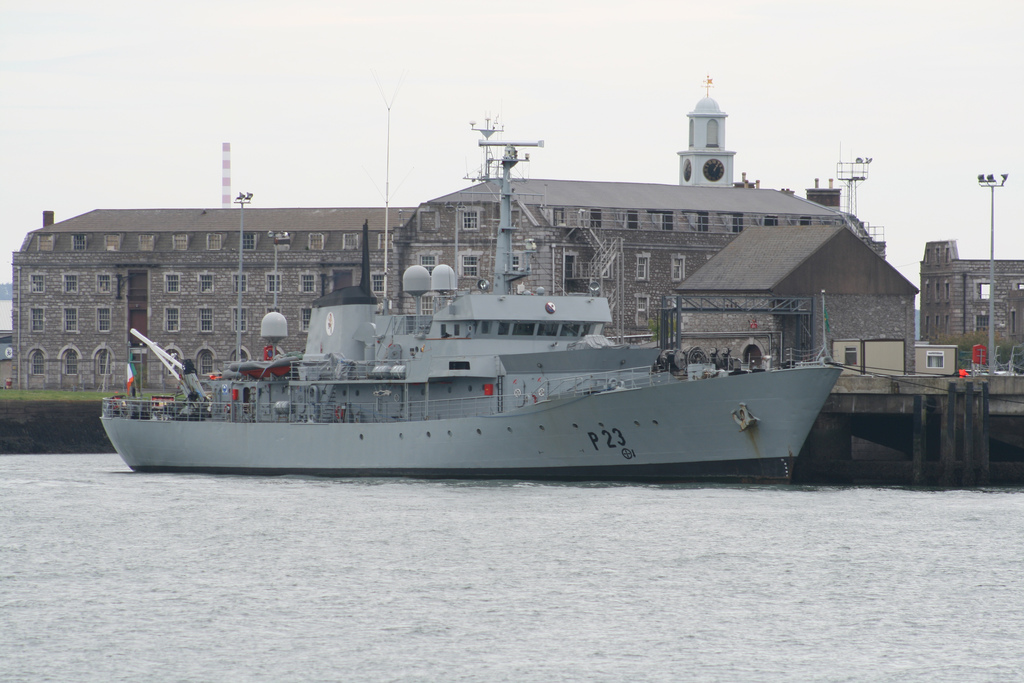
Details of how a decommissioned Irish naval vessel, the LÉ Aisling, sold by the Government for €110,000 in 2017, was bought by a Libyan warlord for $1.5 million (€1.35 million), are contained in a report that has been submitted to the UN Security Council.

The former Irish coastal patrol vessel has since been fitted out with three cannons it was originally designed to carry, and renamed the Al Karama (Dignity).

To continue reading, please click here.

Source: irishtimes.com

Libyan coastguards kill ‘escaping Sudanese migrant’

The Italian Coastguard/Massimo Sestini

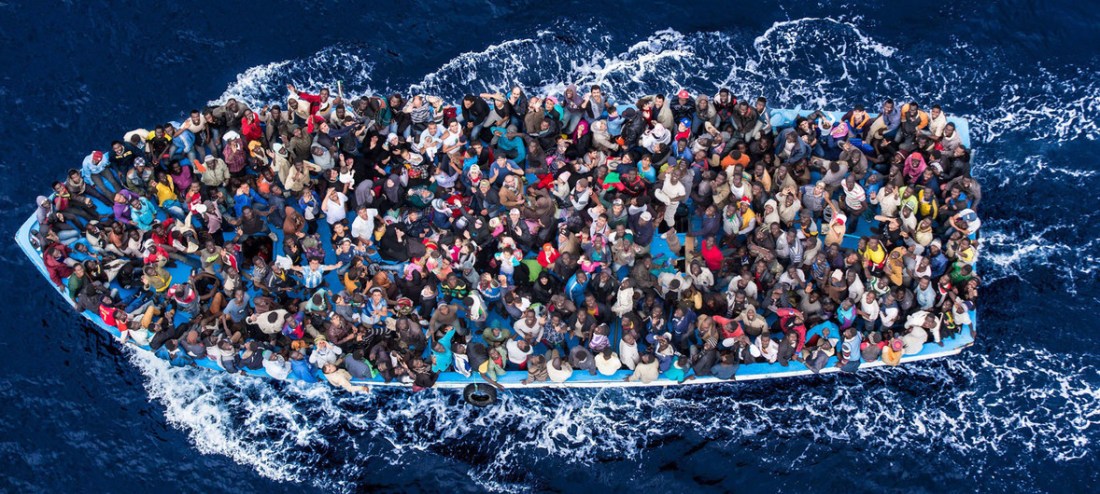
A Sudanese migrant who was trying to cross the Mediterranean to Europe has been shot and killed by Libyan coastguards after being taken back to Libya, the UN’s International Organisation for Migration (IOM) has said.

The man was part of a group of more than 100 people who were returned to shore on Thursday at the Abusitta Disembarkation point in the capital, Tripoli, but resisted being sent back to detention centres.

The IOM said that when people began running away, shots were fired. One bullet hit the man, who later died from his injuries.

The UN organisation condemned the incident and demanded that the Libyan authorities investigate and bring those responsible to justice.

“The use of live bullets against unarmed vulnerable civilians, men, women and children alike, is unacceptable under any circumstances and raises alarms over the safety of migrants and humanitarian staff,” the AFP news agency quotes the IOM’s Leonard Doyle as saying.

“Despite immediately receiving medical aid on the spot by an IOM doctor and then being transferred to a nearby clinic, he died two hours after admission,” he said.

The Libyan Coast Guard said it had picked up nearly 500 migrants from the sea in areas near Tripoli in the last six days and returned them to shore.

Source: bbc.com

Cruise ship rescues 111 migrants off Greece

The Italian Coastguard/Massimo Sestini

The Marella Discovery picked up 111 migrants, including 33 children, near Greece’s Peloponnese peninsula. Despite a large fall in migrants crossing the Mediterranean, six people die each day making the journey.

Nik Martin

A Maltese-registered cruise ship sailing close to the Greek mainland has rescued more than a hundred migrants, the country’s coast guard said on Sunday.

To continue reading, please click here.

Source: dw.com

Somaliland Corrects IGAD Exclusion of Country in Red Sea Taskforce in Statement

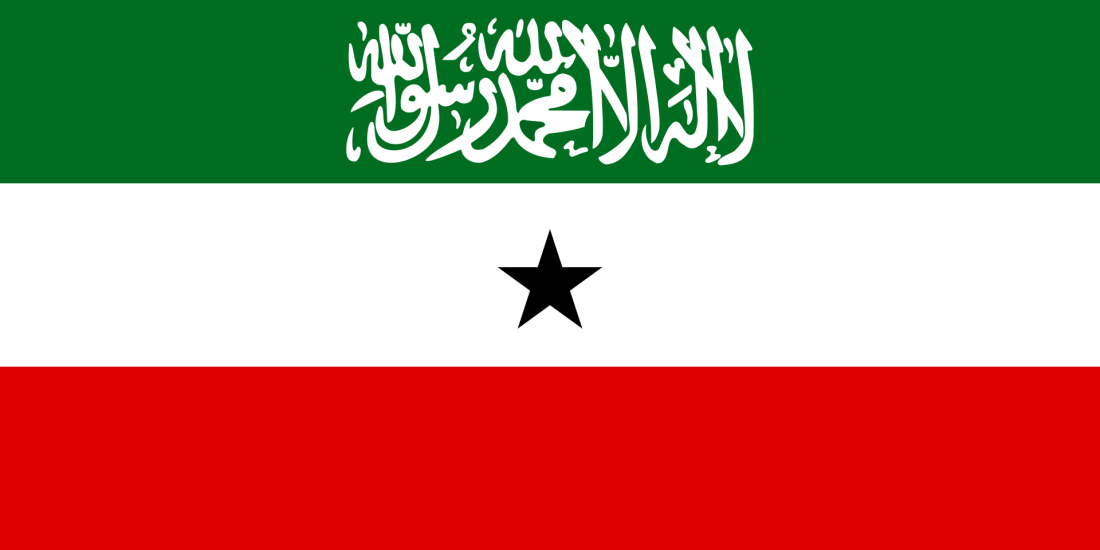
Somalland flag

Somaliland wants to be included in the Taskforce on the Red Sea and the Gulf of Aden by the Intergovernmental Authority on Development (IGAD).

The Somaliland government says that any initiative to coordinate a response to changing Red Sea environs that does not include them in a meaningful way will lack the credibility, capability and representativeness necessary to contend with competing multinational cooperation efforts in these waters.

To continue reading, please click here.

Source: menafn.com

EU to stop Mediterranean migrant rescue boat patrols

The Italian Coastguard/Massimo Sestini

Air patrols will continue after decision, which was driven by threat from Italy to veto entire rescue operation

Jennifer Rankin in Brussels

The European Union is to stop the sea patrols that have rescued thousands of refugees and migrants from the central Mediterranean, after Italy’s populist government threatened to veto the entire operation.

Operation Sophia, which has two vessels and five planes and helicopters, was set up in 2015 to prevent loss of life at sea in a year when 3,771 people died or went missing attempting to reach Europe in rickety boats.

To continue reading, please click here.

Source: theguardian.com