Examining Autonomous Ships’ Vulnerability to Piracy

By Thibaut Eude

Autonomous ships are a hot topic in the maritime sector; piracy and armed robbery too. Since the beginning of the year, according to the IMB, almost 100 attacks have been committed against ships all around the world. 2018 saw a marked increase in attacks compared to the past few years. 

Here is an attempt to describe an autonomous ship hijacking scenario.

The scenario

In 2025, an autonomous ocean-going container ship is chartered on a busy commercial line between China and Europe. The vessel is a level four autonomous ship according to the IMO classification [1] . The vessel is underway, and she is now passing through Malacca Strait. All sensors and artificial intelligence (AI) processes are working hard to avoid collision with others vessels, keep water under the keel and maintain the vessel on track [2]. 

To continue reading, please click here.

Source: maritime-executive.com

Combating Emerging Security Threats in the Maritime Domain

Aside the traditional crimes that have bedeviled the maritime domain for decades, Chiemelie Ezeobi writes that emerging security threats like attacks on shipping, sabotage of hydrocarbon infrastructure and maritime resource theft, as well as other transnational organised crimes, are some of the challenges being tackled by the Nigerian Navy in its quest to secure the nation’s  and the Gulf of Guinea waters 

World over, security threats keep evolving from traditional to conventional warfare. In the maritime domain, same rings true. In the past, the maritime domain was threatened by piracy, sea robbery, illicit trafficking, illegal unreported and unregulated fishing (IUUF) and marine pollution. Now, emerging security threats within the Nigerian maritime domain stem largely from non-military causes such as socio-economic agitations and unemployed youths within the coastal communities, which are manifested through attacks on shipping, sabotage of hydrocarbon infrastructure and maritime resource theft.

To continue reading, please click here.
Source: thisdaylive.com

CTF-151 OUTLINE OF FO ‘KING CRAB’

INTRODUCTION

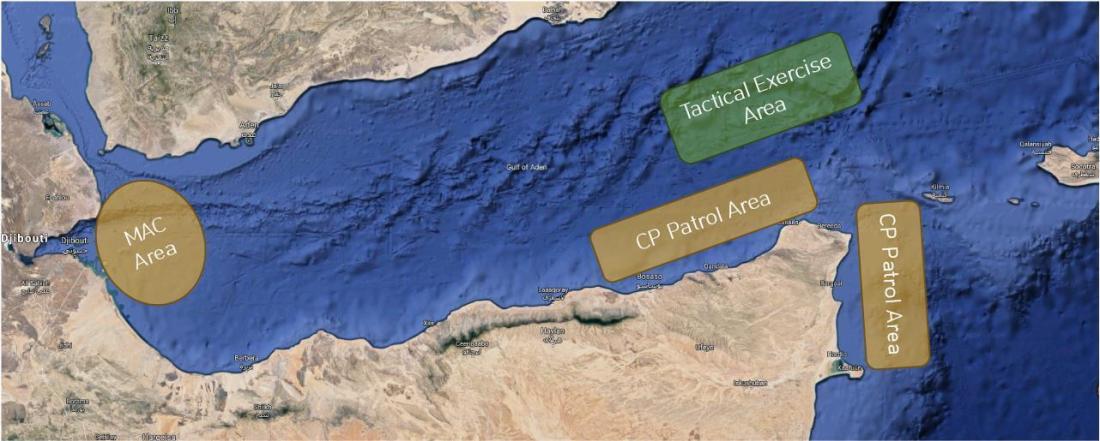
  1. A CTF 151 led Counter Piracy Focused Operation ‘KING CRAB’, will be conducted from 23rd SEP to 26th SEP 2019. The purpose of this note is to inform military forces (EUNAVFOR, Independent Deployers), regional partners and maritime communities on planned activities in order to help their understanding and to bring about cooperation.
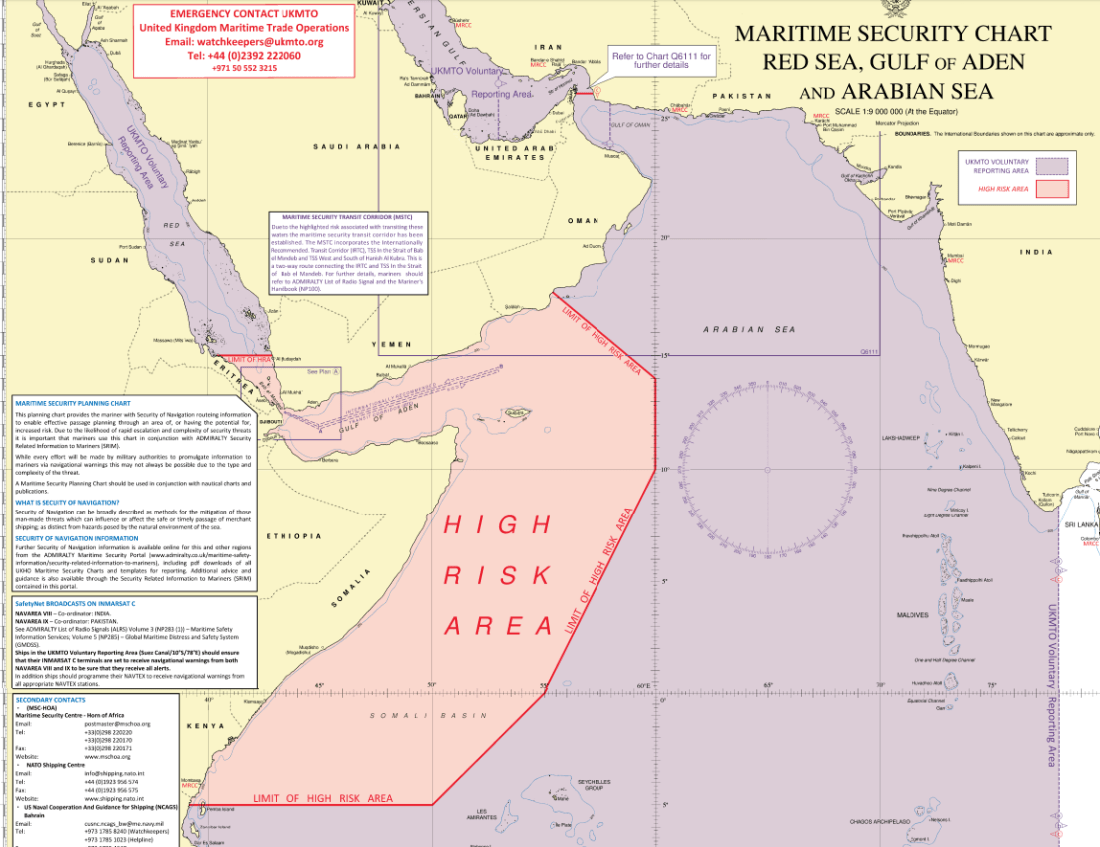
  2. The area of operations will be the Gulf of Aden and Socotra Gap. Also CTF-151 will continue to operate along the northern coast of Somalia, providing opportunities for engagements with merchant communities and local mariners, increasing the understanding on Pattern of Life and exchanging information with partners. And merchant shipping is to be advised that during the period of Operation KING CRAB there will be increased military activities and conduct of Maritime Awareness Calls (MAC).

THE AIM OF OPERATION

  1. Between 23rd to 26th SEP, CTF151 is to deploy increased assets in the focused areas, ENSURING a visible military presence at sea for deterring piracy action, MONITORING suspicious maritime activities involved in piracy, ENGAGING with merchant community for better relationship and reassuring, and UNDERSTANDING regional and local marine activities via POL collection and Friendly Approach.

POINT OF CONTACT

  1. Plans Assistant (roknctf151n51@gmail.com) will act as the main a POC within CTF 151. For partners – military and civilian – interested in any of the outline activities, CTF151 battle watch captain (ctf151.bwo.rokn@gmail.com, +001 1 203 574 6393) will act as points of contact.

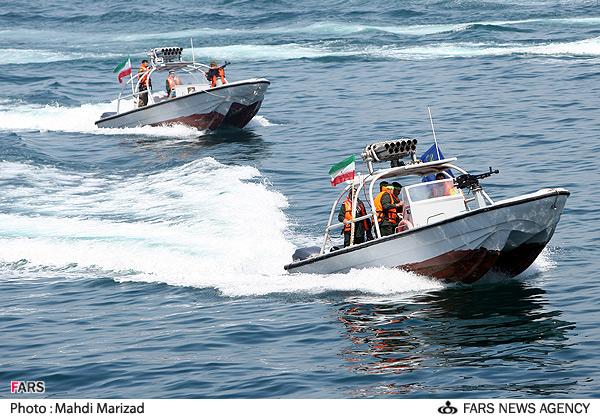
Iranian targeting of shipping in the Arabian Gulf ‘changes the game’ by raising risks to new levels

Insurance and shipping leaders said specific targeting of UK and US crew by Iran has left the industry to grapple with escalating tensions between Tehran and the West.

Nick Busvine, a partner at the strategic intelligence firm Herminius, told The National the drive from Tehran to take British and American hostages while targeting commercial shipping in the Arabian Gulf “changes the game” for the insurance industry.

To continue reading, please click here.
Source: hellenicshippingnews.com

Criminals to forfeit ships, illegal proceeds to govt

By BAYO AKOMOLAFE

Efforts by government to tackle  illegal bunkering, kidnapping,  illegal fishing and smuggling on Nigerian waters have assumed a new dimension as past attempts failed to yield any meaningful result due to lack of effective law.

In the past, Nigeria had participated actively in a multi-national maritime exercise sponsored by the United States Military Africa Command (AFRICOM). Recently, it also participated in the 2019 Exercise Obangame Express attended by 33 countries from West Africa, Europe and North America.

The country had also acquired patrol boats and trained personnel with huge funds but these feats have not deterred criminals on Nigerian waters.

To continue reading, please click here.

Source: newtelegraphng.com

Navy uncovers illegal diesel depot in Akwa Ibom

The Nigerian Navy in Ikot Abasi has uncovered an illegal Automated Gas Oil (popularly known as diesel) depot in Eket Local Council of Akwa Ibom.

Leader of the team, Lieutenant Commander Umaru Sidi, made the revelation while handing over the recovered items to the state command of the Nigeria Security and Civil Defence Corps (NSCDC) yesterday in Eket.

To continue reading, please click here.

Source: guardian.ng

U.S. puts Abu Sayyaf sub-leader Sawadjaan on global terror list

Along with Hatib Hajan Sawadjaan – who is said to be the leader of the Islamic State in the Philippines – a female named Almaida Marani Salvin is also included on the United States’ blacklist

Sofia Tomacruz

MANILA, Philippines – The United States has added Abu Sayyaff sub-leader Hatib Hajan Sawadjaan, who is said to be the leader of the Islamic State (ISIS) in the Philippines, to its list of global terrorists.

Along with Sawadjaan, a female named Almaida Marani Salvin was also included in the US Treasury’s sanctions blacklist. Salvin was said to have “materially assisted, sponsored, or provided financial, material, or technological support ” to ISIS-Philippines.

To continue reading, please click here.
Source: rappler.com

Oil theft: Navy deploys helicopter, other arsenals to curb crime

Ben Dunno

The Central Naval Command of the Nigerian Navy has intensified its ongoing war against illegal bunkering activities along the coastal region with the deployment of additional surveillance aircraft, gadgets and weapons to curb the menace.

The latest addition to the naval fleets in the region includes a helicopter, four ships, and two riverine patrol gunboats to boost the operational efficiency of men and officers both in aerial and land surveillance along the waterways.

To continue reading, please click here.
Source: sunnewsonline.com

Oman – Cooperation is paramount for maritime security: Sayyid Badr

Oman remains at the forefront of maritime security in the region in league with navies from around the world. It is cooperating with agencies such as the EU Navfor for free flow of international trade in the region as well as around the Horn of Africa.

Speaking at the Indian Ocean Conference in the Maldives recently on the topic of ‘Securing the Indian Ocean Region: Traditional and Non-Traditional Challenges’, Sayyid Badr bin Hamad al Busaidi, Secretary General in Oman’s Ministry of Foreign Affairs, said that maritime security is built upon the foundations of law and operational security.

To continue reading, please click here.

Source: menafn.com

Oil theft: Navy inducts 250 inshore patrol boats

Olaleye Aluko

The Nigerian Navy  has said it has inducted more than 250 Inshore Patrol Boats as well as acquired more Seaward Defence Boats to check oil theft and other maritime crimes in parts of the country.

The Chief of the Naval Staff, Vice Admiral Ibok Ete-Ibas, revealed  this on Tuesday. He said  some piracy attacks occasionally occurred on the  Nigerian waters and the Gulf of Guinea which called for more proactive actions by the military and other stakeholders.

To continue reading, please click here.

Source: punchng.com