US eyes 55-ship surveillance mission off Iran in Nov.: source

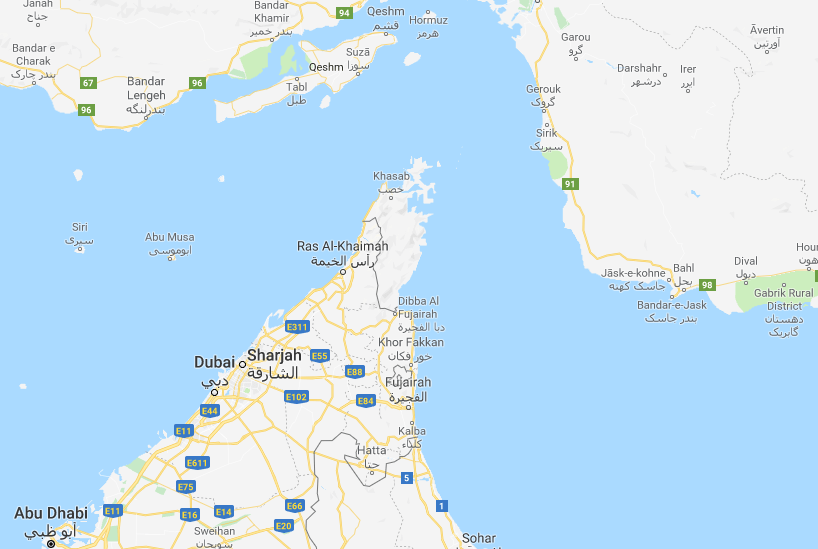
Persian Gulf/SoH

WASHINGTON (Kyodo) — U.S. President Donald Trump’s administration is planning to form an international maritime surveillance mission involving 55 vessels in a key waterway off Iran in November, a source familiar with the plan said Thursday.

The plan came to light amid heightened tensions between the United States and Iran following recent attacks on major oil facilities in Saudi Arabia, an incident Washington has blamed on Tehran.

To continue reading, please click here.

Source: mainichi.jp
Iran to hold annual Gulf drills with 200 Guards frigates – report

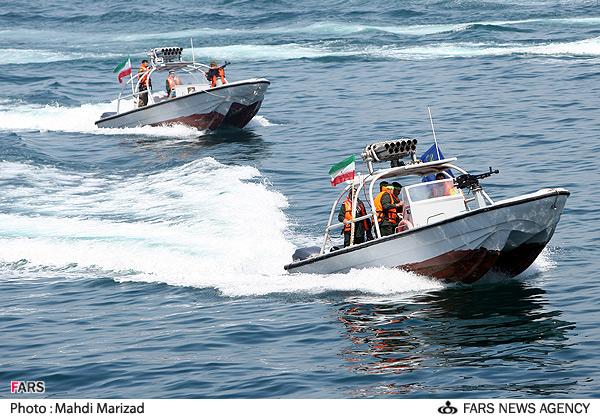
DUBAI, Sept 18 (Reuters) – Iran will hold its annual military parade on Sept. 22 in the Gulf with 200 frigates of its elite Revolutionary Guards Corps, Iran Front Page reported on Wednesday, at a time of spiked tension between Tehran and Washington.

“Some 200 IRGC frigates will take part in a parade of military units in the Persian Gulf… on Sept. 22 to mark the beginning of Iran-Iraq in 1980,” the IFP cited military sources as saying.

To continue reading, please click here.

Source: yahoo.com

Oil theft: Shell Nigeria deploys HD aerial cameras

Femi Asu

Shell Petroleum Development Company of Nigeria Limited has said it has deployed state-of-the-art high definition cameras for quick detection of and response to crude oil spills from its facilities.

The oil major said that the cameras would also help in tracking vandalism of the SPDC joint venture assets.

To continue reading, please click here.

Source: punchng.com

SIFAX Group Decries Attacks On Vessels At Lagos Port

By Jeremiah

Indigenous terminal operator, SIFAX Group has raised the alarm over incessant attacks on vessels at berth by sea-robbers and hoodlums. SIFAX Group is the operators of Ports and Cargo Terminal at the Tin Can Island port of Lagos.

Group executive vice-chairman of SIFAX Group, Dr Taiwo Afolabi disclosed this at the weekend during the 4th edition of Taiwo Afolabi Annual Maritime Conference (TAAM) with the theme, “Innovation and Practical Reforms Towards Sustainable Growth in the Maritime Sector” which held in Lagos.

To continue reading, please click here.

Source: leadership.ng

Gulf of Guinea maritime crime round up

Four robbers armed with a gun and knives boarded an anchored Marshall Islands-flagged product tanker at 0250 UTC in position 09:25N – 013:44.1W, around 5nm SSW of Conakry, Guinea. They took hostage the duty AB, tide his hands and forced him to lead them to the bridge. Once inside the bridge the robbers took hostage the duty officer and forced him to lead them to the Captain, Chief Engineer, third officer and bosun’s cabins. After looting the cabins, the robbers locked the crew in a cabin and escaped. Crew personal belongings, cash and ship’s properties stolen. SSAS activated; Duty Officer tried to contact local authorities via VHF but no response. Reported (IMB) 16 Sep. Via OCEANUSLive.org.

Via OCEANUSLive.org

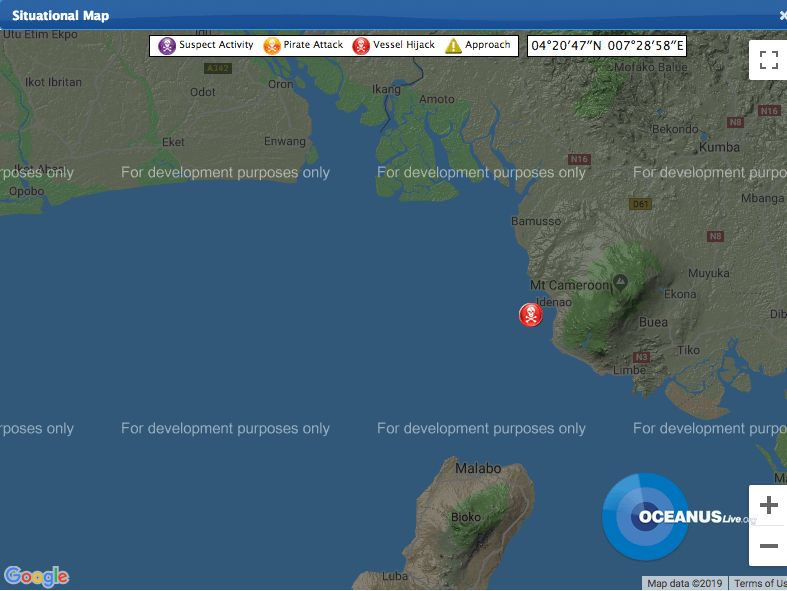
Eight persons in a speed boat, boarded a fishing vessel conducting fishing operations at 2200 UTC in position 04:10.26N – 008:55.33E, around 4.3nm SW of Idenao, Cameroon. The perpetrators kidnapped two crew members and escaped. Cameroon navy notified and investigations are ongoing. Reported (IMB) 13 Sep. Via OCEANUSLive.org

Via OCEANUSLive.org

Sri Lanka Navy trains overseas Coast Guard personnel in Search and Seizure

Sept 17, Colombo: The Sri Lanka Navy (SLN) is currently conducting a specialized ship search and seizure training for the overseas Coast Guard personnel in partnership with the United Nations Office on Drugs and Crime, (UNODC), the Navy said.

A Visit Board Search & Seizure (VBSS) course for the boarding teams of Indonesian, Malaysian and Philippine Coast Guards commenced at the Special Boat Squadron (SBS) Headquarters in Trincomalee Monday (16th September 2019).

To continue reading, please click here.

Source: colombopage.com

Nigeria: Losing war to vandals, oil thieves

With 45,347 breaks inflicted on Nigeria’s fuel pipelines in 18 years, thieves and vandals appear to be winning war against government and oil multinationals. Adeola Yusuf reports

For the umpteenth time, the Nigerian National Petroleum Corporation (NNPC) penultimate Wednesday announced collaboration with the Nigerian Navy to deepen war on crude oil theft. Describing theft and vamdalism as a menace, the two institutions declared a full-fledged war on crude oil theft and attacks on oil and gas facilities.

The duo came to the resolution when the NNPC GMD, Mallam Mele Kyari paid a courtesy visit to the Chief of Naval Staff, Vice Admiral Ibok Ekwe Ibas at the Naval Headquarters.

To continue reading, please click here.

Source: newtelegraphng.com

Private armed guards not allowed onboard vessels in Nigeria –Navy

Maritime Security News: Not entirely sure why they feel the need to restate this policy.

The Nigerian Navy has disclosed that private armed guards are still not permitted on merchant vessels in Nigeria. Rear Admiral, Begroy Enyinna Ibe-Enwo, representing the Chief of Naval Staff, confirmed this last week at the West Africa Shipping Summit in London, as part of highlight of events at the London International Shipping Week.

At the event, both NIMASA and the Navy acknowledged the challenges in securing the Nigerian maritime domain and affirmed the collaboration between both organisations to stem the incidents of piracy and armed robbery at sea.

To continue reading, please click here.

Source: sunnewsonline.com

The future of Philippine maritime enforcement

Michael van Ginkel

Illicit activity in the Sulu and Celebes Seas continues to pose a daunting maritime security challenge for the Philippines. The recent kidnapping of nine fishermen off the coast of Borneo and the increasingly violent modus operandi of the militant Abu Sayyaf Group (ASG) have raised safety concerns amongst Philippine policy makers and local communities. Although the Philippines has initiated several maritime enforcement initiatives, including the extensive National Coastal Watch System (NCWS), the government needs to enhance cooperation between land-based and maritime operations and increase engagement between military and civilian agencies to improve regional maritime stability.

To continue reading, please click here.

Source: theaseanpost.com