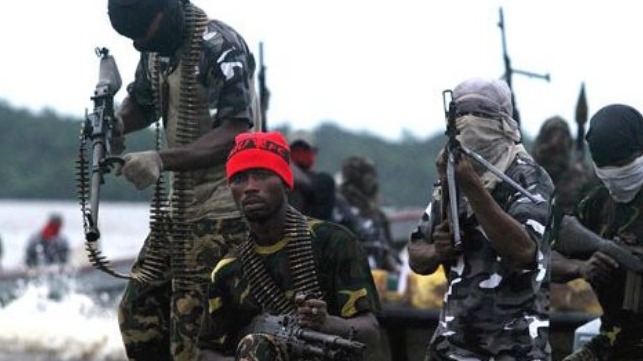
The Nigerian Navy has recruited 1,176 young men and women to aid the fight against sea pirates and oil bunkers in the nation’s maritime domain.
The Chief of Defence Staff, General Abayomi Olonisakin, stated this in a statement made available to The Tide shortly after the passing out parade of Batch 28, Basic Training School in Onne. He said the trainees underwent rigorous physical and mental training for seven months to prepare them for internal security operations across the country.
The guilty verdict handed down in a Sao Tome and Principe courtroom echoed across the globe.
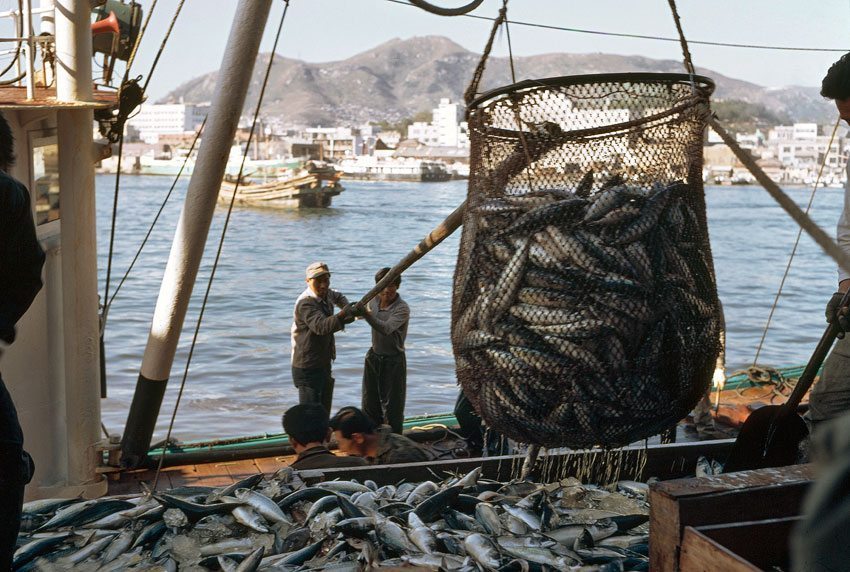
A Chilean captain and two Spanish crew members of the notorious fishing vessel the Thunder were sentenced to two to three years in prison and fined a total of $15 million.
For the tiny Gulf of Guinea island that relies heavily on the sea economy, it felt like a rare win in a losing battle against illegal fishing.
MANILA (Reuters) – A Dutch photographer held hostage by Islamic State-linked militants in the Philippines since 2012 was killed on Friday by his captors when he tried to escape during a firefight on a remote southern island, the military said.
Ewold Horn, a wildlife photographer, was shot by his guards from the Abu Sayyaf group when he tried to flee during a clash between government troops and the militants, said Brigadier General Divino Rey Pabayo, commander of a Joint Task Force on Sulu island.
Bonny – The Nigerian Navy has called for more effective collaboration between security agencies and the people to tackle crime in Rivers.
The navy decried the upsurge in criminality across various communities and on waterways, express optimisms that it would be successful, if the residents were fully involved. Capt. Kolawole Oguntuga, the Commanding Officer, Forward Operating Base, Bonny, made the call on Thursday at the inauguration of a free medical outreach on Thursday in Bonny Local Government Area of Rivers.
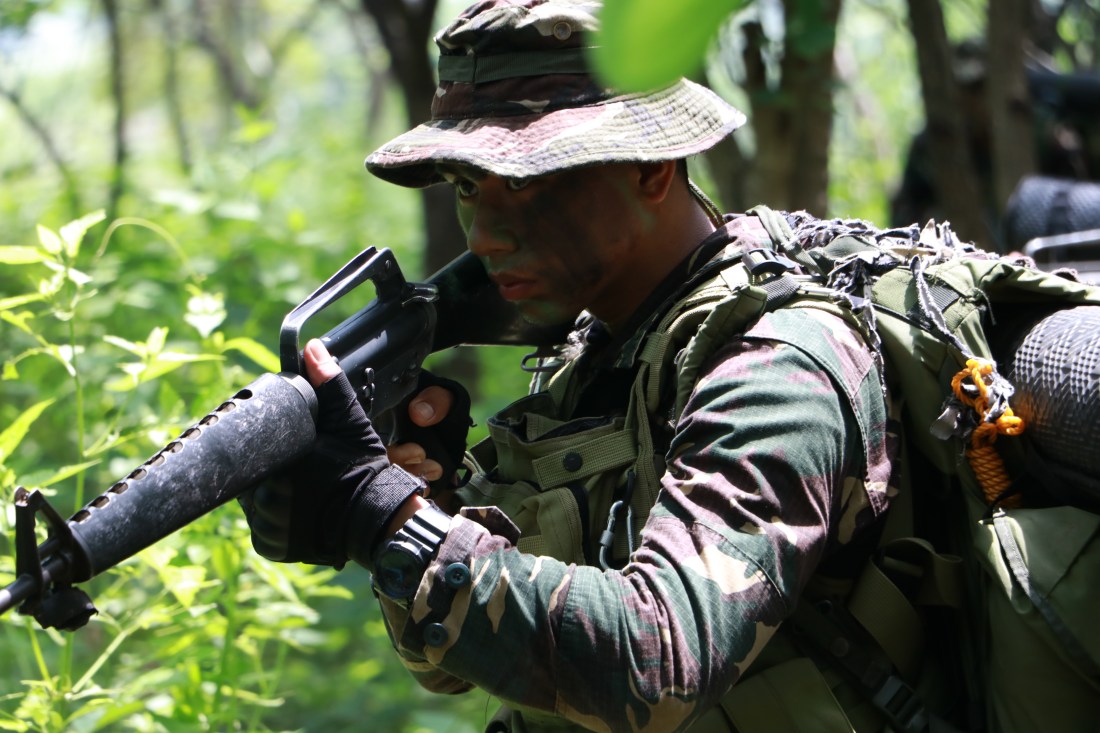
MANILA — The military will deploy the 1st Brigade Combat Team (1BCT) to Sulu in line with ongoing efforts to neutralize the Abu Sayyaf Group (ASG) terrorists.
“Now that the election period is over and national candidates have been proclaimed, we are redeploying forces to security challenged areas like Sulu Archipelago for focused military operations,” Armed Forces of the Philippines (AFP) spokesperson, Marine Brig. Gen. Edgard Arevalo said in an interview with reporters Thursday.
The federal government has lamented that insecurity on the nation’s maritime domain has deteriorated assuring that it is determined to stamp out all forms of insecurity such as piracy, sea robbery, kidnapping for ransom and oil theft, among others within the nation’s maritime domain.
The government said by January 2020, insecurity and maritime crime would be a thing of the past as it would begin a phased implementation of its new maritime security architecture.
THE Federal Government will begin the deployment of anti-piracy equipment in the nation’s Maritime sector by June 2019.
Disclosing this on Tuesday in Lagos during a stakeholders meeting tagged ‘Regulating The Maritime Industry For a Better Nigeria’, the Honourable Minister of Transportation, Rt. Hon. Rotimi Amaechi revealed that the situation as regards insecurity in the nation’s maritime sector is very bad as of now.
“The need for a strong maritime security presence in the High-Risk Area remains critical for the deterrence and prevention of future incidents and attacks.”
Rear Admiral Antonio Martorell Lacave
On 21 April, suspected pirates seized a fishing dhow off the coast of Somalia, holding 23 people hostage. In a matter of hours, the European Union’s counter-piracy force EU NAVFOR Somalia Operation Atalanta had responded to the attack. Two days later, the incident was over; Operation Atalanta had detained five suspects and released 23 hostages.
An Attack Dismantled
The incident began when five suspected pirates captured a fishing dhow off the coast of Somalia. The suspects proceeded to navigate the dhow along the coast, where they visited a pirate base camp and reinforced their crew with additional members. Next, using the captured dhow as a mother ship, the suspects attacked another fishing vessel, the FV Adria. This attack took place in the Indian Ocean, some 280 nautical miles off the coast of Somalia.
In self-preservation, FV Adria then conducted evasive manoeuvres and increased its speed. Another fishing vessel, the FV Txori Argi was also operating in the vicinity at the time and assisted the FV Adria as the suspects continued to chase her. After approximately one hour, the suspects approached both fishing vessels and attacked them with a rocket-propelled grenade. The Private Armed Security Teams (PAST) on board the FV Adria and the FV Txori Argi responded, and the suspects retreated.
That same day, EU NAVFOR dispatched its Maritime Patrol Aircrafts (MPRAs) and conducted a regional search, through which they were able to successfully identify and track the captured mother ship.
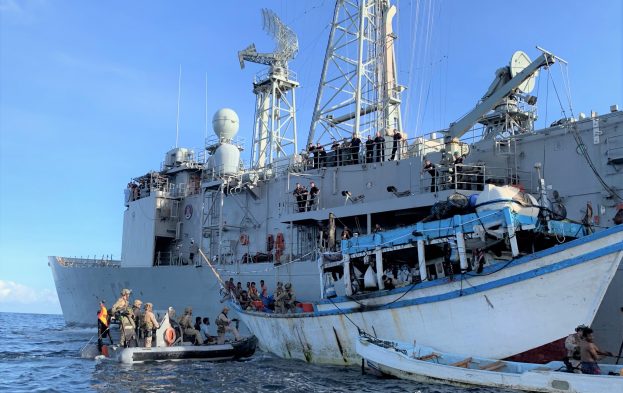
On 23 April, in collaboration with its MPRAs, EU NAVFOR’s flagship ESPS NAVARRA was able to approach, intercept and board the captured fishing vessel. With the support of the PAST and EU NAVFOR’s various active assets in the region—including the frigate ESPS NAVARRA and MPRAs German JESTER and Spanish CISNE—Operation Atalanta was able to control the situation and prevent any further imminent attacks.
“This incident clearly demonstrates that piracy and armed robbery at sea off the coast of Somalia have not been eradicated,” said Operation Commander Rear Admiral Antonio Martorell Lacave in an interview. “The need for a strong maritime security presence in the High-Risk Area remains critical for the deterrence and prevention of future incidents and attacks.”
Following the attack, Operation Atalanta urged the maritime industry to remain vigilant across the High-Risk Area and to comply with recommended Best Management Practises for Protection against Somalia Based Piracy, as supported by EU NAVFOR’s Maritime Security Centre Horn of Africa (MSCHOA). MSCHOA last updated the Best Management Practises for public reference in 2015, at the height of piracy attacks in the High-Risk Area.
Behind The Scenes
Lesser known to the public, however, was the fact that at the time of these attacks in April, Operation Atalanta was still in the midst of an important transition. Just three weeks before the attack—the first since October of last year—Operation Atalanta officially moved from its previous Operation Headquarters (OHQ) in Northwood, U.K., to its new OHQ in Rota, Spain. MSCHOA also moved from OHQ in Northwood to Brest, France, although it remains under command of OHQ in Rota. Additionally, the operation transferred command from Major General Charlie Stickland, UK Royal Marines, to Rear Admiral Antonio Martorell Lacave, Spanish Navy.
Lesser known to the public, however, was the fact that at the time of these attacks in April, Operation Atalanta was still in the midst of an important transition. Just three weeks before the attack—the first since October of last year—Operation Atalanta officially moved from its previous Operation Headquarters (OHQ) in Northwood, U.K., to its new OHQ in Rota, Spain. MSCHOA also moved from OHQ in Northwood to Brest, France, although it remains under command of OHQ in Rota. Additionally, the operation transferred command from Major General Charlie Stickland, UK Royal Marines, to Rear Admiral Antonio Martorell Lacave, Spanish Navy.
The handover and transfer of command was a careful process that lasted nearly a year in its entirety. After all arrangements for location, staffing and training were complete, the transitional phase also involved one month of parallel operational running between Northwood and Rota. However, one would never know it by the operational fluidity that the headquarters maintained throughout the process, and continues to demonstrate today. Highly skilled staff—some from the previous OHQ in Northwood, UK and some new to Operation Atalanta—maintained near perfect continuity throughout the transition.
Operation Atalanta Commander Rear Admiral Martorell Lacave says the manner in which Operation Atalanta handled this first piracy attack in its new OHQ is representative of the commitment and responsibility each branch of the operation feels to their duty.
“I am very confident in the capabilities of the staff in all branches of EU NAVFOR’s Operation and Force Headquarters,” he said. “As we have seen with this most recent incident, we continue to provide the same level and quality of operational outputs from Rota as were previously provided in Northwood.”
Nigeria’s government has authorized a local oil company to operate a new floating crude oil export terminal off the coast of the Rivers state in the oil-rich but still troubled Niger Delta.
Belemaoil Producing Ltd has been allowed to moor a floating storage and offloading (FSO) unit and use it as a crude oil export terminal, according to a letter signed by the Director of Nigeria’s Department of Petroleum Resources (DPR), Mordecai Ladan, Nigerian media report.
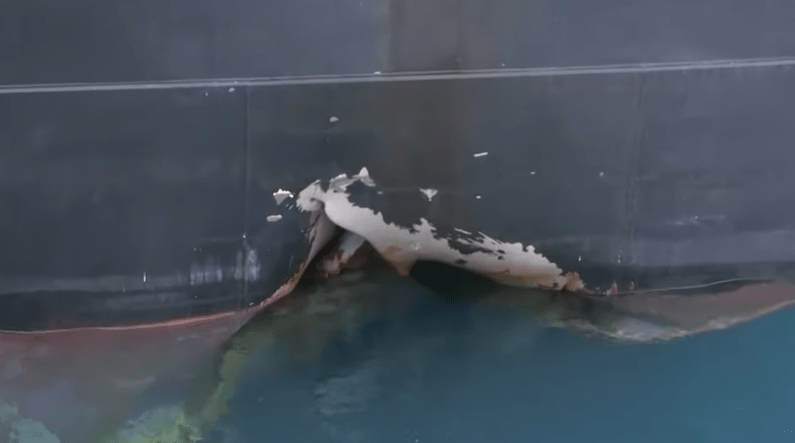
ABU DHABI (Reuters) – U.S. National Security Adviser John Bolton said on Wednesday that attacks on oil tankers off the coast of the United Arab Emirates this month were the work of “naval mines almost certainly from Iran”.
The UAE has not yet blamed anyone for the sabotage of four vessels, including two Saudi tankers, which was followed two days later by drone strikes on oil pumping stations in Saudi Arabia.





 Maritime Security News