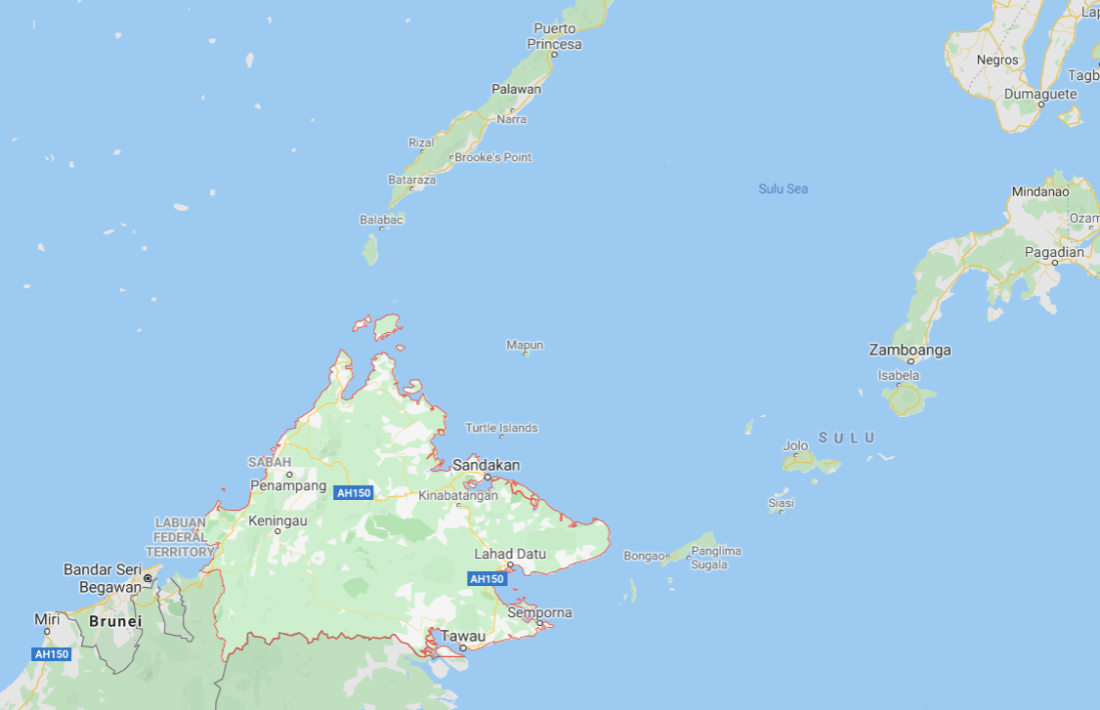
ZAMBOANGA CITY, Philippines — Army troopers are tracking down five Indonesian fishermen being held captive by Abu Sayyaf bandits after the victims were reportedly spotted in the hinterlands of Maimbung, Sulu.
The Joint Task Force Sulu (JTFS) intensified its intelligence gathering as it gave assurance that the troops are ready to execute plans to liberate the captives.
These reports come against a backdrop of pirate attacks against merchant ships in West Africa, particularly in the Gulf of Guinea between Côte d’Ivoire and Gabon. They have also led to attention-grabbing headlines about a “piracy surge” or even “waves of terror”.
In 2019, kidnappings of seafarers in the Gulf of Guinea reached an unprecedented number. Attacks against merchant ships were recorded off Togo, Benin, Nigeria, Cameroon and Equatorial Guinea. The area is often described as “the world’s most dangerous seas”.
Piracy is a significant threat for shipping companies operating in the region. Industry organisations have pointed out that urgent action is required and that seafarers should not be “exposed to such appalling dangers”.
The human cost is significant and hostages aren’t the only victims. Representatives from seafarers’ unions have pointed out that their members are at considerable risk for just doing their jobs, and even crews on ships that are merely transiting are on edge.
Based on a thorough analysis of attack patterns and overall maritime activities in the region, I am convinced that it will be impossible for navies and other security agencies to improve maritime security as long as root causes are not addressed. Many security incidents at sea, and notably kidnappings of seafarers, are merely an extension of land-based issues.
At the heart of the problem are activities by criminal groups based in the Niger Delta where kidnappings on land have long been a security challenge. Unless the massive security problems in the Delta are resolved, no significant headway will be made at sea.
The numbers
Beyond attention-grabbing headlines there’s no consensus on figures. Not even the reports mentioned above include the same numbers. That matters because shipping companies make commercial decisions based on official statistics, and budgets for security agencies are allocated depending on the scope and scale of the problem.
For example, the International Maritime Bureau reported that 121 seafarers were taken as hostages during attacks in the Gulf of Guinea in 2019. This represented more than 90% of global kidnappings at sea recorded by the centre.
At the same time, the organisation only reported 64 attacks in the Gulf of Guinea last year. This was a decrease of 19% compared with 2018.
The US Maritime Administration highlighted a similar trend in a recent advisory even though the overall numbers are much higher. It reported that there were 129 attacks in 2019 after 145 attacks in 2018, representing an 11% drop.
The French Navy’s Mica centre, on the other hand, reported a 20% increase in attacks against ships across the Gulf of Guinea between 2018 and 2019 (from 90 to 111 incidents).
Overall, numbers differ due to reporting standards and categorisations aren’t comparable. Similar events are often classified in different ways. For example, the IMB recorded four hijacked ships in 2019, the US Maritime Administration noted six, and the MICA centre classified 26 incidents as hijackings.
Annual statistics are further complicated by increased awareness. Incidents that would not have been reported a few years ago are now included in publicly available data, even though they may be linked to other criminal activities at sea.
During my own research, I have come across many cases where such activities were linked to incidents broadly described as “pirate attacks”, without a detailed analysis of individual circumstances.
Such differences underline that annual statistics are not necessarily a valuable tool for understanding issues in the Gulf of Guinea. Rather, security agencies have to gain a broad understanding of all maritime security challenges. Based on such knowledge, a transparent analysis of incidents is possible, providing the necessary background for commercial decisions or law enforcement operations.
Extension of a land problem
Attacks at sea are generally conducted by criminal groups based in the Niger Delta. Throughout the region, there is an ample supply of foot soldiers and camps in remote locations where hostages can be held during negotiations, the prerequisites for a lucrative business model.
Highlighting the direct link with Nigeria is important. On the one hand, neighbouring countries are unable to solve the problem unless security on land in the Niger Delta improves. On the other hand, spikes in attacks are possible at any time. For operators of merchant ships, the threat level can change within weeks, depending on factors such as weather, changes in traffic patterns or naval operations as well as the general situation on land in certain areas in the Niger Delta.
Furthermore, insecurity at sea is an overarching problem for regional governments. Pirate attacks may be particularly visible. But other concerns, such as fuel smuggling, illegal fishing or unregulated shipments of pharmaceuticals like Tramadol, are usually more pressing for government agencies.
Solutions
The West and Central African region has made significant progress in fighting all types of illicit activities at sea. Various types of maritime security issues are mentioned in the Yaoundé Code of Conduct, adopted in 2013 and aimed at improving maritime security in West and Central Africa.
However, human and financial resources are scarce and maritime security is generally regarded as less important than land-based security challenges which directly affect domestic populations.
But insecurity at sea has a significant economic impact by hurting activities related to the maritime environment. Maritime business plans therefore must include security-related expenditures for navies, coastguards and other government agencies. These are needed to maximise the potential of the maritime environment. This, in turn, would show that better maritime security has direct benefits for economic growth and development.
The suspects were arrested in the creeks of the Niger Delta after extensive intelligence and surveillance
by SaharaReporters
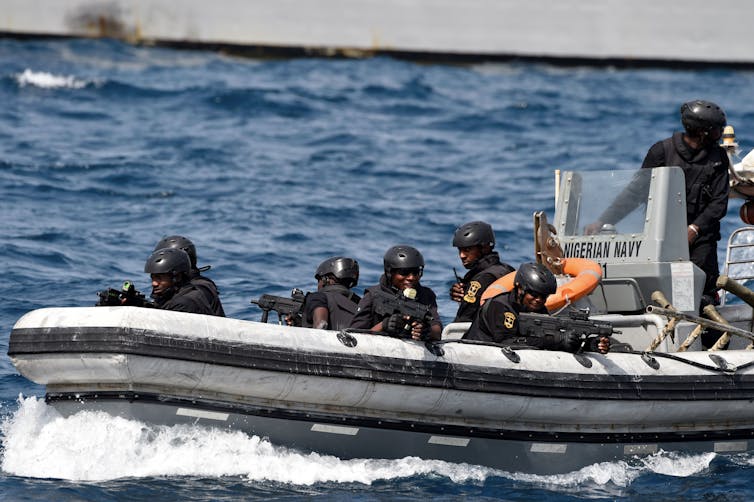
The Nigerian Navy has arrested three sea robbers suspected to have links with the pirates that killed four naval ratings in Ondo State.
The suspects including Odun Ogunse, Adeojo Sunday and Edema ThankGod were arrested during the week by the team of naval officers in Igbokoda area of the state.
Police are monitoring the remaining few hostage ‘spotters’ or lookouts working in cohorts with the kidnap-for-ransom group (KFRG) responsible for the kidnapping incidents in Sabah’s east coast.
Sabah Police Commissioner Omar Mammah (above) said the spotters under surveillance were fishermen.
KOTA KINABALU: Two of the six men suspected to have kidnapped five Indonesian fishermen in Malaysian waters earlier this month have been shot dead by Philippine security forces.
Eastern Sabah Security Command (Esscom) commander Hazani Ghazali said the suspects were killed in a shootout with Philippine security forces two days ago.
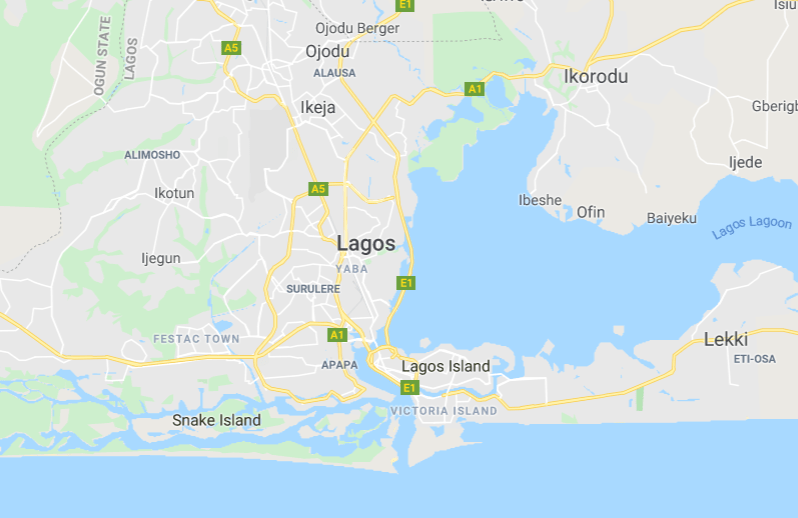
Rear Admiral Oladele Daji, the Commander of Operation Awatse, says Tarkwa-bay is a hideout for sea robbers and officially it is a non-residential area.
Daji disclosed these on Tuesday during an interview on Channels Television breakfast programme, Sunrise daily. Speaking concerning the eviction of Tarkwa-bay residents, Daji described this as a clearance operation code-named Operation Kuronbe (Yoruba word meaning Leave There).
ABDUCTORS, who spread fear and terror in West African waters and are responsible for the rising cases of kidnapping in Nigeria, Cameroon, Benin, among others, are mostly ex-militant members of a group who steal crude oil fromtanker ships and sell it to buyers on the black market.
In an exclusive interview by The Manila Times, the two freed Filipino seafarers said most of their abductors were former high-ranking officials of the Nigerian military who broke away from the government.
MarsecNews: Please note that this post was automatically translated from French into English and some errors may occur.
ByBirama THIOR
The future major terrorist attack after 9/11 could be navy. This is an alert made on Tuesday by Gorgui Sy, coordinator of the world’s largest LNG tanker suggests the establishment of a joint patrol unit in the sub-region to defend oil and gas facilities.
This is an exit worthy of a warning. The retired commander’s on potential terrorist attacks. “There is a whole system of security to be put in place around, especially in Senegal where we do not have these boats but we do not have a very dangerous zone certainly. But the exploitation of oil and gas always elicits malicious people who will want to show up or do things that don’t match what is expected,” Mr. Sy said on Rfm, noting that Senegal can set up its own shipping company if conditions are right.
LAHAD DATU: The captors of the five Indonesian workers off Tambisan waters on Jan 15 have not made any ransom demand, said Sabah police commissioner Omar Mammah.
“Until today, we have not received any demand for ransom money from the kidnappers. We are investigating to find out who the masterminds are,” he said during a visit to the Lahad Datu police headquarters today.
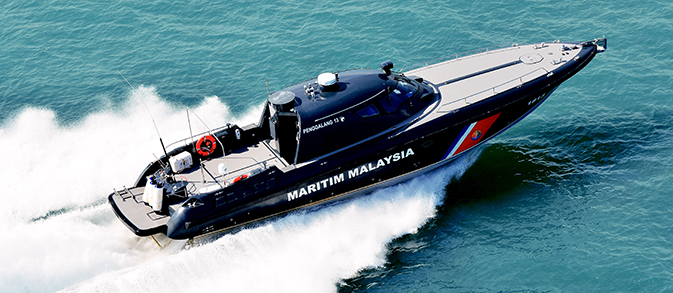
LABUAN: Labuan marine police thwarted smuggling activities with a total seizure worth more than RM17 million last year, compared to RM1.5 million in 2018.
Sabah marine police (Region 4) commander, ACP Mohamad Pajeri Ali said Labuan marine police also foiled several attempts of illegal fishing by foreign fishermen and intrusion by illegal immigrants.






 Maritime Security News