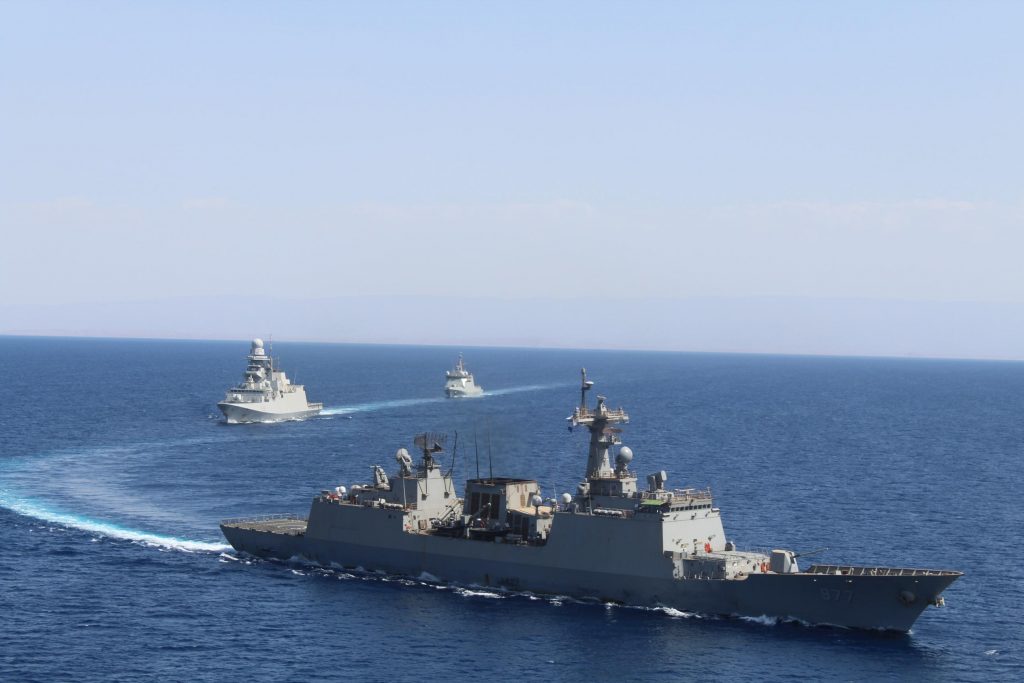
HMAS Toowoomba, FS Guépratte exercise in Gulf of Aden

HMAS Toowoomba, via Wikipedia

By: Sandy Milne

HMAS Toowoomba has exercised with French frigate FS Guépratte in the Gulf of Aden as part of the Australian warship’s support to Combined Task Force 150.

The CTF 150 mission is to stabilise the region by disrupting piracy operations, as well as seeking to counter weapon and narcotic smugglers. During the exercise, Toowoomba and Guépratte conducted ship handling training including Officer of the Watch manoeuvres and replenishment at sea (RAS) approaches, which form core components of a CTF deployment.

To continue reading, please click here.

Source: defenceconnect.com.au

India: Customs cracks down on fishing boats with Chinese tracking devices

By Toby Antony

KOCHI: To ensure the security of the coastline and prevent smuggling activities through the sea route, the Customs has launched a crackdown on fishing vessels operating from Kerala shores using China-made Automatic Identification System-tracking devices which are mandatory for vessels now.The decision was taken after multiple agencies raised concerns regarding security issues following fishing boats fitted with the Chinese AIS were found on the Kerala coast.

Recently, Customs Commissioner Sumit Kumar directed its marine units to intensify checking on fishing vessels which are not using the standard AIS recommended by the government.The marine units have already tracked down 18 such vessels operating from various harbours in Kerala.

To continue reading, please click here.

Source: newindianexpress.com

Covid-19 and the threat to maritime and port security

As the UK becomes the latest country to adopt a policy of restricted movement for its citizens, following (at least two metres behind) France, Spain and Italy in Europe, it’s important that we do not lose sight of the risks this presents.

Criminals and non-state threat actors do not necessarily follow health warnings and lockdown measures. If anything, they thrive in an environment like that. One example would be during WWII in the UK, where the German bombing of London turned the city into a criminals’ playground. During the four months of the London Blitz from September to December 1941, a total of 4,584 cases of looting were heard by the Old Bailey court, for example.

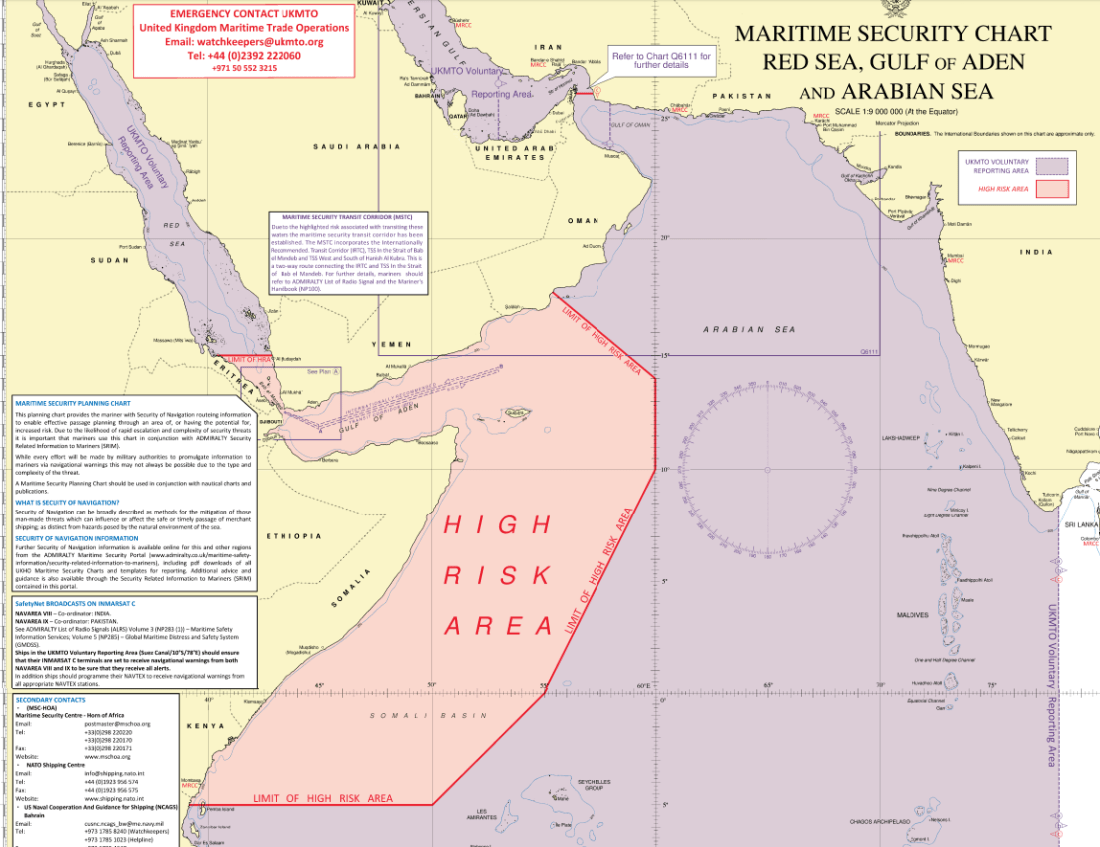
Organised crime and the black market flourished, and we should expect something similar to occur in maritime crime hot spots and High Risk Areas.

Over the weekend, seven crew were kidnapped in the Gulf of Guinea, which underlines the risk. In the coming weeks, we should expect further incidents and, should food and energy supply lines be further affected by the pandemic, port and terminal security should be stepped up to mitigate any risk at ports from criminal gangs. It is likely that oil theft will increase in the Delta, although the Nigerian Navy is already making efforts to mitigate this.

In the Indian Ocean, the risks presented by Somali pirates remain low, but still present. An increase in Covid-19 cases in the country could potentially lead to further economic issues which will then drive criminals on to the water to look for ‘easy’ money. Combine this with the current issues being experienced by maritime security companies trying to embark armed security teams and it’s easy to see just how badly wrong things could go.

Organised criminal gangs will be aware that regional and international naval forces will have difficulties with crew rotations, bunkering etc. and may choose to exploit the situation by increasing smuggling operations in the Arabian Sea.

In Yemen, Houthi rebels, already making their presence felt in recent weeks with SVBIEDs (boat bombs), may attempt to disrupt crucial shipping lanes in order to focus world attention on their plight.

It’s a long list of maybes. But mitigation and prevention should be a paramount concern for anyone involved in maritime security.

Finally, thank you all for continuing to support the blog. We’ve had a sharp increase in readers from around the world, and I appreciate your support, even if I’m not in a position to earn any money from this (and that would be rather useful at the moment, as I’ve also lost earnings due to the virus).

Keep well, keep apart and stay safe.

In a first, India, France conduct joint patrols from Reunion Island

File image of US Navy P-8A Poseidon

Dinakar Peri

India and France, For the first time, have conducted joint patrols from the Reunion Island, signalling New Delhi’s intent to engage with friendly foreign partners in expanding its footprint in the Indian Ocean, focusing on the stretch between the East African coastline and the Malacca straits.

India has so far carried out Coordinated Patrols (CORPAT) only with maritime neighbours and had rejected a similar offer by the US.

To continue reading, please click here.

Source: thehindu.com

Operation Sankalp: Indian Navy commences maritime security operations for merchant vessels in Strait of Hormuz

Indian Navy

New Delhi: In wake of the deteriorating situation in the Middle East, India has launched a maritime security operation to promptly respond to the emergency situations for Indian sea vessels.

The Indian Navy on Wednesday said that they have commenced security operations called ‘Operation Sankalp’ in order to ensure safe passage of Indian Flag Vessels through the Strait of Hormuz.

To continue reading, please click here.

Source: timesnownews.com

Indian, French navies to carry out joint patrolling in Indian Ocean Region

New Delhi, Dec 9 (PTI) India and France will soon launch a joint naval patrolling in the region to protect their strategic interests, including to check large scale illegal fishing, a top commander of the French Navy said on Monday.

Vice admiral Didier Maleterre, who is Joint Commander of the French forces deployed in the Indian Ocean region, also said that the two navies will ink an agreement early next year providing for sharing of classified information for better operational cooperation in the region.

To continue reading, please click here.

Source: outlookindia.com

Exercise Naseem Bahr: Joint naval drill between India and Oman to focus on maritime security and anti-piracy

Indian Navy

By: Huma Siddiqui

India and Oman will conduct the 12th edition of bilateral maritime exercise ‘Naseem Al Bahr’ in the Arabian Sea next month, as both countries are aiming to further increase interoperability between the two navies and enhance maritime security.

The scope of Naseem Al Bahr this year will include besides professional interactions, operational activities at sea across the spectrum of maritime operations.

To continue reading, please click here.

Source: financialexpress.com

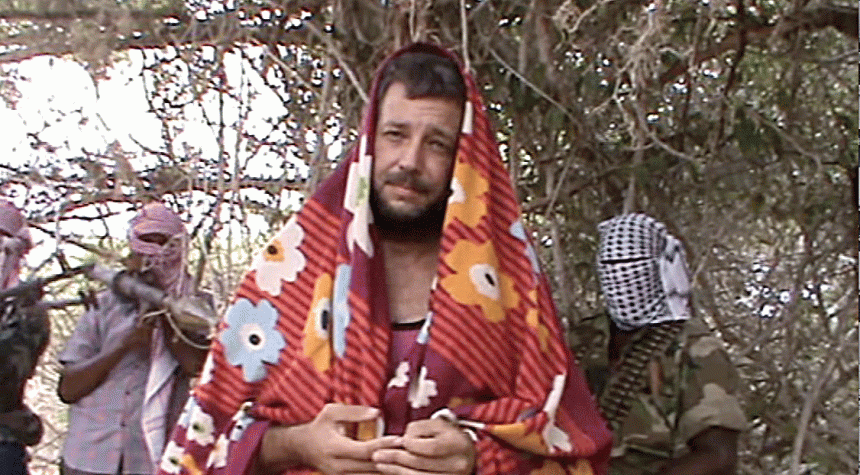
Alleged Somali pirates accused of kidnapping hit with terrorism charges

Michael Scott Moore, image courtesy of SomaliaReport.com

By Andrew Denney

Two alleged Somali pirates previously accused of kidnapping an American journalist and holding him for more than two and a half years were hit with fresh federal charges on Wednesday — including new allegations they were working on behalf of terrorists.

Mohamed Thalil Mohamed and Abdi Hassad were previously hit with kidnapping raps in connection with the long captivity of Michael Scott Moore.

To continue reading, please click here.

Source: nypost.com

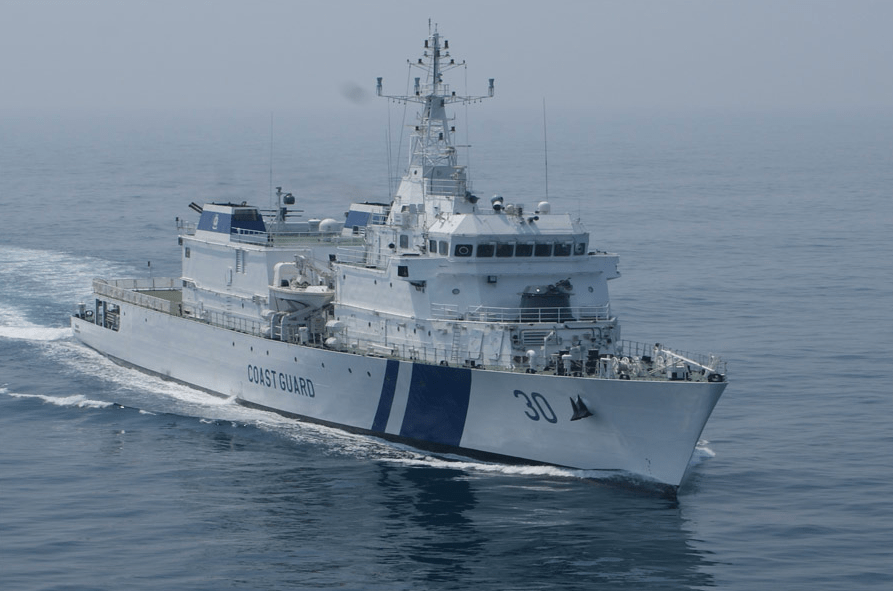
India to have Central Marine Police Force to guard coastline

India has a vast coastline of 7,516 km touching 13 states and union territories. It also has around 1,197 islands.

New Delhi: The Ministry of Home Affairs has completed the modalities of setting up a new armed force — Central Marine Police Force — to strengthen coastal security. A final proposal would be sent to the Cabinet by early next month for approval, a source in the ministry said on Saturday.

About the structure of the force, a senior ministry officer said, “Unlike other Central Armed Police Forces, the Central Marine Police Force will have it own cadre, rules, manual, Act, infrastructure and would be headed by a Director-General rank officer.”

To continue reading, please click here.

Source: telanganatoday.com


Maritime terrorism in Asia: An assessment

Abhijit Singh

This paper evaluates the possibility of an increase in maritime terrorist violence in Asia, based on a recounting and analysis of some of the most recent past incidents in these waters. It argues that the vulnerability of high seas shipping to criminal acts of violence and the weak and inconsistent nature of maritime governance raises the possibility of a terrorist strike in the Asian littorals. In assessing the odds of a major terrorist attack in coastal regions, the paper also explores the terrorism-piracy nexus and the state of port security in key continental spaces, highlighting measures to improve maritime readiness against acts of terror.

Introduction

In recent years, sea-borne terrorism has emerged as a major security threat in littoral-Asia. Since the November 2008 attacks in Mumbai—when ten Pakistani terrorists infiltrated the city from the sea, killing 166 people and injuring over 300—regional watchers have been wary of the possibility of another attack from the seas. Within India’s security establishment, the anxiety has been palpable. In November 2018, a few weeks shy of the tenth anniversary of the Mumbai attacks, intelligence emerged that Pakistan-based militant outfits Lashkar-e-Taiba and Jaish-e-Mohammed had been training their cadres to execute another strike on Indian ports, cargo ships and oil tankers.[1]Reportedly, Pakistani militant commanders had been training volunteers at modified training sites and canals in Lahore and Faisalabad for “samundari jihad” (seaborne jihad). Unlike 26/11, when terrorists had used the sea route to enter Mumbai and stage attacks on land targets, the plan this time around was to deploy trained jihadi divers to target an Indian or coastal facility.[2]

To read the entire paper, please click here.

Source: orfonline.org