Seafarers’ charity Stella Maris (Apostleship of the Sea) has expressed concern over the effect that piracy continues to have on seafarers’ physical and mental wellbeing, ahead of Sea Sunday on July 14.
The charity has emphasised that seafarers’ safety and pastoral support remains paramount when their ships are targeted or attacked by pirates.
Alerting the international maritime community on Monday, the IMO stated that warnings currently being issued from the email account of the Regional Maritime Information Sharing Centre (REMISC) in Sana’a, Yemen (infoex@remisc.org) are not legitimate.
Given the current situation in Yemen, the centre has not been able to provide updated piracy incident information, and has temporarily stopped its activities.
Kenya has been elected the chair of the Contact Group on Piracy off the Coast of Somalia (CGPCS) for a period of two years beginning January 2020.
The chairmanship will afford Kenya the opportunity to coordinate regional and international efforts to deal with the challenge of piracy which remains a threat to the Maritime sector, despite being suppressed in recent times.
The seas off West Africa’s oil-rich coastline are now the most dangerous in the world for shipping, according to a new report.
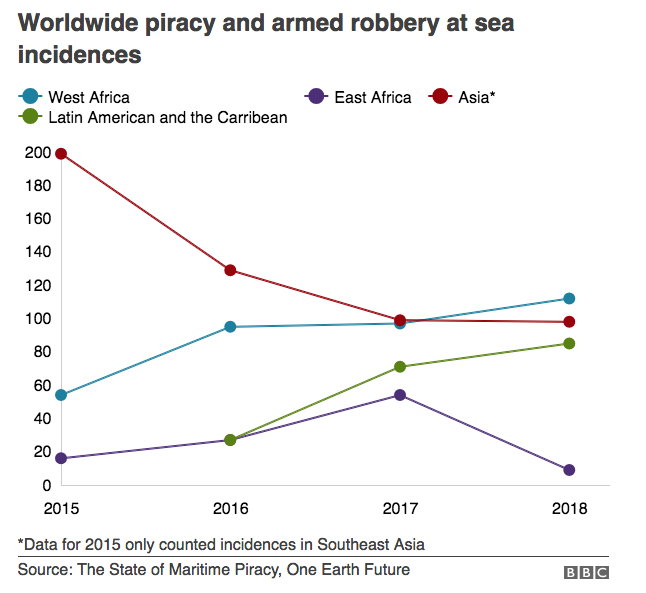
One Earth Future, which produces an annual State of Maritime Piracy, says that while attacks have been falling substantially in some regions of the world, in West Africa they’ve been on the rise and are now more frequent than anywhere else.
So why the increase in West Africa, and what shipping is being targeted?
What is piracy?
A strict definition of maritime piracy only includes attacks on shipping on the high seas – that is, more than 12 nautical miles off the coastline and not under the jurisdiction of any state.
Inside a country’s territorial waters and within port facilities, these attacks are defined as armed robberies at sea.
However, the data we’ve used from this latest report combines these two sets of data to give an overall picture of incidents at sea both inshore and offshore.
In 2018, there were 112 such incidents in West African waters.
It’s not just the huge tankers exporting oil and gas from Nigeria and Ghana that are targeted.
Commercial ships from smaller countries are also in the sights of the pirates.
At a recent event in London, President Faure Gnassingbé of Togo – a country sandwiched between these two regional giants – highlighted his own concerns at the rise in attacks on regional shipping.
“Our region is distinguished by the resurgence of transnational criminality on the high seas in the Gulf of Guinea,” said Mr Gnassingbé.
Why are attacks rising?
Most of the attacks have been against ships involved in oil and gas transportation, such as tankers, bulk carriers and tugs. Fishing vessels have also been targeted.
The coastline off Nigeria saw the most attacks in 2018. This is partly because of “petro-piracy”, targeting tankers from Nigeria’s rich oil and gas fields.
There were also incidents reported at the loading and anchorage facilities in the Nigerian port of Lagos.
Piracy in the form of hijacking and kidnapping for ransom payments was also common off the coasts of Benin, Ghana, Nigeria, Congo-Brazzaville and Cameroon.
Rich pickings at sea, political instability, the lack of law enforcement and poverty on land are all factors which have contributed to the increase in piracy.
Most of the seafarers affected are not from the region. Around half are from the Philippines, followed by India, Ukraine and Nigeria.
One of the reasons West Africa is now the number one spot for piracy is because of of the downward trends recorded elsewhere.
The East African shipping routes along the Somali coastline have been notorious for hijackings and robberies.
But since peaking in 2011, rates of piracy there have fallen off dramatically in recent years.
Local efforts on land in Somalia to change attitudes towards permitting piracy and building legal capacity to prosecute criminals have also helped improve the situation.
In Asia, the Malacca Strait, a busy, commercially important stretch of water between Malaysia and Indonesia, experienced a high number of attacks in 2015.
Concerted action by regional naval forces has reduced the problem there, but piracy still persists.
Attacks against shipping in the Caribbean and off the coast of Latin American have, however, risen.
Venezuela in particular has become a hotspot for piracy.
“Political and economic instability is a big factor there,” says Lydelle Joubert, an expert on piracy at One Earth Future.
The French Government has commended Kenya for establishing a Coast Guard Unit to police its vast Coastal maritime waters.
President Uhuru Kenyatta late last year unveiled the Kenya Coast Guard Service (KCGS) and launched into service its first offshore patrol boat christened Doria in Mombasa.
The geographic mandate of the Contact Group on Piracy off the Coast of Somalia (CGPCS) might be broadened to combat piracy in the Gulf of Guinea, Russia‘s Deputy Permanent Representative to the UN Dmitry Polyanskiy said during UN Security Council consultations on the situation in the Central African region.
“Our country has had a positive experience in international efforts to fight piracy in the northwestern part of the Indian Ocean as part of the Contact Group on this fight off the coast of Somalia. We hope that this experience might be useful for resolving similar issues in the Gulf of Guinea, including in the context of possibly broadening the geographic mandate of the Contact Group to include the Gulf of Guinea,” Polyanskiy said on Tuesday.
Kenya has banned fishing activities off the Coast near the Somalia border over security concerns.
Lamu County Commissioner Joseph Kanyiri says all fishermen are prohibited from carrying out their activities in Ras Kamboni and any other areas past Kiunga Town, all of which lie close to the Kenya-Somalia border.
A fresh annual report from the International Maritime Bureau shows that attacks in West Africa helped push piracy numbers up in 2018. In terms of military and law enforcement, an international operation is not complicated, so what is needed above all is the will to act.
According to the bureau’s report, there were 201 incidents in total* reported to the bureau last year. That is a rise from 180 incidents in 2017 and from 191 in 2016. Of this, 48 incidents took place in Nigeria, up from 33 in 2017 and 36 incidents in 2016.
The report also showed that the region saw a considerable spike in violence in the last quarter of the year, with 40 kidnappings in the waters off Nigeria alone. In West Africa, there appears to be challenges with underreporting, which is estimated at as much as 40%, the report says.
Maritime Security News: It’s worth noting that the IMB only collates reports submitted to them directly by CSOs and Masters. To gain a full picture of maritime crime, it is necessary to collate reports from all agencies.
Meeting reiterates: threat of piracy not eradicated off the Horn of Africa.
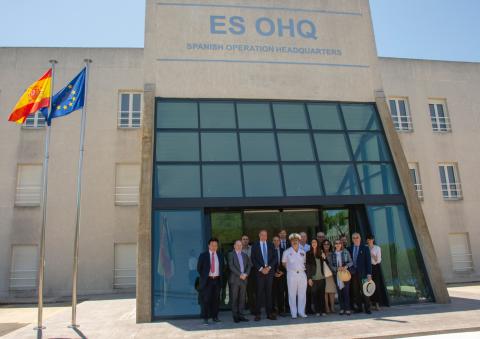
On 23 May, ECSA’s Maritime Security Working Group met with the EU NAVFOR Somalia Operation Atalanta at their operation headquarters in Rota, Spain.
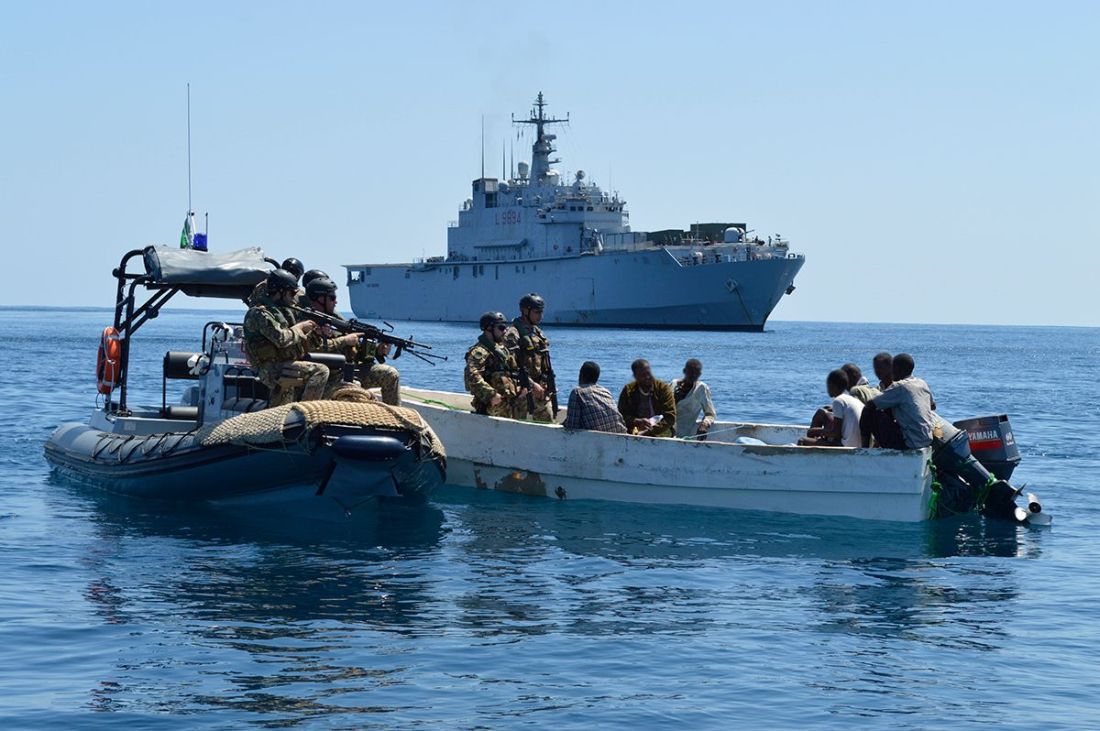
Representing the European shipping industry, the ECSA delegation met with the EU NAVFOR’s team to discuss the current state of piracy off the coast of Somalia. The delegation also visited the naval assets participating in Operation Atalanta. For the past ten years, EU NAVFOR has deterred and prevented acts of piracy and armed robbery off the coast of Somalia, protected vessels of the World Food Programme (WFP) and African Union Mission Somalia (AMISOM), and monitored acts of illegal fishing.
While it is true that today the number of attacks is minimal, this is only a result of the industry’s implementation of Best Management Practices along with the combined action of different actors and organisations, notably the states in the region.
“We know for a fact that pirate networks maintain the intent, the means and the capability to deploy and attack merchant vessels,” said R. Adm. Antonio Martorell Lacave. “It is up to us – military operations, coalitions and regional states – to uphold deterrence, operate in a flexible and agile manner and keep the seas safe.”
“Operation Atalanta has been a key element in the decrease of piracy attacks,” Flemming Dahl Jensen ECSA’s Maritime Security Working Group Chair mentioned. “We need to ensure there are sufficient resources allocated to guarantee its successful continuation.”
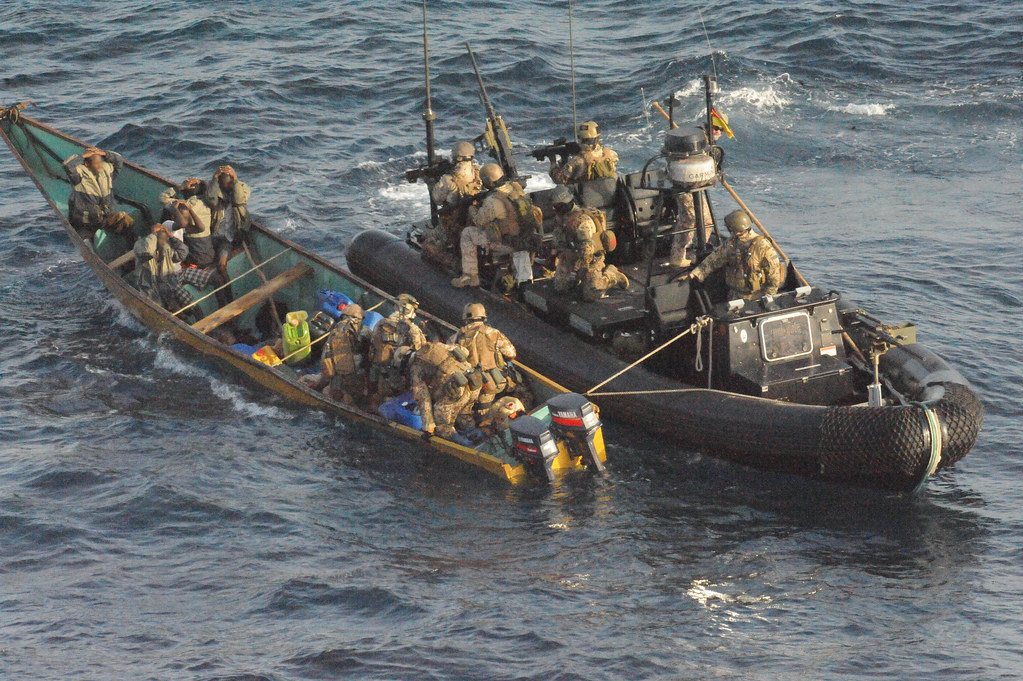
EU NAVFOR remains committed to deterring, preventing and suppressing piracy and emphasizes that the Maritime Industry must continue to adhere to BMP measures in order to maximize the safety of the ships and crews whilst transiting the high-risk area.
The European shipowners expressed their support to EU NAVFOR Operation Atalanta and their close cooperation with other international actors. The shipping industry will continue to cooperate with the EU NAVFOR team to ensure that Somali-based piracy stays suppressed.
The Iranian Navy plans to dispatch the 62nd flotilla of warships to free waters in the next few days to protect the country’s cargo ships and oil tankers against pirate attacks. The 62nd fleet includes Bayandor destroyer and Lavan and Bushehr logistic warships.
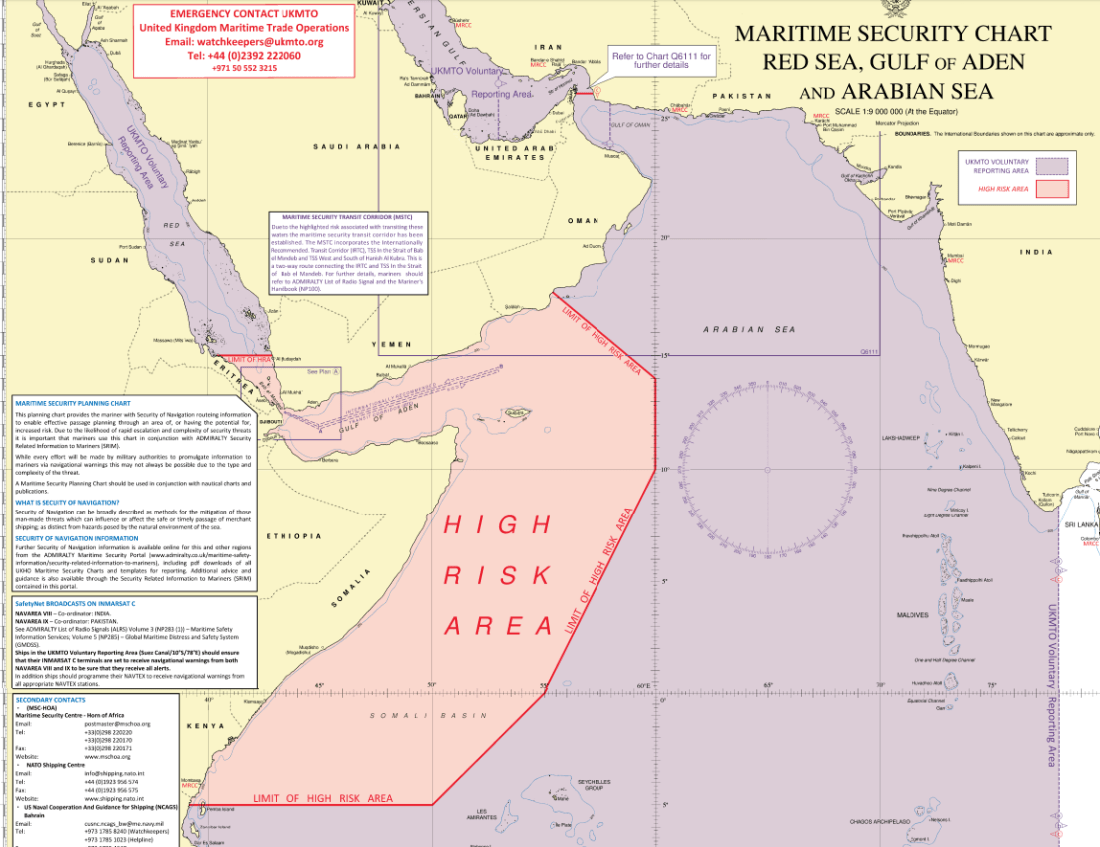
The 61st flotilla of the Iranian Navy had set off for the high seas to safeguard maritime routes used by Iranian vessels in international waters, especially in the Gulf of Aden, in March.


 Maritime Security News