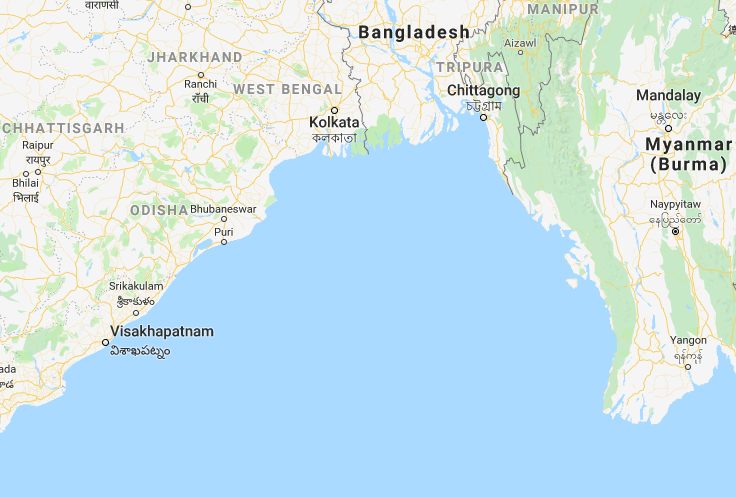
The government has drafted the Maritime Zones Bill proposing establishment of a special tribunal to deal with piracy, robbery and maritime violence in the Bangladesh territorial waters settled through legal battles with against India and Myanmar in an international court.
The draft proposed death sentence or life term in addition to forfeiture of property for causing death while committing and offence and indentified two ‘grey areas’ with India and Myanmar.
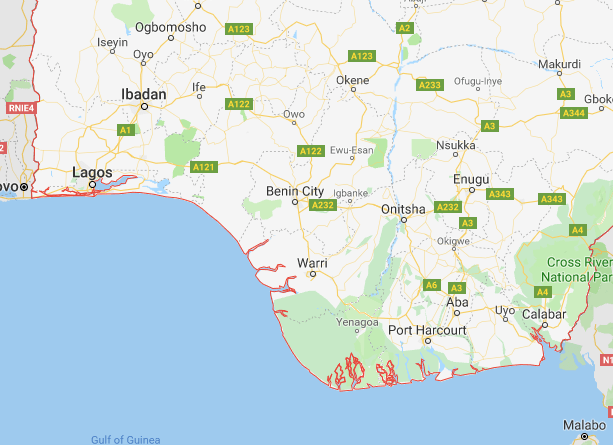
The inauguration of a special panel by the Federal Government to probe alleged looting of assets of the Niger Delta Amnesty Programme is a warning signal that all is not well with a programme that was meant to defuse militancy in the restive Niger Delta region.
While government is committed to making life better for the people of the Niger Delta, some unscrupulous elements are frustrating the good intentions of government and by so doing stoking fire of avoidable violence.
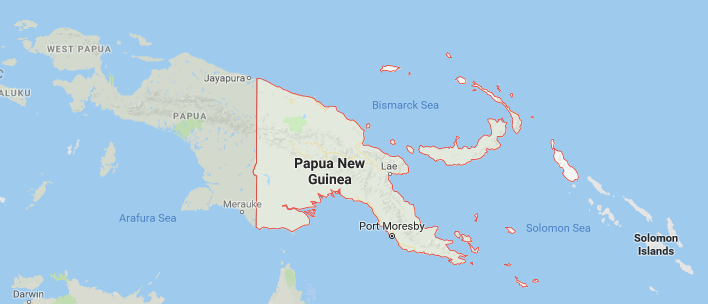
Raicoast people will now have a sea ambulance that will also cater for sea emergencies in the Raicoast waters.
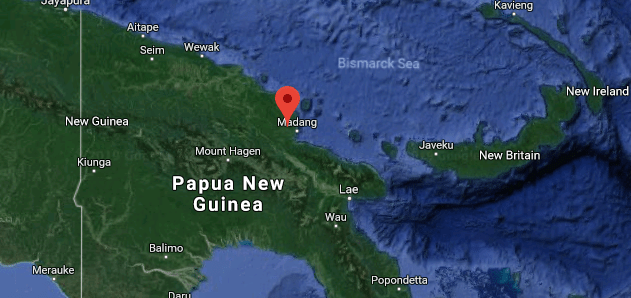
MP Peter Sapia made the announcement last week following the attack and robbery of 13 people from Astrolabe Bay local level government. Sapia said the district development authority planned to buy a sea ambulance.
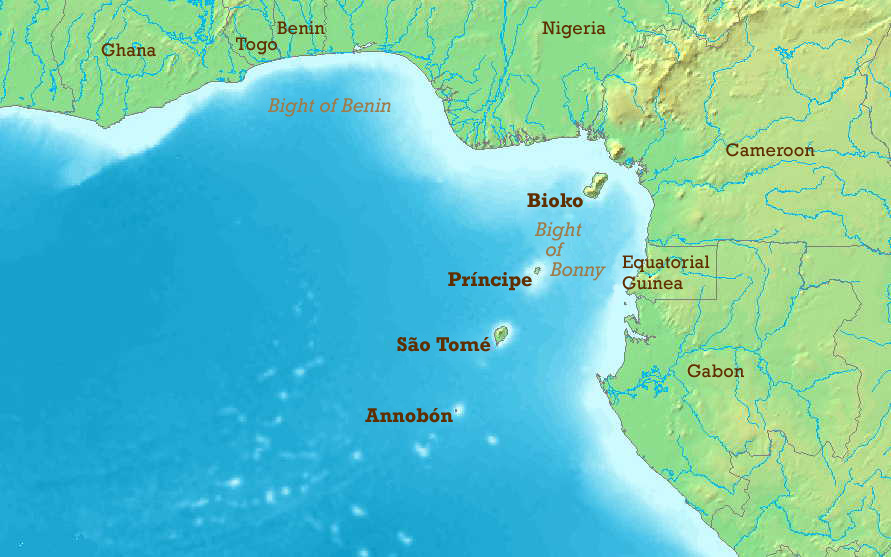
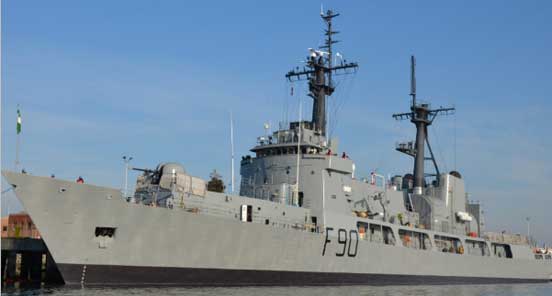
The Federal Government has signed a Memorandum of Understanding (MoU) with Gulf of Guinea nations that will allow for a seamless border patrol.
The Flag Officer Commanding, Western Naval Command, Rear Admiral Obed Ngalabak, disclosed this to newsmen in Lagos yesterday on the activities to flag off this year’s multinational sea exercise code name “OBANGAME”.
Globally, the International Maritime Bureau (IMB) Piracy Reporting Centre, based in Singapore, recorded 201 incidents of maritime piracy and armed robbery in 2018, up from 180 in 2017. The Gulf of Guinea remained increasingly dangerous for seafarers as reports of attacks in waters between the Ivory Coast and the Democratic Republic of Congo more than doubled in 2018.
The expansion of piracy in the Gulf of Guinea poses a dire threat to local economies, potentially undermining what little stability currently exists in the region. Oil revenue, which many countries in the region rely upon, is seriously threatened by pirate activity; 7 per cent of Nigeria’s oil wealth is believed lost due to such criminality.
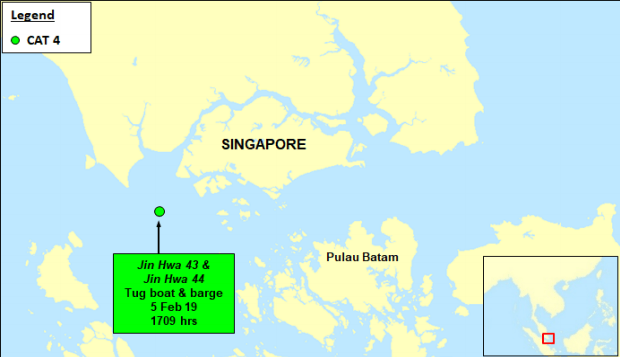
Piracy and Armed Robbery Against Ships in Asia OVERVIEW During 5-11 Mar 19, an incident of armed robbery against ship was reported to ReCAAP ISC. The incident occurred on 5 Feb 19 and was reported to ReCAAP ISC by Focal Point Singapore after verification with the relevant agencies. The location of the incident is shown in the map below; and detailed description of the incident is tabulated in attachment.
THE Nigerian Trawler Owners Association, NITOA, and the Federal Department of Fishery and Agriculture, have said that there has been a drastic reduction in pirates attacks against fishing trawlers.
Speaking to Vanguard Maritime Report, President of the association, Mr. Amire Akinbola, said although he could not make the figures available to our correspondent, the report of such attacks was very minimal last year.
Maritime Security News Note:
This may well be the case for Nigerian fishermen, but it’s a different story for crew on other vessels. On Feb. 24th, eight Chinese crew were reportedly kidnapped from fishing vessels off Cameroon.
The Philippines and Malaysia vowed on Thursday to ramp up their cooperation to address security issues in the region, particularly in combating terrorism, piracy and transnational crimes, including the fight against illegal drug trade.
“We resolved to address security issues. We touched on our extensive economic cooperation. We shared the view that its further expansion serves our mutual interests as that of ASEAN and our region,” Philippine President Rodrigo Duterte said after his meeting with visiting Malaysian Prime Minister Mahathir Mohamad at the Malacanang presidential palace.
By DOROTHY MARK ARMED pirates attacked a dinghy but left a mother and her baby, a 13-year-old girl and eight others unharmed. However, two others are still missing after they were forced to jump into the sea.
The terrifying drama unfolded at 3pm on Saturday when the dinghy, skippered by a man called Zebedi Moka, ran into six pirates armed with homemade guns, two bush knives and two catapults. Moka said the pirates ordered everyone, except the mother and her baby, to jump into the sea near the Kalibobo Lighthouse towards the Gogol River.
The world’s oceans are at the centre of transnational organised crimes committed by profit-driven networks operating across borders. The United Nations Security Council recently convened to discuss the threat this poses to international peace and security.
While Somali piracy in the Western Indian Ocean focused the world’s attention on the oceans, numerous other transnational organised crimes are taking place across the globe.
When it comes to countering transnational organised crime at sea, the response to Somali piracy is the greatest success story. It’s exceptional because it actually worked.
How were Somali pirates stopped?
The response to Somali piracy was set in motion in 2008 when the UN Security Council passed Resolution 1816. In terms of international law, piracy is a crime of universal jurisdiction, meaning any state may act against it on the high seas and in exclusive economic zones. Resolution 1816 went further by authorising foreign states to also enter Somalia’s territorial sea to suppress piracy.
The result was an inter-State, inter-agency and public-private response involving a number of players. These included states, the shipping industry and other stakeholders like the United Nations and the International Maritime Organisation. These actors formed the Contact Group on Piracy off the Coast of Somalia. This, in turn, was split into working groups whose members implemented and coordinated the counter measures.
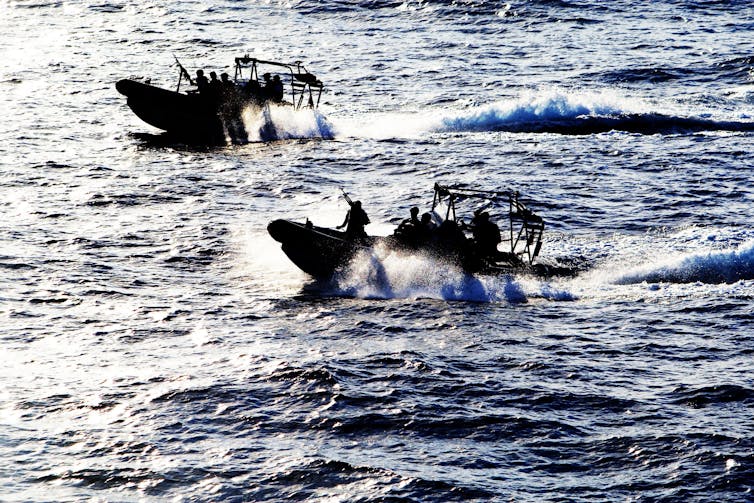
The all-encompassing response came together as follows: International navies would escort vessels through the High Risk Area and shipping vessels would employ shipping self-protection measures, such as hiring armed guards. Both navies and armed guards would then respond to attacks and apprehend suspects.
Law reforms in regional countries ensured that piracy was an offence in domestic legislation. This allowed suspects to be handed over to regional states for prosecution. This was facilitated by a regional pirate prosecution model and capacity building projects. These ensured that regional courts were enabled to try pirates and criminal justice practitioners were trained to prosecute piracy. Regional prisons, including in Somalia, were then built or improved to house convicted pirates.
In addition, capacity building projects focused on building the capacity of regional maritime law enforcement entities. There were also land based development programmes aimed at the causes of piracy. These included counter-piracy messaging and alternative livelihood programmes.
Many of these measures are still in place today, although many have taken on a different form.
But the problem off the coast of Somalia hasn’t been entirely solved. Piracy is a product of the fragile situation in Somalia. Yet land based responses were negligible in comparison to those aimed at sea. This failed to meaningfully address the causes of piracy, which is arguably evidenced by renewed attacks.
This is a universal problem – law enforcement measures without simultaneous efforts to address the causes of crime – will be a never-ending endeavour of mere suppression.
Countering pirates, countering all?
Copy and pasting the counter-piracy response would be unrealistic. This is because international laws applicable to the different transnational organised crimes at sea allow varying interdiction regimes.
Nevertheless, the piracy response holds many clues as to what constitutes an effective response to organised crime at sea. Three counter-measures are particularly noteworthy.
First, no single entity can counter a transnational crime. As the Contact Group on Piracy off the Coast of Somalia has shown, transnational crimes require collaboration and pooling of resources on a regional and international level by all those affected.
The response worked because it was in partnership with the shipping industry. Massive quantities of illicit goods are moved in containers on commercial shipping vessels. Yet, the relevant industries are missing from counter-measures, leaving under-resourced and overstretched borders and ports to detect illicit shipments among masses of licit shipping.
Second, the counter-piracy response has shown that disrupting the logistics of an operation breaks the business model. For example, the current practice on the high seas of the Western Indian Ocean heroin trafficking route is to seize the heroin and let the crew and vessel go, leaving the vessel free to return with another load. Countries like Indonesia have solved this by destroying vessels engaged in IUU fishing in Indonesian waters. Trafficking vessels can be forfeited if national laws provide for this.
Finally, if international law has limited options, states must lobby for a Security Council resolution authorising additional counter-measures. Resolutions like this were passed on Somali piracy, as well as the Mediterranean migrant crisis.
Alternatively, states can conclude bilateral or regional treaties authorising additional measures and providing for a legal finish.
Interests, corruption and political will
Paramount to all the above is the will to act. Piracy threatened world trade. The same can’t be said for crimes like drug or wildlife trafficking. A better understanding of the interests threatened by other forms of crimes at sea is therefore necessary.
It seems that growing drug addiction, dying migrants and dwindling fish stocks fail to move the international community to decisive action. But the detrimental effect on governance and corruption should get their attention. Across the globe, there are people in power with an interest in sustaining these illicit flows and until they are eliminated, any counter-measures will be a drop in the ocean.



 Maritime Security News