Responding to questions in Parliament, Singapore’s Minister for Defence Dr. Ng Eng Hen has indicated that the pirates responsible for recent incidents in the Singapore Strait are not from Singapore.
Ng says the number of piracy and sea robbery incidents occurring in the Singapore Strait fluctuates considerably from year to year. For example in 2014, 2015 and 2019 there were 48, 104 and 31 such incidents. But in the remaining years over the last decade, the average was around 12.
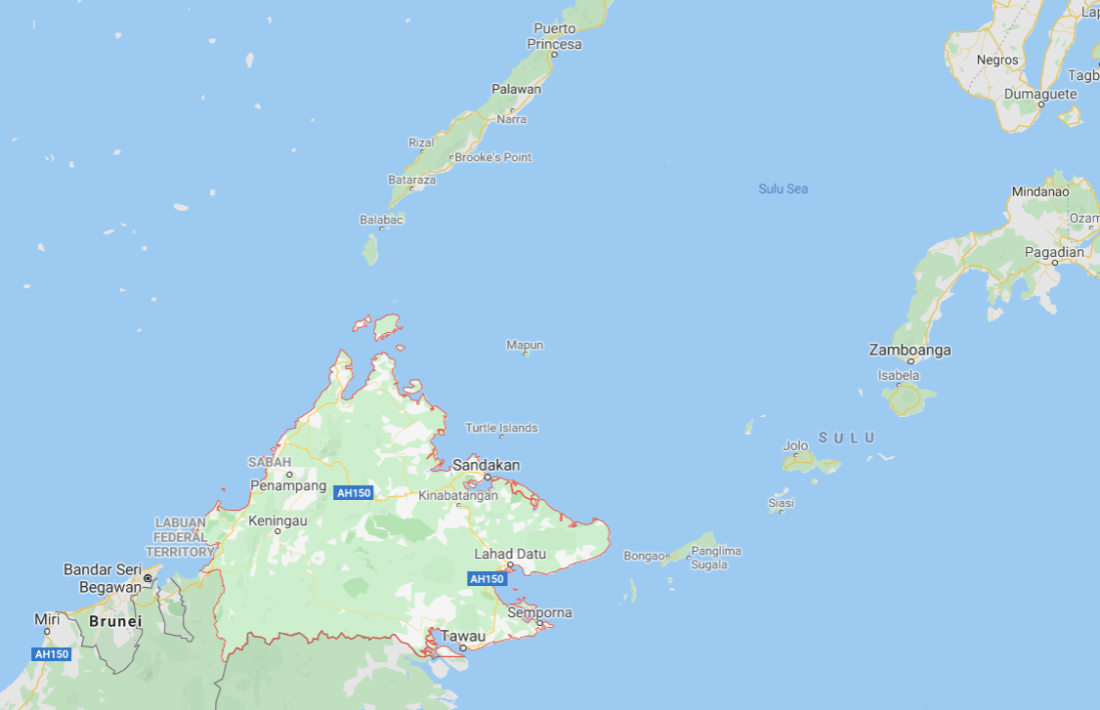
ZAMBOANGA CITY, Philippines — Army troopers are tracking down five Indonesian fishermen being held captive by Abu Sayyaf bandits after the victims were reportedly spotted in the hinterlands of Maimbung, Sulu.
The Joint Task Force Sulu (JTFS) intensified its intelligence gathering as it gave assurance that the troops are ready to execute plans to liberate the captives.
These reports come against a backdrop of pirate attacks against merchant ships in West Africa, particularly in the Gulf of Guinea between Côte d’Ivoire and Gabon. They have also led to attention-grabbing headlines about a “piracy surge” or even “waves of terror”.
In 2019, kidnappings of seafarers in the Gulf of Guinea reached an unprecedented number. Attacks against merchant ships were recorded off Togo, Benin, Nigeria, Cameroon and Equatorial Guinea. The area is often described as “the world’s most dangerous seas”.
Piracy is a significant threat for shipping companies operating in the region. Industry organisations have pointed out that urgent action is required and that seafarers should not be “exposed to such appalling dangers”.
The human cost is significant and hostages aren’t the only victims. Representatives from seafarers’ unions have pointed out that their members are at considerable risk for just doing their jobs, and even crews on ships that are merely transiting are on edge.
Based on a thorough analysis of attack patterns and overall maritime activities in the region, I am convinced that it will be impossible for navies and other security agencies to improve maritime security as long as root causes are not addressed. Many security incidents at sea, and notably kidnappings of seafarers, are merely an extension of land-based issues.
At the heart of the problem are activities by criminal groups based in the Niger Delta where kidnappings on land have long been a security challenge. Unless the massive security problems in the Delta are resolved, no significant headway will be made at sea.
The numbers
Beyond attention-grabbing headlines there’s no consensus on figures. Not even the reports mentioned above include the same numbers. That matters because shipping companies make commercial decisions based on official statistics, and budgets for security agencies are allocated depending on the scope and scale of the problem.
For example, the International Maritime Bureau reported that 121 seafarers were taken as hostages during attacks in the Gulf of Guinea in 2019. This represented more than 90% of global kidnappings at sea recorded by the centre.
At the same time, the organisation only reported 64 attacks in the Gulf of Guinea last year. This was a decrease of 19% compared with 2018.
The US Maritime Administration highlighted a similar trend in a recent advisory even though the overall numbers are much higher. It reported that there were 129 attacks in 2019 after 145 attacks in 2018, representing an 11% drop.
The French Navy’s Mica centre, on the other hand, reported a 20% increase in attacks against ships across the Gulf of Guinea between 2018 and 2019 (from 90 to 111 incidents).
Overall, numbers differ due to reporting standards and categorisations aren’t comparable. Similar events are often classified in different ways. For example, the IMB recorded four hijacked ships in 2019, the US Maritime Administration noted six, and the MICA centre classified 26 incidents as hijackings.
Annual statistics are further complicated by increased awareness. Incidents that would not have been reported a few years ago are now included in publicly available data, even though they may be linked to other criminal activities at sea.
During my own research, I have come across many cases where such activities were linked to incidents broadly described as “pirate attacks”, without a detailed analysis of individual circumstances.
Such differences underline that annual statistics are not necessarily a valuable tool for understanding issues in the Gulf of Guinea. Rather, security agencies have to gain a broad understanding of all maritime security challenges. Based on such knowledge, a transparent analysis of incidents is possible, providing the necessary background for commercial decisions or law enforcement operations.
Extension of a land problem
Attacks at sea are generally conducted by criminal groups based in the Niger Delta. Throughout the region, there is an ample supply of foot soldiers and camps in remote locations where hostages can be held during negotiations, the prerequisites for a lucrative business model.
Highlighting the direct link with Nigeria is important. On the one hand, neighbouring countries are unable to solve the problem unless security on land in the Niger Delta improves. On the other hand, spikes in attacks are possible at any time. For operators of merchant ships, the threat level can change within weeks, depending on factors such as weather, changes in traffic patterns or naval operations as well as the general situation on land in certain areas in the Niger Delta.
Furthermore, insecurity at sea is an overarching problem for regional governments. Pirate attacks may be particularly visible. But other concerns, such as fuel smuggling, illegal fishing or unregulated shipments of pharmaceuticals like Tramadol, are usually more pressing for government agencies.
Solutions
The West and Central African region has made significant progress in fighting all types of illicit activities at sea. Various types of maritime security issues are mentioned in the Yaoundé Code of Conduct, adopted in 2013 and aimed at improving maritime security in West and Central Africa.
However, human and financial resources are scarce and maritime security is generally regarded as less important than land-based security challenges which directly affect domestic populations.
But insecurity at sea has a significant economic impact by hurting activities related to the maritime environment. Maritime business plans therefore must include security-related expenditures for navies, coastguards and other government agencies. These are needed to maximise the potential of the maritime environment. This, in turn, would show that better maritime security has direct benefits for economic growth and development.
The suspects were arrested in the creeks of the Niger Delta after extensive intelligence and surveillance
by SaharaReporters
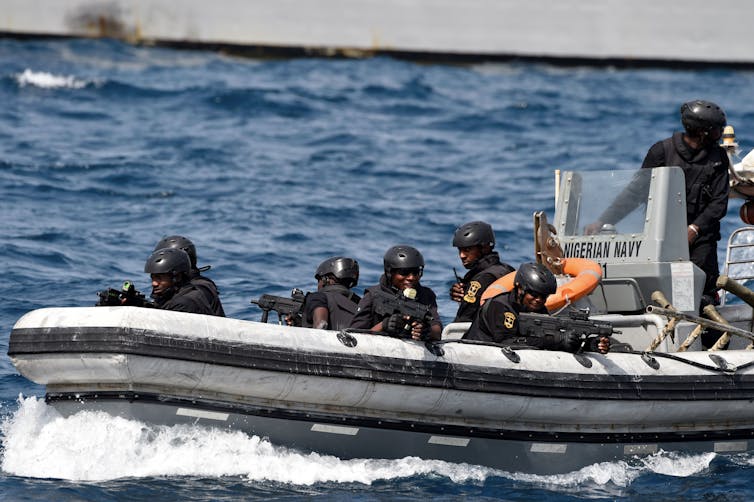
The Nigerian Navy has arrested three sea robbers suspected to have links with the pirates that killed four naval ratings in Ondo State.
The suspects including Odun Ogunse, Adeojo Sunday and Edema ThankGod were arrested during the week by the team of naval officers in Igbokoda area of the state.
BAHRAINI naval forces have been patrolling shipping lanes in the region to ensure safe passage for cargo vessels alongside international partners. The Royal Bahrain Naval Force yesterday drew praises from a senior US naval commander for its operational ability and working with the seven-member International Maritime Security Construct (IMSC), which was launched in November to protect the international merchant community following a string of vessel attacks that have been blamed on Iran.
Police are monitoring the remaining few hostage ‘spotters’ or lookouts working in cohorts with the kidnap-for-ransom group (KFRG) responsible for the kidnapping incidents in Sabah’s east coast.
Sabah Police Commissioner Omar Mammah (above) said the spotters under surveillance were fishermen.
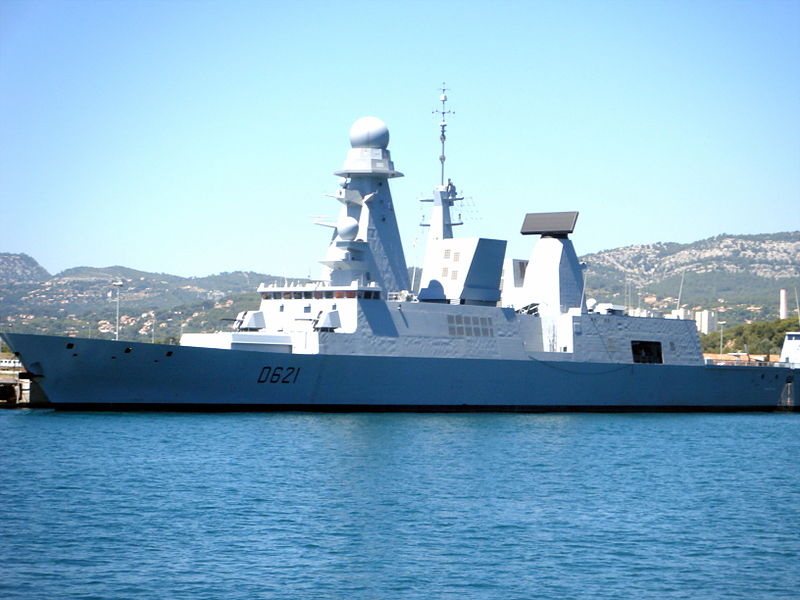
PARIS (Reuters) – France announced on Thursday the beginning of the European Maritime Awareness mission in the Strait of Hormuz (EMASoH), intended to ensure the freedom of navigation in the Gulf while promoting a de-escalation approach with Iran.
The French government has pushed for a European security alternative in the Strait of Hormuz after ruling out taking part in a U.S.-led coalition protecting oil tankers and cargo ships from what Washington says is a threat from Iran.
Date: 29th January 2020
Location: 253400N,0550400E
INCIDENT TYPE: SOLAS INCIDENT (VESSEL ON FIRE)
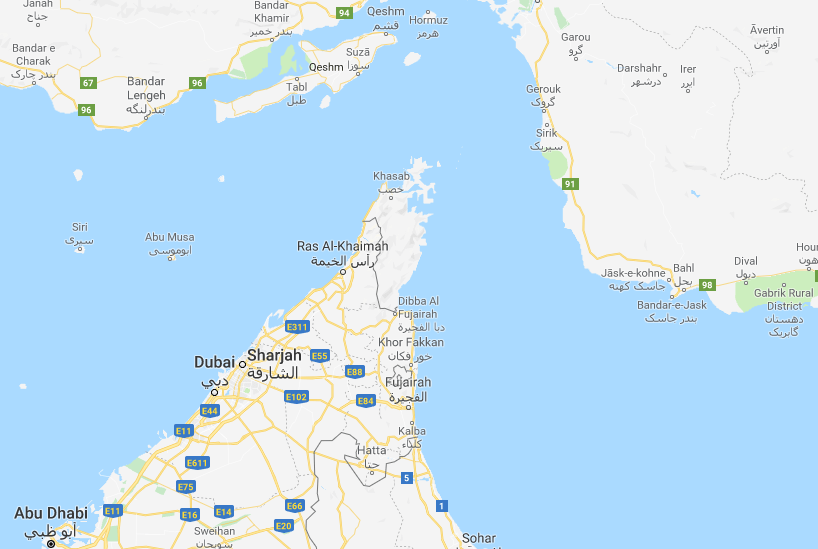
UKMTO has received reports that a vessel is on fire in position 2534N 05504E (21NM North West of SHARJAH)
VESSELS TRANSITING THE AREA ARE ADVISED TO EXERCISE EXTREME CAUTION This Advisory is not classified as a Maritime Security Event and has not been verified by UKMTO. This information is provided to inform maritime situational awareness for mariners operating in the region. UKMTO is not responsible for the accuracy of this reporting.
ISLAMABAD: Chief of the Naval Staff Admiral Zafar Mahmood Abbasi on Wednesday completed his five-day official visit to Sri Lanka aimed at strengthening naval ties between the two countries and offering help to the island nation in combating organised transnational crime at sea.
Admiral Abbasi, according to Pakistan Navy, during his stay in Colombo met Prime Minister of Sri Lanka Mahinda Rajapaksa, Defence Secretary retired major general Kamal Gunaratne and three Sri Lankan services chiefs.
Britain has taken over command from the United States of a maritime security mission in the Gulf to protect global shipping from the threat of attack by Iran.
Royal Navy Commodore James Parkin took charge of the seven-nation coalition on Thursday from US Rear Admiral Alvin Holsey at a ceremony at a US naval base in Bahrain.




 Maritime Security News