Op-Ed: A Simple Deal on Embarked Guards Could End West African Piracy

By Jakob Voight

On July 17, 2020, the tanker Curacao Trader was boarded by pirates at a position about 210 nautical miles from Nigerian shores. 13 Russian and Ukrainian seafarers were abducted. Two weeks before, the freighter Kota Budi was boarded about 200 nm from Nigerian shore. What is particularly noticeable about these attacks is the location: when looking at the statistics for 2019, it appears that the average distance of confirmed pirate attacks was 62 nm from shore, with only seven attacks at positions more than 100 nm from shore. In 2020, the average distance of confirmed pirate attacks was 75 nm, and there have already been several pirate attacks at positions more than 100 nm from shore.

Despite the improvement of the regional cooperation demonstrated in the response to the Hai Lu Feng 11 attack in May, despite the arrival of new maritime platforms, despite the use of surveillance systems like the Deep Blue project in Nigeria, it is obvious that pirates are a permanent threat off West Africa. The increase of pirates’ operational range is not a surprise for informed observers. This trend was seen in the Indian Ocean between 2004 and 2010, when Somali pirates reached almost to the west coast of India. This evolution is not due to chance – it’s simply the search for “soft locations,” areas where no means of coercion prevent the act of piracy or react quickly enough to intervene in a boarding or kidnapping. West African pirates thus demonstrate their capacity for adaptation.

To continue reading, please click here.

Source: maritime-executive.com

Arabs Push Yemen’s Houthis to Allow UN to Assess Oil Tanker

Six Arab countries are urging the UN Security Council to exercise “maximum efforts” to persuade Yemen´s Houthi militias to allow the United Nations to inspect a tanker moored in the Red Sea while loaded with over a million barrels to prevent “widespread environmental damage, a humanitarian disaster, and the disruption of maritime commerce.”

In a letter to the council circulated Thursday, they warned that in the event of an explosion or leak “the possibility of a spill of 181 million liters of oil in the Red Sea would be four times worse than the oil disaster of the Exxon Valdez Exxon, which took place in Alaska in 1989.”

To continue reading, please click here.

Source: aawsat.com

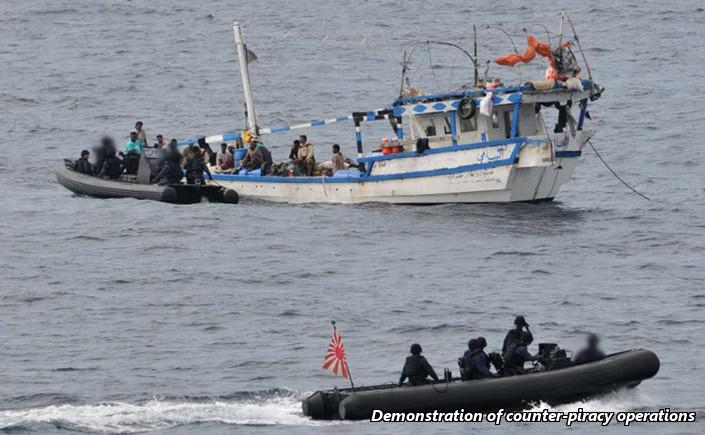
Counter-Piracy Operations by Japanese Self-Defense Force

MSDF. Image via Japan MoD

For Japan and the international community, the waters off the coast of Somalia and the Gulf of Aden are extremely important sea lanes.

In response to the piracy incidents in the area, Ministry of Defense (MOD) and Japan Self-Defense Forces (JSDF) takes measures for counter-piracy operations.

To continue reading, please click here.

Source: sldinfo.com

COVID-19 travel restrictions to impact on armed guards on ships

As the situation with COVID-19 novel coronavirus continues to evolve, states are increasingly taking measures to restrict the movements of personnel into and within their borders. A number of states have effectively closed their borders to people coming from perceived high-risk areas. These travel restrictions are placing a considerable logistical burden on the wider shipping industry and are very likely to increase as time goes on.

With such an evolving situation, there is a corresponding increase in uncertainty, according to Dryad Global. An example of this was seen in the recent decision by Sri Lanka to close its border to people coming from several countries, which led to potentially significant disruption in the embarkation and movement of Armed Security Teams (ASTs). With the corresponding confusion, Private Military Security Companies (PMSCs) were required to find alternative embarkation points for weapons and teams, and shipping companies faced increased ambiguities around the provision of security teams and potentially significantly increased costs. Whilst the ban on AST embarkation at Galle has since been lifted, Dryad assesses that while the situation evolves at pace, this decision will be under continuous review. At the time of writing Malaysia, which was a proposed alternative embarkation and disembarkation point, has significantly restricted foreign access.

To continue reading, please click here.

Source: defenceweb.co.za

Lift for maritime sector in Kenya and Djibouti after fall in piracy

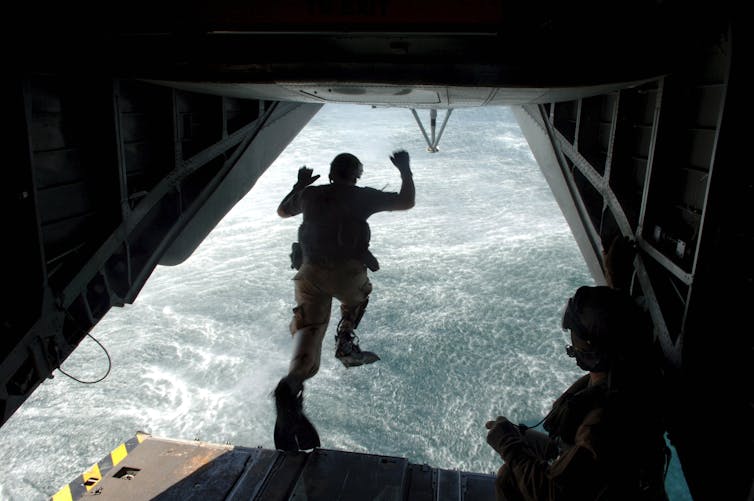
US service members practising water rescue techniques during a routine training exercise off the coast of Djibouti in 2007.
EPA/US NAVY/MC1 MICHAEL R. MCCORMICK

Robert McCabe, Coventry University

The upsurge of Somali piracy after 2005 led to significant international activity in the Horn of Africa. Naval missions, training programmes, capital investment and capacity building projects were among the responses to the threat. States in the region also started to focus on the dangers and opportunities associated with the sea.

Kenya and Djibouti, two states directly affected by piracy, achieved widespread reform of their domestic maritime sectors through new national initiatives and assistance from external partners. Djibouti’s President Ismail Guelleh recently commented during talks with Kenya on security and trade links that

What happens in Somalia has an immediate impact on all of us.

At its height, between 2008 and 2012, it is estimated that Somali piracy cost the Kenyan shipping industry between US$300 million and $400 million every year. This was as a result of increased costs (including insurance) and a decline in coastal tourism. It also damaged Djibouti’s maritime industry, financial sector and international trade.

The upsurge of piracy after 2005 had a number of causes. It grew from poverty and lawlessness in Somalia alongside opportunity and a low risk of getting caught. By 2013 the threat had been reduced. This was due to a combination of naval patrols, private armed guards, self defence measures on board ships and capacity building efforts ashore.

Historically, most states in the Horn of Africa have struggled with limited capacity to address maritime insecurity. Their naval assets, training, human resources, institutional and judicial structures, monitoring and surveillance have all been critically underfunded.

But the international response to piracy – and the investments and partnerships that emerged – have helped some states to improve in these areas.

More importantly perhaps, since the decline in piracy attacks, Kenya and Djibouti have been paying more attention to policies around maritime governance and “blue” economic development. This relates to sustainable use of ocean resources for economic growth, job creation and ocean ecosystem health. The refocus marks a shift from traditional investments related to land based conflict and land borders.

In a recent article, I examine how Kenya and Djibouti reformed their domestic maritime sectors following a decline in acts of piracy. The study sheds new light on the limitations and challenges facing domestic maritime sectors in Africa as well as some of the innovative approaches taken.

A key point is that blue economic growth is not possible without addressing security threats at sea. This includes building a robust maritime security sector, improving ocean health and regulating human activity at sea in a more sustainable way.

International partnerships

Many of the new developments in the region have been supported by international partners. The Djibouti Navy and Coastguard work closely with the US Navy. Together, for example, they are developing capacity for stopping and searching suspicious vessels. This is important in countering the illicit trafficking in people and smuggling of migrants through Djiboutian waters.

Djibouti has also benefited from Chinese direct investment, which accounts for nearly 40% of the funding for its major investment projects. Chinese state-owned firms have built some of Djibouti’s largest maritime related infrastructure projects. These include the Doraleh Multipurpose Port, a new railway connection between Djibouti and Addis Ababa, and the opening of China’s first foreign military facility.

This is a clear example of Beijing prioritising its growing economic and security interests in Africa. And advancing its “massive and geopolitically ambitious” Belt and Road Initiative.

Kenya, too, has received international assistance and investment. This includes support to set up the Regional Maritime Rescue Coordination Centre in Mombasa. Organisations like the International Maritime Organisation have led training for staff from the centre and for the Kenyan Navy.

The United Nations Office on Drugs and Crime has provided law enforcement training for the Kenyan Maritime Police Unit. It also opened a new high-security courtroom in Shimo La Tewa, Mombasa, for cases of maritime piracy and other serious criminal offences.

National refocus

At a national level, there is evidence of a fundamental shift towards building a more secure and sustainable domestic maritime sector.

For example, Kenya has created a new coastguard service. Its job is to police the country’s ocean territory and to ensure that Kenya benefits from its water resources. The country has new naval training partnerships, maritime capacity building projects and an implementation committee to coordinate “blue economic” activities. These include fisheries, shipping, port infrastructure, tourism and environmental protection.

For its part, Djibouti has rapidly developed its maritime sector and recognised the financial benefits of leasing coastal real estate. The country has an ambitious development plan titled “Djibouti Vision 2035”. This sets out its aspiration to become a maritime hub and the “Singapore of Africa”. It’s trading on the fact that it has a similar strategic position along one of the world’s busiest shipping lanes.

All of these approaches require robust laws and regulations governing human activities at sea. They also call for a capable and flexible coastguard and navy to enforce these regulations and secure coastal waters against threats such as piracy, fisheries crime and the illicit smuggling of drugs, weapons and people.

The way forward

There are lessons in the Horn of Africa experience for other regions of Africa facing similar maritime insecurities. One example is the Gulf of Guinea.

The first lesson is that there’s a need to convince coastal states with weak maritime capacities of the untapped potential of the blue economy. Even reputational damage can harm tourism, development and investment in coastal regions. This was clearly illustrated in the case of Kenya.

Blue economic growth needs a safe and secure maritime environment for merchant shipping in particular. It can also help alleviate poverty in coastal regions, provide alternatives to criminal livelihoods, and allow local communities more ownership of issues that affect them.

Ultimately, maritime security and blue economic growth need to be considered as a unified policy issue.The Conversation

Robert McCabe, Assistant Professor, Coventry University

This article is republished from The Conversation under a Creative Commons license. Read the original article.

Sri Lanka- Head of Avant-Garde’s Maritime Security Division arrested

(MENAFN – Colombo Gazette) The head of Avant-Garde’s Maritime Security Division, Vishwajith Nandana Diyabalanage, was arrested by the Criminal Investigations Department (CID) at the Bandaranaike International Airport (BIA) today.

He was arrested when he returned to the country from Singapore. Diyabalanage was wanted over ongoing investigations into Avant-Garde.

To continue reading, please click here.

Source: menafn.com

Private armed guards not allowed onboard vessels in Nigeria –Navy

Maritime Security News: Not entirely sure why they feel the need to restate this policy.

The Nigerian Navy has disclosed that private armed guards are still not permitted on merchant vessels in Nigeria. Rear Admiral, Begroy Enyinna Ibe-Enwo, representing the Chief of Naval Staff, confirmed this last week at the West Africa Shipping Summit in London, as part of highlight of events at the London International Shipping Week.

At the event, both NIMASA and the Navy acknowledged the challenges in securing the Nigerian maritime domain and affirmed the collaboration between both organisations to stem the incidents of piracy and armed robbery at sea.

To continue reading, please click here.

Source: sunnewsonline.com

AG files indictment against 13 in Avant-Garde high seas arms trafficking case

The Attorney General’s Department yesterday filed indictment in the Avant-Garde High Seas Arms Trafficking case before a Trial-At-Bar against 13 persons including Avant-Garde Maritime Services Ltd. (AGMS) Chairman Nissanka Senadhipathi.

A total of 7,573 charges were filed by the AG under the Fire Arms Ordinance as well as the Penal Code for illegally operating a merchant vessel ship and carrying 813 unlicensed automatic weapons and 200,935 rounds of live ammunitions on board the Ship MV Avant-Garde in and around October 2015.

To continue reading, please click here.

Source: ft.lk

Gulf of Guinea must look east to solve its pirate problem

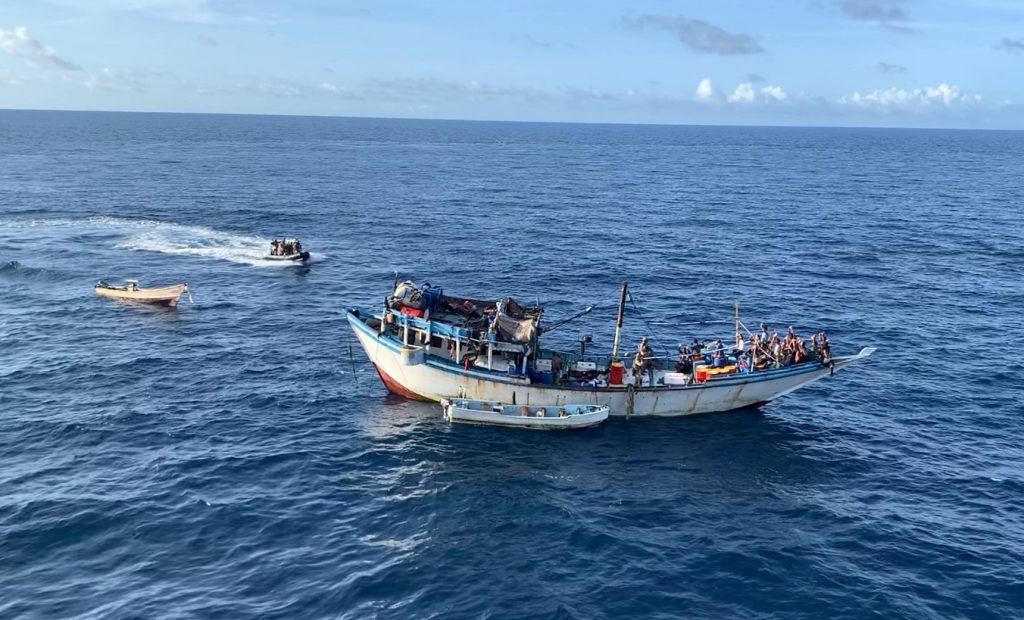
File image of an approach on a dhow

Why has piracy off Somalia’s coast plummeted while in West Africa pirates remain undefeated?

BY PETER FABRICIUS

A few years ago piracy off the east coast of Africa, focusing on Somalia, was a major crisis, attracting extensive international attention. Now it has plummeted. Meanwhile across the continent in the Gulf of Guinea, the piracy problem, which never attracted quite the same attention, has persisted at much the same high levels.

The reasons are numerous, though the greater prioritisation of Western Indian Ocean sea routes to the international community is probably near the heart of it. Another reason seems to be the relatively greater capacity of individual West African states to fight piracy.

Pirate attacks off Somalia’s coast have dropped dramatically over the past eight years – from 237 incidents in 2011 to nine in 2017 and just three attempted attacks in 2018, Denys Reva reported in a June ISS Today article.

So much so that the Contact Group on Piracy off the Coast of Somalia has started discussing broadening the group’s mandate to include combating other maritime security problems like trafficking. This complements similar changes occurring in other prominent maritime security initiatives such as the Djibouti Code of Conduct.

By contrast, on 8 July this year the International Maritime Bureau Piracy Reporting Centre (IMB-PRC) said the seas around West Africa remained ‘the world’s most dangerous for piracy.’ Of the 75 seafarers taken hostage on board or kidnapped for ransom worldwide so far this year, 62 were captured in the Gulf of Guinea – off the coasts of Nigeria, Guinea, Togo, Benin and Cameroon. 

The bureau said 73% of all kidnappings at sea, and 92% of hostage takings, happened in the Gulf of Guinea. It nonetheless notes ‘a welcome and marked decrease’ in attacks in the gulf for the second quarter of 2019, commending the Nigerian navy in particular for actively responding to reported incidents by dispatching patrol boats. While recognising that many attacks go unreported, the maritime bureau recorded 21 incidents around Nigeria so far in 2019, down from 31 in the same period of 2018.

Timothy Walker, Senior Researcher and specialist in maritime issues at the Institute for Security Studies, says however that despite the improvement recorded by the IMB-PRC, the general incidence of piracy in the Gulf of Guinea seems to have remained fairly constant over the past decade.

He suggests this is because the high seas off Somalia generally carry shipping heading to and from the Suez Canal and linking the huge markets of Europe, India and East Asia. They are also of greater global interest as they carry ships of almost every flag state and generally of greater size.

While there is also a huge volume of international shipping in the Gulf of Guinea, most attacks are happening in territorial waters, against localised shipping to and from West Africa. Because of this geographic difference, a larger international operation was mobilised to counter Somali-based piracy, pulling in powerful navies from the United States, China, Russia, India and France, among others, and notably the European Union’s Operation Atalanta.

These nations have coordinated their efforts through the Contact Group on Piracy off the Coast of Somalia and the Shared Awareness and De-confliction (SHADE) Conference. Their success seems to have been enhanced by natural competition among themselves for the greatest competence in combating piracy and projecting national maritime power. It was precisely the absence of a functioning national authority in relatively ungoverned Somalia that brought these international navies into the fight against piracy.

Walker notes that the many West African nations with shores on the Gulf of Guinea could better fight piracy through pooling their capacity and strengthening their law enforcement institutions. Such cooperation between and within the economic communities of West African States and Central African States is improving maritime security to a degree.

There is also an Interregional Coordination Centre in Yaoundé steering many of these efforts, complementing national and regional actions. But such efforts struggle with capacity shortages and the low political priority many governments still attach to maritime security.

One manifestation of the need for coordination is that while private security guards on ships have been an effective, albeit controversial, means to combat pirates off Somalia, this hasn’t worked in the Gulf of Guinea. Countries such as Nigeria insist on shipping companies manning their vessels with Nigerian naval teams in their national waters.

Another downside of the many different national jurisdictions fighting piracy in the west is that pirates can shift to different national maritime jurisdictions when one country steps up the pressure against them. This displacement of piracy could be a major factor in maintaining high overall piracy rates, Walker suggests.

He also notes that those fighting Somali piracy have been able to institutionalise their efforts more effectively than their Gulf of Guinea counterparts. However the institutions in the west are working as well as their member states empower them to, he says.

Reva notes that companies sailing off Somalia have together developed effective safety guidelines for ships travelling through a well-defined High Risk Area. For example, ships navigating through the region are urged to increase their speed and install protective systems on board. They are also asked to follow the protected Maritime Security Transit Corridor, making it harder for pirates to attack. These guidelines were key to bringing down piracy off Somalia’s coast, Reva said.

Another difference is the east’s legal approach. Walker says at the height of piracy in the Western Indian Ocean many were caught off Somalia and brought to court in countries such as Kenya and the Seychelles. They were then incarcerated in Somalia itself or its semi-autonomous Puntland region to be prosecuted, convicted and imprisoned. This has been a strong deterrent to piracy in the east.

By contrast there is little record of incarceration, prosecution or conviction of pirates in the Gulf of Guinea, he says. Through this ‘lack of legal finish’, as Walker puts it, the west is missing an opportunity to visibly deter piracy.

Overall, the problem in the east has now become how to avoid complacency in the face of success. In the west, the problem remains the need to reduce the incidence of piracy. It would seem that greater regional coordination – if necessary with international assistance, including guidance from those who have succeeded on the other side of the continent – is called for.

Peter Fabricius, ISS Consultant

Source: issafrica.org

Commercial ships warned against using private armed security in the Gulf

Shipping associations issue advice after a series of attacks blamed on Iran

Shipping companies sailing through the Arabian Gulf are being urged to avoid having private armed security guards on board as the risk of escalation in the region rises.

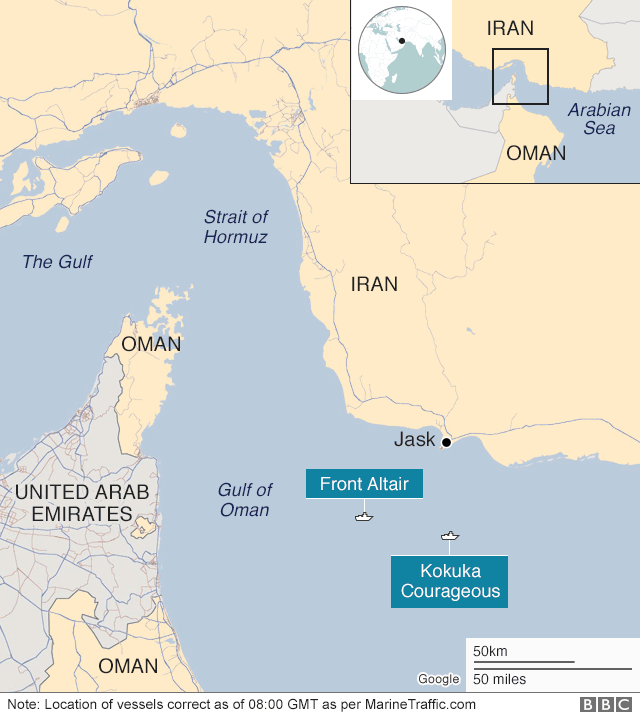
Relations between Iran and the West have become increasingly strained after Britain seized an Iranian tanker in Gibraltar last week and London said its warship HMS Montrose had to fend off Iranian vessels seeking to block a British-owned tanker from passing through the Strait of Hormuz.

To continue reading, please click here.

Source: thenational.ae