New Home for Operation Sentinel

BAHRAIN

08.06.2020

Story by NAVCENT Public Affairs 

U.S. Naval Forces Central Command / U.S. 5th Fleet

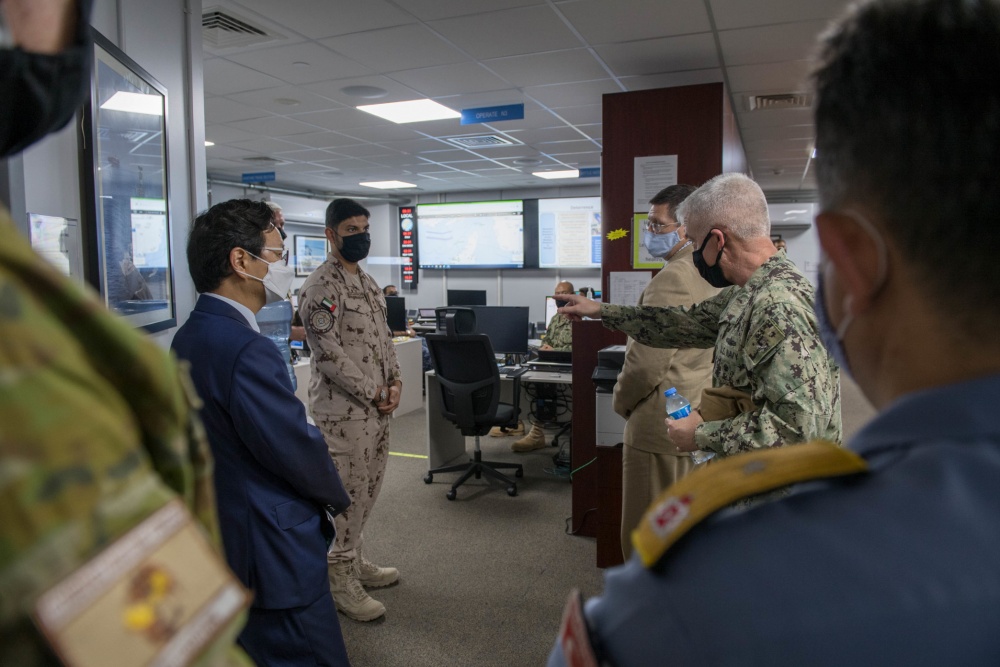
The International Maritime Security Construct (IMSC) held a ribbon cutting ceremony on board Naval Support Activity Bahrain to formally open the new operational headquarters for Coalition Task Force (CTF) Sentinel, Aug. 6.

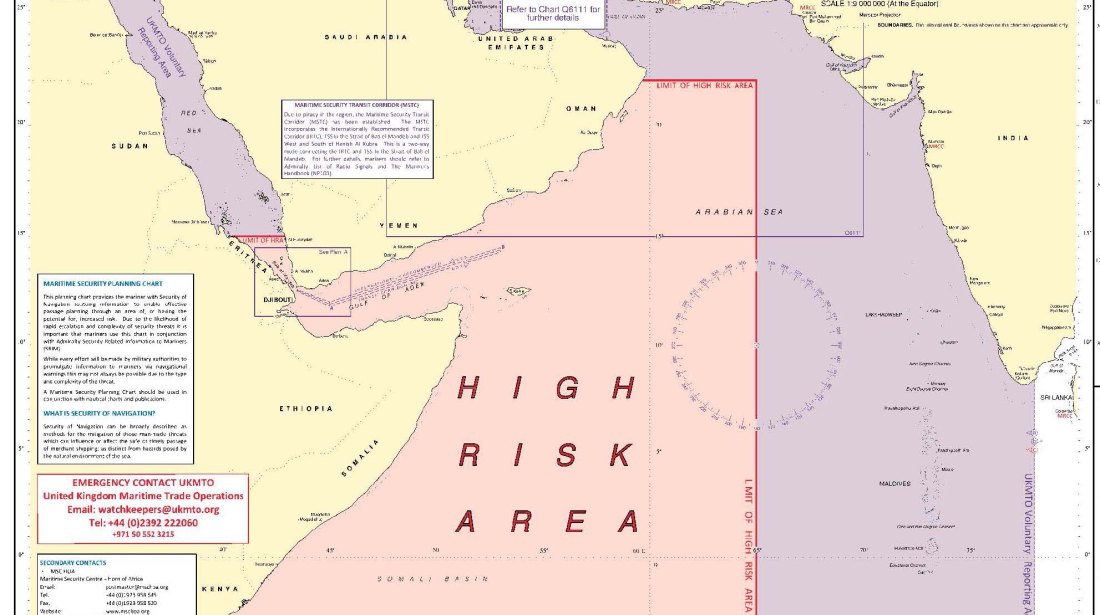
The new and improved space will enhanced the flow of information and allow for greater coordination in tracking merchant shipping as it transits through key waterways in the Arabian Gulf, Strait of Hormuz, the Bab el-Mandeb Strait and the Gulf of Oman.

Cdre. Rob Bellfield, CTF Sentinel Commander paid particular praise to the contributions made by regional partners who are members of the International Maritime Security Construct (IMSC).

“Our partners in Bahrain, Saudi Arabia and the United Arab Emirates share their exceptional political and geographic knowledge of the region,” said Bellfield. “They know this region intimately because this is their home, which they graciously share with us. The interoperability between Sentry ships from the region and Sentinel ships from Australia, the United Kingdom and United States, as well as regional Naval Operation Centres, highlights the close relationship we have allowing CTF Sentinel to maintain an operational strength we may not otherwise achieve.”

The ceremony was limited to ensure social distancing and to mitigate against the spread of coronavirus.

Representatives from the host nation, Bahrain, were in attendance.

“We are pleased to be here today for the opening of the new headquarters of CTF Sentinel,” said Rear Adm. Mohammed Yousif Al-Asam, Commander of Royal Bahrain Naval Forces. “It marks another vital facet of the IMSC, which has proved to be effective in ensuring the freedom of navigation, the safety of all the maritime shipping in the region and the strategic passage ways.”

In acknowledging this milestone, Vice Adm. Jim Malloy, commander of U.S. Naval Forces Central Command, U.S. 5th Fleet, Combined Maritime Forces, said, “IMSC’s success comes from standing and working together. This coalition fulfils a much-needed role. Its watchwords of “Vigilance, Surveillance, and Assurance” tell you exactly what CTF Sentinel is about and why the task force plays such a key role in the region. They are providing the much-needed collective eyes and ears to some of the world’s most congested, contested waters.”

Since the opening of the watch floor in November 2019, the Task Force Sentinel team has continued to expand in both capability and capacity.

Malloy praised the “enduring commitment of all nations that contribute to the free flow of merchant shipping through some of the world’s busiest sea lanes.”

The multi-national, British-led CTF Sentinel deploys ships and aircraft throughout the region as part of the international surveillance and detection effort, ensuring freedom of navigation and free flow of commerce in international waters.

Source: dvidshub.net
Maritime guards bust 1 ton of narcotics in S Iran

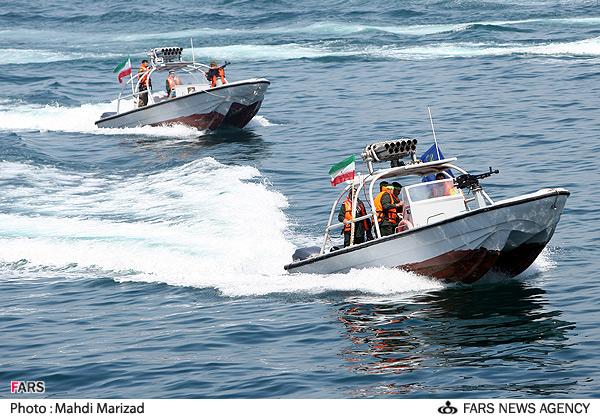
Maritime guards of Hormozgan Province have seized 1 ton of illicit drugs in Bandar Lengeh, said navy commander.

The Commander of Maritime Guards in Hormozgan Colonel Hossein Dehaki said on Sunday that border guards in Bandar Lengeh naval base managed to identify two smuggling bands following intelligence operations.

He added that they have successfully seized 1 vessel and 1 vehicle, in addition to the confiscation of 1 ton of opium.

To continue reading, please click here.

Source: en.mehrnews.com

The hidden face of the war in Cabo Delgado

By Centro para Democracie e Desenvolvimento (CDD)

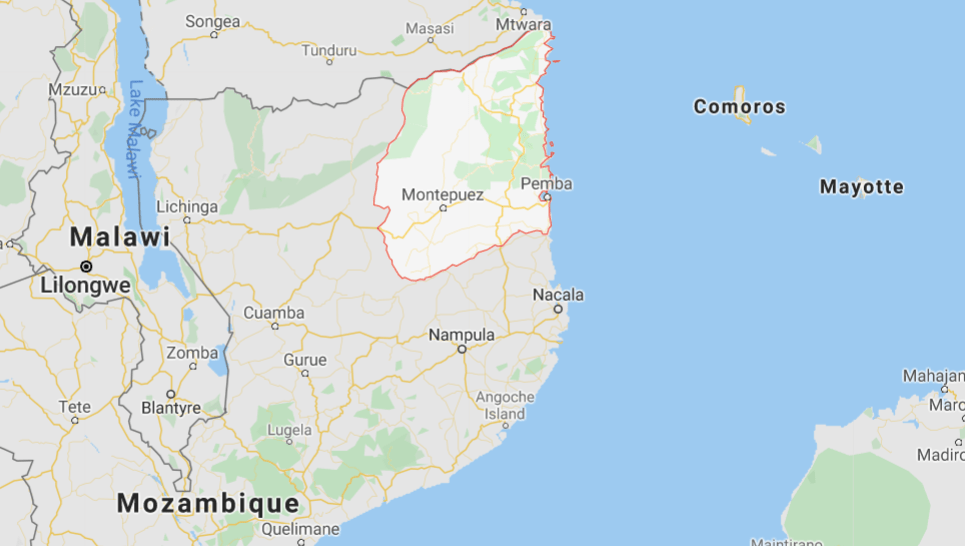
The establishment of the terrorist groups al-Shabab and the Islamic State with claims to establish the Islamic Law, the corporate interests of the oil industry and the lobby of Erik Prince, a former operative of the American military elite, now at the head of a private business proposal to pacify Cabo Delgado, are considered so far by academics, press and the civil society as the motivations explaining the armed insurgency in the potentially richest province of Mozambique.

By far, heavy drug trafficking and the illegal extraction of resources are framed in the equation. However, as documented by international reports and frequent police seizures, the coast of Cabo Delgado has been an important drug corridor in East Africa since the 1990s, a position recently expanded after Tanzania and Kenya repressed the trafficking networks, pushing them into Mozambican waters.

To continue reading, please click here.

Source: defenceweb.co.za

Somalia to announce plans for first oil licensing round in December

Wendell Roelf

CAPE TOWN (Reuters) – Somalia will announce plans in December for its first ever oil and gas licensing round, its oil minister said on Tuesday, as the frontier market looks to attract new investment after decades of civil strife.

At least three mortar bombs were fired last month at Mogadishu’s international airport, the latest attack in a wave of violence that has afflicted the Horn of Africa nation since clan warlords overthrew a dictator in 1991.

To continue reading, please click here.

Source: reuters.com

Alleged Somali pirates accused of kidnapping hit with terrorism charges

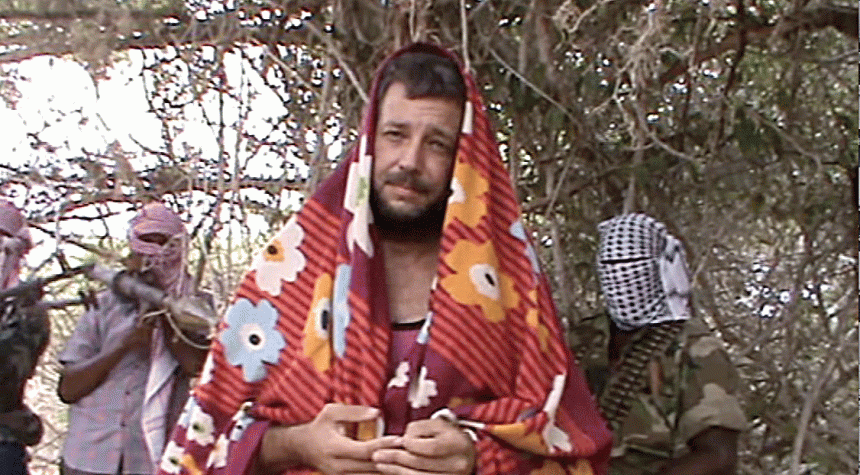
Michael Scott Moore, image courtesy of SomaliaReport.com

By Andrew Denney

Two alleged Somali pirates previously accused of kidnapping an American journalist and holding him for more than two and a half years were hit with fresh federal charges on Wednesday — including new allegations they were working on behalf of terrorists.

Mohamed Thalil Mohamed and Abdi Hassad were previously hit with kidnapping raps in connection with the long captivity of Michael Scott Moore.

To continue reading, please click here.

Source: nypost.com

Agency wants EU to expand maritime security mandate over Horn of Africa

By WINNIE ATIENO

A regional maritime organisation wants a European Union military ships operating in the Horn of Africa to extend its mandate to cover all maritime crimes in the Indian Ocean.

The Inter-Governmental Standing Committee on Shipping (ISCOS), says the EU NAVFOR Somalia Operation ATALANTA— which mainly focuses on anti-piracy activities — should extend its mandate to deal with all the maritime crimes including terrorism, charcoal smuggling as well as drug and human trafficking.

To continue reading, please click here.

Source: businessdailyafrica.com

MSN Note: Expanding the mandate of Operation Atalanta has been discussed for years, but this is the first real credible move. Somalis have been asking for fisheries protection for some time, and a naval presence would go some way to deterring foreign fleets from IUU fishing activity in Somali waters. Additionally, as Somalia and Kenya continue to argue about their respective TTWs, maritime security for oil and gas will become increasingly important in the region. Al Shabaab continues to profit from smuggled charcoal, something which would become much harder with additional maritime security present.

Kenya, Somalia sea row threatens war on piracy

By AGGREY MUTAMBO


Somalia has launched a diplomatic offensive against Kenya in their dispute over the Indian Ocean waters prompting the Arab League to condemn Nairobi for annexing Mogadishu’s territory.

The Arab Parliament in which Somali has members claimed Kenya was drawing up an illegal map that includes taking away Somali territory. The taking sides in the disputes could now complicate the war on piracy in which more than 30 Indian Ocean rim countries have cooperated to decimate attacks and their success.

To continue reading, please click here.

Source: businessdailyafrica.com

Exclusive: Western oil exploration in Somalia may spark conflict – U.N. report

Western commercial oil exploration in disputed areas of Somalia and discrepancies over which authorities can issue licenses to companies could spark further conflict in the African nation, U.N. monitors warned in a confidential report.

In the U.N. Monitoring Group’s latest annual report to the Security Council’s sanctions committee on Somalia and Eritrea, the experts said the Somali constitution gives considerable autonomy to regional governments to enter commercial oil deals.

To continue reading, please click here.

Source: the-star.co.ke