Nigerian Navy arrests suspected illegal fishing trawlers

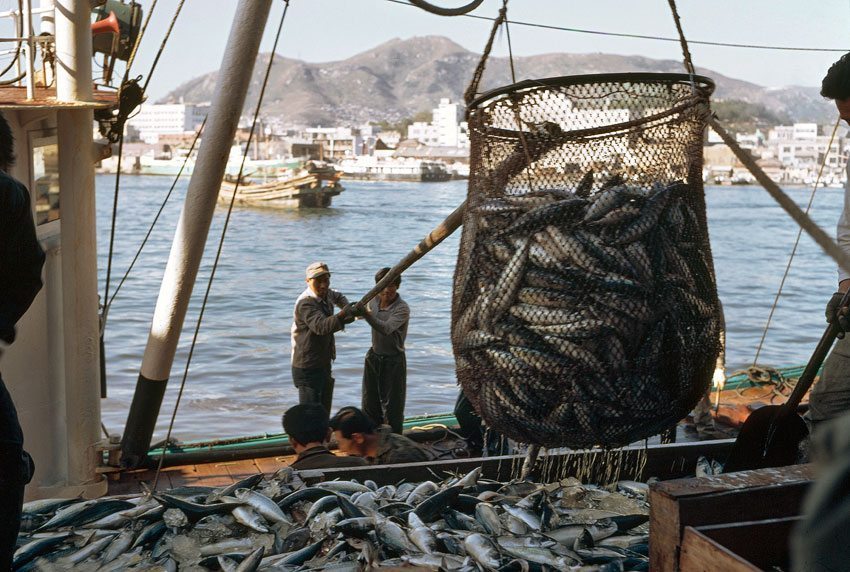
The Nigerian Navy on Tesday handed over to the Federal Department of Fisheries and Aquaculture, four arrested fishing trawlers, 52 crew members and three foreigners over suspected illegal fishing activities, on the Brass River in Bayelsa State.

The four vessels, named: Star Shrimpers 3, Cosmos 1, Trade Wind and ORC VII, with the 52 crew members, including three Ghanaians were handed over to officials of the agency by the Commanding Officer, Forward Operating Base, FORMOSO, Brass, Navy Capt. Suleiman Ibrahim, for further investigation and possible prosecution.

To continue reading, please click here.

Source: newtelegraphng.com

Damage done by Nigeria’s oil pirates

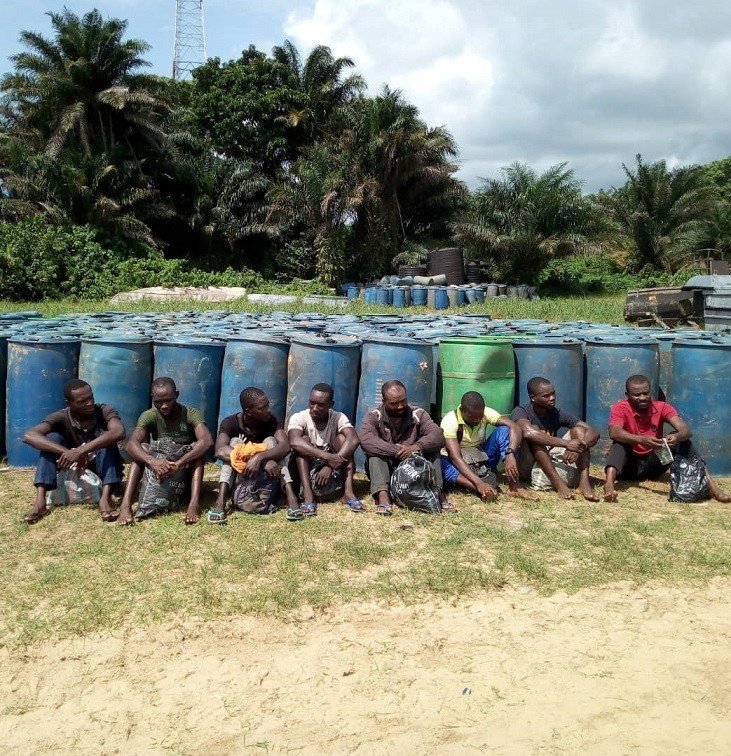
Parts of the once-thriving ecosystem in Nigeria’s oil-rich delta have been transformed into an ecological dead zone because of oil bunkering – the practice of siphoning oil from pipelines.

Oil pirates puncture holes in pipelines, steal the crude oil, and then transport it to be sold on the black market or to be refined.

To continue reading, please click here.

Source: straitstimes.com

Indian maritime authority issues alert on Nigerian waters

By Godwin Oritse

AT the backdrop of high incidences of piracy in the Gulf of Guinea, GoG, coterminous with Nigeria’s continental shelf, the Indian maritime authority has warned its seafarers to steer clear of Nigerian waters for fear of falling victims.

Disclosing this at the just concluded World Maritime celebration in Lagos, Director General of the Nigerian Maritime Administration and Safety Agency, NIMASA, Dr. Dakuku Senibo Peterside said that NIMASA was currently working on the development with a view to assuaging the fears of the Indian authorities.

To continue reading, please click here.

Source: vanguardngr.com

Royal Navy guardians protect 7m tonnes of shipping in Gulf

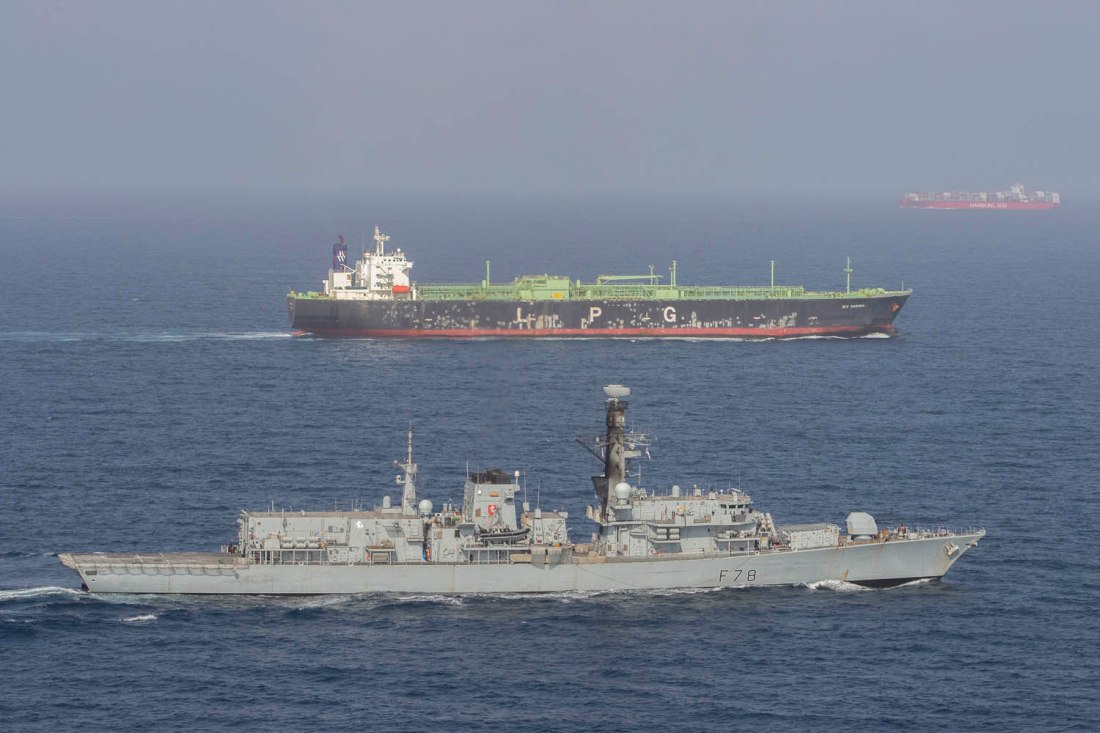
Over seven million tonnes of British shipping – the equivalent of around 20 wartime convoys – have been guided safely through the Strait of Hormuz by the Royal Navy.

HMS Montrose, her sister frigate HMS Kent and destroyers HM Ships Duncan and Defender – have accompanied British flagged and registered merchant ships in and out of the Gulf amid tensions with Iran.

Grateful seafarers have labelled the Royal Navy vessels ‘guardians of the Gulf’ for their efforts providing protection in the narrow waters separating Iran on the north shore and Oman and the UAE since the beginning of July.

The warships, plus their helicopters, have been used to accompany and watch over merchant shipping to ensure they can pass into and out of the Gulf safely, keeping international trade – especially oil and natural gas – flowing in the face of threats.

Most recently HMS Kent has borne the burden of patrols, spending three weeks in the strait, providing safe passage for in excess of 800,000 tonnes of shipping.

“We are a close-knit team and I am extremely proud of what my sailors have achieved over the last few months,” said Commander Andrew Brown, HMS Kent’s Commanding Officer.

The ship uses her Wildcat helicopter to scour hundreds of square miles of the Gulf for any signs of danger – merchant shipping needs accompanying through an area twice the size of Wales.

“Controlling our helicopter in such a busy area of the world can at times be extremely stressful,” said Leading Aircraft Controller Lewis Jackson. “The constant training we receive enables us to do our job in a calm and safe manner and at an extremely professional level.”

Beyond the physical and mental challenges of the escort mission, the 200-plus sailors and Royal Marines aboard the warships are still contending with demanding temperatures – in the high 30s Celsius by day – even at the end of September.

HMS Duncan, which returned to Portsmouth at the weekend, made 29 runs through the Strait, watching over 1,287,209 tonnes of merchant shipping.

Commander Tom Trent said his ship’s company found the mission challenging but also “very rewarding. We had emails from the ships we helped thanking us for getting them through safely.

“Protecting shipping is what the Royal Navy has done for hundreds of years. The whole operation is a reminder of how critical the Royal Navy is.”

Operations in the Strait of Hormuz to protect British shipping continues on a daily basis.

Source: royalnavy.mod.uk

The Maritime & Port Security ISAO and Templar Executives Launch Maritime Cybersecurity Awareness eLearning Course

To kick-off National Cybersecurity Awareness Month (NCSAM) activities, the Maritime and Port Security Information Sharing and Analysis Organization (MPS-ISAO) and Templar Executives Ltd. are delighted to announce a strategic partnership and the launch of a new Maritime Cyber Security eLearning course. This industry tailored training allows customers to increase the cyber security competence of their workforce. It also provides a new baseline standard for cyber security awareness across the maritime industry, a mandate from the International Maritime Organization (IMO) required to be in effect by 2021.

The MPS-ISAO is a non-profit established to advance global maritime and port critical infrastructure cyber resilience headquartered at the Kennedy Space Center in Florida. Templar Executives, is a U.K.-based organization and founder member of the International Maritime Cyber Center of Excellence (IMCCE) encompassing the Maritime Cyber Emergency Response Team (MCERT) and Templar Cyber Academy for Maritime (T-CAM). Both MPS-ISAO and Templar Executives are trusted cyber security partners to the maritime industry. Recognizing the need to increase cyber security awareness across the industry, the partners have developed market leading content that delivers a well-rounded understanding of cyber security principals tailored to mariners, and all those involved the maritime industry, in an easy to consume format.

The Maritime Cyber Security eLearning course content covers a range of topics – from an Introduction to Maritime Cyber Security to Best Practices and Top Tips. It includes a short assessment for learners to test their knowledge and is also perfectly suited for shipboard low bandwidth communication requirements and mobile devices.

“The maritime industry has needed a course like this for a long time, because traditional learning formats which required classrooms or videos were a challenge for individual mariners to complete given the diverse operating environments throughout the industry,” said Scott Dickerson, the MPS-ISAO’s Chief Strategy Officer. “We are offering this eLearning course to the entire maritime community which meets the need across industry to provide awareness and track individual training completion.”

Dickerson continued, “Adversaries are targeting port and maritime critical infrastructure every day, so there is an urgent need to increase cyber security competency across the industry – from the very smallest to the very largest of organizations. Because the maritime industry is a globally interconnected ecosystem, cyber security best practices can no longer be optionally implemented. Protecting critical maritime infrastructure requires an all-hands approach and a cultural shift in our thinking to consider both the safety and security of maritime operations. We encourage everyone in the industry to understand what’s at risk and embrace their role as guardians.”

“Templar Executives is delighted to be partnering with MPS-ISAO to provide exclusive content for an enhanced Maritime Cyber Security eLearning course, delivered through the Templar Cyber Academy for Maritime,” stated Anu Khurmi, Managing Director for Templar Executives’ Global Services division. “The IMO has announced a series of important cyber security measures for shipowners, ship operators and ports within the ISM code which must be addressed by 2021. These include requirements that stakeholders must ’raise awareness on the Cyber risk’; and ’embed a culture of Cyber risk awareness’. Our joint eLearning course is easy to access and assimilate and provides a cost effective and sustainable response to delivering training and education that supports the awareness agenda. It also contributes to the up-skilling of individuals in an industry that is digitalizing at pace and which needs to develop a more sustainable and robust cyber resilience capability across the entire ecosystem.“

Christy Coffey, MPS-ISAO VP of Operations, added, “Since the MPS-ISAO’s inception in 2016, we have had a mission objective to improve cyber security knowledge across the maritime transportation system. MPS-ISAO customers are really enthusiastic about the eLearning course launch, and Templar Executives have been such a wonderful partner for our ISAO. We begin on-boarding existing MPS-ISAO customers with the eLearning October 7th.”

All maritime stakeholders are encouraged to participate in the partners’ Maritime Cyber Security eLearning course opportunity. Please direct Maritime Cyber Security eLearning course inquiries to info@mpsisao.org.

Information about National Cyber Security Awareness Month is available at the Department of Homeland Security’s website: https://www.dhs.gov/national-cyber-security-awareness-month.

Source: einnews.com

Maritime security training for Trinidad and Tobago

Trinidad and Tobago is the latest IMO Member State to receive maritime security training. A self-assessment and audit training workshop took place in in Port of Spain, Trinidad (23-27 September).

Participants were trained in self-assessing how two key IMO maritime security instruments – SOLAS Chapter XI-2 and the International Ship and Port Facility Security (ISPS) Code – are implemented at the port facility level. This is done using established, industry-standard IMO and ISO procedures to identify areas for improvement.

The course addressed outcomes of a previous workshop on ISPS Code responsibilities delivered by IMO in Port of Spain last year.

The workshop included theoretical lessons for participants to understand the certification process involved in obtaining the Statement of Compliance of a Port Facility, presentations on audit processes and techniques, and practical exercises on role playing the review of a port facility security plan.

Source: imo.org

Mexican pirates posing greater risk in Gulf of Mexico to oil workers, tourists

By Hollie McKay

MEXICO CITY – In the calm waters of the Gulf of Mexico, drilling platforms hum away under the sunshine. But, in the dark of the night, they are becoming more and more subject to vicious attacks launched by modern-day pirates.

“Although oil and diesel stealing has been going on for decades, there has been an increase in criminal activity reported in the last four years,” Johan Obdola, founder of the Global Organization for Security and Intelligence, told Fox News. “It is estimated that the stealing in Mexico is up to 1.18 million barrels a day, bringing millions to criminal organizations, and making it very difficult to control.”

To continue reading, please click here.

Source: foxnews.com

Rivers Assembly invites Bonny LG chair over sea pirate attacks

Chukwudi Akasike

The Rivers State House of Assembly has resolved to invite the Chairman of Bonny Local Government Area, David Irimagha, to appear before its Committee on Transport to explain his contribution towards the fight against sea pirate attacks along Bonny waterways.

Passenger boats were last week attacked by sea pirates, who kidnapped a councillor and one other person from the area while robbing other passengers of their belongings.

To continue reading, please click here.

Source: punchng.com

EU NAVFOR Somalia MPRAs Fly In Support of CTF-151 Focused Operation

This week, EU NAVFOR Somalia Operation ATALANTA’s German Maritime Patrol Reconnaissance Aircraft supported a multi-national counter-piracy operation led by Combined Task Force 151 (CTF 151) in the Gulf of Aden.

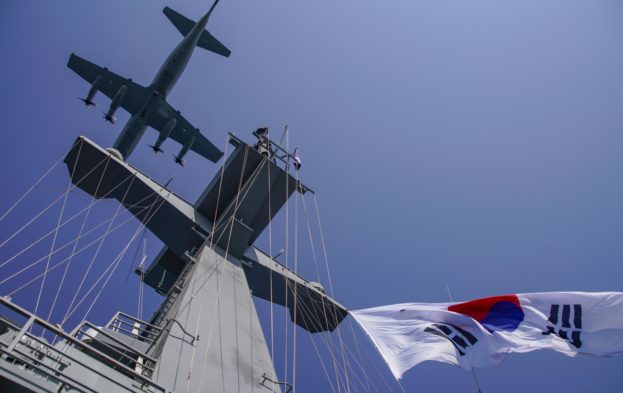
The assets involved in Focused Operation “King Crab” were from nine different nations, and included the Republic of Korea Ship (ROKS) Kang Gam Chan; the Japanese Ship (JS) Sazanami and the Royal Navy of Oman Vessel (RNOV) Al-Dhafreh in support.

The operation was a concentrated effort that spanned over four days and saw the counter-piracy task force and its partners undertake increased counter-piracy patrols and maritime engagement visits to merchant vessels and local dhows. The participating assets also partook in joint training and boarding exercises.

The exercises also reinforced the importance of information-sharing amongst the wide combination of counter-piracy partners.

“Ultimately we all have the same goal of promoting security and stability in the region to legitimate seafarers by defeating piracy and criminal attacks,” said Commander CTF 151, Rear Admiral Byeong-Ju Yu, ROKN. “Focused Operations such as King Crab greatly increase our ability to do this.”

Operation ATALANTA’s MPRAs have now returned to regular operations, patrolling the Indian Ocean, Gulf of Aden, Red Sea and Arabian Sea alongside other EU NAVFOR naval Assets.

Source: eunavfor.eu

Nigeria, Others Lose $2bn to Pirates’ Attacks Annually, Says Naval Chief

By Eromosele Abiodun

The Chief of Naval Staff, Rear Admiral Ibok Ekwe Ibas, has revealed that Nigeria and 15 other countries in the Gulf of Guinea are currently losing a sum of $2 billion to pirate attacks annually.

The Naval Chief’s revelation was coming two months after Nigeria was rated as number one in pirate attacks in the Gulf of Guinea in a report by the International Maritime Bureau (IMB). Ibas also confirmed THISDAY’s exclusive report that Nigeria loses several millions of dollars to illegal fishing and poaching on the nation’s coastal and territorial waters.

To continue reading, please click here.

Source: allafrica.com