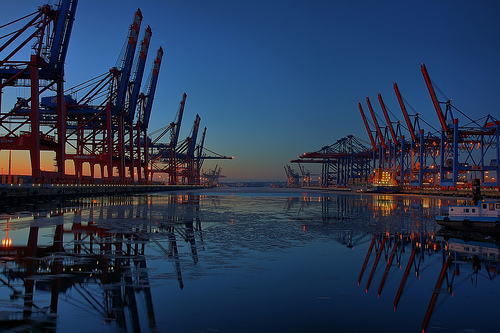
Iran reports failed cyber-attack on Strait of Hormuz port

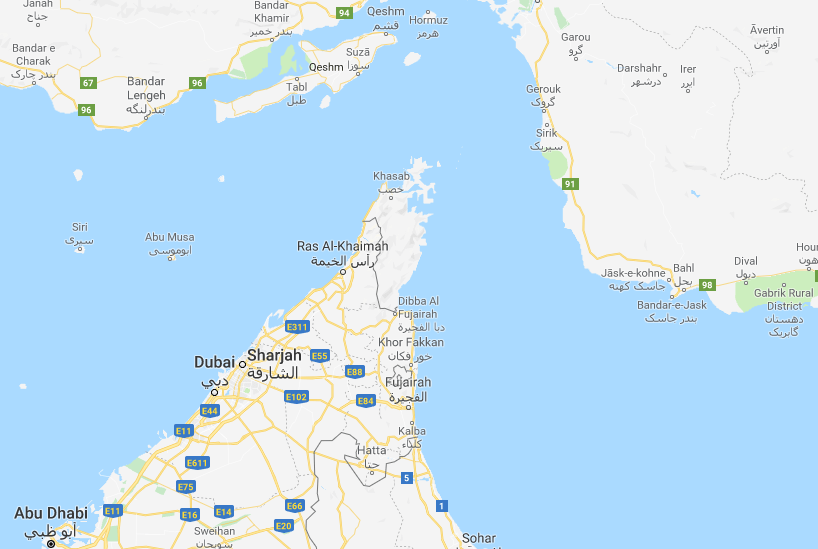
Iranian officials said hackers infiltrated and damaged a small number of computers at the port of Shahid Rajaei in the city of Bandar Abbas.

By

Iranian officials said on Sunday that hackers damaged a small number of computers in a failed cyber-attack against the port of Bandar Abbas, the country’s largest port in the Strait of Hormuz.

Details about the cyber-attack’s nature remain unknown.

To continue reading, please click here.

Source: zdnet.com

ESSCom chief: Intelligence sharing helps tackle kidnap threats

The Malaysia-Philippines’ co-operation contributes in efforts to tackle cross-border crime threats such as the kidnap for ransom (KFR) by the Abu Sayyaf Group and its network from southern Philippines on the east coast waters of Sabah, Malaysia.

Eastern Sabah Security Command (ESSCom) commander Datuk Hazani Ghazali said sharing of intelligence information with the Philippines enabled monitoring of KFR elements for interception at sea.

To continue reading, please click here.

Source: malaymail.com

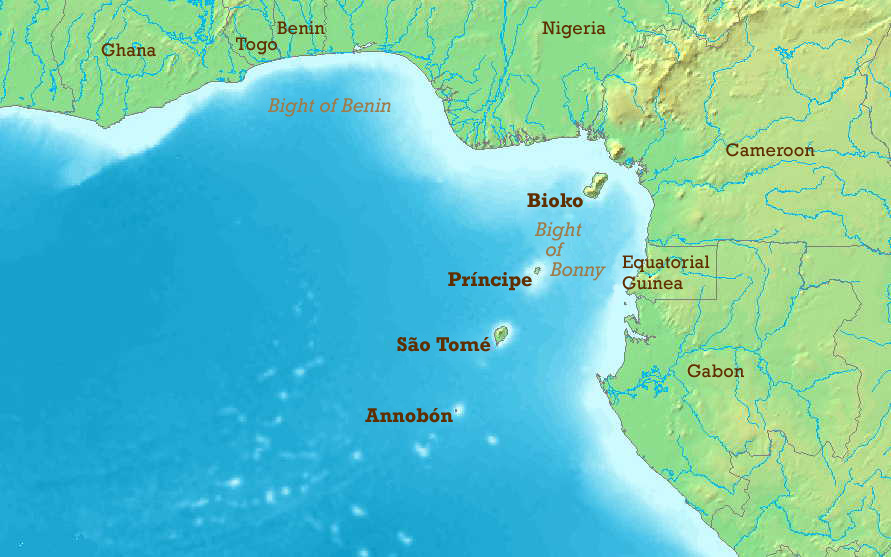
Two Kidnapped Off Equatorial Guinea

Two crewmembers have been kidnapped from a general cargo vessel off Equatorial Guinea in the Gulf of Guinea, according to security company Dryad Global.

The incident occurred two nautical miles from Malabo on May 9. The pirates reportedly used ladders to board the Rio Mitong from a speedboat. A Russian and a Ukrainian are believed to have been kidnapped.

To continue reading, please click here.

Source: maritime-executive.com

The day the pirates came

For Sudeep Choudhury, work on merchant ships promised adventure and a better life.

But a voyage on an oil tanker in West Africa, in dangerous seas far from home, would turn the young graduate’s life upside down.

His fate would come to depend on a band of drug-fuelled jungle pirates – and the whims of a mysterious figure called The King.

The MT Apecus dropped anchor off Nigeria’s Bonny Island shortly after sunrise. Sudeep Choudhury was at the end of a draining shift on deck. Looking towards land, he could make out dozens of other ships. On the shoreline beyond them, a column of white oil storage tanks rose out of the ground like giants.

He had breakfast and then made two phone calls. One to his parents – he knew they worried about him, their only child – and one to his fiancee, Bhagyashree. He told her that everything was going to plan and that he would call her again later that day. He then clambered into bed for a sleep.

It was 19 April, 2019. The small, ageing oil tanker and its crew of 15 had spent two days sailing south from the port of Lagos to the Niger Delta, where oil was discovered in the 1950s by Dutch and British businessmen seeking a swift fortune. Although he knew that vicious pirates roamed the labyrinthine wetlands and mangroves of the delta, Sudeep felt safe that tropical South Atlantic morning. Nigerian navy boats were patrolling and the Apecus was moored just outside Bonny, seven nautical miles from land, waiting for permission to enter port.

To continue reading, please click here.

Source: bbc.co.uk

Iran naval ‘friendly fire’ incident kills 19 sailors in Gulf of Oman

Persian Gulf/SoH

Nineteen sailors have been killed and 15 others wounded in a “friendly fire” incident involving two Iranian naval vessels, the navy has said.

Iranian state media reported that a new anti-ship missile being tested by the frigate Jamaran hit the light support ship Konarak on Sunday in the Gulf of Oman.

The accident happened during a training exercise near the Strait of Hormuz.

Iran’s armed forces regularly hold exercises in the strategic waterway.

The “Konarak vessel was struck with a missile yesterday [Sunday] afternoon during a military exercise in the waters of Bandar-e Jask” off Iran’s south coast, state TV said on its website.

“The vessel was hit after moving a practice target to its destination and not creating enough distance between itself and the target,” it added.

The incident happened near the port of Jask, some 1,270km (790 miles) south-east of Tehran, in the Gulf of Oman, state TV said.

The Jamaran and Konarak are said to belong to naval forces of the Iranian military.

Source: bbc.co.uk

Cyber security concerns for autonomous and remotely controlled systems

Cyber security is highly relevant to a raft of autonomous and remotely controlled systems in the offshore energy sector, writes International Marine Contractors Association (IMCA) technical adviser, competence and training, remote systems and ROV Andre Rose

Among these systems are marine autonomous surface systems (MASS), unmanned surface vessels (USVs), remotely operated vessels (ROVs) and autonomous underwater vessels (AUVs) able to operate from remote control centres often referred to as unmanned underwater systems (UUVs); and to unmanned aerial vehicles (UAVs) commonly known as drones.

As information technology (IT) has advanced, the opportunity for cyber crime has also increased. Technological advances now make USVs commonplace with many of these small craft (< 5 m) already in use for survey operations. Future larger systems will have varying levels of autonomy ranging from remotely controlled vessels operated from a shoreside RCC to, eventually, fully autonomous vessels.

To continue reading, please click here.

Source: rivieramm.com

Piracy: Nigeria loses $1.5bn monthly – IMB

Steve Agbota

Nigeria is losing an average of 400,000 barrels amounting to $1.5billion monthly to the activities of sea pirates according the latest study of the International Maritime Bureau (IMB).

According to the IMB, the loss represents almost 5 per cent of the country’s Gross Domestic Product (GDP), even as it listed the Gulf of Guinea as the most dangerous piracy zone for oil companies, with huge record of attacks in recent years.

The report indicated that the first quarter of 2020 was marked by a peak in maritime piracy worldwide, where the Gulf of Guinea recorded 21 of the 47 reported attacks.

To continue reading, please click here.

Source: sunnewsonline.com

Operation Copper extension to cost R154 million

Mozambique Channel

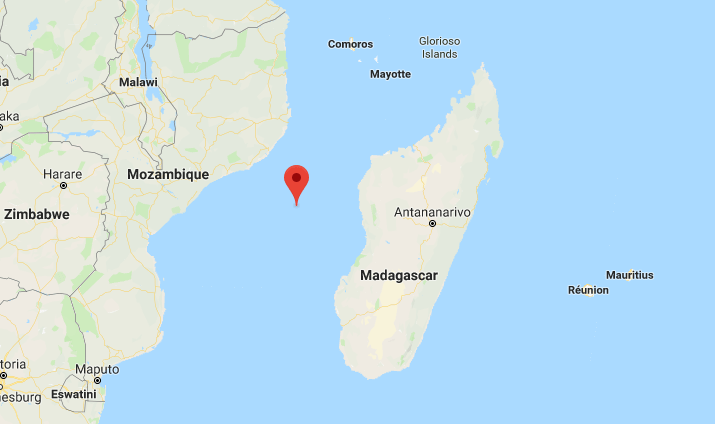
The extension of the Operation Copper maritime patrol mission in the Mozambique Channel for another year will cost the South African National Defence Force R154 million.

This is according to a letter from President Cyril Ramaphosa informing the National Assembly of the extension of Operation Copper, from 1 April 2020 to 31 March 2021.

To continue reading, please click here.

Source: defenceweb.co.za

Nigeria’s anti-piracy law misses the mark

by Maurice Ogbonnaya

Fundamental gaps such as links to organised crime and dealing with the proceeds of piracy must be closed.

Nigeria’s June 2019 law on piracy and other maritime offences is an important step in securing the country’s coastline and seas. But the legislation fails to account for the links between piracy and other crimes, especially at the transnational level.

According to the ICC International Maritime Bureau, actual and attempted piracy and armed robberies against ships on Africa’s West Coast rose from 47 in 2011 to 64 in 2019. In 2019 the United Nations Office on Drugs and Crime reported that between 2015 and 2017, the total economic cost of piracy, kidnapping and armed robbery at sea incurred by all stakeholders involved in countering these activities, including Nigeria, was US$2.3 billion.

To continue reading, please click here.

Source: issafrica.org

German Customs Officers Find Half a Tonne of Cocaine Aboard Bulker

In a multiday operation, German customs authorities have seized half a tonne of cocaine from a bulker at the Port of Hamburg.

A large-scale operation by the Hamburg Customs Investigation Office began early last week. Based on tips from international partners, the investigators targeted a Montenegrin-flagged bulk carrier traveling from Brazil via England to Hamburg. Authorities suspected that the 180-meter freighter was being used to smuggle narcotics into the EU.

To continue reading, please click here.

Source: maritime-executive.com