Kenya elected to chair Contact Group on Piracy off the Coast of Somalia

By Patrick Vidija

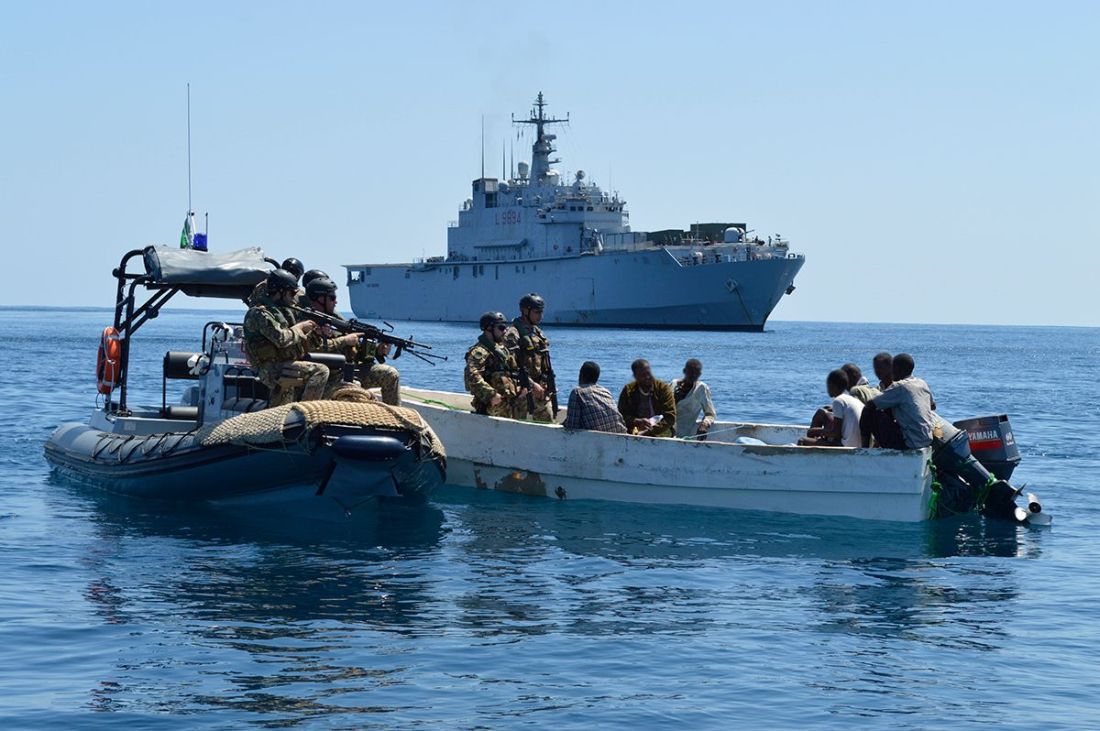
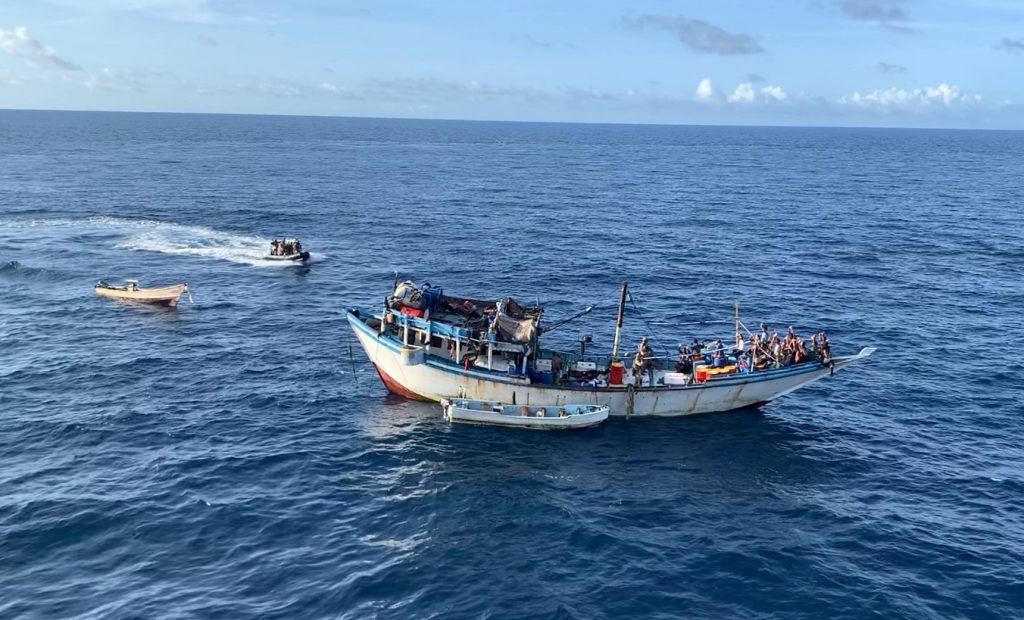
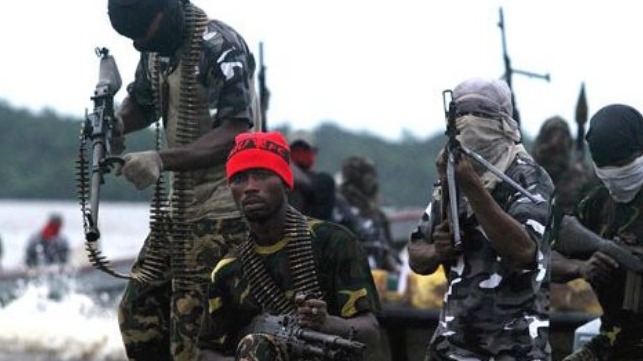
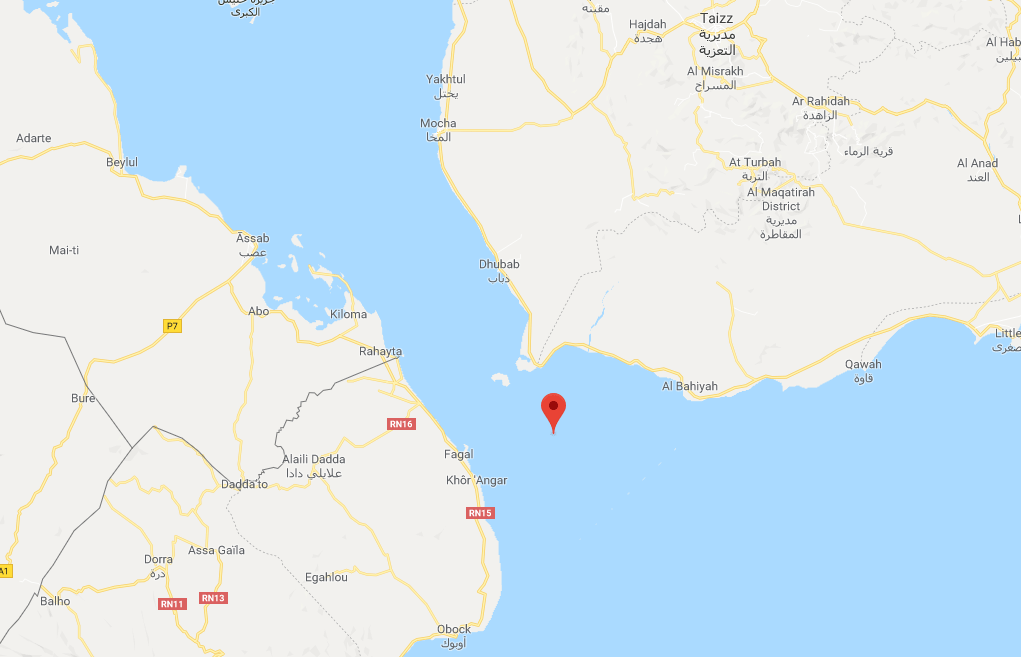
Kenya has been elected the chair of the Contact Group on Piracy off the Coast of Somalia (CGPCS) for a period of two years beginning January 2020.

The chairmanship will afford  Kenya the opportunity to coordinate regional and international efforts to deal with the challenge of piracy which remains a threat to the Maritime sector, despite being suppressed in recent times.

To continue reading, please click here.

Source: the-star.co.ke

Eight men held in connection with kidnapping of fishermen in Lahad Datu, says CID Chief

KUALA LUMPUR (Bernama): Eight men have been arrested to help in investigations into the kidnapping of 10 Bajau Laut fishermen (sea gypsies) in Felda waters in Lahad Datu, Sabah on Tuesday (June 18), says CID director Datuk Huzir Mohamed.

He said six of those arrested are foreigners, aged between 17 and 60, who were spared by the armed kidnappers on Tuesday.

To continue reading, please click here.

Source: thestar.com.my

Navy playing Op Copper cards close to the chest – military observers not impressed

File image of an approach on a dhow

An SA Navy decision not to comment on an Operation Copper anti-piracy deployment has not improved the public image or perception of the maritime service of the national defence force, with experts cautioning this is a step backwards in terms of transparency.

When defenceWeb earlier this month requested some detail on an apparent upcoming deployment to the Mozambique Channel the official SA Navy response was: “This is an operational matter and we cannot comment on it”.

To continue reading, please click here.

Source: defenceweb.co.za

Our vessel not involved in piracy, C&I Leasing says

Anna Okon

The Management of C&I Leasing Plc has said contrary to report by some online media that its vessel, MV Charis, was arrested in Malabo, Equatorial Guinea, on the suspicion of involvement in piracy activities, the vessel was on its way to execute a recovery contract in Equatorial Guinea when it was hijacked by sea pirates.

The Managing Director, C&I Leasing, Mr Andrew Otike-Odibi, explained this in a statement while commending the Nigerian Maritime Administration and Safety Agency, the Nigerian Ambassador to Equatorial Guinea, Ambassador Toko Ali Gongulong; the Defence Attaché, Navy Captain Seyi Oladipo; and the Spanish Navy, for their intervention and timely release of the vessel.

To continue reading, please click here.

Source: punchng.com

Gulf of Oman attacks prompt rise in armed guard requests

The Financial Times reports that the recent incidents in the Gulf of Oman have seen a rise in calls to maritime security companies by concerned shipping firms.

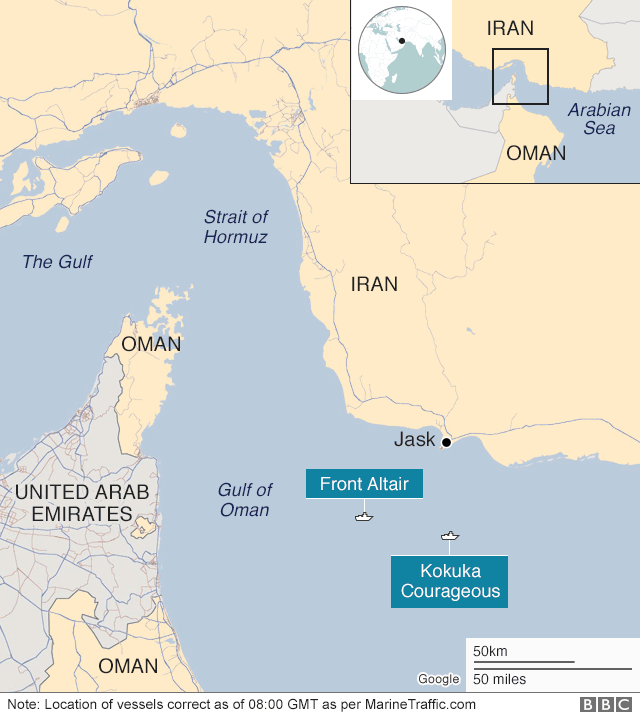
Since the attacks on the Front Altair and Kokuka Courageous, shipping companies who transit the region on a regular basis have been looking into additional protection for their vessels. During the height of Somali piracy in the region, it was the norm for the merchant marine to employ teams of armed guards in order to deter any potential attack, and it worked. No merchant vessel with armed guards has ever been hijacked in the Indian Ocean. That, combined with more aggressive and visible patrolling by the international naval forces present in the region, has seen the issue of piracy off Somalia reduce considerably since 2012.

The current threat, believed to be from Iran’s IRGC – an accusation denied by Iran – is leading to an increase in demand for armed protection services, a sector which has suffered considerably from rate cuts and an influx of cheaper personnel in recent years.

The main UK Private Maritime Security Companies (PMSC), such as Ambrey Risk and MAST report an increase in demand from previous and prospective clients keen to ensure the safety of their ships in the region.

While a team of armed guards is no match for the IRGC, even an unarmed security detail can offer additional security. Well trained guards on Watch duties can spot threats that crew might miss or dismiss as the local pattern of life and, while engaging hostile state actors is unlikely, they can offer the Master an early warning system that he may lack.

With the situation in the region fluid, it’s possible that a convoy escort programme, similar to that used in the Internationally Recognised Transit Corridor (IRTC) in the Gulf of Aden may be adopted, with support from the US Navy. Russia, China, South Korea and Japan’s MSDF have all run escorts through the Gulf of Aden, and a multi-national force may be more palatable to states bordering Iran.

However, nothing has been officially announced, leaving the shipping industry scrambling to come up with its own solutions, as is so often the case. The threat posed to vessels in the region continues to be real and the situation dangerous for crews.

Gulf crisis: US confirms drone was shot down by Iranian missile

A US military surveillance drone has been shot down by Iranian forces while flying over the Strait of Hormuz.

Iran’s Islamic Revolution Guards Corps (IRGC) said the drone had violated Iranian airspace. But US military said it had been over international waters.

IRGC commander-in-chief Maj-Gen Hossein Salami said the downing of the drone sent a “clear message to America” that Iran’s borders were its “red line”.

It comes at a time of escalating tension between the US and Iran.

On Monday, the US defence department said it was deploying 1,000 extra troops to the region in response to “hostile behaviour” by Iranian forces.

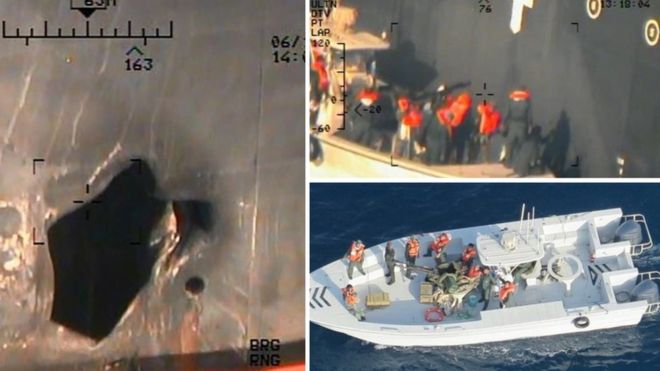
The US has also accused Iran of attacking two oil tankers with mines last Thursday just outside the Strait of Hormuz, in the Gulf of Oman. Iran rejects the allegation.

It was the second time in a month tankers have been attacked close in the region, through which a fifth of the world’s oil passes each day.

Tensions were further fuelled on Monday when Iran announced its stockpile of low-enriched uranium would next week exceed limits it agreed with world powers under a landmark nuclear deal in 2015.

Iran stepped up its production in response to tightening economic sanctions from the US, which unilaterally withdrew from the deal last year.

What happened on Thursday?

The IRGC said its air force shot down the US drone in the early hours of Thursday after the unmanned aircraft violated Iranian airspace near Kuhmobarak in the southern province of Hormozgan.

The drone was identified by the IRGC as a RQ-4 Global Hawk, but the US military official told Reuters news agency the drone was a US Navy MQ-4C Triton, a maritime patrol and reconnaissance aircraft based on the RQ-4B Global Hawk.

Later, in a speech carried live on Iranian state TV, Gen Salami warned the US that it needed to respect Iran’s territorial integrity and national security.

“The downing of the American drone was a clear message to America… our borders are our red line and we will react strongly against any aggression.”

He added: “Iran is not seeking war with any country, but we are fully prepared to defend Iran.”

Is this the first time Iran has targeted a US drone?

Last week, the US military accused Iran of attempting to shoot down a US MQ-9 Reaper armed drone with a surface-to-air missile in an attempt to disrupt surveillance of one of the tankers that was attacked, the Kokuka Courageous.

The drone had earlier observed a fire on board the other tanker, the Front Altair.

The previous week, another US MQ-9 Reaper was shot down over Yemen by a surface-to-air missile fired by the Iran-backed rebel Houthi movement.

The US military said the altitude of the engagement “indicated an improvement over previous Houthi capability, which we assess was enabled by Iranian assistance”. Iran denies providing weapons to the Houthis.

In 2011, Iran said it had captured a US RQ-170 Sentinel reconnaissance drone that had been reported lost by US forces in neighbouring Afghanistan. It developed its own version of the drone, one of which was shot down by Israel last year.

Source: bbc.co.uk

Houthi Leader Threatens to Target Int’l Navigation

Ali Rabee

Head of the Houthis’ Supreme Political Council Mahdi al-Mashat has threatened to target the commercial navigation waterways and oil tankers in the Red Sea and the Arabian Sea, saying that they possess missiles that can reach Egypt and Sudan.

Mashat affirmed that the militias would continue to target cities and airports in Saudi Arabia.

To continue reading, please click here.

Source: aawsat.com

U.S. seizes $1 billion worth of cocaine from ship in Philadelphia

(Reuters) – Federal authorities seized 16.5 tons of cocaine worth more than $1 billion from a ship in Philadelphia in one of the largest drug seizures in U.S. history, the U.S. Justice Department said on Tuesday.

Federal, state and local law enforcement agents on Monday boarded the MSC Gayane, a cargo ship docked in Philadelphia’s Packer Marine Terminal, and found cocaine in seven shipping containers, according to a criminal complaint filed in Philadelphia federal court.

To continue reading, please click here.

Source: reuters.com

‘Dark ship’ detection exposes sanction-busting ships

The use of synthetic aperture radar technology means ships can be detected even if they turn off Automatic Identification System transponders. Satellites can see through clouds to detect vessels using microwave pulses

Michelle Wiese Bockmann

VESSELS failing to comply with international sanctions will not be able to avoid being tracked in real time as technology used to detect illegal fishing is fully adapted for commercial shipping.

Iran’s fleet of 36 very large crude carriers and eight suezmax tankers have finessed and expanded the so-called practice of ‘going dark’ by establishing complicated logistics chains to avoid detection and thus disguise the origin and destination of oil cargoes.

To continue reading, please click here.

Source: lloydslist.maritimeintelligence.informa.com

Trump creates doubt over use of U.S. force to protect Gulf oil

Babak DehghanpishehSylvia Westall

GENEVA/DUBAI (Reuters) – U.S. President Donald Trump said he was prepared to take military action to stop Tehran from getting a nuclear bomb but left open whether he would back the use of force to protect Gulf oil supplies that Washington fears may be under threat by Iran.

Worries about a confrontation between Iran and the United States have mounted since attacks last week on two oil tankers near the strategic Strait of Hormuz shipping lane at the entrance to the Gulf. Washington blamed long-time foe Iran for the incidents.

To continue reading, please click here.

Source: reuters.com