(ICYMI) Coalition destroys Houthi-laid marine mines in southern Red Sea

Original article posted on Nov. 27th.

DUBAI: The Saudi-led Arab coalition in Yemen said it destroyed two mines laid by Houthis in the south of the Red Sea, state television Al Ekhbariya reported on Friday.

The actions of the Houthi militia, according to the coalition, threatened maritime security in Bab Al-Mandab and the southern Red Rea. The coalition said a total of 166 marine mines were removed and destroyed.

To continue reading, please click here.

Source: arabnews.com

Oil tanker hit by blast at Saudi terminal, Saudi Arabia confirms

By ,

LONDON/DUBAI (Reuters) – An explosion damaged a Greek-managed tanker at a Saudi Arabian terminal on the Red Sea just north of the Yemeni border, the ship’s manager said on Wednesday, in an attack confirmed by Saudi Arabia.

In a statement published by state media, the Saudi-led coalition fighting the Houthis in Yemen said a commercial vessel suffered minor damage from shrapnel in what it described as a foiled terrorist attack.

To continue reading, please click here.

Source: uk.reuters.com

MarsecNews: This incident comes just two days after Saudi coalition forces destroyed a number of sea mines in the Red Sea. Click here for details.

Yemeni officials repeat warnings over Safer oil tanker

Saeed Al-Batati

AL-MUKALLA: Iran-backed Houthi’s use of naval mines and bomb boats, and the group’s resistance to maintaining the Safer tanker are serious threatens to international maritime traffic and ecological life in the Red Sea, senior Yemeni officials warned on Monday.

The officials repeated concerns about the collapse of the tanker, urging the international community to act now to avert a major disaster in the Red Sea.

To continue reading, please click here.

Source: arabnews.com

Saudi Arabia thwarts Houthi explosive bomb attack on oil facilities

File image of suspected Houthi SVBIED (boat bomb), via http://crfimmadagascar.org

Associated Press reported on Friday 13th November that Saudi officials had been quoted as saying that they had intercepted and thwarted an apparent attempt to disrupt oil supplies at an Aramco oil distribution centre in the Red Sea.

The report cites a Saudi Press Agency report which said:

“Coalition Navy Forces detected this evening (Wednesday, 11 November 2020) an attempt by the terrorist Houthi militia to carry out a hostile, terrorist act in Southern Red Sea using (2) bomb-laden Unmanned Surface Vehicles (USVs) launched from Hodeida Governorate.

“The USVs, which pose a threat to regional and international security, Sea Lines of Communication and International Trade, were destroyed.”

The deployment of remote controlled ‘boat bombs’ is not a new one and al Houthis have demonstrated their effectiveness in the past. However, this is the second incident of SVBIED in recent weeks and should concern all shipping which transits the region.

INTERNATIONAL COUNTER PIRACY OPERATION BLOWS THROUGH THE GULF OF ADEN

Media Release

With the monsoon season – which makes sea conditions favourable for smaller shipping vessels – over, a large multinational counter piracy operation has been conducted by the Combined Maritime Forces in the Gulf of Aden.

The operation, named Operation Shamal after the strong winds that blow from the north bringing sandstorms to the region, was designed to increase military patrolling in the area around the Gulf of Aden and the Horn of Africa.

The area is of immense importance as the main shipping lane from the Indian Ocean to the Mediterranean passes through it. With the Monsoon diminishing and sea becoming favourable for sailors, there has been a large increase in the number of smaller fishing vessels, skiffs and dhows operating again, mainly closer to the coastlines of coastal states.

“Focused Operation Shamal was conducted to demonstrate to potential pirates and sponsors of piracy that there is a significant military force in the region that would deal with any attempted piracy attack,” said Combined Task Force 151’s (CTF 151) Operations officer, Lieutenant Commander Yoo Sanghun of the Republic of Korea Navy.

“We are also here to reassure our partners on merchant ships that despite the increase in small boat activity, the military is there to respond,” he added.

The Operation was an international affair, with support from CMF members Pakistan, the Republic of Korea, the United States and the Japanese Maritime Self Defence Force.

The Pakistan Navy ship Zulfiquar and the ROK ship Dae Jo Yeong drilled together during a Passing Exercise. The exercise is a testimony of the skills and professionalism of the respective navies and demonstrated their abilities to enhance interoperability at sea.

There was also a significant contribution from Djibouti and Oman, with Djibouti’s coastguard and the Royal Navy of Oman playing a vital part in contacting merchant vessels sailing through the area, alerting them to the presence of warships and gathering essential information about any suspicious activity they’d seen during their transit.

The UKMTO office in Dubai contributed to the operation, alerting merchant shipping to expect an increase in military activity, both visually and on VHF.

Military activity during the operation was not just limited to the sea; maritime patrol aircraft from both CMF and EU NAVFOR-participating countries contributed significantly to the operation, providing an overwatch right across the entire piracy High Risk Area. They identified potential piracy activity at an early stage, whether in the Somalian based known piracy camps or at sea.

“It is always pleasing when we are able to grow our capability by having so many countries operating closely together, whether it’s patrol aircraft and warships tactically maneuvering together or nation states coordinating their navies and coastguards to deliver freedom of navigation in a long term strategy,” said Rear Admiral Nejat Inanir of the Turkish Navy, Commander of CTF 151.

The region is in a state of transition between monsoon seasons; October is one of the busiest times for small fishing craft and dhows to operate and there will be an increase in small dhow traffic between the various ports on both sides of the Gulf of Aden. Merchant ships are encouraged to use the Internationally Recommended Transit Corridor (IRTC), where they are less likely to have any interaction with the smaller fishing skiffs, which are occasionally mistaken for pirates.

Warships and maritime patrol aircraft continuously patrol the Gulf of Aden throughout the year, but will be particularly vigilant in these weather transition zones. It’s vital to protect world trade through vulnerable chokepoints. With the seafarer hostages being released by pirates earlier this month, it’s a key reminder that organisations including CMF’s CTF 151 play a fundamental role to deter piracy from interrupting the free passage of these crucial sea lanes.

“It’s been a very successful operation,” said Rear Admiral Nejat Inanir. “Operation Shamal has provided a timely reminder to the maritime community that there is an international effort to maintain the free flow of commerce, today and always.”

CTF151 and Pakistan Navy hold talks ahead of CTF Command takeover

Media release

The Turkish-led Combined Task Force 151 (CTF 151) held a recent engagement with the Assistant Chief of Naval Staff (Ops) of the Pakistan Navy, two months ahead of the Pakistan takeover of CTF 151 command.

Rear Admiral Nejat Inanir of the Turkish Navy, the Commander of the Combined Maritime Forces’ CTF 151, followed the current Covid-19 trend of using Zoom conference calling to discuss matters of mutual cooperation and security in the region. Pakistan will be assuming command of CTF 151 in December for a record ninth time, marking this time as a key preparation period.

RAdm Inanir thanked the longstanding support and contribution of the Pakistan Navy to the Combined Maritime Forces for its provision of personnel and maritime assets which contribute to counter piracy operations in the region.

“I am so pleased to see Pakistan contribute to CMF so effectively. Their support aids how we maintain maritime security and ensure the free flow of commercial maritime trade,” said RAdm Inanir said. “We are seeing a large increase in small vessel activity now that the monsoon season is transitioning and it’s vital that CTF 151 continues to suppress any piracy activity early.”

Cdre Faisal commended the strong leadership of Turkish-led CTF 151:  “All support will be provided to CTF 151 for Counter Piracy Operations as and when required,” he said.

Both Commanders agreed to provide further assistance and collaboration to achieve their common goal of providing maritime security in the region and making the seas safe for legitimate mariners and seafarers.

The Combined Maritime Forces (CMF) is a multinational maritime partnership which exists to counter illicit non-state actors on the high seas, promoting security, stability and prosperity in the Arabian Gulf, Red Sea, Gulf of Aden, Indian Ocean and Gulf of Oman. CTF 151 is one of three CMF task forces with the mission to deter piracy across the Arabian Gulf, Red Sea, Gulf of Aden and the Gulf of Oman, protecting the free flow of maritime commerce. Pakistan last led CTF 151 in 2016.

ENDS


Iranian Ports Operating Normally after Cyberattack

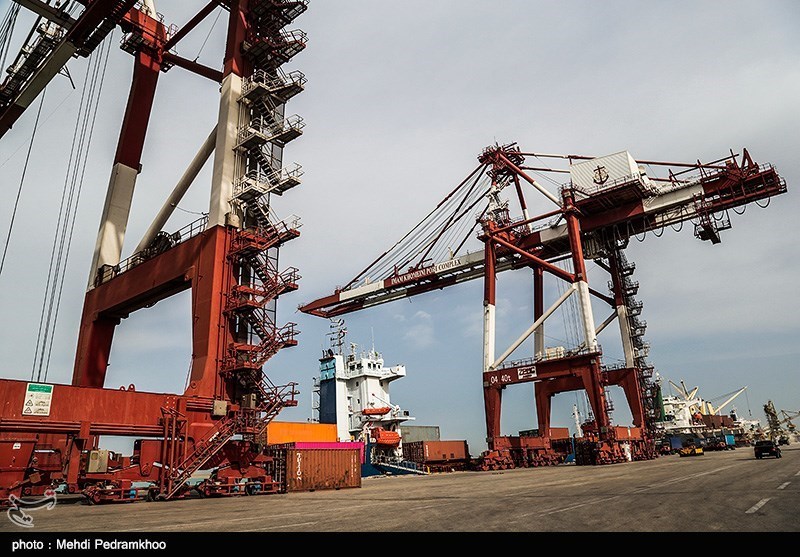
TEHRAN (Tasnim) – The Ports and Maritime Organization of Iran said it has foiled a cyberattack on the electronic infrastructures of the seaports.

The Ports and Maritime Organization of Iran announced in a statement that its information technology experts have thwarted a cyberattack targeting the electronic infrastructures of the Iranian ports.

All missions and activities of the Ports and Maritime Organization are going on normally, the statement added, noting that online services are being provided to prevent any disruption to the freight services or loading and unloading operations even for a moment.

Last month, an official said the export of non-oil commodities in the first half of the current Iranian year via the southeastern port city of Chabahar has risen by 95 percent compared to the corresponding period a year earlier.

Chabahar is the closest and best access point of Iran to the Indian Ocean and Iran has devised serious plans to turn it into a transit hub for immediate access to markets in the northern part of the Indian Ocean and Central Asia.

Source: tasnimnews.com

Iran Says Opposed to Europe’s Military Presence in Persian Gulf

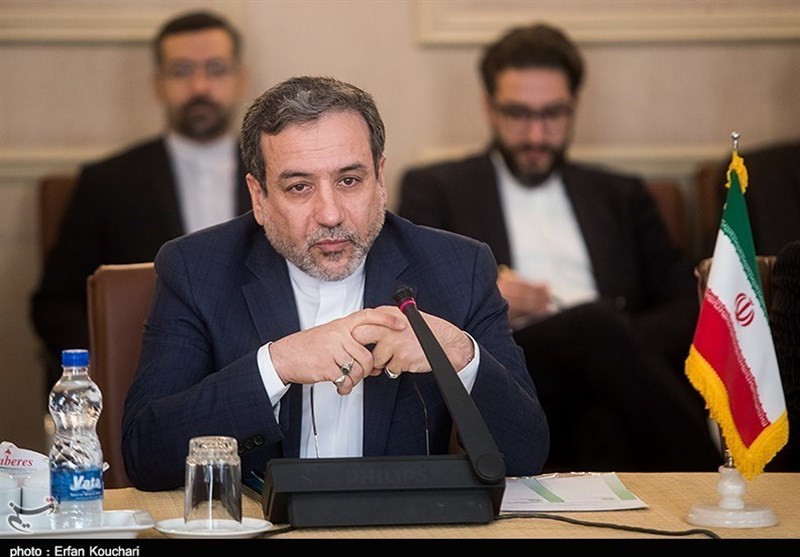
TEHRAN (Tasnim) – Iranian Deputy Foreign Minister for Political Affairs Seyed Abbas Araqchi expressed the country’s opposition to any foreign military presence in the Persian Gulf region, including the presence of European forces.

Speaking in a meeting with the new Danish ambassador to Tehran on Wednesday, Araqchi stressed that the security of the Persian Gulf region should be provided by the countries of the region.

He said the presence of foreign troops will not only not help establish security but will prepare the ground for the escalation of tensions as well.

The Iranian official underlined that Persian Gulf security is an issue of common interest for all regional countries. He said the establishment of sustainable security in the region is contingent upon dialogue and collective cooperation among regional countries and non-interference by foreign powers.

“Therefore, instead of deploying troops and military equipment or selling massive amounts of arms to certain regional countries, Denmark and other European countries had better tackle the root cause of tensions in the region, namely the United States’ destructive and wrong policies in the Persian Gulf region,” he said.

In the meeting, the two sides exchanged views on regional and international developments, fighting terrorism, the situation in the Middle East, the Nagorno-Karabakh crisis and potential for economic cooperation between the two countries.

Source: tasnimnews.com

Chinese navy fleet returns from escort mission

HANGZHOU — A Chinese navy flotilla returned to the port city of Zhoushan in East China’s Zhejiang province Wednesday after completing its mission of escorting civilian vessels in the Gulf of Aden and waters off Somalia.

The 35th escort squad of the Chinese People’s Liberation Army Navy, comprising the guided-missile destroyer Taiyuan, the missile frigate Jingzhou and the supply ship Chaohu, escorted 49 Chinese and foreign ships during the mission. The fleet set sail from Zhoushan on April 28.

To continue reading, please click here.

Source: chinadaily.com.cn