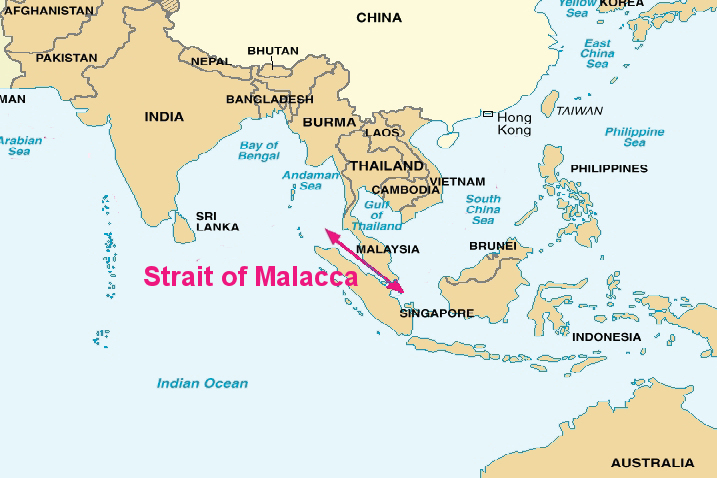
The Maritime and Port Authority of Singapore (MPA) has responded to China’s decision to raise the security level for its vessels heading through the Strait of Malacca, asserting that no information has been received about an immediate threat.
According to Bloomberg, a notice was served by China’s transport ministry on July 2, advising Chinese-flagged vessels to adopt heightened security measures and raise their security warning to level three.
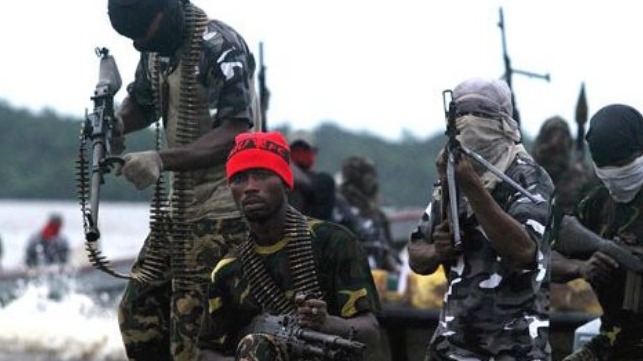
The seas around West Africa remain the world’s most dangerous for piracy, the International Maritime Bureau’s (IMB) latest report reveals.
Of the 75 seafarers taken hostage onboard or kidnapped for ransom worldwide so far this year, 62 were captured in the Gulf of Guinea – off the coasts of Benin, Cameroon, Guinea, Nigeria and Togo. Worldwide, the International Chamber of Commerce’s IMB Piracy Reporting Centre recorded 78 incidents of piracy and armed robbery against ships in the first half of 2019, compared with 107 incidents for the same period of 2018. Overall, 57 vessels were boarded successfully, representing 73% of all attacks.
Pirates killed one person, took 38 crewmembers hostage, and kidnapped a further 37 for ransom.
Gulf of Guinea world piracy hotspot
The IMB report reveals 73% of all kidnappings at sea, and 92% of hostage-takings, took place in the Gulf of Guinea. Armed pirates in these high-risk waters kidnapped 27 crewmembers in the first half of 2019 and 25 in the same period in 2018. Two chemical tankers were hijacked, as well as a tug that was then used in another attack. Of the nine vessels fired upon worldwide, eight were off the coast of Nigeria, Africa’s top oil producer. These attacks took place on average 65 nautical miles off the coast – meaning they are classified as acts of piracy.
But there are some encouraging signs of improvement. The IMB Piracy Reporting Centre reports “a welcome and marked decrease” in attacks in the Gulf of Guinea for the second quarter of 2019, commending the Nigerian navy for actively responding to reported incidents by dispatching patrol boats. While recognising that many attacks go unreported, IMB recorded 21 incidents around Nigeria so far in 2019, down from 31 in the same period of 2018.
Naval vessels from Equatorial Guinea and Spain also intervened in May 2019 when a Nigerian tug was hijacked 41 nautical miles off Luba, Equatorial Guinea. Soon after, the pirates used the tug to launch an attack on a Maltese heavy load carrier. The crew retreated into the ship’s citadel, a safe room for protection against attackers. When the navies responded, the pirates left the vessel and the crew were freed. The IMB Piracy Reporting Centre thanks the naval vessels for their prompt assistance.
Warning to stay alert
Despite the recent fall in Gulf of Guinea attacks, IMB is urging seafarers in the region to remain vigilant and report all suspicious activity to regional response centres and the Piracy Reporting Centre. “Early detection of an approaching suspicious craft is key to prevent boarding and give time to raise the alarm and retreat into a citadel, if needed,” said an IMB spokesperson.
Meanwhile, in Malaysia, 10 crew were kidnapped from two fishing boats off eastern Sabah in June. Of these, nine crew are reported to have been released.
Around Indonesia, on-going information-sharing cooperation between the Indonesian Marine Police and the IMB Piracy Reporting Centre continues to show positive results. The 11 incidents reported in Indonesian waters remains the lowest Q2 figure since 2009 when three incidents were reported.
Violent attacks in South America
A vessel was fired upon in the Guayas River after departing from Guayaquil, Ecuador’s second largest city. This is the first time an incident involving the firing of weapons has been reported to the IMB Piracy Reporting Centre in Ecuador.
Elsewhere in South America, incidents of violent armed theft against ships at anchor have been reported in Callao in Peru, Jose Terminal in Venezuela and Macapa in Brazil. On 2 May 2019, when armed robbers boarded a yacht in San Ignacio de Tupile, Panama, shooting and killing a family member and injuring another, the IMB Piracy Reporting Centre liaised with the victims and authorities. The surviving family members including two children were rescued by Panamanian Marine Police.
Global anti-piracy support
Since 1991 the Piracy Reporting Centre’s 24-hour manned centre, has provided the maritime industry, governments and response agencies with timely and transparent data on piracy and armed robbery incidents – received directly from the Master of the vessel or its owners. This important work promotes the purpose of the International Chamber of Commerce to enable business to secure peace, prosperity and opportunity for all.
The IMB Piracy Reporting Centre’s prompt forwarding of reports and liaison with response agencies, its broadcasts to shipping via Global Maritime Distress and Safety System (GMDSS) Safety Net Services and email alerts to Company Security Officers, all provided free of charge, has helped the response against piracy and armed robbery and the security of seafarers, globally.
IMB strongly urges all shipmasters and owners to report all actual, attempted and suspected piracy and armed robbery incidents to the IMB Piracy Reporting Centre globally. This first step in the response chain is vital to ensuring that adequate resources are allocated by authorities to tackle piracy. Transparent statistics from an independent, non-political, international organisation can act as a catalyst to achieve this goal.
Naval authority in charge of the Forward Operating Base (FOB), Badagry, at the weekend, said it has intensified its surveillance and patrol around the Badagry creeks in other to cub the rising cases of smuggling of contraband into the country.
It said several gunboats to have been deployed to notorious areas in the creeks.
The five battalions of the police’s elite Special Action Force (SAF), which President Duterte early in his term had ordered to be formed, may see action in Mindanao as part of the effort to wipe out the extremist Abu Sayyaf Group (ASG).
Gen. Oscar Albayalde, chief of the Philippine National Police (PNP), said the five battalions of SAF commandos are nearing completion of their commando training and would graduate as soon as they pass the test mission.
Adhoc committee set up by the State House of Assembly to investigate the frequent attacks and robbery on the Bille-Port Harcourt sea route has submitted its report. The committee is chaired by member representing Gokana State Constituency, Hon. Dumle Maol, who submitted the report last Thursday after it carried out its investigations.
Among recommendations made by the committee was for the security agencies patrol along the waterways to curb the frequent waylay on passenger boats by sea pirates. It also called on the authorities to ensure that the miscreants and robbers are fished out and arrested, so as to stein the menace in the future.
An industry first – Leading marine underwriter Lampe
& Schwartze join the advisory board of the Maritime Cyber Emergency
Response Team (MCERT) and announce their new Ship Owner’s Marine Cyber Cover (SOMCC) covering exclusion Clause 380.
Leading marine underwriter Lampe & Schwartze has joined the advisory board of the Maritime Cyber Emergency Response Team (MCERT). Today’s announcement took place at a reception for insurance brokers and vessel operators hosted by Lampe & Schwartze at the Hafen Club in Hamburg. Guest speakers included Norton Rose Fulbright, Verein Hanseatischer Transportversicherer (VHT), and from the MCERT, Wärtsilä and Templar Executives.
The MCERT partnership underpins the formal launch of Lampe &
Schwartze Marine Unit’s (L&S MU) new Ship Owner’s Marine Cyber Cover
(SOMCC) covering exclusion Clause 380, and provides the basis for a
joint approach to protect the maritime industry, especially shipowners,
from cyber attacks. MCERT is one of the first companies providing a
trusted platform for industry wide collaboration on cyber incident
reporting and response and sharing of threat intel, especially for the
maritime sector.
‘We are delighted to welcome Lampe & Schwartze onto our Advisory
Board. This is the culmination of months working together to incorporate
MCERT as an integral part of the process for the cyber cover
eligibility,’ said Andrew Fitzmaurice, CEO at Templar Executives.
Mark Milford, VP Cyber Security at Wärtsilä added, ‘This exciting
partnership with Lampe & Schwartze brings a new dimension and is a
great example of how the MCERT is enabling collaboration and adopting
solutions by leading industry players for the industry.’
Anu Khurmi who has been leading the MCERT collaboration with Lampe
and Schwartze commented, ‘‘At a time when digitisation and automation
are shaping the future of the maritime industry, the spectre of cyber
attacks is becoming ever more prominent. Marine insurance has a critical
role in facilitating and safeguarding international maritime trade
especially if it enables best practices in cyber hygiene and resilience
throughout the entire ecosystem. Lampe & Schwartze are leading
experts in complex transport and maritime risks, providing highly
specialised insurance concepts such as their ground-breaking SOMCC
offering’.
‘Our Ship Owner’s Marine Cyber Cover provides certainty in scope of
insurance cover and is a standalone insurance policy covering the
exclusions of the clause 380 in hull & machinery policies. Our
exciting partnership with MCERT will provide international cyber
incident reporting and response and ensure due diligence on vessel
operators taking out the SOMCC. In addition, the MCERT has a key role in
providing daily alerts and global threat intel which will further help
in loss prevention and cyber risk mitigations.’ stated Hans-Christoph
Enge, Managing Partner of L&S MU.
In case of a claim or incident, a co-operation between the MCERT and Verein Hanseatischer Transportversicherer (VHT), the tried and tested Hull & Machinery Claims Organization of the German Market, will guarantee a combination of technical, nautical and cyber security know-how thus giving a holistic 24/7 response line. The insurance capacity for the cover is provided by renowned German direct insurer and reinsurers.
ZAMBOANGA CITY –– A Marine battalion has been deployed to Sulu to beef up the government’s security presence in the province, rocked by recent bombings in a military facility, and grappling with a long-running bout with terrorists.
Their mission: “Destroy the Abu Sayyaf … and establish a peaceful and stable environment in Sulu,” said Rear Admiral Erick Kagaoan, commander of Naval Forces Western Mindanao.
Hard times await pirates that operate on Nigerian waters, as the Suppression of Piracy and other Maritime Offences Bill, signed into law by President Muhammadu Buhari recommended a life sentence for culprits.
A copy obtained by The Guardian, showed the law recommended various punishments for piracy, armed robbery, and other maritime-related offences ranging from life imprisonment to fines of N500 million, N250 million, and 12- 15 years imprisonment, depending on the gravity of the offence.
USNS Carson City (T-EFP 7), a Military Sealift Command Spearhead-class expeditionary fast transport ship, departed Rota, Spain, on July 2, as part of the Navy’s second deployment to the Gulf of Guinea this year.
Sailors and embarked personnel will work alongside regional partners on an Africa Partnership Station (APS) mission to provide small boat maintenance assistance, maritime law enforcement engagement, and medical and community relations outreach.
“The deployment of USNS Carson City to the Gulf of Guinea enables our partners to improve maritime security along their coastlines, territorial seas, and exclusive economic zones,” said Adm. James G. Foggo III, commander, U.S. Naval Forces Europe-Africa. “Maritime security is critical for coastal nations as seaborne trade is the lifeblood of global trade. When maritime trade freely sails across the seas, economic development and opportunities for prosperity are possible.”
U.S. Coast Guard (USCG) cutter Thetis (WMEC 910) was the first U.S. ship to deploy to the Gulf of Guinea in 2019.
“Thetis conducted training with our African partners on maritime law enforcement throughout exercise Obangame Express 2019 and continued training with our partners in the region during its deployment,” said Foggo. “Carson City’s deployment will enhance Gulf of Guinea nations’ maritime capabilities through workshops and collaboration. The presence of U.S. ships such as Thetis and Carson City helps address some of the challenges our African navies and coast guards have requested assistance with, including law enforcement and maritime resource management.”
During Carson City’s deployment, U.S. military personnel will work alongside U.S. partners in Cabo Verde, Cote d’Ivoire, Ghana, Nigeria, and Senegal to provide assistance based on host nation requests during previous APS exercise and engagements. The crew and the embarked European allies will provide host nation-requested, needs-based assistance through engagements as part of our enduring friendship and partnership with our African partners.
Mission personnel traveling with Carson City include a small boat maintenance and repair team, a medical team, United States Coast Guard Maritime Law Enforcement personnel, and the U.S. Naval Forces Europe band, who will conduct performances for local communities.
“We have a lot of experts embarked aboard Carson City to work alongside our Gulf of Guinea partners in areas they have asked for assistance such as maintenance and medical engagements,” said U.S. Navy Cmdr. Howard Gray, lead planner for Carson City deployment.
These experts include service members from other regional partners and allies, who are also joining Carson City for the deployment.
“Not only do we have U.S. service members from the Navy and Coast Guard, but we also have members of the Portuguese, Spanish, and Italian navies embarked to help ensure our African partners are getting the assistance and mentorship they need to succeed,” said Foggo. “We are also embarking members of the Ghana Navy for a brief period. Together, we are promoting progress through partnership.”
Thetis’ deployment earlier this year, like the Carson City deployment, was part of the APS program. The cutter was in Africa theater for three months, conducting training with regional countries on law enforcement tactics and techniques to combat illegal fishing, human and narcotics trafficking, piracy, and pollution.
APS is U.S. Naval Forces Africa’s flagship maritime security cooperation program focusing on maritime safety and security through increased maritime awareness, response capabilities, and infrastructure. It consists of the various exercises and operations conducted by U.S., European, and African partners and allies throughout the U.S. Africa Command area of operations.
U.S. Naval Forces Europe-Africa/U.S. 6th Fleet, headquartered in Naples, Italy, conducts the full spectrum of joint and naval operations, often in concert with allied and interagency partners, in order to advance U.S. national interests, security and stability in Europe and Africa.
President Muhammadu Buhari has signed into law an anti-piracy bill to improve security on Nigeria waterways and exclusive economic zone, the Nigerian Maritime Administration and Safety Agency said.
The so-called Suppression of Piracy and other Maritime Offences Bill will “ensure safe and secure shipping on Nigerian waters, prosecute infractions, and criminalize piracy,” the agency known as NIMASA said in emailed statement Wednesday.





 Maritime Security News