Curfew at Esszone extended to September 23

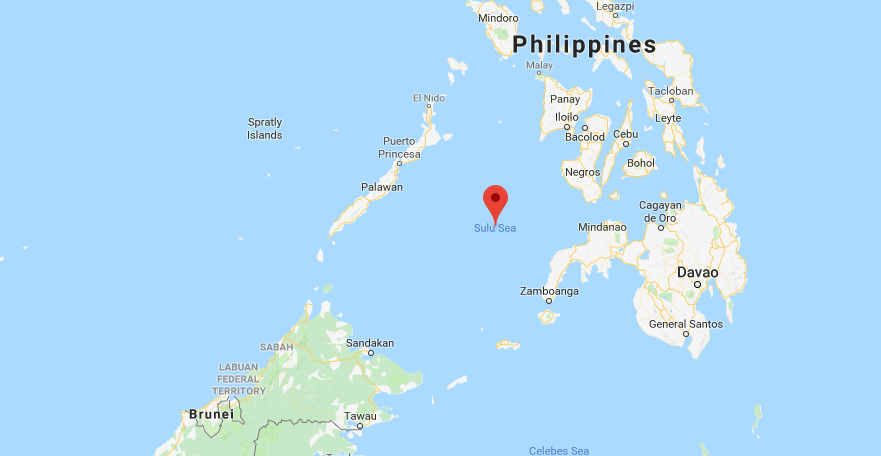
KOTA KINABALU-The confinement order in the waters of seven districts in the eastern Sabah (ESSZone) End of tomorrow will be extended until September 23.

Sabah Police Commissioner Datuk Omar Mammah says the curfew from 6 pm to 6 a.m. covers the waters of Tawau, Semporna, Kunak, Lahad Datu, Kinabatangan, Sandakan and Beluran.

To continue reading, please click here.

Source: translatetheweb.com

Shell ‘losing $560,000 a day to Nigeria oil thieves’

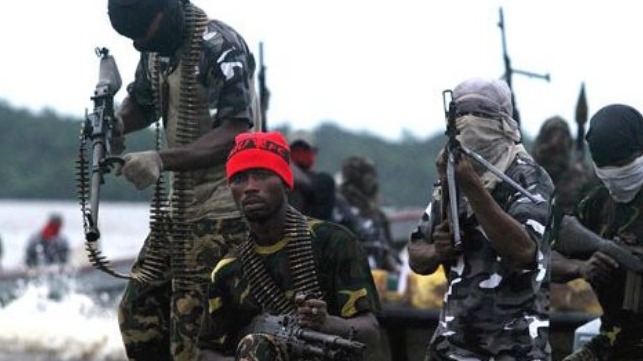
Shell’s subsidiary in Nigeria says the oil giant is losing 10,000 barrels of oil a day to thieves in the West African nation – at a cost of $560,000 (£452,000) a day.

The losses by vandals attacking oil pipelines in the southern Niger Delta are equivalent to $204.4m over a year.

The announcement was made by Igo Weli, general manager of the Shell Petroleum Development Company of Nigeria (SPDC), which is a joint venture between Shell and the Nigerian government.

“These attacks were on critical assets that produce the crude oil, which accounts for over 90% of Nigeria’s foreign exchange earnings and the bulk of government revenue,” Mr Weli is quoted as telling a workshop on pipeline vandalism in the oil city of Port Harcourt on Monday.

Since 2012 he said the company had discovered and removed 1,160 points where thieves were stealing the oil.

But this did not seem to be stemming the problem as 9,000 barrels a day were being stolen in 2017, 11,000 last year and 10,000 this year.

Mr Weli was also critical of a lack of development in the Niger Delta, where most people remain poor despite the vast wetlands rich oil resources.

“There is a community in the Niger Delta that has received over 2bn naira ($5.5m, £4.5m) from SPDC joint venture for its development, but is yet to develop,” the Premium Times quotes him as saying.

“The region receives 13% derivation, revenue from NDDC [the Niger Delta Development Commission government agency] and funds from companies, but still has not developed,” he said.

“The Niger Delta has refused to develop despite the huge monies allocated to the area. So, we need to ask ourselves the critical questions to change the Niger Delta narratives.”

Source: bbc.com

Peace returns to Akwa Ibom creeks as ex-militants, police pursue pirates

Joe Effiong

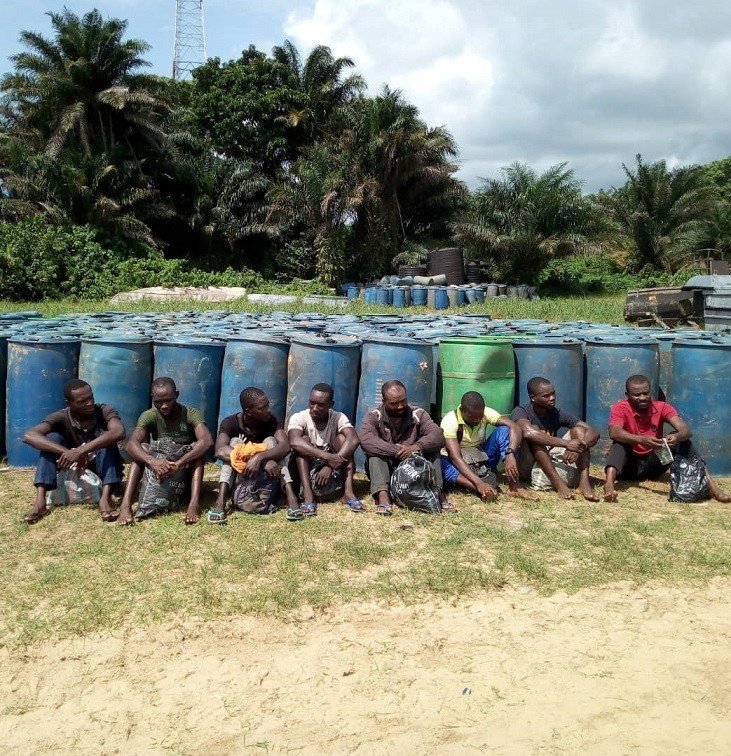
Fishermen in Akwa Ibom have commended the combined efforts of the ex-militants and a team of amphibious mobile police squad from the office of the Inspector-General of Police, who have worked together to reduce frequent attacks by sea pirates.

The chairman of Mbo Indigenous Fishers Association, Mr Offong Ettekamba, told journalists at Rnwang, Mbo LGA of the state, that there was remarkable peace in the sea within the past two weeks since the amphibious police and some ex-militant leaders took over the surveillance of the waterways.

To continue reading, please click here.

Source: sunnewsonline.com

MOFA Japan, MPA & ReCAAP ISC Collaborate to Combat Piracy

Ministry of Foreign Affairs of Japan and Maritime and Port Authority of
Singapore, in cooperation with ReCAAP Information Sharing Centre, Join
Efforts to Build Region’s Capabilities in Combating Piracy and Sea Robbery
The Ministry of Foreign Affairs of Japan (MOFA Japan) and the Maritime and Port
Authority of Singapore (MPA), in cooperation with the ReCAAP Information Sharing
Centre (ReCAAP ISC), jointly organised the 3rd Capacity Building Executive
Programme (CBEP) in Singapore. The one-week programme begins today, and will
end on 13 September 2019.

Since the inaugural edition in 2017 held in both Singapore and Japan, CBEP has
become the region’s flagship counter-piracy and sea robbery capacity building
programme, with all 20 ReCAAP Contracting Parties as well as Indonesia and
Malaysia having participated in previous editions.

This year’s edition will see senior officials and international experts address a broad
spectrum of piracy and sea robbery issues including:

• Situation Update on Piracy and Armed Robbery against Ships in Asia
• Evolving Situation and Advisory in the Sulu-Celebes Seas
• Situation in the East and West Africa
• Sharing of best practices and experiences of participating countries
• UNCLOS, SUA Convention, Hostage Convention as applied to Piracy and Sea
Robbery
• Maritime Cybersecurity

The lectures will be supplemented by in-depth discussions of case studies from
regulatory/law-enforcement agencies from across the region.

A dialogue session between regulatory/law enforcement agencies and the shipping
industry will be held to promote exchange of views and mutual cooperation.

“With 13 years of efforts and contributions by the ISC and the contracting parties,
ReCAAP has proved itself as a successful model of regional cooperation which has
made significant progress in mitigating piracy and sea robbery in Asia. Despite the
recent trend of decreasing number of piracy incidents, new challenges such as
terrorism and cyber attacks have been observed in the maritime domain. Against this
backdrop, Japan is pleased to co-host the 3rd programme with Singapore and the
ReCAAP ISC, which aims to provide the participants with opportunities to enhance
law enforcement capabilities in the efforts of counter-piracy and to learn how to
address emerging threats, as well as to exchange views and ideas with regional
partners and experts,” said Mr. Hideki Yamaji, Director, Maritime Security Policy
Division, MOFA Japan and Acting Japanese Governor to the ReCAAP ISC Governing
Council.

“Singapore is pleased to once again partner Japan to co-host this year’s ReCAAP
Capacity Building Executive Programme. Capacity building is one of the pillars of
ReCAAP. The sharing of best practices and experiences, and building the collegiality
among fellow practitioners, strengthens the network we have. This Programme has
contributed greatly to our collective effort in the fight against piracy and armed robbery
against ships in Asia,” said Ms. Quah Ley Hoon, MPA’s Chief Executive and Singapore
Governor to the ReCAAP ISC Governing Council.

“A distinguishing factor of ReCAAP ISC that has led to its success in reducing both
the number and severity of incidents in Asia in recent years is the incident reporting
and response framework attributing the primary role to the coastal States. The CBEP
builds on this framework to enhance the effectiveness of the coastal States in
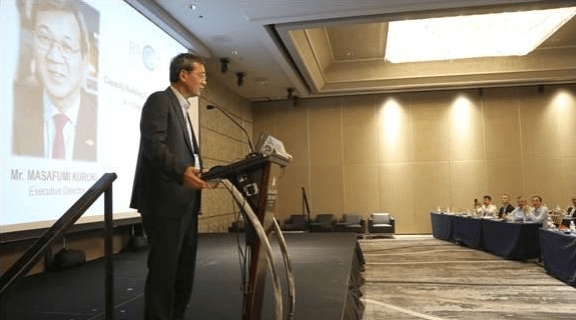
addressing piracy and sea robbery in Asia,” said Mr. Masafumi Kuroki, Executive
Director of ReCAAP ISC.

Source: recaap.org

Trinidad & Tobago Orders 2 Cape-Class Patrol Boats From Austal

Xavier Vavasseur

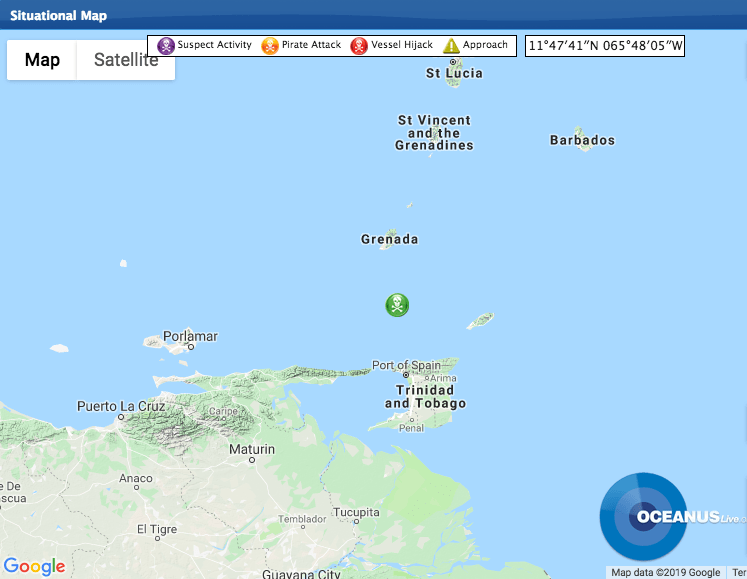
Austal has signed a contract worth approximately A$126 million to construct two Cape Class Patrol Boats (CCPB) for the Government of the Republic of Trinidad & Tobago (GORTT). The vessels will be delivered in the second half of 2020.

Austal Chief Executive Officer David Singleton said the award of the contract confirmed an important defence export opportunity for Austal and consequent workflow for the Company’s Henderson operations.

To continue reading, please click here.

Source: navalnews.com

Curfew in ESSZone extended to Aug 24

KOTA KINABALU: Curfew in the waters off seven districts in the Eastern Sabah Security Zone (ESSZone) which ends tomorrow will be extended until Aug 24.

Sabah Police Commissioner Datuk Omar Mammah said the curfew from 6pm to 6am covers the waters of Tawau, Semporna, Kunak, Lahad Datu, Kinabatangan, Sandakan and Beluran.

To continue reading, please click here.

Source: nst.com.my

Piracy: Nigeria, others to assess war risk charges

Anna Okon

Worried about the charges imposed on Nigeria as war risks for piracy attacks, the Nigerian Shippers’ Council is set to convene a meeting with the Global Shippers Forum to discuss the issue.

The Executive Secretary, NSC, Mr Hassan Bello, who made this known, said the charges were too high and most times unwarranted. Nigeria has been in the news in the past few years for the frequency of piracy attacks.

To continue reading, please click here.

Source: punchng.com

Pirate Attacks Continue Worldwide Despite Efforts to Control Them

ASIA – AFRICA – Although the rash of serious pirate attacks off the Somalian coast which we reported on almost a daily basis in the years leading up to 2017 have since diminished, that does not mean the seas of the world are now always a safe place to ply one’s trade. It was a concentrated, internationally coordinated policy of increased naval surveillance which managed to largely control the hijacking of container ships and tankers in the Indian Ocean, but elsewhere every day brings the risk of assault on the innocent.

The Information Fusion Centre (IFC) is a division of the Indian Navy and its semi-annual report for South East Asia shows the state of play in the region. What should be made clear here is that the vast bulk of incidents worldwide are not truly ‘piracy’. To qualify for that title the vessel being assaulted must be at sea, therefore only one true pirate attack has taken place recently according to the IFC, that of the South Korean flagged bulk carrier CK Bluebell on July 22 near the Singapore Strait which passes Indonesia, Malaysia and Singapore.

To continue reading, please click here.

Source: handyshippingguide.com

Nigeria wants to adopt Kenya’s strategy in bolstering maritime security

The Gulf of Guinea is a hub of illegal activities resulting in tremendous threats to global trade and security. It is the most dangerous stretch of sea for pirate attacks over the planet. To overcome the challenge, a two-day International Maritime Defence Exhibition and Conference took place in Ghana’s capital, Accra. It attracted experts from various countries who discussed the issues of armed robbery and piracy and the solutions. The conference focused on dealing with multiple security-related issues like piracy, illegal fishing, abducting for ransom, illegal oil bunkering and drug trafficking in the Gulf of Guinea.

To continue reading, please click here.

Source: devdiscourse.com

Coastal communities in Akwa Ibom protest over attacks by sea pirates

By Lovina Anthony

Residents of fishing communities in Oron Local Government Area of Akwa Ibom State, on Tuesday protested over incessant attacks and killings of fishermen and boat owners on waterways by suspected sea pirates.

It was gathered that security agents drafted to protect the waterways were incapacitated to salvage the situation as pirates seemed to have overpowered them.

To continue reading, please click here.

Source: dailypost.ng