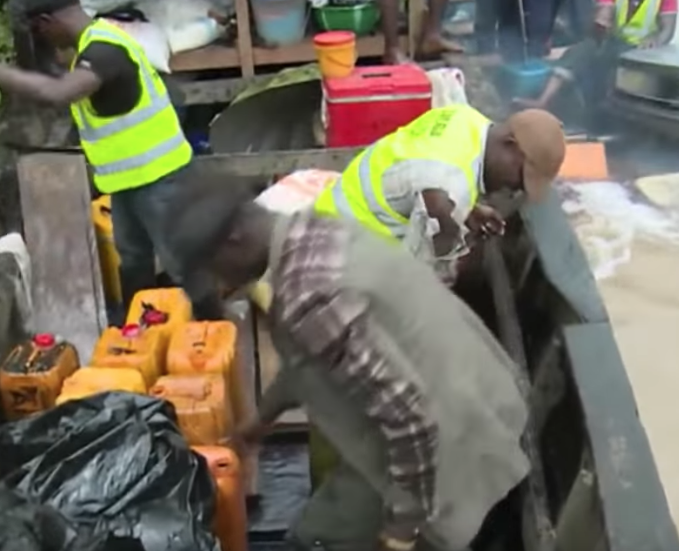
The Nigerian Navy said it operatives have impounded six ships and 80 wooden boats used by criminal elements for alleged illegal oil bunkering, used in siphoning of product from the Nigerian National Petroleum Corporation (NNPC) pipelines and crude oil well heads in six months. The Command also said it has destroyed over 50 illegal refineries at Yeye, Burutu and Ibafa creeks in Delta State.
The operatives of the Nigerian Navy Ship NNS, Delta gave the names of the six arrested ships as MT Aysu, MT Interim, MV Mama Elizabeth, MT Miracle, MV Nipal and SD Waterman and 80 wooden boats used by criminals for alleged illegal bunkering of petroleum products from NNPC.
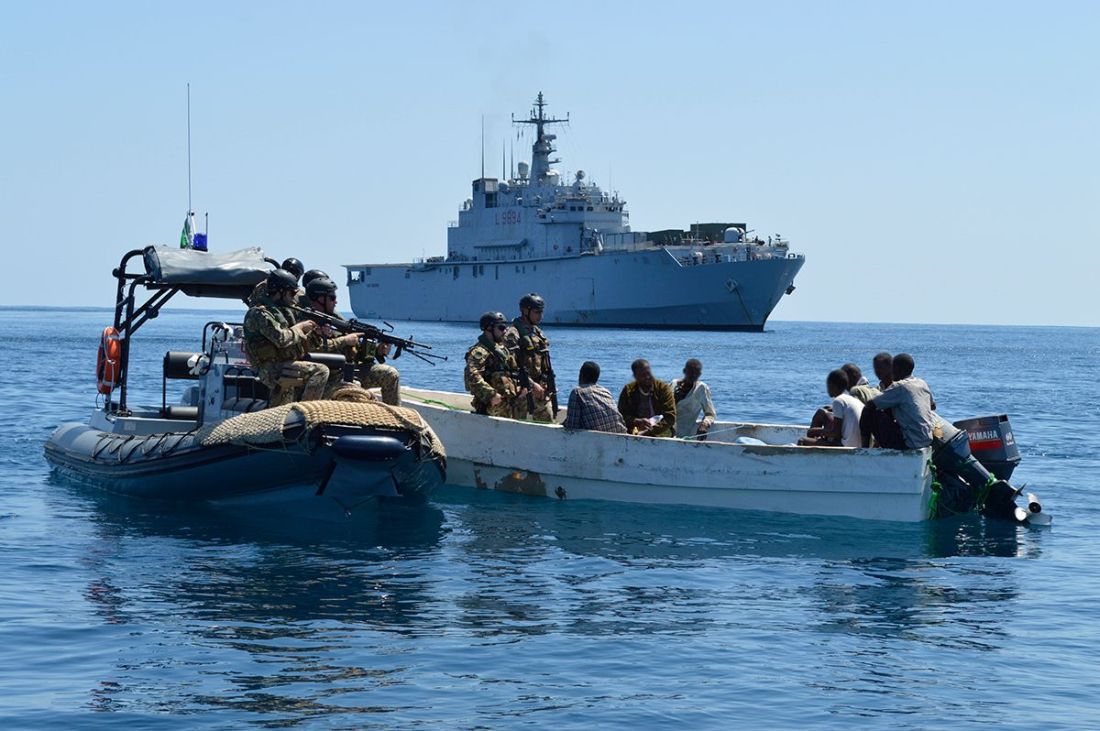
Kenya has been elected the chair of the Contact Group on Piracy off the Coast of Somalia (CGPCS) for a period of two years beginning January 2020.
The chairmanship will afford Kenya the opportunity to coordinate regional and international efforts to deal with the challenge of piracy which remains a threat to the Maritime sector, despite being suppressed in recent times.
KUALA LUMPUR (Bernama): Eight men have been arrested to help in investigations into the kidnapping of 10 Bajau Laut fishermen (sea gypsies) in Felda waters in Lahad Datu, Sabah on Tuesday (June 18), says CID director Datuk Huzir Mohamed.
He said six of those arrested are foreigners, aged between 17 and 60, who were spared by the armed kidnappers on Tuesday.
The Management of C&I Leasing Plc has said contrary to report by some online media that its vessel, MV Charis, was arrested in Malabo, Equatorial Guinea, on the suspicion of involvement in piracy activities, the vessel was on its way to execute a recovery contract in Equatorial Guinea when it was hijacked by sea pirates.
The Managing Director, C&I Leasing, Mr Andrew Otike-Odibi, explained this in a statement while commending the Nigerian Maritime Administration and Safety Agency, the Nigerian Ambassador to Equatorial Guinea, Ambassador Toko Ali Gongulong; the Defence Attaché, Navy Captain Seyi Oladipo; and the Spanish Navy, for their intervention and timely release of the vessel.
The seas off West Africa’s oil-rich coastline are now the most dangerous in the world for shipping, according to a new report.
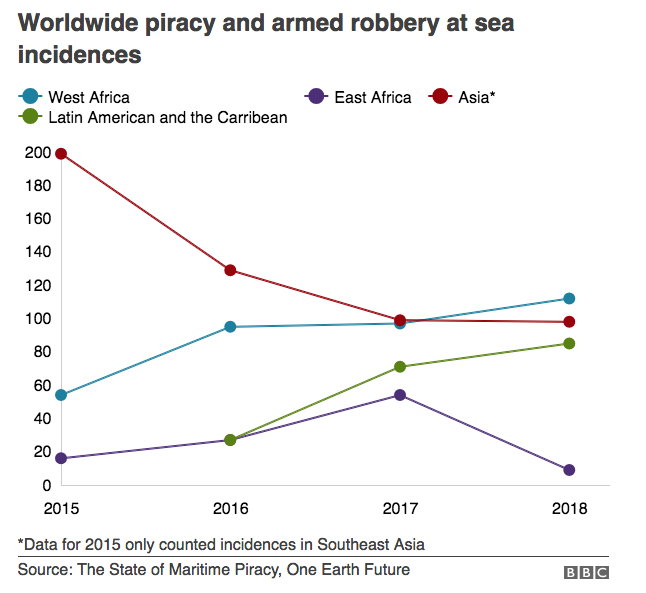
One Earth Future, which produces an annual State of Maritime Piracy, says that while attacks have been falling substantially in some regions of the world, in West Africa they’ve been on the rise and are now more frequent than anywhere else.
So why the increase in West Africa, and what shipping is being targeted?
What is piracy?
A strict definition of maritime piracy only includes attacks on shipping on the high seas – that is, more than 12 nautical miles off the coastline and not under the jurisdiction of any state.
Inside a country’s territorial waters and within port facilities, these attacks are defined as armed robberies at sea.
However, the data we’ve used from this latest report combines these two sets of data to give an overall picture of incidents at sea both inshore and offshore.
In 2018, there were 112 such incidents in West African waters.
It’s not just the huge tankers exporting oil and gas from Nigeria and Ghana that are targeted.
Commercial ships from smaller countries are also in the sights of the pirates.
At a recent event in London, President Faure Gnassingbé of Togo – a country sandwiched between these two regional giants – highlighted his own concerns at the rise in attacks on regional shipping.
“Our region is distinguished by the resurgence of transnational criminality on the high seas in the Gulf of Guinea,” said Mr Gnassingbé.
Why are attacks rising?
Most of the attacks have been against ships involved in oil and gas transportation, such as tankers, bulk carriers and tugs. Fishing vessels have also been targeted.
The coastline off Nigeria saw the most attacks in 2018. This is partly because of “petro-piracy”, targeting tankers from Nigeria’s rich oil and gas fields.
There were also incidents reported at the loading and anchorage facilities in the Nigerian port of Lagos.
Piracy in the form of hijacking and kidnapping for ransom payments was also common off the coasts of Benin, Ghana, Nigeria, Congo-Brazzaville and Cameroon.
Rich pickings at sea, political instability, the lack of law enforcement and poverty on land are all factors which have contributed to the increase in piracy.
Most of the seafarers affected are not from the region. Around half are from the Philippines, followed by India, Ukraine and Nigeria.
One of the reasons West Africa is now the number one spot for piracy is because of of the downward trends recorded elsewhere.
The East African shipping routes along the Somali coastline have been notorious for hijackings and robberies.
But since peaking in 2011, rates of piracy there have fallen off dramatically in recent years.
Local efforts on land in Somalia to change attitudes towards permitting piracy and building legal capacity to prosecute criminals have also helped improve the situation.
In Asia, the Malacca Strait, a busy, commercially important stretch of water between Malaysia and Indonesia, experienced a high number of attacks in 2015.
Concerted action by regional naval forces has reduced the problem there, but piracy still persists.
Attacks against shipping in the Caribbean and off the coast of Latin American have, however, risen.
Venezuela in particular has become a hotspot for piracy.
“Political and economic instability is a big factor there,” says Lydelle Joubert, an expert on piracy at One Earth Future.
KOTA TINGGI: The Malaysian Maritime Enforcement Agency (MMEA) thwarted an attempt by a group of foreign men to steal items on board a commercial vessel in Teluk Ramunia waters, off Pengerang, early yesterday.
Johor MMEA deputy operations director Sanifah Yusof said at 3am on Sunday, an MMEA patrol team from the Tanjung Sedili Maritime Zone came across two wooden boats, both named ‘Lima Sore’ secured to the ‘M.T. Ponier’ vessel that was anchored about 2.9 nautical miles south of Teluk Ramunia.
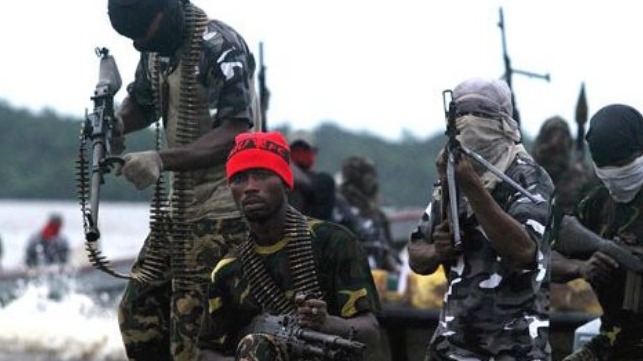
Reports coming from Sabah suggest that Abu Sayyaf Group terrorists have kidnapped 10 crew from two fishing boats early on Tuesday 18th.
Media reports state that the incidents near Borneo Island, when two speedboats approached two fishing vessels. “Pirates” boarded the boats at around 2am LT, confiscated documents likely to relate to the nationality of the crew members, and then took 10 hostages before fleeing towards Sitangkai Island in the Philippines. The fishing boats were believed to be operating during curfew hours without a permit, according to a report in The Straits Times. The remaining crew were picked up by the MMEA.
The incident comes after a prolonged lull in kidnapping activities by the group. However, the loss of hostages in recent rescues and killings would suggest that the group is now looking to increase its funds by further Kidnap For Ransom efforts.
The incident prompted Sabah Chief Minister Datuk Seri Mohd Shafie Apdal to call for further security measures in Sabah, an area which has seen cross border criminality and kidnapping at sea in recent years.
A suspected notorious cultist and illegal oil bunkering kingpin, Korobe Menele Loveday, who has been on the wanted list of the security agencies for terrorizing communities in Rivers State has been killed.
He was killed in a shootout with security operatives.
Western commercial oil exploration in disputed areas of Somalia and discrepancies over which authorities can issue licenses to companies could spark further conflict in the African nation, U.N. monitors warned in a confidential report.
In the U.N. Monitoring Group’s latest annual report to the Security Council’s sanctions committee on Somalia and Eritrea, the experts said the Somali constitution gives considerable autonomy to regional governments to enter commercial oil deals.



 Maritime Security News