Nigeria seeks collaboration to tackle maritime crimes

By Sulaimon Salau and Joke Falaju

Worried by the impact of maritime crime on the regional economy, Nigeria has sought partnership with other countries to tackle the menace headlong.

The Director-General, Nigerian Maritime Administration and Safety Agency (NIMASA), Dakuku Peterside, who made this call at the ongoing Global Maritime Security Conference, in Abuja, said maritime insecurity remains one of the significant challenges affecting international trade, and the quest for sustainable use of ocean resources for economic growth, improved livelihood and job creation.

To continue reading, please click here.

Source: guardian.ng

MarsecNews: If NIMASA is genuinely looking to collaborate with other nations on maritime crime, then it could be a significant move for the Gulf of Guinea. Traditionally, navies in the region have been slow to cooperate with one another but when they have, it has paid dividends. Overall intelligence sharing in the Gulf of Guinea between states has been poor, but efforts in recent years have improved the situation slightly. There remains, however, an issue with certain nations who have multiple agencies all vying for government funding and competing with one another for relevance. As organised criminal gangs have shifted from petro-piracy to crew kidnap for ransom, the speed of naval response becomes more crucial; it’s a lot harder to track a skiff full of hostages than a tanker.

Genuine cooperation between nation states in the Gulf of Guinea would go a long way to suppress maritime crimes such as piracy and armed robbery, allowing for faster response times. However, as long as some countries continue to downplay the threat of piracy, the situation will persist.

Kidnapping in the Sulu Sea: Implications on Terrorism in the Philippines

In the Sulu Seas, kidnap-for-ransom activities perpetrated by Islamic State-linked terrorist networks are on the rise again.

By Kenneth Yeo

On September 23, a group of seven gunmen aboard two pump boats ambushed and seized three fishermen off the coast of East Sabah, in a sign of how the Islamic State (IS) and its affiliated networks continue to trouble the Southeast Asian region. The latest attack follows a surge in ambushes and kidnappings in the last two years along the Sulu Seas, which encompasses the waters around Indonesia, Malaysia’s eastern Sabah state and the Philippines, and has long been a hotspot for piracy and sea robbery. Although there was no claim of responsibility, the attackers are said to be members of an Abu Sayyaf splinter group affiliated with the Islamic State (IS) in Sulu province. It is believed the seven gunman, who were masked, boarded two fishing vessels around midday local time, and abducted three crew members. 

To continue reading, please click here.

Source: thediplomat.com

Gunmen Abduct Two Persons In Rivers Community

Gunmen suspected to be kidnappers have invaded Amariari community in Bonny Local Government Area of Rivers State and kidnapped two persons, according to a report by PUNCH.

The gunmen, according to a source from the area, came into the community on Wednesday morning and forced themselves into some houses.

To continue reading, please click here.

Source: saharareporters.com

Ransom demand made for kidnapped fishermen

By STEPHANIE LEE

KOTA KINABALU: The family of one of three recently abducted Indonesians fishermen has received a ransom demand from their kidnappers.

Sabah Police Commissioner Datuk Omar Mammah said according to their Philippines counterparts, the kidnappers had made the call a few days after the Sept 23 incident.

To continue reading, please click here.

Source: thestar.com.my

Safety in the Red Sea corridor can’t be taken for granted

by Omar S Mahmood

The Red Sea and the adjacent Gulf of Aden face many potential threats to free movement, ranging from the presence of non-state armed groups (such as the Houthis in Yemen) and organised crime outfits, to ongoing territorial disputes and environmental concerns. Yet maritime traffic has largely gone undisrupted in recent years.

The hitherto safe passageway of the Red Sea should not be taken for granted though, and the area has attracted significant geopolitical interest. New initiatives concerned with the shared maritime space are being conceived, including a Red Sea Forum championed by Saudi Arabia and Egypt. The African Union (AU) and Intergovernmental Authority on Development (IGAD) are also taking a greater interest. All these actors aim to address a perceived gap in management of the Red Sea space.

To continue reading, please click here.

Source: issafrica.org

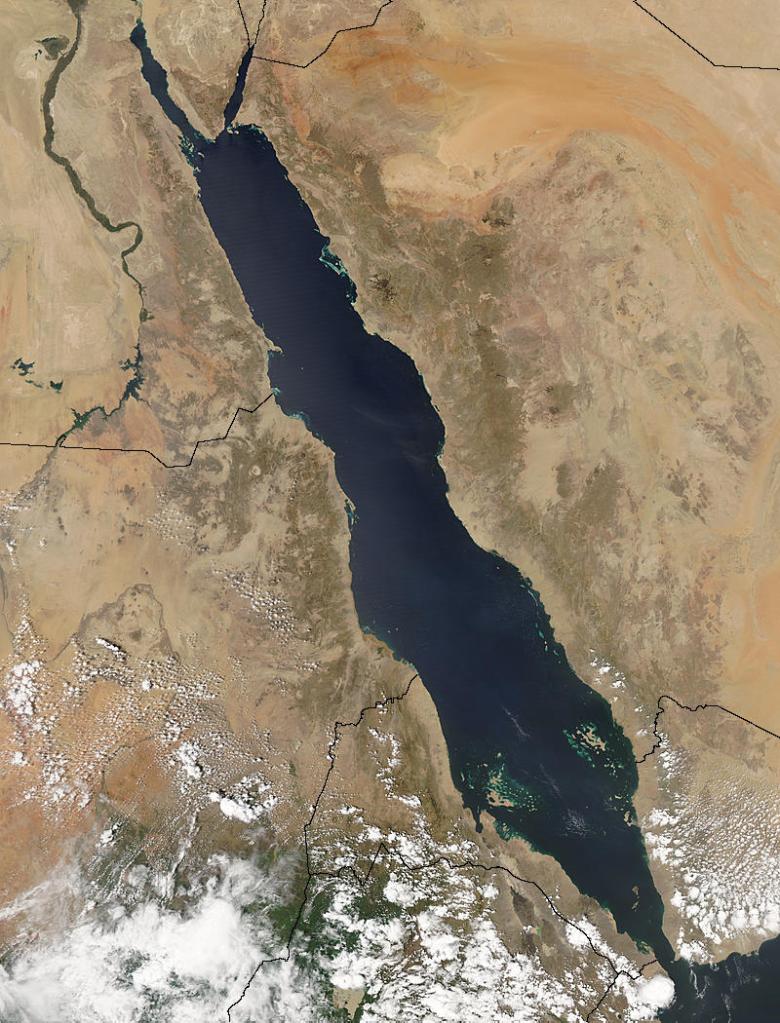
Red Sea, via NASA
Red Sea (NASA)

Indian maritime authority issues alert on Nigerian waters

By Godwin Oritse

AT the backdrop of high incidences of piracy in the Gulf of Guinea, GoG, coterminous with Nigeria’s continental shelf, the Indian maritime authority has warned its seafarers to steer clear of Nigerian waters for fear of falling victims.

Disclosing this at the just concluded World Maritime celebration in Lagos, Director General of the Nigerian Maritime Administration and Safety Agency, NIMASA, Dr. Dakuku Senibo Peterside said that NIMASA was currently working on the development with a view to assuaging the fears of the Indian authorities.

To continue reading, please click here.

Source: vanguardngr.com

Maritime security training for Trinidad and Tobago

Trinidad and Tobago is the latest IMO Member State to receive maritime security training. A self-assessment and audit training workshop took place in in Port of Spain, Trinidad (23-27 September).

Participants were trained in self-assessing how two key IMO maritime security instruments – SOLAS Chapter XI-2 and the International Ship and Port Facility Security (ISPS) Code – are implemented at the port facility level. This is done using established, industry-standard IMO and ISO procedures to identify areas for improvement.

The course addressed outcomes of a previous workshop on ISPS Code responsibilities delivered by IMO in Port of Spain last year.

The workshop included theoretical lessons for participants to understand the certification process involved in obtaining the Statement of Compliance of a Port Facility, presentations on audit processes and techniques, and practical exercises on role playing the review of a port facility security plan.

Source: imo.org

Mexican pirates posing greater risk in Gulf of Mexico to oil workers, tourists

By Hollie McKay

MEXICO CITY – In the calm waters of the Gulf of Mexico, drilling platforms hum away under the sunshine. But, in the dark of the night, they are becoming more and more subject to vicious attacks launched by modern-day pirates.

“Although oil and diesel stealing has been going on for decades, there has been an increase in criminal activity reported in the last four years,” Johan Obdola, founder of the Global Organization for Security and Intelligence, told Fox News. “It is estimated that the stealing in Mexico is up to 1.18 million barrels a day, bringing millions to criminal organizations, and making it very difficult to control.”

To continue reading, please click here.

Source: foxnews.com

Rivers Assembly invites Bonny LG chair over sea pirate attacks

Chukwudi Akasike

The Rivers State House of Assembly has resolved to invite the Chairman of Bonny Local Government Area, David Irimagha, to appear before its Committee on Transport to explain his contribution towards the fight against sea pirate attacks along Bonny waterways.

Passenger boats were last week attacked by sea pirates, who kidnapped a councillor and one other person from the area while robbing other passengers of their belongings.

To continue reading, please click here.

Source: punchng.com

EU NAVFOR Somalia MPRAs Fly In Support of CTF-151 Focused Operation

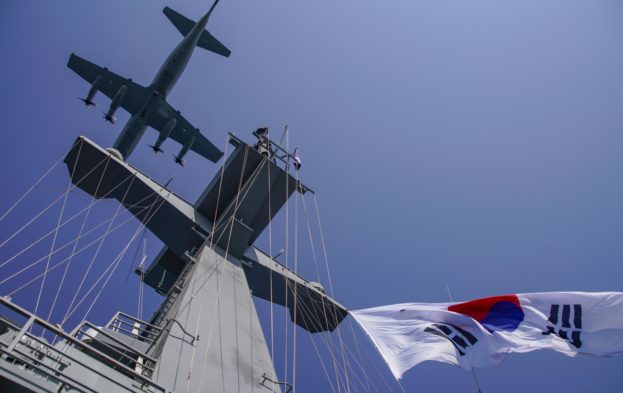
This week, EU NAVFOR Somalia Operation ATALANTA’s German Maritime Patrol Reconnaissance Aircraft supported a multi-national counter-piracy operation led by Combined Task Force 151 (CTF 151) in the Gulf of Aden.

The assets involved in Focused Operation “King Crab” were from nine different nations, and included the Republic of Korea Ship (ROKS) Kang Gam Chan; the Japanese Ship (JS) Sazanami and the Royal Navy of Oman Vessel (RNOV) Al-Dhafreh in support.

The operation was a concentrated effort that spanned over four days and saw the counter-piracy task force and its partners undertake increased counter-piracy patrols and maritime engagement visits to merchant vessels and local dhows. The participating assets also partook in joint training and boarding exercises.

The exercises also reinforced the importance of information-sharing amongst the wide combination of counter-piracy partners.

“Ultimately we all have the same goal of promoting security and stability in the region to legitimate seafarers by defeating piracy and criminal attacks,” said Commander CTF 151, Rear Admiral Byeong-Ju Yu, ROKN. “Focused Operations such as King Crab greatly increase our ability to do this.”

Operation ATALANTA’s MPRAs have now returned to regular operations, patrolling the Indian Ocean, Gulf of Aden, Red Sea and Arabian Sea alongside other EU NAVFOR naval Assets.

Source: eunavfor.eu