Royal Navy seizes over 450kg in the largest methamphetamine drug bust in the Middle East

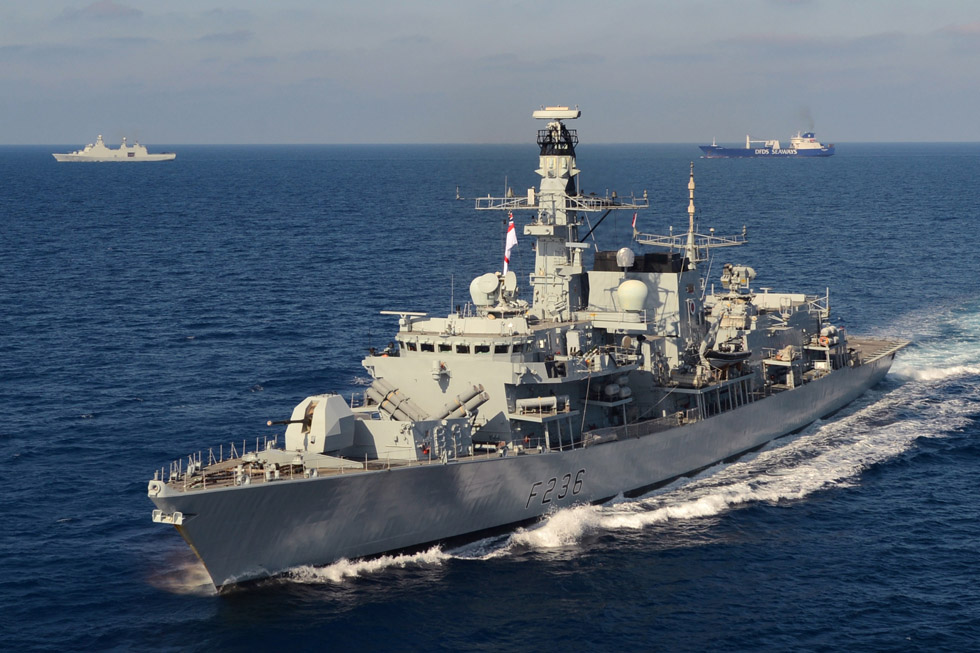
Sailors and Royal Marines from HMS Montrose intercepted over 450 kilograms of methamphetamine, with a wholesale value of £18 million, during a counter-narcotics operation in the Arabian Sea.

From:

The operation, which was part of the Combined Maritime Forces’ (CMF) Operation SEA SHIELD, was an international effort involving several of the CMF’s 33 member nations and partners.

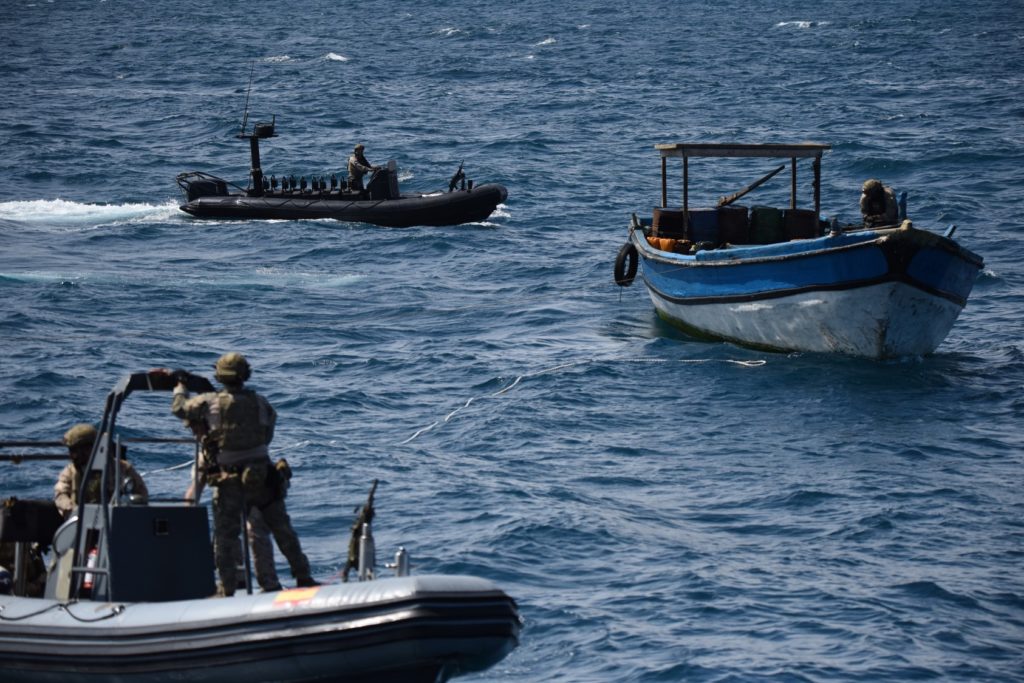
In rough seas, and aided by the ship’s Wildcat helicopter, sailors and Royal Marines conducted the boarding of the suspicious vessel, and during an extensive search discovered the 450kg haul hidden amongst the boat’s cargo.

Minister for the Armed Forces James Heappey said:

Following several large drugs busts by the Royal Navy in the Caribbean, HMS Montrose has conducted the most successful counter-methamphetamine operation ever in the Middle East.

Organised crime funds terrorism and by preventing these drugs reaching the open market HMS Montrose has directly interrupted illegal activity that causes considerable harm across the globe.

Intercepting and boarding suspicious vessels at sea is a skilled operation, made more challenging by the threat of COVID. The ship’s medical team was responsible for de-contaminating all personnel and equipment, and specialist PPE was used throughout the boarding process.

Commanding Officer of HMS Montrose Commander Charles Collins said:

Every sailor and marine, airman and woman, alongside our international partners, should be proud to have contributed to the success of this operation which has undoubtedly kept millions of pounds of drugs off our streets.

With four Mine Countermeasure Vessels, a forward deployed Type 23 Frigate and a Royal Fleet Auxiliary support ship permanently deployed in the Middle East, the Royal Navy remains committed to keeping the region’s critical sea lanes free from illegal activity in order to maintain maritime security.

The Royal Marine Boarding Team’s Officer Commanding from 42 Commando Lt Joe Martin said:

For many of the Royal Marines in the team, this was their first operational tasking. It’s good to see all of our hard work and training come to fruition in an operational environment where we are truly making a positive impact to regional maritime security.

CMF is a multinational maritime partnership that works to counter illicit non-state actors in the Gulf region, promoting stability and security across some of the world’s busiest shipping lanes. The main focus is counter-narcotics, counter-smuggling, supressing piracy and encouraging regional co-operation in order to promote overall security and stability in the region.

Source: gov.uk

Iranian Ports Operating Normally after Cyberattack

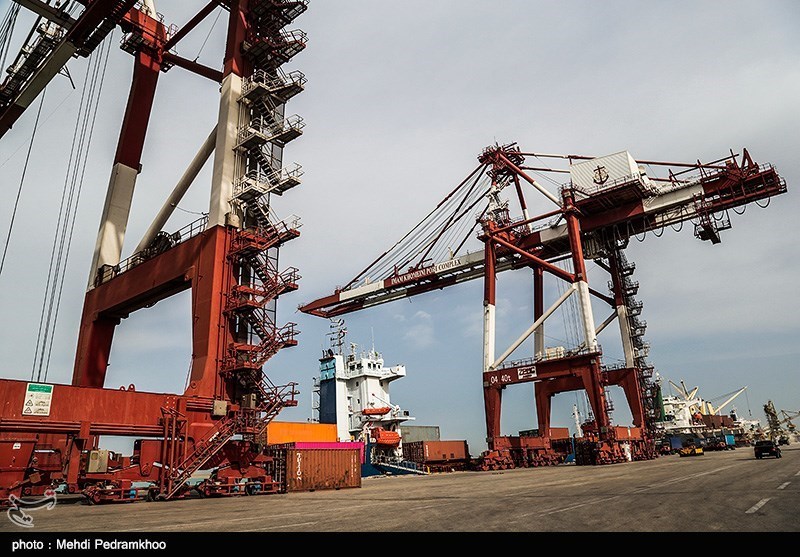
TEHRAN (Tasnim) – The Ports and Maritime Organization of Iran said it has foiled a cyberattack on the electronic infrastructures of the seaports.

The Ports and Maritime Organization of Iran announced in a statement that its information technology experts have thwarted a cyberattack targeting the electronic infrastructures of the Iranian ports.

All missions and activities of the Ports and Maritime Organization are going on normally, the statement added, noting that online services are being provided to prevent any disruption to the freight services or loading and unloading operations even for a moment.

Last month, an official said the export of non-oil commodities in the first half of the current Iranian year via the southeastern port city of Chabahar has risen by 95 percent compared to the corresponding period a year earlier.

Chabahar is the closest and best access point of Iran to the Indian Ocean and Iran has devised serious plans to turn it into a transit hub for immediate access to markets in the northern part of the Indian Ocean and Central Asia.

Source: tasnimnews.com

Iran Says Opposed to Europe’s Military Presence in Persian Gulf

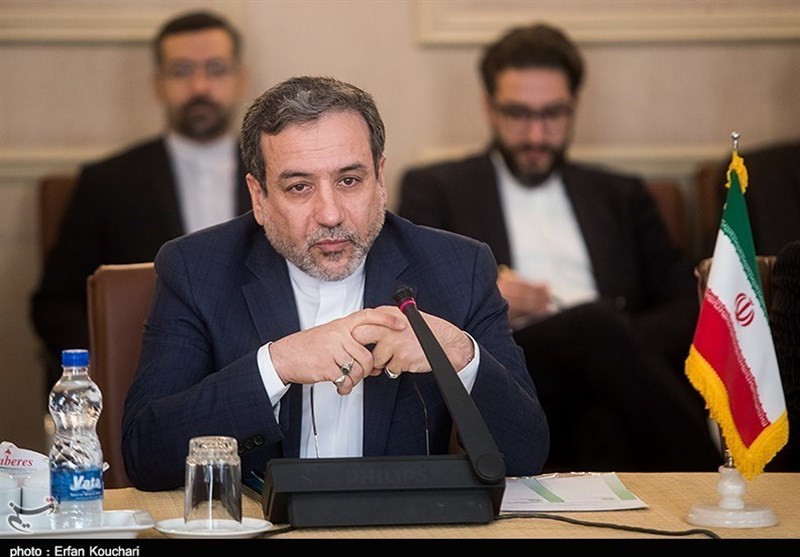
TEHRAN (Tasnim) – Iranian Deputy Foreign Minister for Political Affairs Seyed Abbas Araqchi expressed the country’s opposition to any foreign military presence in the Persian Gulf region, including the presence of European forces.

Speaking in a meeting with the new Danish ambassador to Tehran on Wednesday, Araqchi stressed that the security of the Persian Gulf region should be provided by the countries of the region.

He said the presence of foreign troops will not only not help establish security but will prepare the ground for the escalation of tensions as well.

The Iranian official underlined that Persian Gulf security is an issue of common interest for all regional countries. He said the establishment of sustainable security in the region is contingent upon dialogue and collective cooperation among regional countries and non-interference by foreign powers.

“Therefore, instead of deploying troops and military equipment or selling massive amounts of arms to certain regional countries, Denmark and other European countries had better tackle the root cause of tensions in the region, namely the United States’ destructive and wrong policies in the Persian Gulf region,” he said.

In the meeting, the two sides exchanged views on regional and international developments, fighting terrorism, the situation in the Middle East, the Nagorno-Karabakh crisis and potential for economic cooperation between the two countries.

Source: tasnimnews.com

Chinese navy fleet returns from escort mission

HANGZHOU — A Chinese navy flotilla returned to the port city of Zhoushan in East China’s Zhejiang province Wednesday after completing its mission of escorting civilian vessels in the Gulf of Aden and waters off Somalia.

The 35th escort squad of the Chinese People’s Liberation Army Navy, comprising the guided-missile destroyer Taiyuan, the missile frigate Jingzhou and the supply ship Chaohu, escorted 49 Chinese and foreign ships during the mission. The fleet set sail from Zhoushan on April 28.

To continue reading, please click here.

Source: chinadaily.com.cn

Pirates are kidnapping more seafarers off West Africa, IMB reports

ICC International Maritime Bureau (IMB) figures show a rise in piracy and armed robbery on the world’s seas in the first nine months of 2020, with a 40% increase in the number of kidnappings reported in the Gulf of Guinea. Pirates armed with guns and knives are abducting bigger groups of seafarers at further distances off the West African coast.

IMB’s latest global piracy report details 132 attacks since the start of 2020, up from 119 incidents in the same period last year. Of the 85 seafarers kidnapped from their vessels and held for ransom, 80 were taken in the Gulf of Guinea – in 14 attacks reported off Nigeria, Benin, Gabon, Equatorial Guinea and Ghana.

In the first nine months of 2020, seafarers reported 134 cases of assault, injury and threats, including 85 crewmembers being kidnapped and 31 held hostage onboard their ships. A total of 112 vessels were boarded and six were fired upon, while 12 reported attempted attacks. Two fishing vessels were hijacked, both in the Gulf of Guinea.

“Crews are facing exceptional pressures due to Covid-19, and the risk of violent piracy or armed robbery is an extra stress,” said Michael Howlett, Director of IMB, whose Piracy Reporting Center (IMB PRC) has responded to reports and shared data since 1991, supporting seafarers and fishers worldwide. “While IMB liaises with authorities swiftly in case of a pirate attack, we encourage all Coastal states and Regional Cooperations to take responsibility for ensuring maritime security within their EEZ to achieve safer seas and secure trade.”

Gulf of Guinea the world’s piracy hotspot

With approximately 95% of global kidnappings reported from within Gulf of Guinea waters, IMB warns that pirate gangs in the area are “well organized and targeting all vessel types over a wide range”.

The furthest attack from shore also involved the most crew kidnapped from a single vessel in 2020. On 17 July 2020, eight pirates armed with machine guns boarded a product tanker underway around 196 nautical miles southwest of Bayelsa, Nigeria. They held all 19 crewmembers hostage, stole ship’s documents and valuable items, and escaped with 13 kidnapped crew. The tanker was left drifting with limited and unqualified navigational and engine crew onboard. A nearby merchant vessel later helped the tanker to sail to a safe port. Regional Authorities were notified and the 13 kidnapped crewmembers were released safely one month later.

A more recent example was on 8 September 2020, when armed pirates attacked a refrigerated cargo ship underway around 33nm south-southwest of Lagos, Nigeria. Two crewmembers were kidnapped, but the rest of the crew managed to retreat into the citadel – one of the industry’s recommended best practices endorsed by IMB. A Nigerian naval team was dispatched, who boarded, conducted a search, and then escorted the ship to a safe anchorage for investigations.

The IMB piracy report includes a special thanks to the Nigerian Authorities, particularly the Nigerian Navy and Nigerian Maritime Administration and Safety Agency NIMASA who “continue to provide timely information, actions and valuable cooperation between Agencies”.

Knife attacks in Singapore Straits

The piracy center recorded 15 attacks to ships underway in the Singapore Straits. While most are considered low level crimes, two crew were threatened, one injured and another taken hostage, indicating a continued risk to the crew. Knives were reported in at least ten of the incidents.

Indonesia brighter

There has been a sharp quarterly decrease in the number of incidents within the Indonesian archipelagic, with four reported in Q3, down from 14 in Q2. These are viewed as low level opportunistic thefts with most reported on anchored vessels.

Call for more reporting

All vessel types in the Caribbean, Central and South America – including Brazil, Colombia, Ecuador, Haiti, Mexico and Peru are being targeted at anchor as well as underway, and during river passages under pilotage. On 26 September 2020, a container vessel was boarded by armed perpetrators during its river passage at Guayaquil. The attackers fired their weapons towards the accommodation and bridge, then opened containers and stole the contents before leaving.

However, as many more cases go unreported, IMB is urging all ship masters and operators to inform, in a timely manner, the 24-hour IMB Piracy Reporting Center of any attacks to their vessels or crew.

Howlett said the IMB PRC has always believed in the power of sharing and exchanging information: “Understanding the true risk in the area is an important step towards improving safety for all seafarers. IMB PRC not only relays reports to appropriate response agencies and broadcasts incident information to ships via GMDSS, but we also use the reported statistics to raise awareness of these crimes and be a catalyst of change.”

Somali piracy remains under control

No incidents of piracy have been reported around Somalia since 2018. In August 2020, pirates freed the last three of the thousands of hostages who have been held captive in the region over the years since ship hijackings peaked in 2011.

Despite this, as Somali pirates are still capable of carrying out further attacks, IMB urges vessels to continue implementing the industry’s best management practices (BMP5), and encourages the continued, stabilising presence of navies the region.

IMB Piracy Reporting Center

Since its founding in 1991, IMB PRC remains a single point of contact to report all crimes of maritime piracy and armed robbery, 24 hours a day. Their prompt forwarding of reports, and liaison with response agencies, broadcasts to shipping via GMDSS Safety Net Services and email alerts to CSOs, all provided free of cost, help the response against piracy and armed robbery and the security of seafarers, globally.

Source: iccwbo.org

ISS: East African terror groups are exploiting the seas

EU NAVFOR Somalia Operation ATALANTA's ESPS Canarias towed the vessel belonging to Somali Navy personnel back to the Somali shore.

Violent extremist groups operating in East Africa such as al-Shabaab, Ansar al-Sunna and the Islamic State in East Africa Somalia (IS-Somalia) are increasingly making use of gaps in maritime security. Counter-terrorism strategies must target this aspect of their operations to stop extremists exploiting Africa’s coasts through attacks, smuggling and extortion.

Terror groups fund a portion of their activities through maritime smuggling that involves drugs, arms and human trafficking. Many violent extremists also exploit resources like sugar, cereals and textiles. Al-Shabaab has been involved in charcoal smuggling since 2011. The group earns an estimated US$7 million a year through maritime crime – enough to ensure its long-term survival and to fund its land-based terror attacks.

To continue reading, please click here.

Source: defenceweb.co.za

Iran’s defense chain in PG ready to respond to any threat

Iranian Navy ships in Velayat-90 military exercise, by Mohammad Sadegh Heydari via Wikipedia

TEHRAN, Oct. 13 (MNA) – Deputy Navy Commander for Coordination Rear Admiral Hamzeh Ali Kaviani said that Iran’s defense chain in the south of the country is ready to respond to any threat.

He made the remarks at the welcoming ceremony of Iran’s 69th naval flotilla which returned to the southern port city of Bandar Abbas on Tuesday after a 67-day mission in the international waters. “The presence of foreigners in the Persian Gulf is of no use to them, we declare to the enemies that Iran will respond to any threat to its waters and interests,” said Kaviani.

To continue reading, please click here.

Source: mehrnews.com

Iran Army to unveil domestic UAVs, helicopter carrier

TEHRAN, Oct. 06 (MNA) – Iran’s Navy Commander announced over the unveiling of the first Iranian vessel that is capable of carrying helicopters, UAVs, and a range of missiles as well as bypassing the Earth three times with just one refueling.

Speaking in a ceremony on Tuesday, Rear Admiral Hossein Khanzadi described Iran navy as a symbol of Iran’s authority in the seas which is updating its military capacities in a dynamic way.

To continue reading, please click here.

Source: en.mehrnews.com

Navy, Japanese maritime force hold joint drill in Gulf of Aden

SLAMABAD: Pakistan Navy Ship (PNS) Zulfiqar has participated in Passage Exercise with Japanese Maritime Self Defence Force Ship Onami in the Gulf of Aden.

Both the ships are presently operating in the vital area of the Gulf of Aden as part of international efforts to counter piracy and ensure the security of international shipping.

To continue reading, please click here.

Source: pakistantoday.com.pk

Terrorism harbors at sea : Snapshot of Maritime Terrorism

Sakshar Law AssociatesSakshi Shairwal and Anam Khan

ntroduction

Modern terrorism dates back to the French revolution and has been evolving since then. Among many reasons and sources that aid terrorism, the most common ones are clashes between different cultures, religion and international conflicts. Gone are the days when terrorism was limited to land. Now the scope has shifted to the waters too. Unfortunately, there is no authoritative definition of maritime terrorism. However, what is commonly understood of the term ‘terrorism’ is one among several forms of armed rebellion with systematic use of violence to achieve some higher cause. With the prefix, ‘maritime’ added to it the limit of such armed rebels is restricted to the waters. Although maritime terrorism has not been a serious threat one cannot discount from the rather widespread fears that there is something worse may come.

To continue reading, please click here.

Source: lexology.com