Regina makes second drug bust

Peter Mallett, Staff Writer ~

HMCS Regina and crew completed a second sizable drug bust following the seizure of approximately 3,000 kilograms of hashish of the coast of Oman.

The Canadian warship is participating in Operation Artemis and the Canadian Armed Forces Combined Task Force (CTF) 150, part of an international counter-terrorism and maritime security operations in the Indian Ocean involving the combined maritime forces of 33 nations.

To continue reading, please click here.

Source: lookoutnewspaper.com

Piracy attack off the coast of Somalia

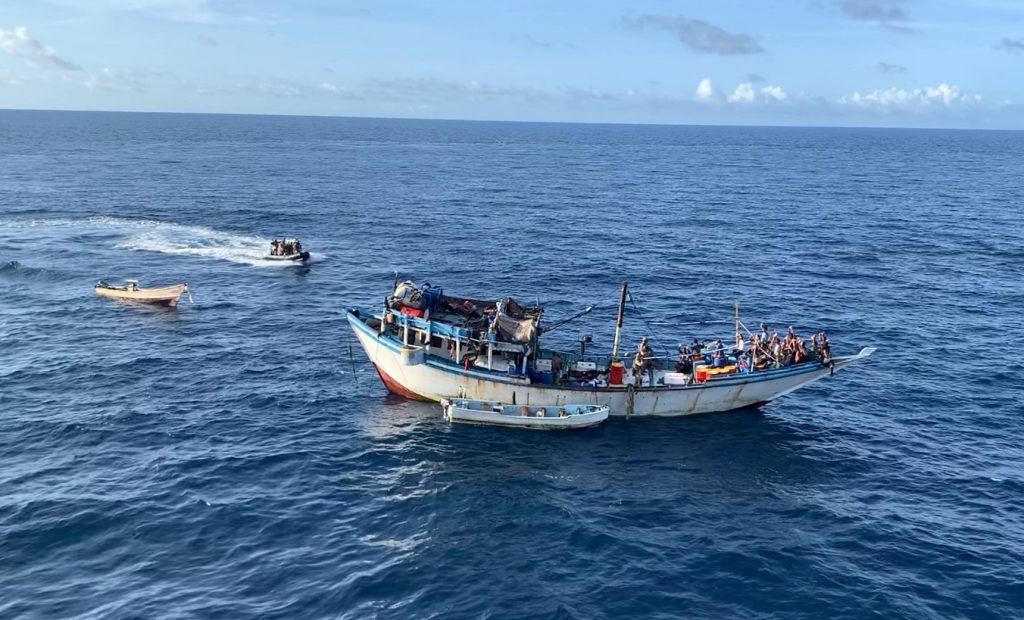
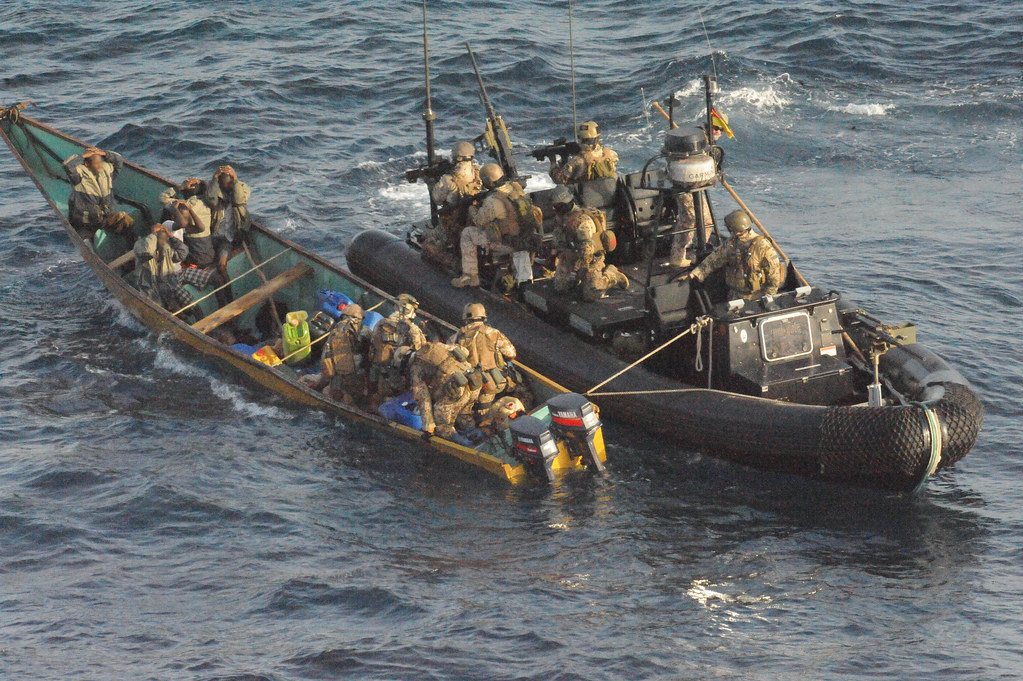
File image of an approach on a dhow

On 21 April, fishing vessels FV Adria and FV Txori Argi were attacked by suspected pirates in the Indian Ocean, 280 NM off the coast of Somalia. The piracy attacks were thwarted, and the crew and vessels remained safe, thanks to the application of Best Management Practices (BMP) protection measures by the Masters, the crews and the private security teams embarked on both fishing vessels.

EU NAVFOR Somalia Operation Atalanta confirms these attacks. It is likely that the attacks were facilitated by a mothership, which was reportedly seized by armed men on 19 April off the central Somali Coast.

EU NAVFOR subsequently dispatched its Maritime Patrol and Reconnaissance Aircrafts to search the area. In addition, EU NAVFOR flagship ESPS Navarra left the port in Mombasa in order to proceed into the area.

On 23 April, ESPS NAVARA successfully intercepted and boarded the dhow being used as a mothership.

The operation is still ongoing, and more details will be provided upon completion.
EU NAVFOR remains committed to deterring, preventing and suppressing piracy and emphasizes that the Maritime Industry must adhere to BMP measures in order to maximize the safety of the ship and their crews whilst transiting the high-risk area.

Source: eunavfor.eu

Suspicious Approach – Indian Ocean (April 21st)

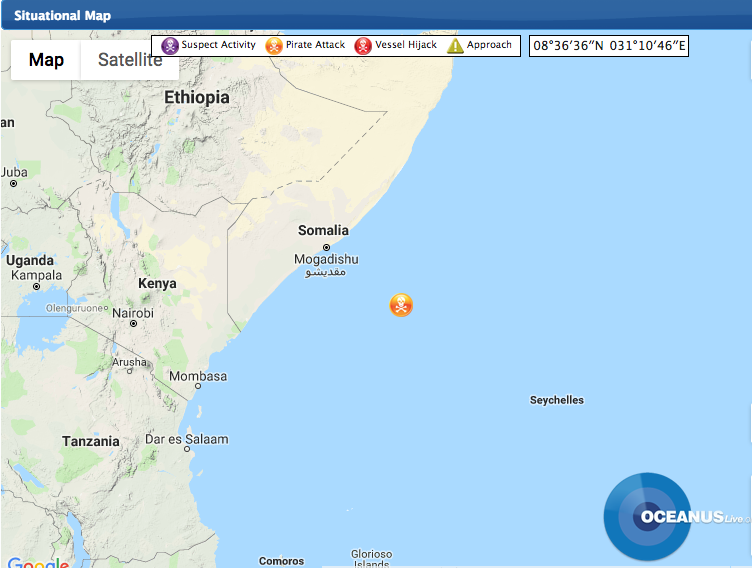
Two trawlers were involved in an incident at 0712 UTC in position 00:29S – 048:36E, approx 248nm SE of Mogadishu, Somalia. One trawler approached by two skiffs with 8-10 POB. Second trawler went to provide aid and was fired upon. Embarked AST returned fire and skiffs departed. Crew and vessels are SAFE. Reported (UKMTO) 21 Apr. Via: OCEANUSLive.org

Via OCEANUSLive.org

Indian Navy reviews outcome of Sea Vigil exercise

The Indian Navy and several other agencies involved in coastal defence and maritime security brainstormed over the outcome of the ‘Sea Vigil’ exercise — the first-of-its-kind multi-agency drill covering the entire 7,516 km-long Indian coastline and exclusive economic zone.

The mega exercise took place on January 22 and 23 with participation of 13 coastal states and union territories along with all maritime stakeholders with an aim to check the efficacy of maritime security and surveillance.

To continue reading, please click here.

Source: business-standard.com

Iran, Oman to stage joint military drill: envoy

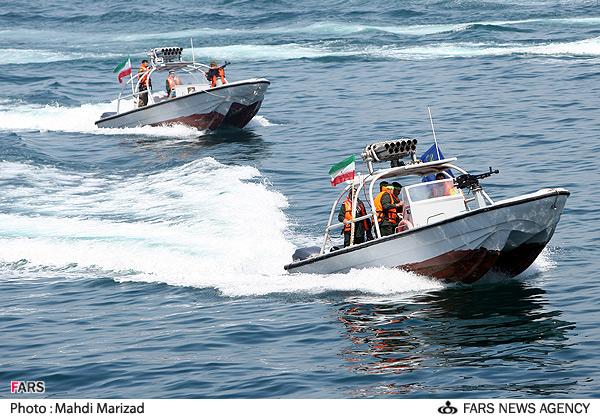
Speaking at a meeting with 120 representatives from Iranian trade and economic sectors held in Muscat, ambassador Nouri Shahroudi said the two countries will be staging a joint military drill in the coming days.

“Currently, our joint military committee is present in Oman, and we will hold a joint maneuver in the coming days,” he said.

To continue reading, please click here.

Source: en.mehrnews.com

Why the Massive Floating Bomb in the Red Sea Needs Urgent Attention

BY DR. IAN RALBY, DR. DAVID SOUD, AND ROHINI RALBY

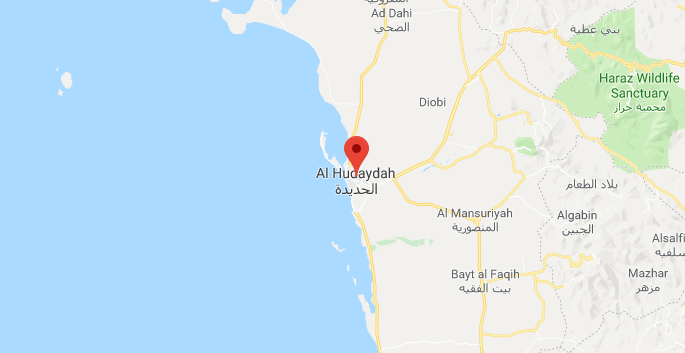
A floating storage and offloading (FSO) terminal less than five miles off the coast of Yemen has turned into a massive bomb—capable of explosion due to its contents and lack of maintenance. The risk of explosion increases by the day, and if that were to happen, not only would it damage or sink any ships in the vicinity, but it would create an environmental crisis roughly four and a half times the size of the Exxon Valdez oil spill.

The consequences of that explosion and corresponding environmental devastation would likely be 1) to rupture the fragile aid-focused ceasefire in Hodeidah established under the December 2018 Stockholm Agreement; and 2) to accelerate the already dire humanitarian crisis in Yemen where roughly fourteen million people are on the brink of famine, surviving at the moment on international aid. There is nothing benign about this situation—even in a region with countless immediate needs, this matter is of the utmost urgency.

To continue reading, please click here.

Source: atlanticcouncil.org

Saudi Arabia’s role in banishing piracy from regional waters

JENNIFER BELL

DUBAI: A decade ago, during the peak years of the Somali piracy crisis, the waters of the Arabian Gulf faced frequent threats from armed criminals at sea, who disrupted the economy by terrorizing shipping routes.

But experts say regional action — with Saudi Arabia at the forefront — has meant crimes on the high seas have dipped to some of the lowest records in years. 

To continue reading, please click here.

Source: arabnews.com

ReCAAP ISC Piracy and Sea Robbery Conference 2019 Updates International Maritime Community on Current Situation in Asia and Africa

ReCAAP Information Sharing Centre (ISC) today held its annual Piracy and Sea Robbery Conference to an audience of international maritime stakeholders including shipping and marine insurance companies, regulators and law enforcement agencies, as well as the diplomatic community based in Singapore.

In his keynote address, Mr. Koji Sekimizu, former Secretary General of the International Maritime Organization (IMO) reviewed the history of activities of IMO in dealing with maritime security and anti-piracy actions covering the establishment of ReCAAP, Somali Piracy, the Contact Group in conjunction with UN Security Council decisions, Djibouti Code of Conduct, Best Management Practices, and discussed a number of issues from his wide experience dealing with these matters as UN officer working at IMO and in the wider context of Maritime Governance by UN and IMO.

The conference addressed topics that are currently high on the agenda of the international maritime community including:

  • Piracy and Sea Robbery Situation in Asia (ReCAAP ISC)
  • Abduction of Crew in the Sulu-Celebes Seas and Waters off Easter Sabah (Philippine Coast Guard)
  • Update on the Indian Ocean High Risk Area (INTERTANKO)
  • Maritime Cybersecurity (BIMCO)
  • Effects and Implications of Piracy (Panel discussion moderated by World Maritime University)

“In 2018, there were 76 incidents of piracy and armed robbery reported in Asia. This was a 25% decrease in the total number of incidents and a 31% decrease in actual incidents compared to 2017. Nonetheless, it is important that we continue to reinforce the ownership of the Coastal States in addressing maritime crime, the cooperation between law enforcement agencies and the industry, and the timely reporting by ships, all of which have led to the decrease of incidents in Asia. The topics and speakers of this year’s conference have been designed to reflect the vitality of that shared responsibility,” remarked Masafumi Kuroki, Executive Director of ReCAAP ISC.

“Over the past couple of years, piracy and terrorism in the Sulu and Celebes Seas has been a point of concern for the shipping industry. The valuable counter-piracy lessons learned here, and off Somalia, are worth exploring, and may well be applied in the current piracy hotspot number one: The Gulf of Guinea. The annual ReCAAP ISC conference will surely help us do just that,” said Jakob P. Larsen, Head of Maritime Security at BIMCO.

“The threat from piracy remains, in Asia and also in the Indian Ocean. The Indian Ocean High Risk Area (HRA) continues to serve an important reference in ensuring ships and seafarers are prepared for pirate attacks,” said Tim Wilkins, Environment Director and Regional Manager, Asia-Pacific of INTERTANKO. “A serious threat remains despite the reduction to the area’s geographic boundaries and so correct reporting, vigilance and adherence to the 5th edition of the Best Management Practices to Deter Piracy and Enhance Maritime Security in the Red Sea, Gulf of Aden, Indian Ocean and Arabian Sea (BMP5) remains crucial. Shipowners must remain alert and law enforcement agencies must continue to provide protection to shipping.”

Ambassador Ong Keng Yong, Executive Deputy Chairman of RSIS, highlighted the relevance of the conference, “This annual conference is an important knowledge-sharing platform on risks and threats facing the international maritime community. We discussed piracy and sea robbery as well as relevant emerging technologies, and shared ideas on solving problems affecting ship owners and seafarers. The most useful part of this exchange is on how to work together effectively.”

Source: recaap.org

Somaliland Corrects IGAD Exclusion of Country in Red Sea Taskforce in Statement

Somalland flag

Somaliland wants to be included in the Taskforce on the Red Sea and the Gulf of Aden by the Intergovernmental Authority on Development (IGAD).

The Somaliland government says that any initiative to coordinate a response to changing Red Sea environs that does not include them in a meaningful way will lack the credibility, capability and representativeness necessary to contend with competing multinational cooperation efforts in these waters.

To continue reading, please click here.

Source: menafn.com

Task force to co-ordinate regional interventions

By FRED OLUOCH

Countries in the Horn of Africa have formed a task force to co-ordinate regional interventions in the face of threats to marine resources and security around the Red Sea and the Gulf of Aden.

The team was formed on Thursday in Nairobi by the Committee of Ambassadors from the Inter-Governmental Authority on Development (Igad) partner states of Kenya, Uganda, Ethiopia, Sudan, Djibouti, Somalia and South Sudan.

To continue reading, please click here.

Source: theeastafrican.co.ke