For the past few weeks, Kenya’s diplomatic relations with the Federal Republic of Somalia has steadily been getting worse, thanks to the ongoing maritime row pitting oil wells along the Indian Ocean.
Amid the row, it is apparent that Kenya could be staring at fresh security threats from terrorist groups as Al-Shabaab, and to some extent, the ISIS who might be watching from a distance, hoping that Kenya gets into a war with Somalia.
The geographic mandate of the Contact Group on Piracy off the Coast of Somalia (CGPCS) might be broadened to combat piracy in the Gulf of Guinea, Russia‘s Deputy Permanent Representative to the UN Dmitry Polyanskiy said during UN Security Council consultations on the situation in the Central African region.
“Our country has had a positive experience in international efforts to fight piracy in the northwestern part of the Indian Ocean as part of the Contact Group on this fight off the coast of Somalia. We hope that this experience might be useful for resolving similar issues in the Gulf of Guinea, including in the context of possibly broadening the geographic mandate of the Contact Group to include the Gulf of Guinea,” Polyanskiy said on Tuesday.
Kenya has banned fishing activities off the Coast near the Somalia border over security concerns.
Lamu County Commissioner Joseph Kanyiri says all fishermen are prohibited from carrying out their activities in Ras Kamboni and any other areas past Kiunga Town, all of which lie close to the Kenya-Somalia border.
In an expansion of its Mission Based Deployments (MBD) in the Indian Ocean Region (IOR), the Navy deployed its P-8I long-range maritime surveillance aircraft for anti-piracy sorties from Salalah in Oman to patrol the Gulf of Aden.
“Long-range maritime reconnaissance Anti-Submarine Warfare aircraft P-8I undertakes anti-piracy patrol sorties from Salalah in the Gulf of Aden and other piracy prone areas in keeping with our MBD philosophy, to keep IOR safe and secure for all,” Navy spokesperson Captain D.K. Sharma said in a tweet on Saturday.
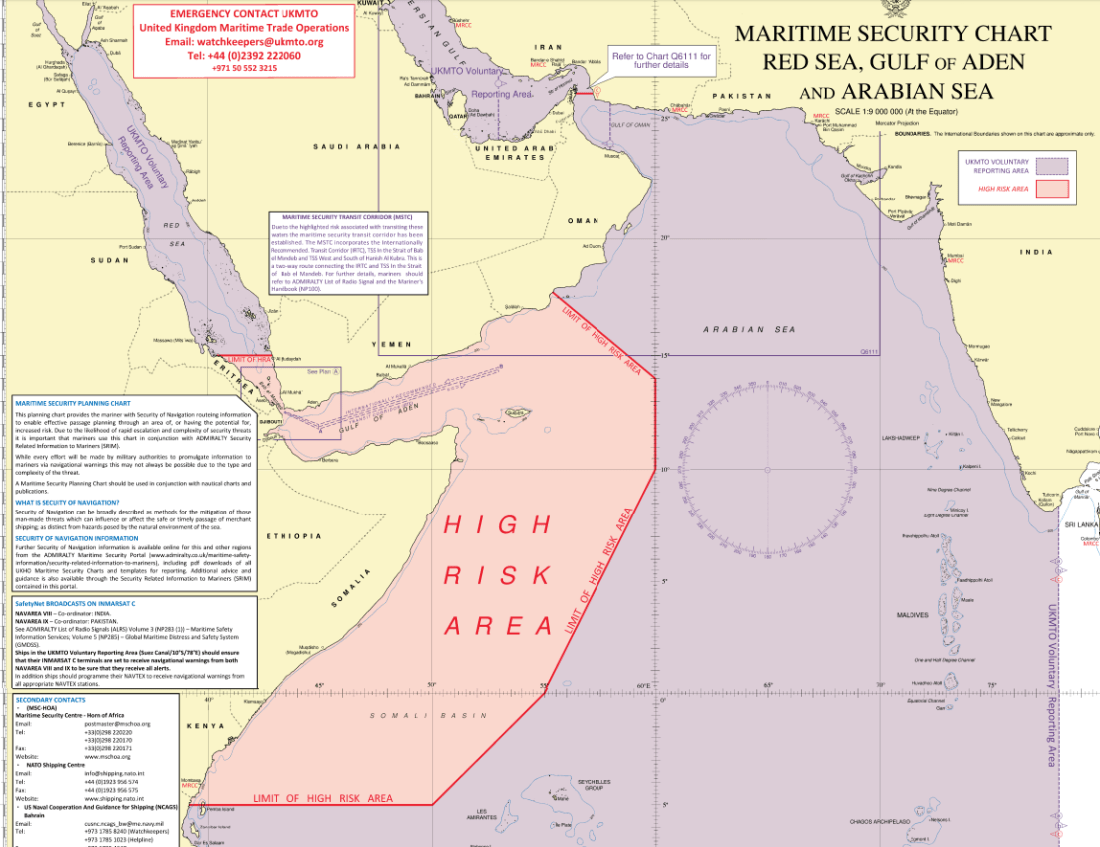
“The need for a strong maritime security presence in the High-Risk Area remains critical for the deterrence and prevention of future incidents and attacks.”
Rear Admiral Antonio Martorell Lacave
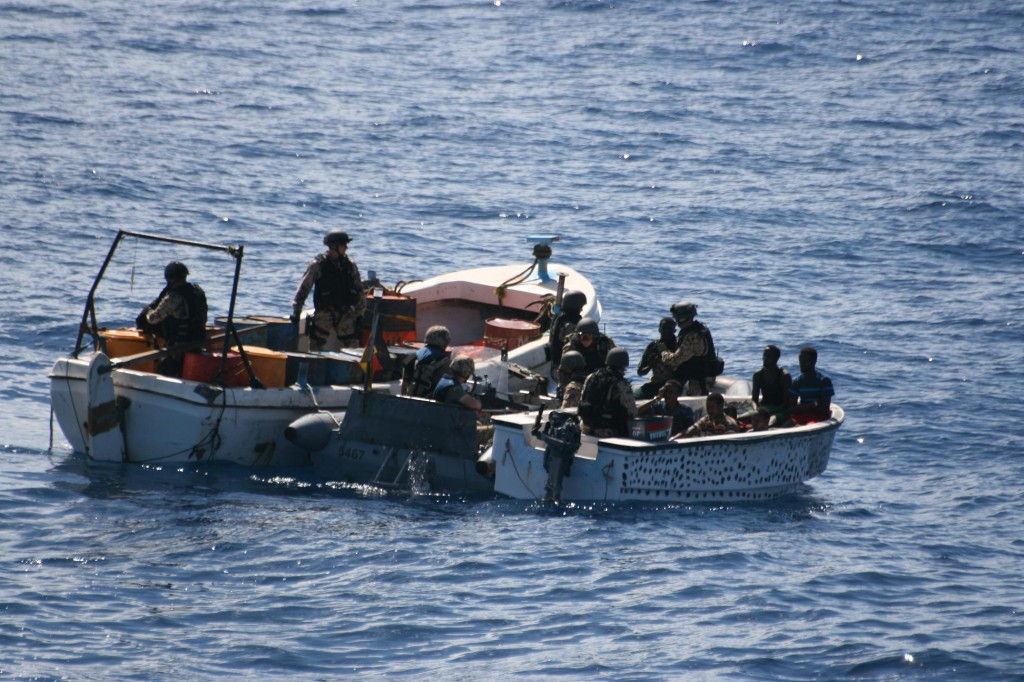
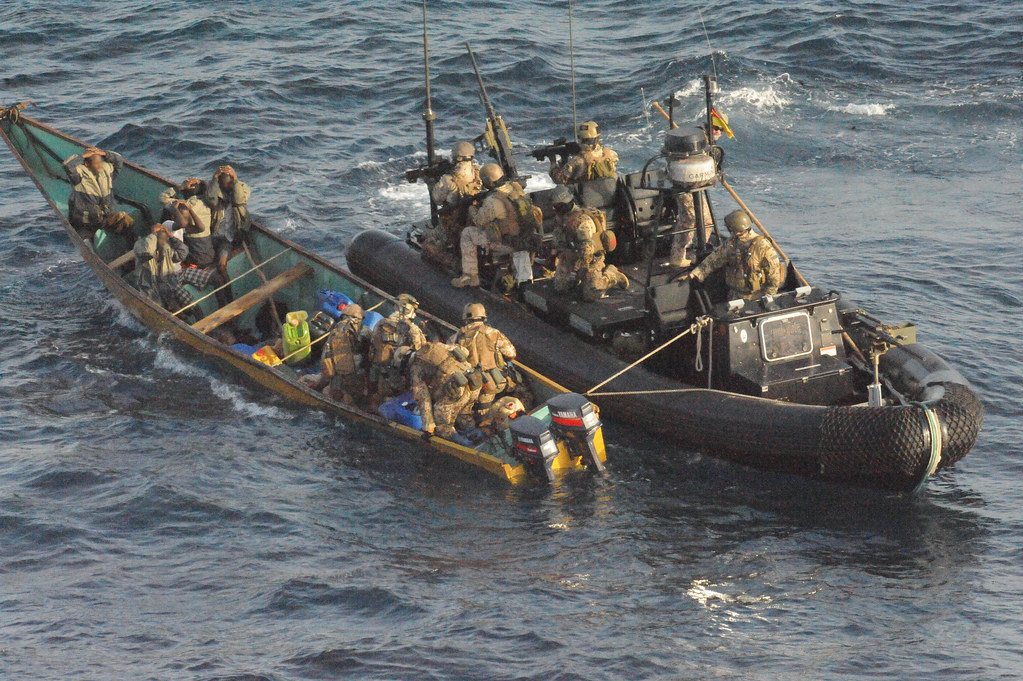
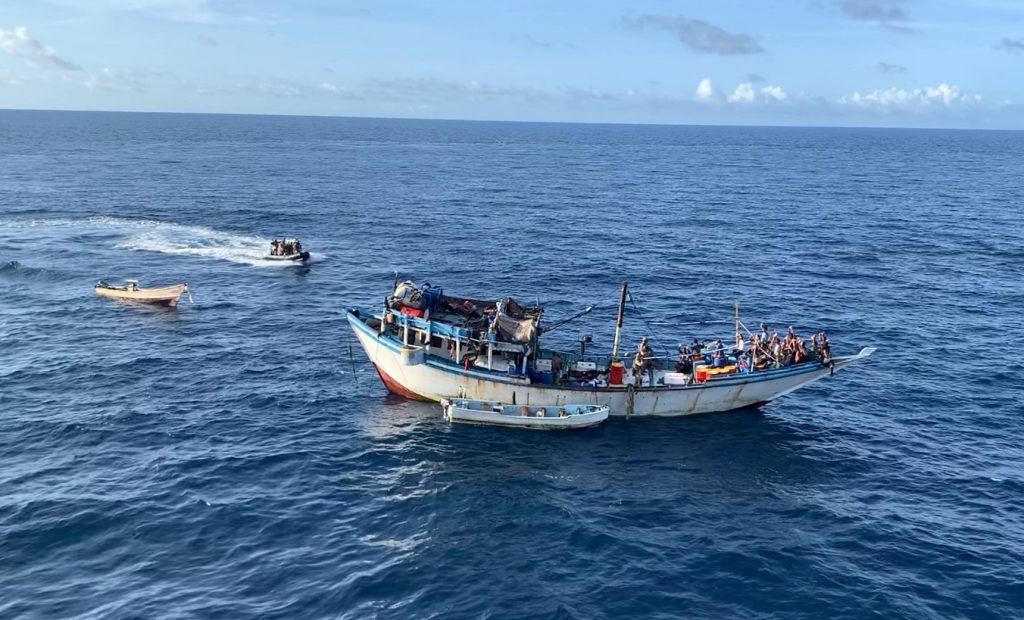
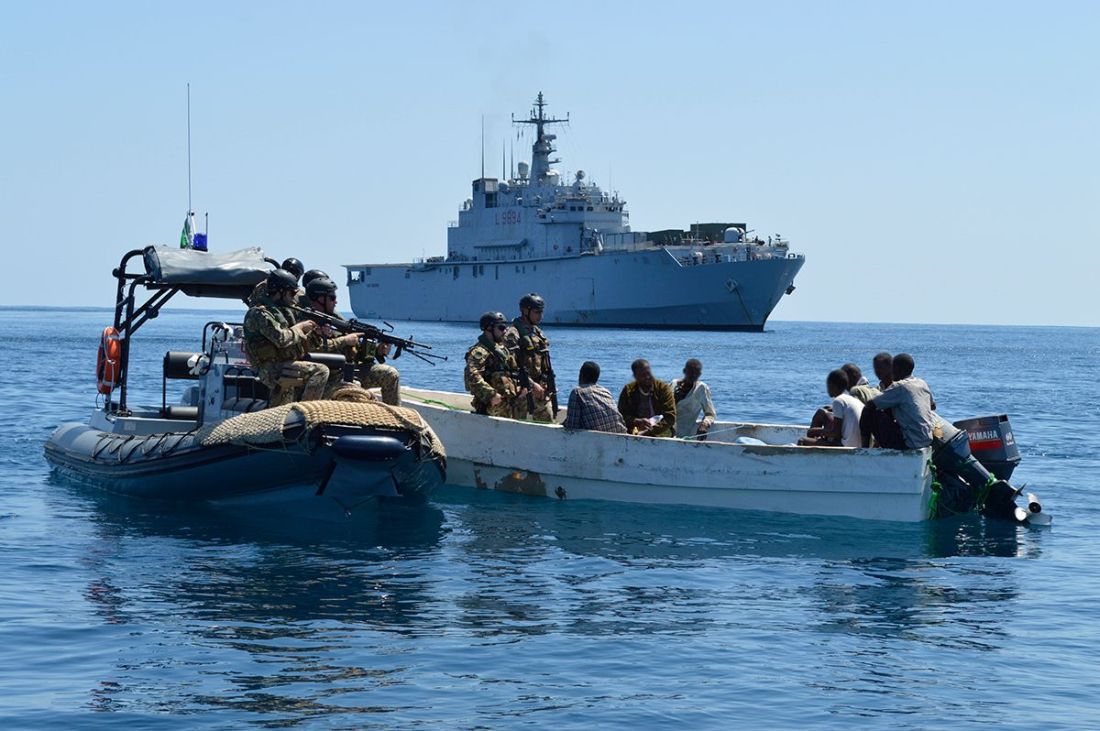
On 21 April, suspected pirates seized a fishing dhow off the coast of Somalia, holding 23 people hostage. In a matter of hours, the European Union’s counter-piracy force EU NAVFOR Somalia Operation Atalanta had responded to the attack. Two days later, the incident was over; Operation Atalanta had detained five suspects and released 23 hostages.
An Attack Dismantled
The incident began when five suspected pirates captured a fishing dhow off the coast of Somalia. The suspects proceeded to navigate the dhow along the coast, where they visited a pirate base camp and reinforced their crew with additional members. Next, using the captured dhow as a mother ship, the suspects attacked another fishing vessel, the FV Adria. This attack took place in the Indian Ocean, some 280 nautical miles off the coast of Somalia.
In self-preservation, FV Adria then conducted evasive manoeuvres and increased its speed. Another fishing vessel, the FV Txori Argi was also operating in the vicinity at the time and assisted the FV Adria as the suspects continued to chase her. After approximately one hour, the suspects approached both fishing vessels and attacked them with a rocket-propelled grenade. The Private Armed Security Teams (PAST) on board the FV Adria and the FV Txori Argi responded, and the suspects retreated.
That same day, EU NAVFOR dispatched its Maritime Patrol Aircrafts (MPRAs) and conducted a regional search, through which they were able to successfully identify and track the captured mother ship.
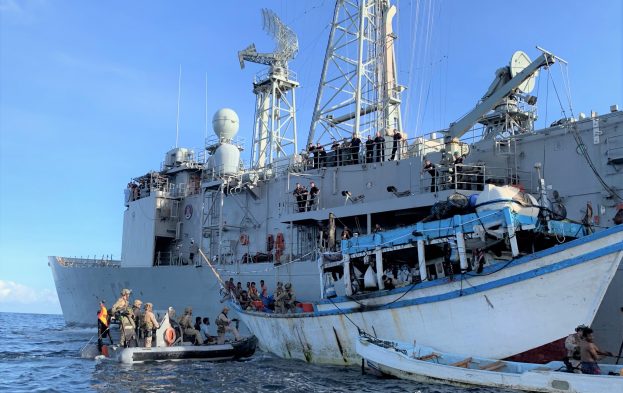
On 23 April, in collaboration with its MPRAs, EU NAVFOR’s flagship ESPS NAVARRA was able to approach, intercept and board the captured fishing vessel. With the support of the PAST and EU NAVFOR’s various active assets in the region—including the frigate ESPS NAVARRA and MPRAs German JESTER and Spanish CISNE—Operation Atalanta was able to control the situation and prevent any further imminent attacks.
“This incident clearly demonstrates that piracy and armed robbery at sea off the coast of Somalia have not been eradicated,” said Operation Commander Rear Admiral Antonio Martorell Lacave in an interview. “The need for a strong maritime security presence in the High-Risk Area remains critical for the deterrence and prevention of future incidents and attacks.”
Following the attack, Operation Atalanta urged the maritime industry to remain vigilant across the High-Risk Area and to comply with recommended Best Management Practises for Protection against Somalia Based Piracy, as supported by EU NAVFOR’s Maritime Security Centre Horn of Africa (MSCHOA). MSCHOA last updated the Best Management Practises for public reference in 2015, at the height of piracy attacks in the High-Risk Area.
Behind The Scenes
Lesser known to the public, however, was the fact that at the time of these attacks in April, Operation Atalanta was still in the midst of an important transition. Just three weeks before the attack—the first since October of last year—Operation Atalanta officially moved from its previous Operation Headquarters (OHQ) in Northwood, U.K., to its new OHQ in Rota, Spain. MSCHOA also moved from OHQ in Northwood to Brest, France, although it remains under command of OHQ in Rota. Additionally, the operation transferred command from Major General Charlie Stickland, UK Royal Marines, to Rear Admiral Antonio Martorell Lacave, Spanish Navy.
Lesser known to the public, however, was the fact that at the time of these attacks in April, Operation Atalanta was still in the midst of an important transition. Just three weeks before the attack—the first since October of last year—Operation Atalanta officially moved from its previous Operation Headquarters (OHQ) in Northwood, U.K., to its new OHQ in Rota, Spain. MSCHOA also moved from OHQ in Northwood to Brest, France, although it remains under command of OHQ in Rota. Additionally, the operation transferred command from Major General Charlie Stickland, UK Royal Marines, to Rear Admiral Antonio Martorell Lacave, Spanish Navy.
The handover and transfer of command was a careful process that lasted nearly a year in its entirety. After all arrangements for location, staffing and training were complete, the transitional phase also involved one month of parallel operational running between Northwood and Rota. However, one would never know it by the operational fluidity that the headquarters maintained throughout the process, and continues to demonstrate today. Highly skilled staff—some from the previous OHQ in Northwood, UK and some new to Operation Atalanta—maintained near perfect continuity throughout the transition.
Operation Atalanta Commander Rear Admiral Martorell Lacave says the manner in which Operation Atalanta handled this first piracy attack in its new OHQ is representative of the commitment and responsibility each branch of the operation feels to their duty.
“I am very confident in the capabilities of the staff in all branches of EU NAVFOR’s Operation and Force Headquarters,” he said. “As we have seen with this most recent incident, we continue to provide the same level and quality of operational outputs from Rota as were previously provided in Northwood.”
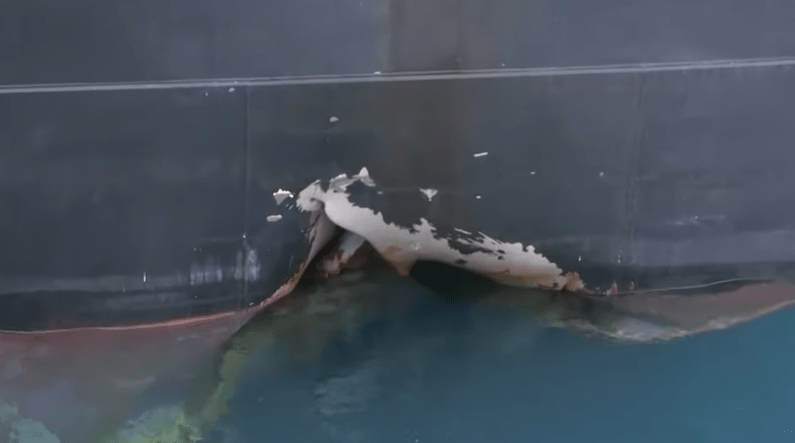
ABU DHABI (Reuters) – U.S. National Security Adviser John Bolton said on Wednesday that attacks on oil tankers off the coast of the United Arab Emirates this month were the work of “naval mines almost certainly from Iran”.
The UAE has not yet blamed anyone for the sabotage of four vessels, including two Saudi tankers, which was followed two days later by drone strikes on oil pumping stations in Saudi Arabia.
From Southeast Asia and the Indian Ocean to Latin America and the Caribbean, the developing world is paying a price for maritime piracy and pilfering. Southeast Asia was home to two-fifths of the world’s pirate attacks between 1995 and 2013, while the waters off Africa remain a watery version of the Wild West.
A fresh annual report from the International Maritime Bureau shows that attacks in West Africa helped push piracy numbers up in 2018. In terms of military and law enforcement, an international operation is not complicated, so what is needed above all is the will to act.
According to the bureau’s report, there were 201 incidents in total* reported to the bureau last year. That is a rise from 180 incidents in 2017 and from 191 in 2016. Of this, 48 incidents took place in Nigeria, up from 33 in 2017 and 36 incidents in 2016.
The report also showed that the region saw a considerable spike in violence in the last quarter of the year, with 40 kidnappings in the waters off Nigeria alone. In West Africa, there appears to be challenges with underreporting, which is estimated at as much as 40%, the report says.
Maritime Security News: It’s worth noting that the IMB only collates reports submitted to them directly by CSOs and Masters. To gain a full picture of maritime crime, it is necessary to collate reports from all agencies.
Meeting reiterates: threat of piracy not eradicated off the Horn of Africa.
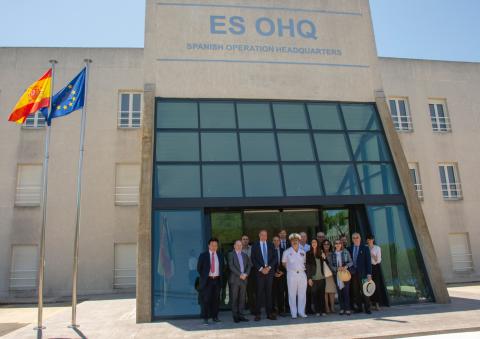
On 23 May, ECSA’s Maritime Security Working Group met with the EU NAVFOR Somalia Operation Atalanta at their operation headquarters in Rota, Spain.
Representing the European shipping industry, the ECSA delegation met with the EU NAVFOR’s team to discuss the current state of piracy off the coast of Somalia. The delegation also visited the naval assets participating in Operation Atalanta. For the past ten years, EU NAVFOR has deterred and prevented acts of piracy and armed robbery off the coast of Somalia, protected vessels of the World Food Programme (WFP) and African Union Mission Somalia (AMISOM), and monitored acts of illegal fishing.
While it is true that today the number of attacks is minimal, this is only a result of the industry’s implementation of Best Management Practices along with the combined action of different actors and organisations, notably the states in the region.
“We know for a fact that pirate networks maintain the intent, the means and the capability to deploy and attack merchant vessels,” said R. Adm. Antonio Martorell Lacave. “It is up to us – military operations, coalitions and regional states – to uphold deterrence, operate in a flexible and agile manner and keep the seas safe.”
“Operation Atalanta has been a key element in the decrease of piracy attacks,” Flemming Dahl Jensen ECSA’s Maritime Security Working Group Chair mentioned. “We need to ensure there are sufficient resources allocated to guarantee its successful continuation.”
EU NAVFOR remains committed to deterring, preventing and suppressing piracy and emphasizes that the Maritime Industry must continue to adhere to BMP measures in order to maximize the safety of the ships and crews whilst transiting the high-risk area.
The European shipowners expressed their support to EU NAVFOR Operation Atalanta and their close cooperation with other international actors. The shipping industry will continue to cooperate with the EU NAVFOR team to ensure that Somali-based piracy stays suppressed.
The Iranian Navy plans to dispatch the 62nd flotilla of warships to free waters in the next few days to protect the country’s cargo ships and oil tankers against pirate attacks. The 62nd fleet includes Bayandor destroyer and Lavan and Bushehr logistic warships.
The 61st flotilla of the Iranian Navy had set off for the high seas to safeguard maritime routes used by Iranian vessels in international waters, especially in the Gulf of Aden, in March.



 Maritime Security News