Piracy and armed robbery a threat to ships’ crews, warns IMB

Seafarers face continuing threats from pirates and armed robbers on the world’s seas, says the International Chamber of Commerce’s (ICC) International Maritime Bureau (IMB), reporting 46 attacks in the first three months of 2020, up from 38 in the same period last year. Pirates boarded 37 ships in the first quarter of 2020.

The Gulf of Guinea remains the world’s piracy hotspot. Seventeen crew were kidnapped in three incidents in these waters, at distances of between 45 and 75 nautical miles from the coast.

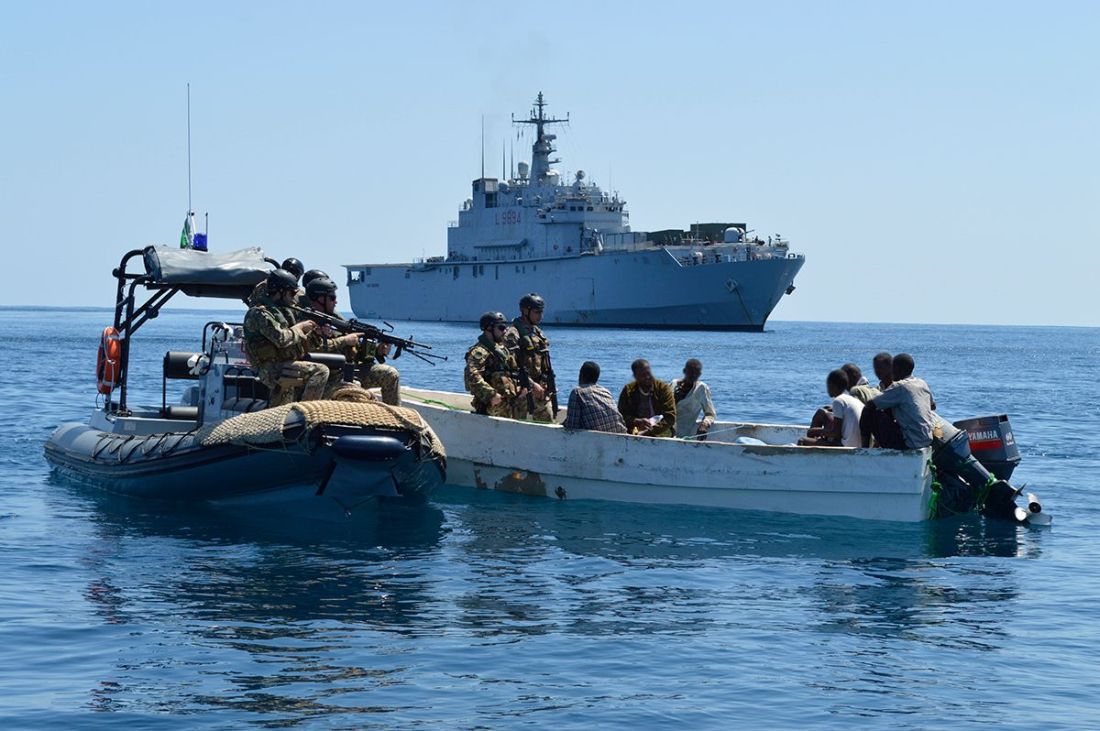
IMB’s latest global piracy report shows zero hijackings in the last two quarters, and no incidents around Somalia. But with no sign of a reduction in attacks worldwide, IMB encourages shipowners to stay vigilant, calling for continued international cooperation.

“Navy patrols, onboard security measures, cooperation and transparent information exchange between authorities, are all factors which help address the crimes of piracy and armed robbery,” said IMB Director Michael Howlett.

“The threat to crew is, however still real – whether from violent gangs, or opportunistic armed thieves inadvertently coming face-to-face with the crew. Ships’ masters must continue to follow industry best practice diligently and maintain watches. Early detection of an approaching pirate skiff is often key to avoiding an attack,” he added.

Gulf of Guinea kidnappings persist

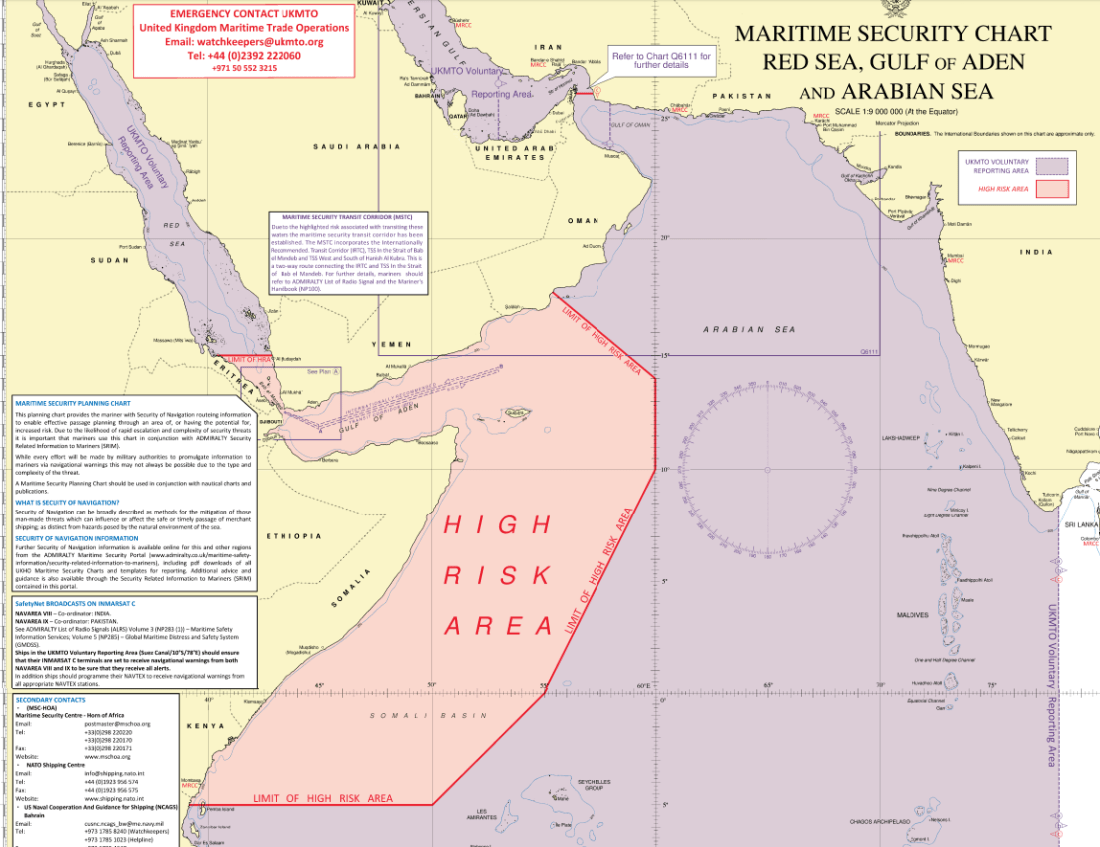
IMB’s 24-hour Piracy Reporting Centre (PRC) recorded 21 attacks in the Gulf of Guinea in the first quarter of 2020. Of these, 12 were on vessels underway at an average of 70 nautical miles off the coast. All vessel types are at risk. The perpetrators are usually armed. They approach in speedboats, boarding ships in order to steal stores or cargo and abduct crewmembers to demand a ransom.

While 10 vessels were fired upon worldwide for the whole of 2019, four already reported being fired at within Nigerian Exclusive Economic Zone (EEZ) in the first quarter of 2020. This includes a container ship underway around 130 nm southwest of Brass. In another incident around 102 nm northwest of Sao Tome Island, another container ship was boarded by pirates. The crew retreated into the citadel and raised the alarm. On receiving the alert, the IMB PRC liaised with Regional Authorities and the vessel operator until the vessel was safe and the crew had emerged from the citadel.

“The IMB PRC commends Regional coastal state response agencies and international navies in the Gulf of Guinea region for actively responding to reported incidents,” said Mr Howlett.

With many more attacks going unreported, IMB advises seafarers in the region to follow the recently published Best Management Practices West Africa – BMP WA.

Indonesia: dialogue pays dividends 

Strategic deployment of Marine Police patrol vessels has resulted in a continued decline in attacks on ships in most Indonesian anchorages and waterways – thanks to positive cooperation between the IMB PRC and the Indonesian Marine Police (IMP). In the first quarter of 2020, just five anchored vessels were reported boarded. These are often low-level armed robbery attacks. The IMB PRC is monitoring the situation and continues to liaise with the IMP as well as other local and regional authorities.

Singapore Straits 

Five ships were boarded while underway in the Singapore Straits – where no attacks were reported in the first quarter of 2019. These low-level armed robbery attacks are a distraction to crews navigating in congested waters. In one incident the crew managed to lock their assailants in the storeroom, which enabled their later arrest.

Elsewhere 

Other violence against seafarers includes the kidnapping of five crew for ransom in an attack on a fishing vessel off Sabah, Malaysia in January 2020. In March, at Macapa Anchorage, Brazil, a watchman was confronted while on duty and held temporarily by a group of robbers. Meanwhile, in the anchorage of Callao, Peru, three crew were apprehended by nine robbers who boarded their vessel to steal ship’s stores. Two crew were injured during the incident. Callao recorded five incidents in the last quarter of 2019 and three this quarter.

IMB Piracy Reporting Centre 

Founded in 1991, IMB’s 24-hour manned Piracy Reporting Centre (PRC) remains a single point of contact to report the crimes of piracy and armed robbery. The Centre has not only assisted ships in a timely manner, it also provides the maritime industry, response agencies and governments with transparent data – received directly from the Master of the vessel under attack – or its owners.

The IMB PRC’s prompt forwarding of reports and liaison with response agencies, its broadcasts to shipping via GMDSS Safety Net Services and email alerts to ships’ Company Security Officers (CSOs), all provided free of charge, has helped the response against piracy and armed robbery and the security of seafarers, globally.

Source: iccwbo.org
Yemen: Saudi-led coalition announces ceasefire

The Joint Forces Command of the Coalition to Restore Legitimacy in Yemen: Thwarting a Terrorist Attack Targeting an Oil Tanker in the Arabian Sea. Image via Saudi Press Agency

A Saudi Arabian-led coalition fighting Houthi forces in Yemen has declared a ceasefire, according to officials. Sources told the BBC the ceasefire will come into effect on Thursday in support of UN efforts to end the five-year-old war.

The coalition, backed by Western military powers, has been fighting against Houthi forces aligned to Iran since March 2015. It’s unclear if the Houthi forces will also observe the ceasefire.

To continue reading, please click here.

Source: bbc.co.uk

IMSC Enforces Safety Measures to Protect Members from COVID-19

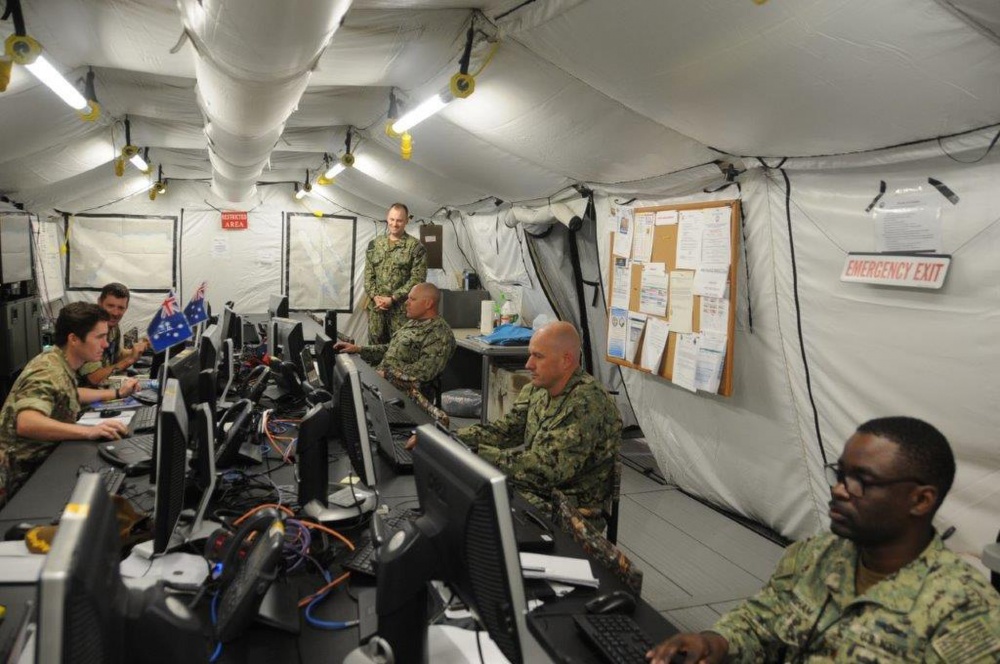
Photo By NAVCENT Public Affairs | 200330-N-NO146-1002 MANAMA Bahrain (March 30, 2020) Service members assigned to the International Maritime Security Construct (IMSC) practice social distancing in the workspace. The IMSC ensures freedom of navigation and free flow of commerce in international waters throughout the Arabian Gulf, Strait of Hormuz, the Bab el-Mandeb Strait, and the Gulf of Oman.

MANAMA, BAHRAIN

03.30.2020

Courtesy Story

The International Maritime Security Construct (IMSC) has been practicing several safety precautions to promote the health and safety of all its members with the recent COVID-19 outbreak.

No members of the IMSC have fallen ill to COVID-19 as of current.

“The well-being of IMSC personnel is critical to our mission,” said Commodore James Parkin, commander of Combined Task Force Sentinel, headquartered in Bahrain. “However, with a pandemic such as this, our people become the mission. We must ensure good health for the sake of their families and each other.”

Personnel supporting IMSC headquarters typically work in close quarters, however, as the need for social distancing has increased, so have the rules for how the day-to-day operations are conducted.

“Our operational tempo remains constant,” said Parkin. “fortunately our ships are unaffected and their mission continues. On shore, we have rescheduled meetings for mission-critical members only, reconfigured our work stations to allow a six-foot distance, and pay particular attention to the cleanliness of work stations and personal hygiene.”

Hand sanitizer, bleach wipes, anti-viral cleaning sprays, and soap and water are readily available throughout the work area. The team breaks at least four times per day to conduct cleaning stations.

The Multi-national, British-led IMSC deploys advanced capabilities through the region as part of a surveillance and detection effort, leading to de-escalation and deterrence through transparency. The IMSC ensures freedom of navigation and free flow of commerce in international waters throughout the Arabian Gulf, Strait of Hormuz, the Bab el-Mandeb Strait, and the Gulf of Oman.

Source: dvidshub.net

HMAS Toowoomba narcotics interdiction

HMAS Toowoomba, via Wikipedia

HMAS Toowoomba has interdicted over 3,000 kilograms of illegal narcotics including hashish and heroin in the Gulf of Aden.

The Anzac class frigate is deployed under Operation MANITOU, Australia’s contribution to support international efforts to promote security, stability and prosperity in the Middle East Region.

Minister for Defence, Senator the Hon Linda Reynolds CSC said this is the first seizure by HMAS Toowoomba since arriving in the Middle East over a month ago.

“The interdiction of these narcotics helps deny the financial pathway that terrorist organisations use to fund their criminal activities in the Middle East region,” Minister Reynolds said.

“The crew of HMAS Toowoomba can be proud of their achievements and the support they are providing to the Combined Maritime Forces.

“I also extend my thanks to the crew’s family and friends for continuing to support those on-board as they serve their nation.”

Commander Joint Task Force 633, Major General Susan Coyle, CSC, DSM commended the personnel on-board Toowoomba.

“The smugglers’ ingenuity in hiding the sizeable amount of drugs was overcome by hard work and lateral thinking from these well-trained teams,” Major General Coyle said.

“Sailors used specialised search techniques and equipment to discover the drugs which were contained inside void spaces, and all of the narcotics were subsequently destroyed at sea.”

The seizure took place on 19 March 2020 in support of the Combined Maritime Forces, an enduring multinational taskforce of 33 nations committed to disrupting terrorist organisations and illegal activities in the maritime domain.

During her deployment, HMAS Toowoomba is also working with international partners to monitor and deter destabilising activity and support the safe passage of commercial and civilian shipping under the International Maritime Security Construct.

This is the Royal Australian Navy’s 68th deployment to the Middle East Region since 1990 and the sixth mission for HMAS Toowoomba

Source: minister.defence.gov.au

COVID-19 And Embarked Security Teams: Security At What Cost?

The outbreak of COVID-19, and the increasingly draconian measures taken by states to control the spread of the virus has led to the widespread disruption of global supply chains. The knock-on impact of restricting the placement of embarked security teams in the Indian Ocean has been keenly felt in the global shipping and security markets. The decision to embark security personnel requires operators to balance commercial considerations with the risks faced. In a world where the logistics of embarking security personnel has become increasingly complex, many of Dryad Global’s clients are considering their options and exploring alternatives.

To continue reading, please click here.

Source: hellenicshippingnews.com

Saudi Arabia identifies tanker attacked in Gulf of Aden

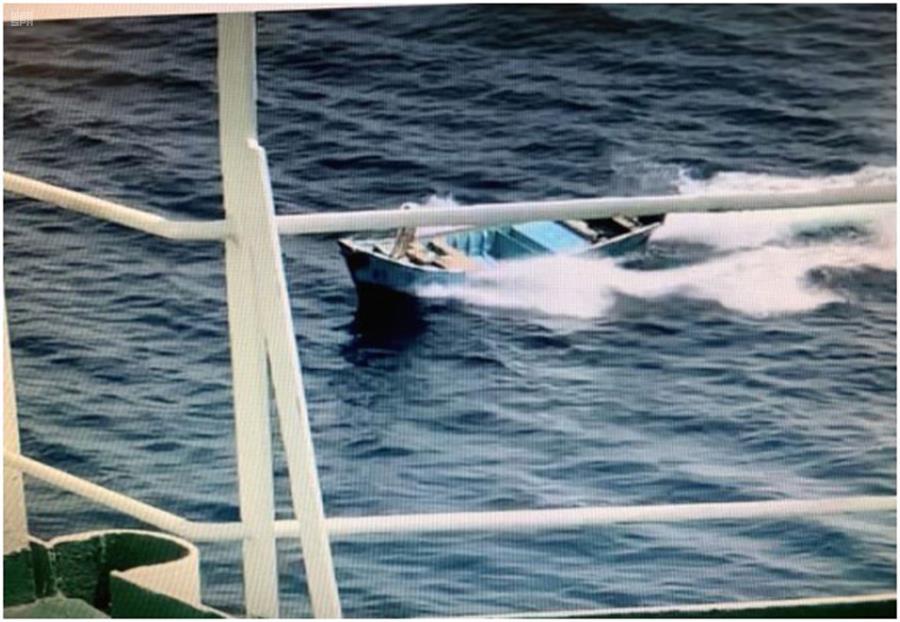
The Joint Forces Command of the Coalition to Restore Legitimacy in Yemen: Thwarting a Terrorist Attack Targeting an Oil Tanker in the Arabian Sea. Image via Saudi Press Agency

Jeremy Binnie, London – Jane’s Defence Weekly

Saudi Arabia’s ambassador to the United Nations has identified the tanker that was attacked with a remotely controlled boat carrying explosives in the Gulf of Aden on 3 March as Gladiolus (IMO: 9169548), a Saudi-flagged vessel.

At the time, Colonel Turki al-Maliki, the spokesman for the Saudi-led coalition fighting the Ansar Allah (Houthi) group in Yemen, said a tanker that was heading towards Aden was attacked 90 n miles southeast of the Yemeni coastal town of Nishtun by four boats, at least one of which was unmanned and carrying explosives.

Col Maliki did not say how the attack was thwarted or identify the perpetrators but the Saudi Press Agency (SPA) released photographs showing what appeared to be an armed man on a large vessel observing approaching skiffs, one of which then swerved away to reveal that no one was on board.

To continue reading, please click here.

Source: janes.com

HMAS Toowoomba, FS Guépratte exercise in Gulf of Aden

HMAS Toowoomba, via Wikipedia

By: Sandy Milne

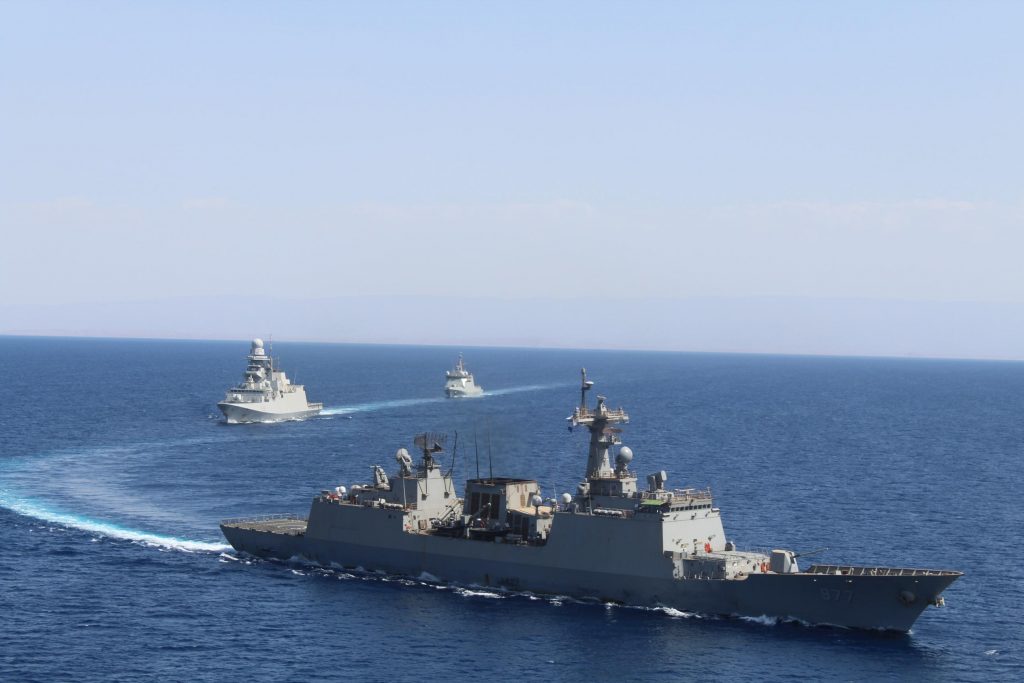
HMAS Toowoomba has exercised with French frigate FS Guépratte in the Gulf of Aden as part of the Australian warship’s support to Combined Task Force 150.

The CTF 150 mission is to stabilise the region by disrupting piracy operations, as well as seeking to counter weapon and narcotic smugglers. During the exercise, Toowoomba and Guépratte conducted ship handling training including Officer of the Watch manoeuvres and replenishment at sea (RAS) approaches, which form core components of a CTF deployment.

To continue reading, please click here.

Source: defenceconnect.com.au

Covid-19 and the threat to maritime and port security

As the UK becomes the latest country to adopt a policy of restricted movement for its citizens, following (at least two metres behind) France, Spain and Italy in Europe, it’s important that we do not lose sight of the risks this presents.

Criminals and non-state threat actors do not necessarily follow health warnings and lockdown measures. If anything, they thrive in an environment like that. One example would be during WWII in the UK, where the German bombing of London turned the city into a criminals’ playground. During the four months of the London Blitz from September to December 1941, a total of 4,584 cases of looting were heard by the Old Bailey court, for example.

Organised crime and the black market flourished, and we should expect something similar to occur in maritime crime hot spots and High Risk Areas.

Over the weekend, seven crew were kidnapped in the Gulf of Guinea, which underlines the risk. In the coming weeks, we should expect further incidents and, should food and energy supply lines be further affected by the pandemic, port and terminal security should be stepped up to mitigate any risk at ports from criminal gangs. It is likely that oil theft will increase in the Delta, although the Nigerian Navy is already making efforts to mitigate this.

In the Indian Ocean, the risks presented by Somali pirates remain low, but still present. An increase in Covid-19 cases in the country could potentially lead to further economic issues which will then drive criminals on to the water to look for ‘easy’ money. Combine this with the current issues being experienced by maritime security companies trying to embark armed security teams and it’s easy to see just how badly wrong things could go.

Organised criminal gangs will be aware that regional and international naval forces will have difficulties with crew rotations, bunkering etc. and may choose to exploit the situation by increasing smuggling operations in the Arabian Sea.

In Yemen, Houthi rebels, already making their presence felt in recent weeks with SVBIEDs (boat bombs), may attempt to disrupt crucial shipping lanes in order to focus world attention on their plight.

It’s a long list of maybes. But mitigation and prevention should be a paramount concern for anyone involved in maritime security.

Finally, thank you all for continuing to support the blog. We’ve had a sharp increase in readers from around the world, and I appreciate your support, even if I’m not in a position to earn any money from this (and that would be rather useful at the moment, as I’ve also lost earnings due to the virus).

Keep well, keep apart and stay safe.

Saudi coalition destroys Houthi SVBIEDs

The Joint Forces Command of the Coalition to Restore Legitimacy in Yemen: Thwarting a Terrorist Attack Targeting an Oil Tanker in the Arabian Sea. Image via Saudi Press Agency

The Joint Forces Command of the Coalition to Restore Legitimacy in Yemen: Interception and Destruction of (2) Remote-Controlled Exploding Boats Launched by the Terrorist Iran-backed Houthi militia from (Hodeida) Governorate

Riyadh, March 17, 2020, SPA — Statement by the Official Spokesman of the Coalition to Restore Legitimacy in Yemen COL Turki Al-Malki

“This morning, Tuesday 17 March 2020, Coalition Naval forces detected an attempt by the terrorist Iran-backed Houthi militia to conduct an imminent hostile, terrorist act in Southern Red Sea using (2) R/C exploding boats launched from Hodeida governorate.
The two boats, representing a threat to regional and international security as well as SLOCs and international trade in Southern Red Sea and Bab-el-Mandeb strait, were totaled and destroyed.

To continue reading, please click here.

Source: spa.gov.sa

Yemen security forces seize weapons onboard UAE aid ship

Yemeni security services in Socotra have seized an Emirati humanitarian ship carrying weapons and armoured vehicles, local sources said.

According to the sources, the “aid” ship belonged to the Khalifa Foundation for Humanitarian Affairs which is run by the UAE delegate in Socotra, Brigadier Khalfan Al-Mazroui.

To continue reading, please click here.

Source: middleeastmonitor.com