Autonomous Shipping – Cyber Hazards Ahead

By Jeffery Mayger

If autonomous vessels are the future of maritime shipping, then cyber threats may be its Achilles heel. 

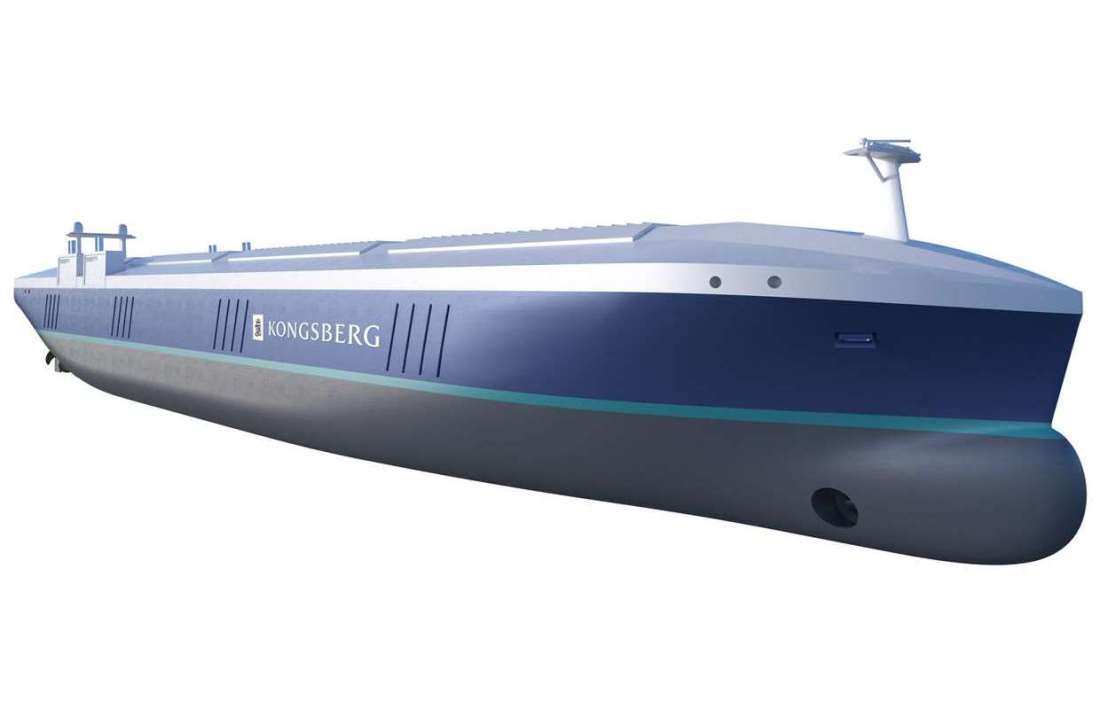
Congested shipping, restricted visibility, limited maneuverability, and intensive docking activities all contribute to port hazards – 42 percent of EU reported marine accidents (injury/death/damage to ships) took place in port areas and 44 percent of workboat fatalities occurred on Tugs. Autonomous shipping should provide numerous benefits including increased safety by relieving crewmembers of unsafe and repetitious tasks. Yet, with cyberattacks threatening every industry, this nascent technology is a large target. If autonomous vessels are the future of maritime shipping, then cyber threats may be its Achilles heel.

To continue reading, please click here.

Source: marinelink.com

The Maritime & Port Security ISAO and Templar Executives Launch Maritime Cybersecurity Awareness eLearning Course

To kick-off National Cybersecurity Awareness Month (NCSAM) activities, the Maritime and Port Security Information Sharing and Analysis Organization (MPS-ISAO) and Templar Executives Ltd. are delighted to announce a strategic partnership and the launch of a new Maritime Cyber Security eLearning course. This industry tailored training allows customers to increase the cyber security competence of their workforce. It also provides a new baseline standard for cyber security awareness across the maritime industry, a mandate from the International Maritime Organization (IMO) required to be in effect by 2021.

The MPS-ISAO is a non-profit established to advance global maritime and port critical infrastructure cyber resilience headquartered at the Kennedy Space Center in Florida. Templar Executives, is a U.K.-based organization and founder member of the International Maritime Cyber Center of Excellence (IMCCE) encompassing the Maritime Cyber Emergency Response Team (MCERT) and Templar Cyber Academy for Maritime (T-CAM). Both MPS-ISAO and Templar Executives are trusted cyber security partners to the maritime industry. Recognizing the need to increase cyber security awareness across the industry, the partners have developed market leading content that delivers a well-rounded understanding of cyber security principals tailored to mariners, and all those involved the maritime industry, in an easy to consume format.

The Maritime Cyber Security eLearning course content covers a range of topics – from an Introduction to Maritime Cyber Security to Best Practices and Top Tips. It includes a short assessment for learners to test their knowledge and is also perfectly suited for shipboard low bandwidth communication requirements and mobile devices.

“The maritime industry has needed a course like this for a long time, because traditional learning formats which required classrooms or videos were a challenge for individual mariners to complete given the diverse operating environments throughout the industry,” said Scott Dickerson, the MPS-ISAO’s Chief Strategy Officer. “We are offering this eLearning course to the entire maritime community which meets the need across industry to provide awareness and track individual training completion.”

Dickerson continued, “Adversaries are targeting port and maritime critical infrastructure every day, so there is an urgent need to increase cyber security competency across the industry – from the very smallest to the very largest of organizations. Because the maritime industry is a globally interconnected ecosystem, cyber security best practices can no longer be optionally implemented. Protecting critical maritime infrastructure requires an all-hands approach and a cultural shift in our thinking to consider both the safety and security of maritime operations. We encourage everyone in the industry to understand what’s at risk and embrace their role as guardians.”

“Templar Executives is delighted to be partnering with MPS-ISAO to provide exclusive content for an enhanced Maritime Cyber Security eLearning course, delivered through the Templar Cyber Academy for Maritime,” stated Anu Khurmi, Managing Director for Templar Executives’ Global Services division. “The IMO has announced a series of important cyber security measures for shipowners, ship operators and ports within the ISM code which must be addressed by 2021. These include requirements that stakeholders must ’raise awareness on the Cyber risk’; and ’embed a culture of Cyber risk awareness’. Our joint eLearning course is easy to access and assimilate and provides a cost effective and sustainable response to delivering training and education that supports the awareness agenda. It also contributes to the up-skilling of individuals in an industry that is digitalizing at pace and which needs to develop a more sustainable and robust cyber resilience capability across the entire ecosystem.“

Christy Coffey, MPS-ISAO VP of Operations, added, “Since the MPS-ISAO’s inception in 2016, we have had a mission objective to improve cyber security knowledge across the maritime transportation system. MPS-ISAO customers are really enthusiastic about the eLearning course launch, and Templar Executives have been such a wonderful partner for our ISAO. We begin on-boarding existing MPS-ISAO customers with the eLearning October 7th.”

All maritime stakeholders are encouraged to participate in the partners’ Maritime Cyber Security eLearning course opportunity. Please direct Maritime Cyber Security eLearning course inquiries to info@mpsisao.org.

Information about National Cyber Security Awareness Month is available at the Department of Homeland Security’s website: https://www.dhs.gov/national-cyber-security-awareness-month.

Source: einnews.com

MOFA Japan, MPA & ReCAAP ISC Collaborate to Combat Piracy

Ministry of Foreign Affairs of Japan and Maritime and Port Authority of
Singapore, in cooperation with ReCAAP Information Sharing Centre, Join
Efforts to Build Region’s Capabilities in Combating Piracy and Sea Robbery
The Ministry of Foreign Affairs of Japan (MOFA Japan) and the Maritime and Port
Authority of Singapore (MPA), in cooperation with the ReCAAP Information Sharing
Centre (ReCAAP ISC), jointly organised the 3rd Capacity Building Executive
Programme (CBEP) in Singapore. The one-week programme begins today, and will
end on 13 September 2019.

Since the inaugural edition in 2017 held in both Singapore and Japan, CBEP has
become the region’s flagship counter-piracy and sea robbery capacity building
programme, with all 20 ReCAAP Contracting Parties as well as Indonesia and
Malaysia having participated in previous editions.

This year’s edition will see senior officials and international experts address a broad
spectrum of piracy and sea robbery issues including:

• Situation Update on Piracy and Armed Robbery against Ships in Asia
• Evolving Situation and Advisory in the Sulu-Celebes Seas
• Situation in the East and West Africa
• Sharing of best practices and experiences of participating countries
• UNCLOS, SUA Convention, Hostage Convention as applied to Piracy and Sea
Robbery
• Maritime Cybersecurity

The lectures will be supplemented by in-depth discussions of case studies from
regulatory/law-enforcement agencies from across the region.

A dialogue session between regulatory/law enforcement agencies and the shipping
industry will be held to promote exchange of views and mutual cooperation.

“With 13 years of efforts and contributions by the ISC and the contracting parties,
ReCAAP has proved itself as a successful model of regional cooperation which has
made significant progress in mitigating piracy and sea robbery in Asia. Despite the
recent trend of decreasing number of piracy incidents, new challenges such as
terrorism and cyber attacks have been observed in the maritime domain. Against this
backdrop, Japan is pleased to co-host the 3rd programme with Singapore and the
ReCAAP ISC, which aims to provide the participants with opportunities to enhance
law enforcement capabilities in the efforts of counter-piracy and to learn how to
address emerging threats, as well as to exchange views and ideas with regional
partners and experts,” said Mr. Hideki Yamaji, Director, Maritime Security Policy
Division, MOFA Japan and Acting Japanese Governor to the ReCAAP ISC Governing
Council.

“Singapore is pleased to once again partner Japan to co-host this year’s ReCAAP
Capacity Building Executive Programme. Capacity building is one of the pillars of
ReCAAP. The sharing of best practices and experiences, and building the collegiality
among fellow practitioners, strengthens the network we have. This Programme has
contributed greatly to our collective effort in the fight against piracy and armed robbery
against ships in Asia,” said Ms. Quah Ley Hoon, MPA’s Chief Executive and Singapore
Governor to the ReCAAP ISC Governing Council.

“A distinguishing factor of ReCAAP ISC that has led to its success in reducing both
the number and severity of incidents in Asia in recent years is the incident reporting
and response framework attributing the primary role to the coastal States. The CBEP
builds on this framework to enhance the effectiveness of the coastal States in
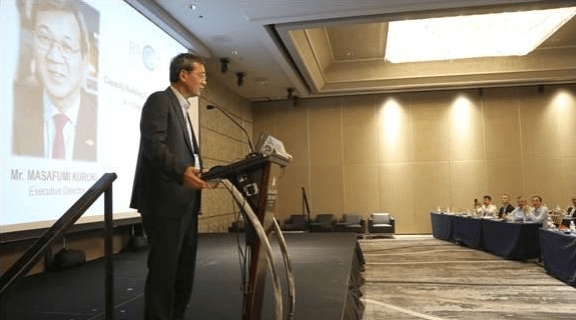
addressing piracy and sea robbery in Asia,” said Mr. Masafumi Kuroki, Executive
Director of ReCAAP ISC.

Source: recaap.org

Coast Guard Warns Shipping Firms of Maritime Cyberattacks

Robert Lemos

A commercial vessel suffered a significant malware attack in February, prompting the US Coast Guard to issues an advisory to all shipping companies: Here be malware.

In February 2019, a large ship bound for New York City radioed the US Coast Guard warning that the vessel was “experiencing a significant cyber incident impacting their shipboard network.” 

The Coast Guard led an incident-response team to investigate the issue and found that malware had infected the ships systems and significantly degraded functionality. Fortunately, essential systems for the control of the vessel were unimpeded.

To continue reading, please click here.

Source: darkreading.com

The MCERT and Lampe & Schwartze launch Maritime Cyber Insurance Partnership

An industry first – Leading marine underwriter Lampe & Schwartze join the advisory board of the Maritime Cyber Emergency Response Team (MCERT) and announce their new Ship Owner’s Marine Cyber Cover (SOMCC) covering exclusion Clause 380.

Leading marine underwriter Lampe & Schwartze has joined the advisory board of the Maritime Cyber Emergency Response Team (MCERT). Today’s announcement took place at a reception for insurance brokers and vessel operators hosted by Lampe & Schwartze at the Hafen Club in Hamburg. Guest speakers included Norton Rose Fulbright, Verein Hanseatischer Transportversicherer (VHT), and from the MCERT, Wärtsilä and Templar Executives.

The MCERT partnership underpins the formal launch of Lampe & Schwartze Marine Unit’s (L&S MU) new Ship Owner’s Marine Cyber Cover (SOMCC) covering exclusion Clause 380, and provides the basis for a joint approach to protect the maritime industry, especially shipowners, from cyber attacks. MCERT is one of the first companies providing a trusted platform for industry wide collaboration on cyber incident reporting and response and sharing of threat intel, especially for the maritime sector.

‘We are delighted to welcome Lampe & Schwartze onto our Advisory Board. This is the culmination of months working together to incorporate MCERT as an integral part of the process for the cyber cover eligibility,’ said Andrew Fitzmaurice, CEO at Templar Executives.

Mark Milford, VP Cyber Security at Wärtsilä added, ‘This exciting partnership with Lampe & Schwartze brings a new dimension and is a great example of how the MCERT is enabling collaboration and adopting solutions by leading industry players for the industry.’

Anu Khurmi who has been leading the MCERT collaboration with Lampe and Schwartze commented, ‘‘At a time when digitisation and automation are shaping the future of the maritime industry, the spectre of cyber attacks is becoming ever more prominent. Marine insurance has a critical role in facilitating and safeguarding international maritime trade especially if it enables best practices in cyber hygiene and resilience throughout the entire ecosystem.  Lampe & Schwartze are leading experts in complex transport and maritime risks, providing highly specialised insurance concepts such as their ground-breaking SOMCC offering’.

‘Our Ship Owner’s Marine Cyber Cover provides certainty in scope of insurance cover and is a standalone insurance policy covering the exclusions of the clause 380 in hull & machinery policies. Our exciting partnership with MCERT will provide international cyber incident reporting and response and ensure due diligence on vessel operators taking out the SOMCC. In addition, the MCERT has a key role in providing daily alerts and global threat intel which will further help in loss prevention and cyber risk mitigations.’  stated Hans-Christoph Enge, Managing Partner of L&S MU.

In case of a claim or incident, a co-operation between the MCERT and Verein Hanseatischer Transportversicherer (VHT), the tried and tested Hull & Machinery Claims Organization of the German Market, will guarantee a combination of technical, nautical and cyber security know-how thus giving a holistic 24/7 response line. The insurance capacity for the cover is provided by renowned German direct insurer and reinsurers.

Source: templarexecs.com

Hack The Sea: Bridging the gap between hackers and the maritime sector

Zeljka Zorz

There’s a not a lot of researchers probing the security of computer systems underpinning the maritime industry.

The limitations that keep that number low are obvious: both the specialized knowledge and equipment is difficult to come by. And, as Ken Munro of UK-based Pen Test Partners told us a year ago, not many people move from shipping into pentesting (and into information security in general).

But things are looking up for those who are interested: at this year’s DEF CON conference in Las Vegas, a maritime hacking village dubbed Hack The Sea will welcome them and offer all kinds of help.

To continue reading, please click here.

Source: .helpnetsecurity.com

New Cyber Security Clause From BIMCO

BIMCO’s Documentary Committee has agreed a new standard Cyber Security Clause that requires the parties to implement cyber security procedures and systems, to help reduce the risk of an incident and mitigate the consequences should a security breach occur.

In the wake of recent costly cyber security incidents involving large shipping companies, cyber security has become a major focus in the maritime industry.

To continue reading, please click here.

Source: hellenicshippingnews.com

New maritime cyber-security centre launched

Zhaki Abdullah

It aims to strengthen security through early detection, monitoring, analysis, response to potential cyber attacks

The Maritime and Port Authority of Singapore (MPA) has a bulwark against cyber attacks with its new Maritime Cybersecurity Operations Centre, launched officially yesterday.

The centre, which has been operating since last November, aims to strengthen Singapore’s maritime security through early detection, monitoring, analysis and response to potential cyber attacks.

To continue reading, please click here.

Source: straitstimes.com

ClassNK Releases Cyber Security Management System for Ships

By Baibhav Mishra

Leading Classification Society ClassNK has released its Cyber Security Management System for Ships.

As part of the ClassNK Cyber Security Series, ClassNK regularly releases guidelines and standards that outline cyber security measures based on the recently-released ClassNK Cyber Security Approach that outlines ClassNK’s basic approach to ensuring onboard cyber security for ships.

To continue reading, please click here.

Source: seanews.co.uk

Naval Dome Cautions Shipping Industry on Cyber Attack

By Baibhav Mishra

The maritime sector is being targeted by highly motivated cyber criminals and the shipping industry should be on the highest alert for a cyber-attack, warned Naval Dome CEO Itai Sela today. 

Speaking at the Singapore Maritime Technology Conference (SMTC) 2019, organised by the Maritime and Port Authority of Singapore, Sela said: “Somebody, somewhere is targeting the maritime sector. The shipping industry should be on Red Alert.”

To continue reading, please click here.

Source: seanews.co.uk