U.S. Navy Sends Second Ship to Gulf of Guinea

NAVAL STATION ROTA, Spain —

USNS Carson City (T-EFP 7), a Military Sealift Command Spearhead-class expeditionary fast transport ship, departed Rota, Spain, on July 2, as part of the Navy’s second deployment to the Gulf of Guinea this year.

Sailors and embarked personnel will work alongside regional partners on an Africa Partnership Station (APS) mission to provide small boat maintenance assistance, maritime law enforcement engagement, and medical and community relations outreach.

“The deployment of USNS Carson City to the Gulf of Guinea enables our partners to improve maritime security along their coastlines, territorial seas, and exclusive economic zones,” said Adm. James G. Foggo III, commander, U.S. Naval Forces Europe-Africa. “Maritime security is critical for coastal nations as seaborne trade is the lifeblood of global trade. When maritime trade freely sails across the seas, economic development and opportunities for prosperity are possible.”

U.S. Coast Guard (USCG) cutter Thetis (WMEC 910) was the first U.S. ship to deploy to the Gulf of Guinea in 2019.

“Thetis conducted training with our African partners on maritime law enforcement throughout exercise Obangame Express 2019 and continued training with our partners in the region during its deployment,” said Foggo. “Carson City’s deployment will enhance Gulf of Guinea nations’ maritime capabilities through workshops and collaboration. The presence of U.S. ships such as Thetis and Carson City helps address some of the challenges our African navies and coast guards have requested assistance with, including law enforcement and maritime resource management.”

During Carson City’s deployment, U.S. military personnel will work alongside U.S. partners in Cabo Verde, Cote d’Ivoire, Ghana, Nigeria, and Senegal to provide assistance based on host nation requests during previous APS exercise and engagements. The crew and the embarked European allies will provide host nation-requested, needs-based assistance through engagements as part of our enduring friendship and partnership with our African partners.

Mission personnel traveling with Carson City include a small boat maintenance and repair team, a medical team, United States Coast Guard Maritime Law Enforcement personnel, and the U.S. Naval Forces Europe band, who will conduct performances for local communities.

“We have a lot of experts embarked aboard Carson City to work alongside our Gulf of Guinea partners in areas they have asked for assistance such as maintenance and medical engagements,” said U.S. Navy Cmdr. Howard Gray, lead planner for Carson City deployment.

These experts include service members from other regional partners and allies, who are also joining Carson City for the deployment.

“Not only do we have U.S. service members from the Navy and Coast Guard, but we also have members of the Portuguese, Spanish, and Italian navies embarked to help ensure our African partners are getting the assistance and mentorship they need to succeed,” said Foggo. “We are also embarking members of the Ghana Navy for a brief period. Together, we are promoting progress through partnership.”

Thetis’ deployment earlier this year, like the Carson City deployment, was part of the APS program. The cutter was in Africa theater for three months, conducting training with regional countries on law enforcement tactics and techniques to combat illegal fishing, human and narcotics trafficking, piracy, and pollution.

APS is U.S. Naval Forces Africa’s flagship maritime security cooperation program focusing on maritime safety and security through increased maritime awareness, response capabilities, and infrastructure. It consists of the various exercises and operations conducted by U.S., European, and African partners and allies throughout the U.S. Africa Command area of operations.

U.S. Naval Forces Europe-Africa/U.S. 6th Fleet, headquartered in Naples, Italy, conducts the full spectrum of joint and naval operations, often in concert with allied and interagency partners, in order to advance U.S. national interests, security and stability in Europe and Africa.

Source: c6f.navy.mil
UAE: Not enough evidence to blame Gulf tanker attacks on Iran

‘If other countries have clear information, I am sure the international community will easily listen to them,’ says Emirati foreign minister on Wednesday

The United Arab Emirates Foreign Minister Abdullah bin Zayed Al-Nahyan said on Wednesday that no country could be held responsible for the latest attacks on oil tankers in the Gulf.

Speaking during a press conference with his Russian counterpart Sergey Lavrov in Moscow, Al-Nahyan said his country needs “clear and convincing evidence” regarding the recent attacks that targeted four vessels off the UAE coast last month, including two Saudi oil tankers.

To continue reading, please click here.

Source: middleeasteye.net

Pompeo’s Hollow Plan to Beef Up Security in the Gulf

BY LARA SELIGMAN

Experts are skeptical that U.S. allies will get on board.

In the wake of alleged aggression from Iran in the Persian Gulf, U.S. Secretary of State Mike Pompeo rolled out a new plan this week, dubbed “Sentinel,” to recruit U.S. partners to help enhance security for ships traversing the Strait of Hormuz and other choke points.

But experts are skeptical that the United States can get allies in the Gulf, Europe, or Asia to shore up the resources needed to make a significant difference to the commercial vessels facing threats from Tehran in the world’s busiest shipping lanes.

To continue reading, please click here.

Source: foreignpolicy.com

Trump Questions Need to Protect Persian Gulf Shipping

Questioning the longstanding American policy of defending maritime security in the Persian Gulf, President Donald Trump said Tuesday that the United States does not “need to be there” for merchant shipping in the region. 

“China gets 91% of its Oil from the [Strait of Hormuz], Japan 62%, & many other countries likewise. So why are we protecting the shipping lanes for other countries (many years) for zero compensation. All of these countries should be protecting their own ships on what has always been a dangerous journey,” he wrote in a Twitter post on Tuesday morning. “We don’t even need to be there in that the U.S. has just become (by far) the largest producer of Energy anywhere in the world!” 

To continue reading, please click here.

Source: maritime-executive.com

U.S. Launches Maritime Security Initiative for Strait of Hormuz

The United States is launching a new maritime security initiative for the Persian Gulf region to counter the threat of Iranian attacks on shipping, a State Department official told reporters Monday. During previous regional conflicts, the U.S. Navy has periodically provided escorts for merchant shipping through the Strait of Hormuz, but this effort would be multilateral, according to the official. 

The new program, called Sentinel, would be implemented with both material assets and monetary contributions from participating nations. The participants have not yet been named, but the official said that Secretary of State Mike Pompeo would seek the support of Saudi Arabia on Monday during a visit to Jeddah. 

To continue reading, please click here.

Source: maritime-executive.com

Gulf of Oman oil tanker attacks fuel maritime security demand

Maritime security firms have seen demand soar following the attacks on oil tankers on June 13. But defending ships from allegedly involved state-backed forces such as Iran’s Revolutionary Guard may not be easy.

Author Ashutosh Pandey

The demand for private maritime security personnel has shot up since the attacks on oil tankers in the Gulf of Oman on June 13, as shippers step up efforts to protect their ships and keep global trade going.

The US has blamed Iran for the attacks, which took place near the Strait of Hormuz, which is used to transport a third of the world’s seaborne crude. Iran has denied the accusations.

To continue reading, please click here.

Source: dw.com

Gulf crisis: US confirms drone was shot down by Iranian missile

A US military surveillance drone has been shot down by Iranian forces while flying over the Strait of Hormuz.

Iran’s Islamic Revolution Guards Corps (IRGC) said the drone had violated Iranian airspace. But US military said it had been over international waters.

IRGC commander-in-chief Maj-Gen Hossein Salami said the downing of the drone sent a “clear message to America” that Iran’s borders were its “red line”.

It comes at a time of escalating tension between the US and Iran.

On Monday, the US defence department said it was deploying 1,000 extra troops to the region in response to “hostile behaviour” by Iranian forces.

The US has also accused Iran of attacking two oil tankers with mines last Thursday just outside the Strait of Hormuz, in the Gulf of Oman. Iran rejects the allegation.

It was the second time in a month tankers have been attacked close in the region, through which a fifth of the world’s oil passes each day.

Tensions were further fuelled on Monday when Iran announced its stockpile of low-enriched uranium would next week exceed limits it agreed with world powers under a landmark nuclear deal in 2015.

Iran stepped up its production in response to tightening economic sanctions from the US, which unilaterally withdrew from the deal last year.

What happened on Thursday?

The IRGC said its air force shot down the US drone in the early hours of Thursday after the unmanned aircraft violated Iranian airspace near Kuhmobarak in the southern province of Hormozgan.

The drone was identified by the IRGC as a RQ-4 Global Hawk, but the US military official told Reuters news agency the drone was a US Navy MQ-4C Triton, a maritime patrol and reconnaissance aircraft based on the RQ-4B Global Hawk.

Later, in a speech carried live on Iranian state TV, Gen Salami warned the US that it needed to respect Iran’s territorial integrity and national security.

“The downing of the American drone was a clear message to America… our borders are our red line and we will react strongly against any aggression.”

He added: “Iran is not seeking war with any country, but we are fully prepared to defend Iran.”

Is this the first time Iran has targeted a US drone?

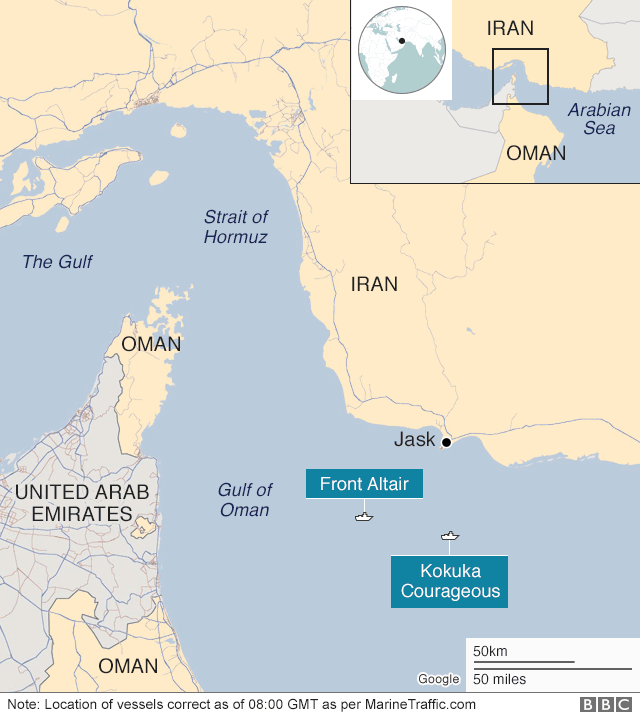
Last week, the US military accused Iran of attempting to shoot down a US MQ-9 Reaper armed drone with a surface-to-air missile in an attempt to disrupt surveillance of one of the tankers that was attacked, the Kokuka Courageous.

The drone had earlier observed a fire on board the other tanker, the Front Altair.

The previous week, another US MQ-9 Reaper was shot down over Yemen by a surface-to-air missile fired by the Iran-backed rebel Houthi movement.

The US military said the altitude of the engagement “indicated an improvement over previous Houthi capability, which we assess was enabled by Iranian assistance”. Iran denies providing weapons to the Houthis.

In 2011, Iran said it had captured a US RQ-170 Sentinel reconnaissance drone that had been reported lost by US forces in neighbouring Afghanistan. It developed its own version of the drone, one of which was shot down by Israel last year.

Source: bbc.co.uk

Trump creates doubt over use of U.S. force to protect Gulf oil

Babak DehghanpishehSylvia Westall

GENEVA/DUBAI (Reuters) – U.S. President Donald Trump said he was prepared to take military action to stop Tehran from getting a nuclear bomb but left open whether he would back the use of force to protect Gulf oil supplies that Washington fears may be under threat by Iran.

Worries about a confrontation between Iran and the United States have mounted since attacks last week on two oil tankers near the strategic Strait of Hormuz shipping lane at the entrance to the Gulf. Washington blamed long-time foe Iran for the incidents.

To continue reading, please click here.

Source: reuters.com

Gulf crisis: US sends more troops amid tanker tension with Iran

The US military will send an additional 1,000 troops to the Middle East as tensions build with Iran.

Acting Defence Secretary Patrick Shanahan said the deployment was in response to what he described as “hostile behaviour” by Iranian forces.

The US Navy also shared new images it says link Iran to attacks last week on two oil tankers in the Gulf of Oman.

Washington has accused Iran of blowing holes in the vessels with mines. Iran has denied the allegations.

Tensions were further fuelled on Monday when Iran said its stockpile of low-enriched uranium would next week exceed levels set under the 2015 nuclear agreement.

It recently stepped up production in response to the US tightening sanctions. The 2015 deal, from which the US has withdrawn, curbed Iran’s nuclear programme in exchange for the lifting of sanctions.

Iran’s President Hassan Rouhani said his country did not seek to wage war with any nation and had remained “loyal” to its international obligations.

Meanwhile, on Monday night three rockets hit a military base housing US troops north of Baghdad, the Iraqi military said. The US said it was “indirect fire” and did not cause injuries.

No group has admitted responsibility for the attack, though it follows warnings by US officials of an increased threat to US interests in Iraq by Iran-backed militias.

What do we know about the extra troops?

The US troop deployment to the Middle East was announced by Mr Shanahan late on Monday.

In his statement, he said the “United States does not seek conflict with Iran” but the action was taken to “ensure the safety and welfare of our military personnel working throughout the region to protect our national interests”.

He said the military would continue to monitor the situation and make adjustments to troop levels accordingly.

Monday’s troop increase announcement comes on top of 1,500 extra announced by President Donald Trump last month.

Secretary of State Mike Pompeo said on Sunday that the US did not want war with Iran, but was nevertheless “considering a full range of options”.

What do the latest images show?

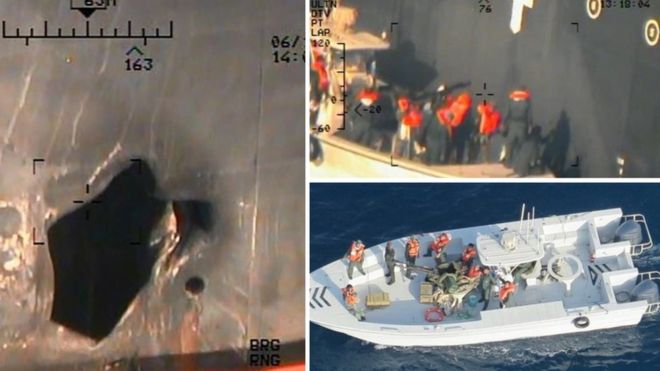
Shortly before the announcement, the Pentagon released new images including some purporting to show the remnants of an unexploded mine on a Japanese-owned oil tanker.

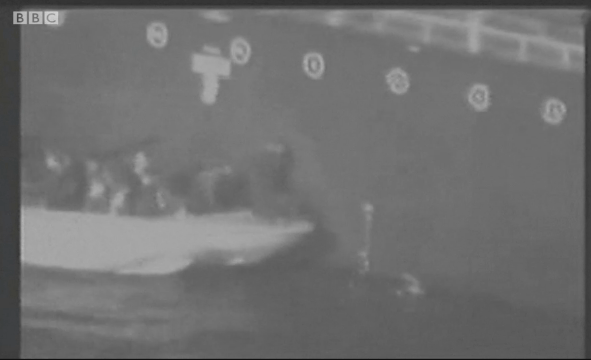
The photos appear to show it being removed by members of the Iranian Revolutionary Guard Corps. The Pentagon has already released grainy video said to show the same episode.

Also seen in the latest images is apparent damage – a hole – above the waterline on the hull of the Kokuka Courageous vessel.

Another image claims to show the Iranian Revolutionary Guard Corps vessel shortly after it was involved in removing the limpet mine.

A Norwegian-owned tanker, the Front Altair, also reported being hit by the blasts on Thursday.

The US has implicated Iran in the latest attacks and four others outside the Strait of Hormuz in May, allegations denied by Iran.

How do other sides see the situation?

China urged the US to lower the pressure and for Iran to stick to the nuclear deal, warning of a “Pandora’s box” in the region.

Russia – another party to the nuclear accord – also called for restraint, calling US actions “truly provocative”.

Saudi Arabia also blames Iran for the attacks on the two oil tankers, while the UK said it was “almost certain” Iran was responsible.

But EU foreign ministers meeting on Monday warned against jumping to conclusions and backed UN calls for an independent investigation.

Why are there new tensions?

In 2015, Iran agreed to a landmark deal with world powers to curb its nuclear development.

It agreed to limit the enrichment of uranium, which is used to make reactor fuel but also nuclear weapons, and other measures in return for relief from sanctions.

Mr Trump abandoned the nuclear accord last year and started to re-impose sanctions.

The move has crippled Iran’s economy, which relies on oil, and Iran has responded by scaling back its nuclear commitments.

On Monday, a spokesman for Iran’s Atomic Energy Organisation said it was on course to exceed agreed limits on its low-enriched uranium stockpiles by 27 June.

But, Iran said there was “still time” for European countries to act by protecting Iran from reinstated US sanctions.

Source: bbc.co.uk

US Department of Defense images

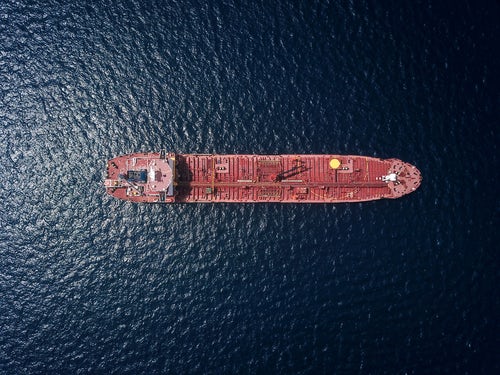
Middle East tanker attacks send ship insurance soaring

The recent spike in attacks on tankers near the Persian Gulf is inflating insurance premiums for ships transiting through the wider Middle East, increasing the cost of transporting oil from the region.

Insurance rates for crude oil tankers loading in the Middle East are now up to 20 times higher following the latest attacks.

To continue reading, please click here.

Source: hellenicshippingnews.com