
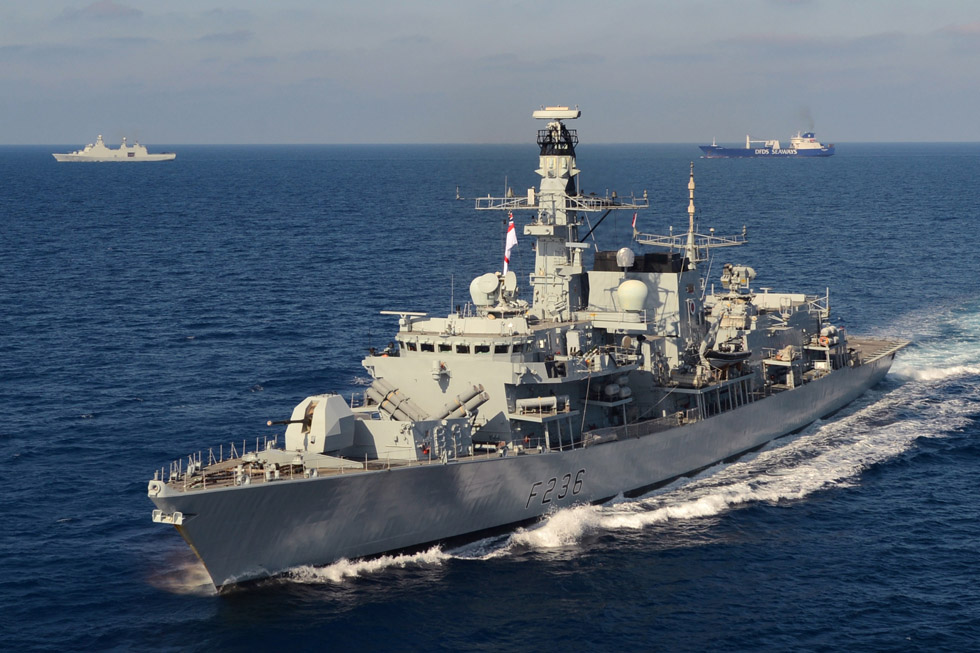
The foreign secretary has repeated his call for the release of a British-flagged ship and its crew detained in the Gulf by the Iranian military.
The Iranian Revolutionary Guard captured the Stena Impero and its 23 crew members in the Gulf on Friday.
Jeremy Hunt told MPs it was an act of “state piracy”.
Mr Hunt said the UK would develop a maritime protection mission with other European nations to allow ships to pass through the area safely.
The foreign secretary secured support for the initiative from both French and German foreign ministers on the phone on Sunday evening, the BBC has been told.
Addressing the Commons after a meeting of the government’s emergency Cobra committee, Mr Hunt said he spoke with a “heavy heart” but if Iran continued to act as it had, it would have to accept a “larger Western military presence” along its coastline.
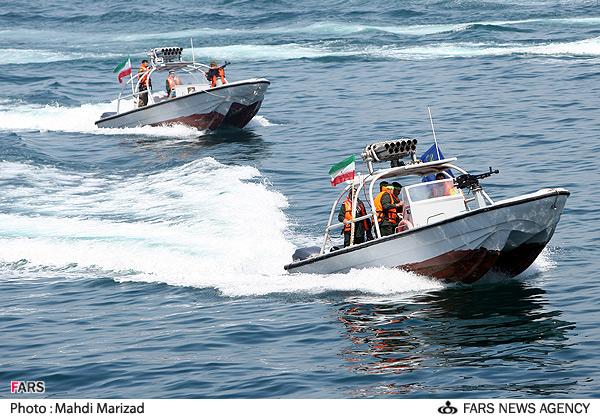
The seizure of the Stena Impero in the key shipping route of the Strait of Hormuz came after Tehran said the vessel violated international maritime rules.
Iran’s state-run news agency said the tanker was captured after it collided with a fishing boat and failed to respond to calls from the smaller craft.
Mr Hunt said the ship was illegally seized in Omani waters and forced to sail into Bandar Abbas port in Iran, where it remains.
Although the crew and owners are not British, the Stena Impero carries the British flag so the UK owes protection to the vessel, maritime analysts said.
The seizure was the latest in a string of acts leading to escalating tensions between Iran and the UK and US.
Earlier this month Royal Marines helped to seize tanker Grace 1 off Gibraltar, because of evidence it was carrying Iranian oil to Syria in breach of EU sanctions.
Mr Hunt said that vessel was detained legally, but Iran said it was “piracy” and threatened to seize a British oil tanker in retaliation.
In a statement to MPs in the Commons, Mr Hunt said the UK would seek to create a European-led mission to ensure safe passage of international vessels in the Gulf.
“Freedom of navigation is a vital interest of every nation,” he said.
US Central Command said it was developing a multinational maritime effort in response to the situation.
But the UK’s protection mission would not include the US because, Mr Hunt insisted, Britain was not part of President Trump’s policy of “maximum pressure” on Tehran.
The initiative would build on existing structures in the region such as the US Navy-led Combined Task Force 150, the BBC has learned.
Instead of focusing on tackling terrorism and the illegal drugs trade like the Combined Task Force 150, the new scheme would have a mandate to ensure freedom of navigation of international ships, the Foreign Office explained.
The mission would be implemented “as quickly as possible” but in the meantime the destroyer HMS Duncan has been sent to help keep British ships and crews safe in the region, Mr Hunt told the Commons.
Mr Hunt said the UK had sought to de-escalate the situation but there would be “no compromise” on freedom of navigation in the Strait of Hormuz.
Bob Sanguinetti, CEO of the UK Chamber of Shipping, welcomed the announcement of the mission but said it was “imperative” the government protected British-flagged ships in the Gulf in the meantime.
Mr Hunt encouraged commercial shipping companies in the region to follow advice issued by the Department for Transport to help reduce “risks of piracy”, because it was “not possible for the Royal Navy to provide escorts for every single ship”.
Source: bbc.co.uk
 Maritime Security News