DUBAI (Reuters) – The two oil tankers crippled in attacks in the Gulf of Oman last week that Washington and Riyadh have blamed on Iran are being assessed off the coast off the United Arab Emirates before their cargos are unloaded, the ships’ operators said on Sunday.
Damage assessment on Japan’s Kokuka Courageous and preparation for ship-to-ship transfer of its methanol cargo would start after authorities in Sharjah, one of the UAE’s seven emirates, complete security checks, Bernhard Schulte Shipmanagement said.
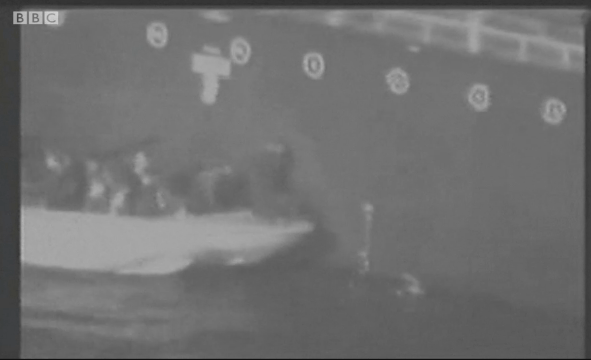
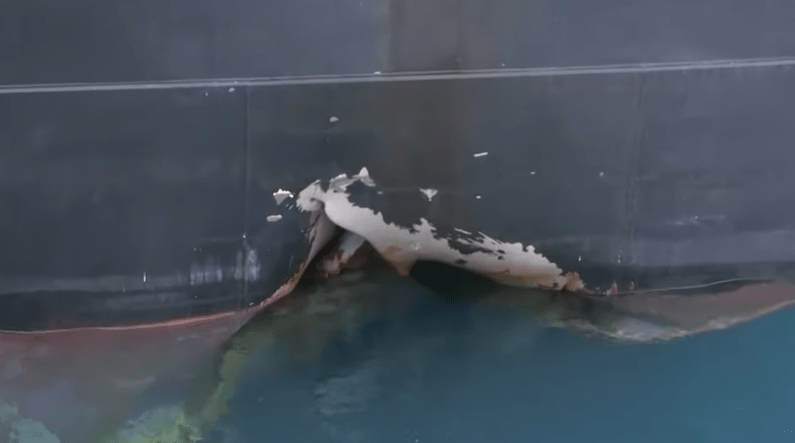
The Norwegian-owned Front Altair had been “attacked”, the Norwegian Maritime Authority said, leading to three explosions on board.
Wu I-fang, a spokesman for Taiwan’s state oil refiner CPC Corp, which chartered the Front Altair, said it was carrying 75,000 tonnes of naphtha and was “suspected of being hit by a torpedo”, although this has not been confirmed. Other unverified reports suggested a mine attack.
The ship’s owner, Frontline, said the Marshall Islands-flagged vessel was on fire but denied reports on Iran media it had sunk.
The operator of the Panama-flagged Kokuka Courageous, BSM Ship Management, said its crew abandoned ship and were rescued by a passing vessel.
The tanker was carrying methanol and was not in danger of sinking, a spokesman said.
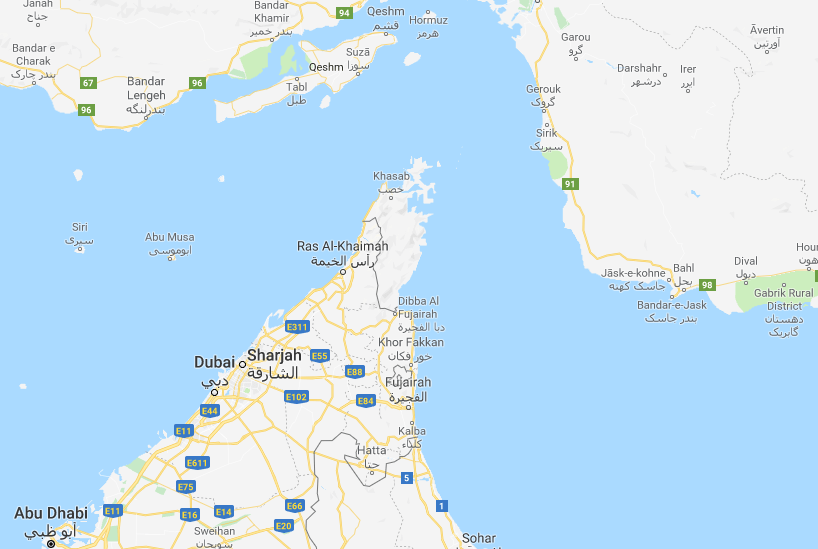
It is currently located about 80 miles from Fujairah in the UAE and 16 miles from Iran. The cargo remains intact.
Who came to the rescue?
Iranian state media said Iran had rescued the crew members and they had been taken to the port of Jask.
Iranian Foreign Minister Mohammad Javad Zarif tweeted that the incident happened as Japanese PM Shinzo Abe was meeting Iran’s supreme leader, Ayatollah Ali Khamenei, adding: “Suspicious doesn’t begin to describe what likely transpired this morning.”
The vessels were carrying what Japan trade officials said was “Japan-related cargo”.
The US 5th Fleet, based in Bahrain, said it had sent the USS Bainbridge to assist.
Spokesman Josh Frey said in a statement: “US naval forces in the region received two separate distress calls at 06:12 local time (03:12 GMT) and a second one at 07:00.”
Why is this so sensitive?
The Gulf of Oman lies at one end of the strategic Strait of Hormuz, and this incident will further increase tension in a vital shipping lane through which hundreds of millions of dollars of oil pass.
The US sent an aircraft carrier strike group and B-52 bombers to the region at the start of May in response to what it said was an unspecified plan by Iran-backed forces to attack US forces in the area.
President Donald Trump has taken a hard line towards Iran, accusing it of being a destabilising force in the Middle East.
Iran rejected the claims and has accused the US of aggressive behaviour.
Those tensions rose markedly after the 12 May limpet mine attacks on four tankers off the UAE.
While it is unclear why Iran would carry out a relatively low-level attack on the multinational tankers, observers have speculated that it could have been to send a signal to forces ranged against it that it is capable of disrupting shipping there without triggering a war.
The United Arab Emirates has told the UN Security Council a “state actor” was most likely behind attacks on four tankers off its coast.
The 12 May attacks bore the hallmarks of a “sophisticated and co-ordinated operation”, according to its report.
The UAE did not say who it thought was behind the attacks, which also targeted vessels from Saudi Arabia and Norway.
The US has accused Iran of being behind the attacks but Tehran denies this and has called for an investigation.
The attacks took place within UAE territorial waters east of the emirate of Fujairah, just outside the strategically vital Strait of Hormuz, in what the UAE called a “sabotage attack”.
They exacerbated long-standing tensions between Iran, and the US and its allies in the Gulf.
What does the report say happened?
According to the UAE-led investigation, which was presented to a closed session of the UN Security Council in New York, the attacks showed a “high degree of sophistication”.
“The attacks required the expert navigation of fast boats” which “were able to intrude into UAE territorial waters”, the report’s preliminary findings say.
Divers were used to attack the ships using limpet mines in order to cause damage but not cause a major explosion, the presentation says.
There were no casualties but Saudi Arabia has said two of its ships suffered “significant” damage. Another tanker was Norwegian-registered, while the fourth was UAE-flagged.
Why is Iran being accused?
The attacks happened at a time of escalating tension between the US and Iran, long-time foes.
They took place days after the US sent warships and bombers to the region in response to what it said was an unspecified plan by Iran to attack US forces in the area.
While it is unclear why Iran would carry out a relatively low-level attack on the multinational tankers, observers have speculated that it could have been to send a signal to forces ranged against it that it is capable of disrupting shipping there without triggering a war.
Responding to the UAE report, the Saudi Ambassador to the UN, Abdallah Y al-Mouallimi, said the kingdom believed “that the responsibility for this action lies on the shoulders of Iran. We have no hesitation in making this statement,” Reuters news agency reported.
However, Mr Bolton, long known for his hawkish stance on Iran, denied the Trump administration was seeking to overthrow the Iranian government.
“The policy we’re pursuing is not a policy of regime change,” he told reporters last week during a visit to London. “That’s the fact and everybody should understand it that way.”
Iran’s foreign ministry has rejected the US accusations as “ludicrous” and accused Mr Bolton of being a “warmonger”.
The decision was intended to bring Iran’s oil exports to zero, denying the government its main source of revenue.
US President Donald Trump reinstated the sanctions a year ago after abandoning the landmark 2015 nuclear deal that Iran agreed with six nations – the five permanent members of the UN Security Council and Germany.
US said set to present evidence on ‘pretty impressive’ attack — including materials gathered by Israel — to UN Security Council
Intelligence materials collected by Israel’s Mossad agency played a role in linking Iran to the sabotaging of four oil tankers off the coast of the United Arab Emirates last month, prompting the United States to accuse Tehran of carrying out the attack, according to a report on Monday.
The US is slated to present the intelligence — including evidence gathered by Israel — in the coming days, likely before the UN Security Council, the Kan public broadcaster said, as tensions between Washington and Tehran continued to simmer.
ABU DHABI (Reuters) – U.S. National Security Adviser John Bolton said on Wednesday that attacks on oil tankers off the coast of the United Arab Emirates this month were the work of “naval mines almost certainly from Iran”.
The UAE has not yet blamed anyone for the sabotage of four vessels, including two Saudi tankers, which was followed two days later by drone strikes on oil pumping stations in Saudi Arabia.
Following the 12 May sabotage attacks on four tankers off Fujairah the LMA Joint War Commission (JWC) has added the United Arab Emirates (UAE) to its listed areas for Hull War, Piracy, Terrorism and Related Perils.
The decision by the JWC was taken on Friday, following a meeting earlier in the week where it had deferred a decision on amending its list of war risk areas.
By Stephen Kalin, Alexander Cornwell and Dahlia Nehme
RIYADH/DUBAI (Reuters) – Attacks on Saudi tankers and other vessels off the coast of the United Arab Emirates this week expose vulnerabilities in the security of a key oil-shipping route amid rising tensions between the United States, Iran and Gulf Arab states.
The operation near the Strait of Hormuz appeared designed to test the resolve of the United States and its Sunni Muslim allies without triggering a war, after Washington tightened sanctions on Iran and beefed up its military presence nearby.
The UN says Houthi rebels have pulled out of three key Red Sea ports in Yemen, in partial implementation of a ceasefire deal agreed six months ago.
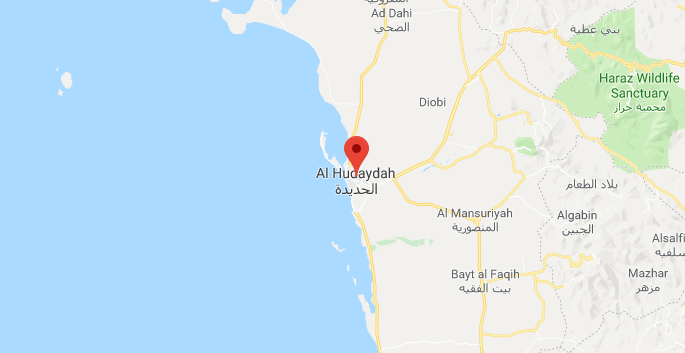
Hudaydah, Salif and Ras Issa were handed over to the coast guard.
The UN said work was still needed to remove trenches, barriers and mines – and to implement the rest of the deal.
The Houthis and pro-government forces, which are backed by a Saudi-led coalition, agreed to leave the ports to allow in vital humanitarian aid.
However, the BBC’s Lyse Doucet says some Yemenis are sceptical about the latest pull-out and accuse the Houthis of leaving fighters in the ports disguised as coast guard personnel.
Yemen’s government has previously warned that the withdrawal would be a rebel “ploy”.
The UN says at least 7,070 civilians have been killed and 11,205 injured in the fighting, with 65% of the deaths attributed to Saudi-led coalition air strikes.
Thousands more civilians have died from preventable causes, including malnutrition, disease and poor health.
About 80% of the population – 24 million people – need humanitarian assistance and protection, and almost 10 million who the UN says are just a step away from famine. Almost 240,000 of those people are facing “catastrophic levels of hunger”.
He said that since Saturday there had been “very good co-operation” with Houthi commanders and that the UN had been given access to all areas of the ports.
“Today we have together seen the redeployment and we have also agreed that there are a few outstanding issues,” he said.
“There are two minefields in Ras Issa and Salif and trenches in this port [Hudaydah] that need to be removed.”
He urged all sides to help implement the next stages of the peace deal.
Why is Hudaydah important?
Hudaydah port is the main lifeline for two-thirds of Yemen’s population and its closure has had a devastating impact.
Under the local ceasefire deal brokered by the UN in Stockholm last December, the warring parties agreed to redeploy their forces from Hudaydah city and the ports of Hudaydah, Salif and Ras Issa.
The Houthi withdrawal marked the first major step in bringing that ceasefire agreement into being.
Pro-government forces have twice tried to seize the port, and accuse the Houthis of using it to smuggle in weapons from Iran. The rebels and Tehran both deny these accusations.
The UK War Risks Club, which provides specialist insurance for ships, is investigating the incidents of sabotage of vessels in Fujairah port over the weekend and has not decided on additional premiums for the region, a company executive said Monday.
The club, managed by insurance provider Thomas Miller, is one of the providers of marine Protection and Indemnity or P&I insurance, including additional war risks insurance for incidents like civil war, piracy or other disturbances.
DUBAI/LONDON (Reuters) – Saudi Arabia said on Monday that two of its oil tankers were among those attacked off the coast of the United Arab Emirates and said it was an attempt to undermine the security of crude supplies amid tensions between the United States and Iran.
The UAE said on Sunday that four commercial vessels were sabotaged near Fujairah emirate, one of the world’s largest bunkering hubs lying just outside the Strait of Hormuz, but did not describe the nature of the attack or say who was behind it.


 Maritime Security News