Maritime Union Report on the Dangers Seafarers Face on Ships in the Persian Gulf

Persian Gulf/SoH

First Hand Report on Transiting the Strait of Hormuz in a Merchant Vessel

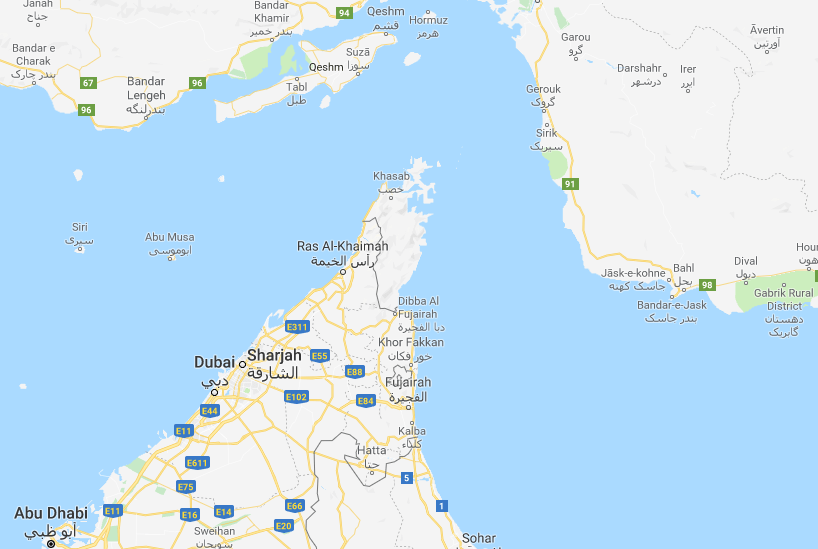
PERSIAN GULF – As with the case of piracy in the waters off the Somali Coast, nothing brings the realities of dangers at sea whilst transiting the seas in the region like the first-hand accounts of those who have experienced the terrors of passing through the Strait of Hormuz whilst anticipating an attack from armed forces.

With security levels raised by the British government following the seizure of the UK-flagged tanker Stena Impero the focus of the maritime unions has been on the welfare of their members and now Nautilus International, the trade union for maritime professionals, has released the testimony of one of its members, via a report by Helen Kelly, illustrating the circumstances faced by seafarers in the region.

To continue reading, please click here.

Source: handyshippingguide.com

Stena Bulk says it has had contact with crew of seized tanker

Persian Gulf/SoH

STOCKHOLM (Reuters) – Stena Bulk, the Swedish-based operator of a British-flagged tanker seized last week by Iran, has been in contact by telephone with the 23 crew members of the vessel, Stena Impero, a spokesman for the operator said on Wednesday.

“We had direct contact with the crew on board the vessel last night by telephone and they’re all okay and in good health and they’re getting good cooperation with the Iranians on board the vessel,” spokesman Pat Adamson said.

To continue reading, please click here.

Source: reuters.com

Ships urged to alert navies before sailing through Strait of Hormuz

Persian Gulf/SoH

LONDON – Shipping associations have called on ship owners to inform Britain’s navy of their movements before sailing into the Middle East Gulf and Strait of Hormuz because of the escalating international crisis in the region.

About a fifth of the world’s oil passes through the Strait of Hormuz and shipping companies are already deploying more unarmed security guards as an extra safeguard.

To continue reading, please click here.

Source: todayonline.com

Iran tanker seizure: Hunt seeks European help on Gulf shipping

The foreign secretary has repeated his call for the release of a British-flagged ship and its crew detained in the Gulf by the Iranian military.

The Iranian Revolutionary Guard captured the Stena Impero and its 23 crew members in the Gulf on Friday.

Jeremy Hunt told MPs it was an act of “state piracy”.

Mr Hunt said the UK would develop a maritime protection mission with other European nations to allow ships to pass through the area safely.

The foreign secretary secured support for the initiative from both French and German foreign ministers on the phone on Sunday evening, the BBC has been told.

Addressing the Commons after a meeting of the government’s emergency Cobra committee, Mr Hunt said he spoke with a “heavy heart” but if Iran continued to act as it had, it would have to accept a “larger Western military presence” along its coastline.

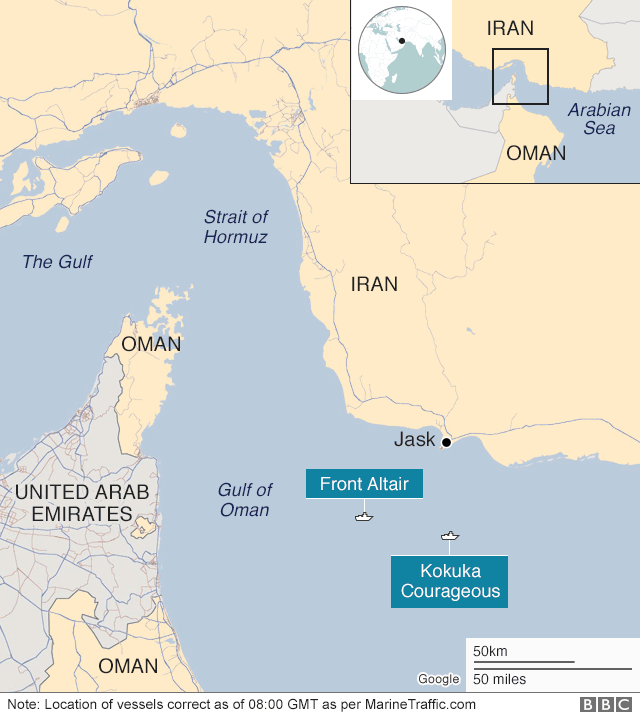
The seizure of the Stena Impero in the key shipping route of the Strait of Hormuz came after Tehran said the vessel violated international maritime rules.

Iran’s state-run news agency said the tanker was captured after it collided with a fishing boat and failed to respond to calls from the smaller craft.

Mr Hunt said the ship was illegally seized in Omani waters and forced to sail into Bandar Abbas port in Iran, where it remains.

Although the crew and owners are not British, the Stena Impero carries the British flag so the UK owes protection to the vessel, maritime analysts said.

The seizure was the latest in a string of acts leading to escalating tensions between Iran and the UK and US.

Earlier this month Royal Marines helped to seize tanker Grace 1 off Gibraltar, because of evidence it was carrying Iranian oil to Syria in breach of EU sanctions.

Mr Hunt said that vessel was detained legally, but Iran said it was “piracy” and threatened to seize a British oil tanker in retaliation.

In a statement to MPs in the Commons, Mr Hunt said the UK would seek to create a European-led mission to ensure safe passage of international vessels in the Gulf.

“Freedom of navigation is a vital interest of every nation,” he said.

US Central Command said it was developing a multinational maritime effort in response to the situation.

But the UK’s protection mission would not include the US because, Mr Hunt insisted, Britain was not part of President Trump’s policy of “maximum pressure” on Tehran.

The initiative would build on existing structures in the region such as the US Navy-led Combined Task Force 150, the BBC has learned.

Instead of focusing on tackling terrorism and the illegal drugs trade like the Combined Task Force 150, the new scheme would have a mandate to ensure freedom of navigation of international ships, the Foreign Office explained.

The mission would be implemented “as quickly as possible” but in the meantime the destroyer HMS Duncan has been sent to help keep British ships and crews safe in the region, Mr Hunt told the Commons.

Mr Hunt said the UK had sought to de-escalate the situation but there would be “no compromise” on freedom of navigation in the Strait of Hormuz.

Bob Sanguinetti, CEO of the UK Chamber of Shipping, welcomed the announcement of the mission but said it was “imperative” the government protected British-flagged ships in the Gulf in the meantime.

Mr Hunt encouraged commercial shipping companies in the region to follow advice issued by the Department for Transport to help reduce “risks of piracy”, because it was “not possible for the Royal Navy to provide escorts for every single ship”.

Source: bbc.co.uk

Maritime security in the Gulf: UK government response

Stena Impero seized in the Strait of Hormuz

On 19 July Iranian authorities seized the British-flagged vessel, Stena Impero, in Omani waters in clear contravention of international law. Following a ministerial COBR meeting on 20 July, Foreign Secretary Jeremy Hunt gave astatement on iranian actions in the Strait of Hormuz.

The UK Mission to the United Nations in New York, on behalf of the UK government, sent a letter to the President of the United Nations Security Council setting out the facts about the incident.

On 21 July the Foreign Secretary called the French and German foreign ministers. Both agreed with the Foreign Secretary that safe passage through the Strait of Hormuz is a top priority for European nations, while avoiding escalation in the region.

Grace 1 detained off the coast of Gibraltar

On 4 July the Iranian oil tanker Grace 1 was detained during a a government of Gibraltar-led operation to uphold EU sanctions on Syria. The Foreign Secretary spoke with the Chief Minister of Gibraltar and with the Iranian Foreign Minister about the Grace 1 tanker.

On 15 July the Foreign Secretary attended the EU Foreign Affairs Council in Brussels. Before his visit, he gave a statement on Iran’s compliance with the nuclear deal and also commented on the detention of the Grace 1 and the rights of commercial ships in the Gulf.

Tankers attacked in the Gulf of Oman

The UK government is almost certain that a branch of the Iranian military attacked 2 tankers on 13 June. The Foreign Secretary condemned the attacks on civilian shipping, and called on Iran to cease all forms of destabilising activity. Read the UK statement on the attacks in the Gulf of Oman.

Source: gov.uk

US destroyed Iranian drone in Strait of Hormuz, says Trump

Persian Gulf/SoH

President Donald Trump has said the US Navy destroyed an Iranian drone in the Strait of Hormuz.

He said the USS Boxer amphibious assault ship “took defensive action” on Thursday after the drone came within about 1,000 yards (914m) of the vessel.

Iran said it had no information about losing a drone. In June, Iran downed a US military drone in the area.

Earlier, Tehran said it had seized a “foreign tanker” and its 12 crew on Sunday for smuggling fuel in the Gulf.

Iran has been blamed by the US for attacks on tankers which have happened in the world’s key shipping area since May. Tehran denies all the accusations.

The recent incidents have triggered fears of a military conflict in the region.

What have the US and Iran said about the incident?

Speaking at the White House, Mr Trump said: “I want to apprise everyone of an incident in the Strait of Hormuz today involving USS Boxer, a navy amphibious assault ship.

“The Boxer took defensive action against an Iranian drone which had closed into a very, very near distance, approximately 1,000 yards (914m), ignoring multiple calls to stand down and was threatening the safety of the ship and the ship’s crew. The drone was immediately destroyed.

“This is the latest of many provocative and hostile actions by Iran against vessels operating in international waters. The United States reserves the right to defend our personnel, facilities and interests.”

A defence department official quoted by the New York Times said the drone had been brought down using electronic jamming equipment.

Meanwhile, a senior Iranian official dismissed the US statement. In an English tweet posted on 19 July, Deputy Foreign Minister Abbas Araqchi even suggested the US may have downed its own drone by mistake.

Mr Araqchi’s comment came after Iranian Foreign Minister Mohammad Javad Zarif told reporters in New York on Thursday that “we have no information about losing a drone today”.

What about the seized oil tanker?

Iran’s Revolutionary Guards’ Sepah News site said on Thursday that an alleged fuel-smuggling ship was seized on Sunday during naval patrols aimed at “discovering and confronting organised smuggling”.

Iran’s state media quoted the Guards as saying the vessel had been smuggling one million litres (220,000 gallons) of fuel.

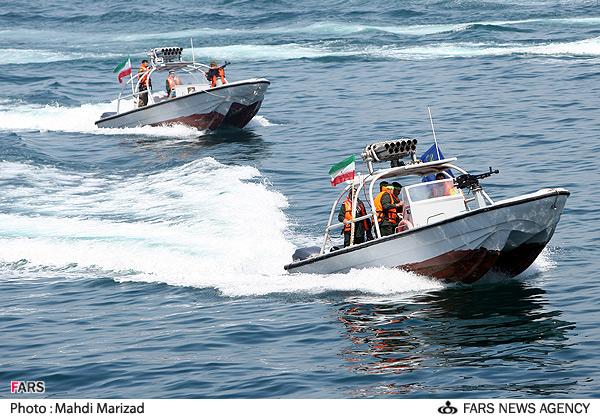
The state media later published footage of Iranian speedboats circling around the Panamanian-flagged Riah tanker.

The vessel was seized south of Iran’s Larak Island, Iran said. Washington called on Iran to immediately release the ship.

What’s the background to this?

Tensions have been high in the Gulf since the US tightened the sanctions that it reimposed on Iran’s oil sector after unilaterally withdrawing from a landmark 2015 nuclear deal.

The US has blamed Iran for two separate attacks on oil tankers in the Gulf of Oman in May and June – an allegation Tehran has denied.

Iran also shot down a US surveillance drone over the Strait of Hormuz. Tehran said the aircraft had violated Iranian airspace, and that the incident sent a “clear message to America”.

The US military said the drone had been over international waters at the time, and condemned what it called an “unprovoked attack”.

UK warships have meanwhile been shadowing British oil tankers in the area since Iran threatened to seize one in response to the impounding of an Iranian tanker off Gibraltar.

The UK said the tanker was suspected of breaching EU sanctions against Syria. Iran denied it was en route there.

US Central Command Chief General Kenneth McKenzie, speaking on a visit to Saudi Arabia on Thursday, said he was working “aggressively” to find a solution to free passage for ships through the Gulf region, Reuters news agency reports.

Source: bbc.co.uk

Seeking to avoid escalation, ships deploy unarmed guards to navigate Gulf

Persian Gulf/SoH

Jonathan Saul

LONDON (Reuters) – Shipping companies are hiring unarmed security guards for voyages through the Middle East Gulf as an extra safeguard after a wave of attacks in the region, security companies involved said.

Relations between Iran and the West are increasingly strained after Britain seized an Iranian tanker in Gibraltar this month. Britain also said last week that one of its warships had to fend off Iranian vessels seeking to block a UK-owned tanker from passing through the Strait of Hormuz.

To continue reading, please click here.

Source: reuters.com

U.S. unsure about circumstances of tanker towed to Iran

DUBAI (Reuters) – U.S. officials say they are unsure whether an oil tanker towed into Iranian waters was seized by Iran or rescued after facing mechanical faults as Tehran asserts, creating a mystery at sea at a time of high tension in the Gulf.

The MT Riah disappeared from ship tracking maps when its transponder was switched off in the Strait of Hormuz on July 14. Its last position was off the coast of the Iranian island of Qeshm in the strait.

To continue reading, please click here.

Source: reuters.com

Threat level raised to ‘critical’ for UK ships in Iranian waters

The UK has raised the threat to British shipping in Iranian waters in the Gulf to the highest level – where the risk of attack is “critical”.

The step was taken on Tuesday, amid growing tensions in the region.

On Wednesday, Iranian boats tried to impede a British oil tanker in the region – before being driven off by a Royal Navy ship, the MoD said.

Iran had threatened to retaliate for the seizure of one of its own tankers, but denied any attempted seizure.

The Department for Transport said it regularly provided security advice to UK ships in high-risk areas.

The threat level means British ships are advised not to enter Iranian waters, BBC defence correspondent Jonathan Beale said.

Boats believed to belong to Iran’s Islamic Revolution Guard Corps (IRGC) approached the British Heritage tanker and tried to bring it to a halt as it was moving out of the Gulf into the Strait of Hormuz.

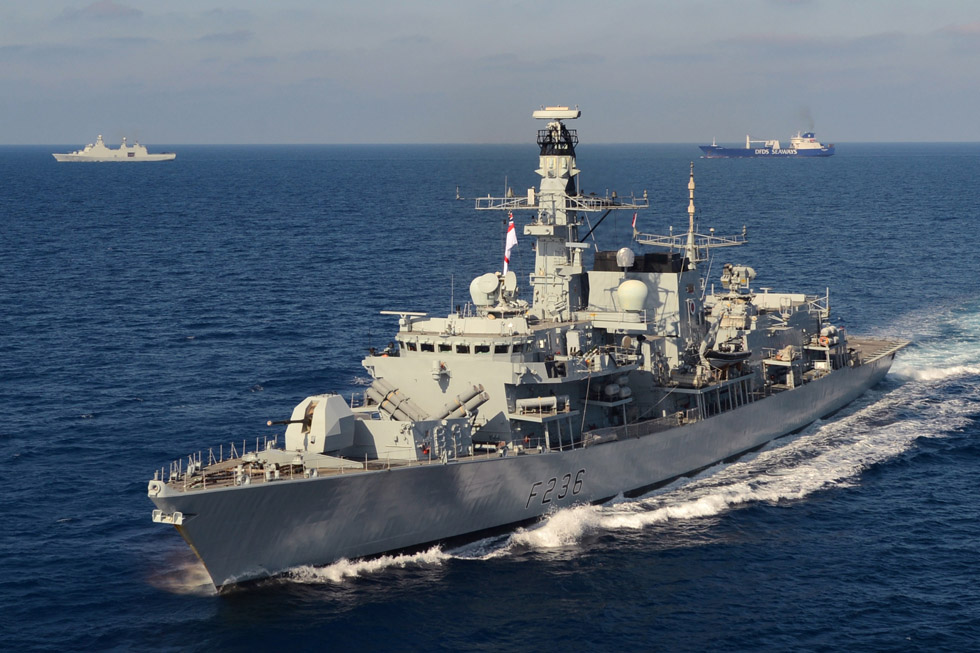
HMS Montrose, a British frigate shadowing the BP-owned tanker, was forced to move between the three boats and the ship, a Ministry of Defence spokesman said.

He described the Iranians’ actions as “contrary to international law”.

Guns on HMS Montrose were trained on the Iranian boats as they were ordered to back off, US media reported. The boats heeded the warning and no shots were fired.

Last week, British Royal Marines helped the authorities in Gibraltar seize an Iranian tanker because of evidence it was carrying oil to Syria in breach of EU sanctions.

A spokesman for the Royal Gibraltar Police said they had arrested the captain and chief officer of the Iranian tanker on Thursday, on suspicion of breaching EU sanctions, but neither had been charged.

The BBC has been told British Heritage was near the island of Abu Musa when it was approached by the Iranian boats.

Although Abu Musa is in disputed territorial waters, HMS Montrose remained in international waters throughout.

Defence Secretary Penny Mordaunt said the government was concerned by the incident and urged the Iranian authorities to “de-escalate the situation”.

Foreign Secretary Jeremy Hunt added the UK would monitor the situation “very carefully”.

Prime Minister Theresa May’s official spokesman said the government was “committed to maintaining freedom of navigation in accordance with international law”.

A spokesperson for the US State Department condemned Iran’s actions and said that Washington would continue to work closely with the UK.

Morgan Ortagus said: “We commend the actions of the Royal Navy in ensuring freedom of navigation and the free flow of commerce through this critically important waterway.”

Commander of the US Fifth Fleet Vice Adm Jim Malloy described the incident as “unlawful harassment” and said the fleet would continue to work closely with the Royal Navy to defend “the free flow of commerce”.

What does Iran say?

The navy of Iran’s Islamic Revolution Guard Corps has denied claims it tried to seize the tanker, Iranian news agencies reported. IRGC’s navy said there had been no confrontation with any foreign vessels in the past 24 hours.

Iranian foreign minister Mohammad Javad Zarif said the UK made the claims “for creating tension”.

“These claims have no value,” Mr Zarif added, according to the Fars news agency.

Why are UK-Iran tensions escalating?

The relationship between the UK and Iran has become increasingly strained, after Britain said the Iranian regime was “almost certainly” responsible for the attacks on two oil tankers in June.

Tensions grew after the seizure of an Iranian oil tanker by authorities in Gibraltar, assisted by British Royal Marines.

On Thursday an Iranian official told the BBC the seizure was “unnecessary and non-constructive escalation by the UK” and called for the tanker, Grace 1, to be released.

An Iranian official previously said a British oil tanker should be seized if Grace 1 was not released.

On Wednesday, Iranian President Hassan Rouhani called the UK “scared” and “hopeless” for using Royal Navy warships to shadow another British tanker in the Gulf.

“You, Britain, are the initiator of insecurity and you will realise the consequences later,” Mr Rouhani said.

The Royal Navy has a frigate, four minehunters and a Royal Fleet Auxiliary support ship already stationed in a permanent Naval Support Facility in the region, at Mina Salman in Bahrain.

This is enough to provide reassurance, but probably not to deal with a crisis, BBC defence correspondent Jonathan Beale said.

Ministers would now have to consider sending another Royal Navy ship to the region – but this could further escalate tensions with Iran, our correspondent said.

Foreign Office officials said they were keeping the UK’s military posture in the region under constant review but insisted they did not want to see tensions escalate.

Source: bbc.co.uk


Iranian boats ‘tried to intercept British tanker’

Iranian boats tried to impede a British oil tanker near the Gulf – before being driven off by a Royal Navy ship, the Ministry of Defence has said.

HMS Montrose moved between the three boats and the tanker British Heritage before issuing verbal warnings to the Iranian vessels, a spokesman said.

He described the Iranians’ actions as “contrary to international law”.

Iran had threatened to retaliate for the seizure of one of its own tankers, but denied any attempted seizure.

Boats believed to belong to Iran’s Islamic Revolution Guard Corps (IRGC) approached the British Heritage tanker and tried to bring it to a halt as it was moving out of the Gulf into the Strait of Hormuz.

Guns on HMS Montrose, the British frigate escorting the tanker, were reportedly trained on the Iranian boats as they were ordered to back off. They heeded the warning and no shots were fired.

The BBC has been told British Heritage was near the island of Abu Musa when it was approached and harassed by the Iranian boats.

Although the island is in disputed territorial waters, HMS Montrose remained in international waters throughout.

A UK government spokesman said: “Contrary to international law, three Iranian vessels attempted to impede the passage of a commercial vessel, British Heritage, through the Strait of Hormuz.

“We are concerned by this action and continue to urge the Iranian authorities to de-escalate the situation in the region.”

What does Iran say?

Quoting the public relations office of the IRGC’s Navy, the Fars news agency said, in a tweet, the IRGC “denies claims by American sources” that it tried to seize British Heritage.

“There has been no confrontation in the last 24 hours with any foreign vessels, including British ones,” the IRGC added, according to the AFP news agency.

Iranian foreign minister Mohammad Javad Zarif said the UK made the claims “for creating tension”.

“These claims have no value,” Mr Zarif added, according to Fars.

Why are UK-Iran tensions escalating?

The relationship between the UK and Iran has become increasingly strained, after Britain said the Iranian regime was “almost certainly” responsible for the attacks on two oil tankers in June.

Last week, British Royal Marines helped the authorities in Gibraltar seize an Iranian oil tanker because of evidence it was heading to Syria in breach of EU sanctions.

In response, an Iranian official said a British oil tanker should be seized if its detained ship was not released.

Iran also summoned the British ambassador in Tehran to complain about what it said was a “form of piracy”.

On Wednesday, Iranian President Hassan Rouhani mocked the UK, calling it “scared” and “hopeless” for using Royal Navy warships to shadow a British tanker in the Gulf.

HMS Montrose had shadowed British tanker the Pacific Voyager for some of the way through the Strait of Hormuz, but that journey had passed without incident.

“You, Britain, are the initiator of insecurity and you will realise the consequences later,” Mr Rouhani said.

The UK has also been pressing Iran to release British-Iranian mother Nazanin Zaghari-Ratcliffe who was jailed for five years in 2016 after being convicted for spying, which she denies.

Source: bbc.co.uk