Iran Unveils New Naval Drone

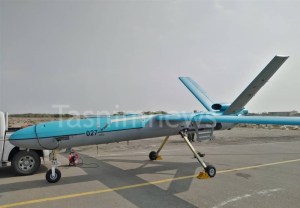
TEHRAN (Tasnim) – The Islamic Republic of Iran’s Navy unveiled a homegrown combat drone on Saturday.

The unmanned aerial vehicle, dubbed Simorgh, was unveiled at a ceremony in the southeastern coastal city of Konarak, attended by Iranian Navy Commander Rear Admiral Hossein Khanzadi.

With a flight endurance of 24 hours, the drone can be used for combat, reconnaissance, and tactical operations, and electronic warfare.

Simorgh has a range of 1,500 kilometers and a service ceiling of 25,000 feet. It is the naval version of Shahed-129, a powerful combat drone that was mass-produced in 2013.

Shahed-129 is now in service in the fight against drug-traffickers and terrorists, patrol and reconnaissance missions along the territorial and sea borders, environmental operations, and for taking aerial images.

The combat version of Shahed-129 can carry a payload of 8 bombs or smart missiles and is designed to hit both fixed and mobile targets.

Source: tasnimnews.com

Simorgh UAV
Simorgh UAV

Iran plans to raise Hormuz peace initiative at IMO summit in London

Persian Gulf/SoH

The managing director of Iran’s Ports and Maritime Organization, has said that the Iranian delegation plans to put forward the Hormuz peace initiative at the International Maritime Organization (IMO) summit in London.

In an interview with the IRIB on Monday, Mohammad Rastad said that security in the region must be maintained by the regional countries.

To continue reading, please click here.

Source: hellenicshippingnews.com

Mysteries of the Middle East Gulf: proxies, drones and spoofing

New Coalition In Gulf May Not Fare As Well As Old One – Analysis

Persian Gulf/SoH

By

Operational Sentinel patrols the Strait of Hormuz, yet regional rivalries and the international coalition’s makeup could escalate tensions.

By Gregory Clough and Morgan D. Bazilian*

Renewed conflict in the Strait of Hormuz pushed the United States to establish an international coalition for maritime security to ensure safe passage of shipping traffic and guarding against further disruption in oil supplies. While such security coalitions have been successful in the past, applying the same approach in the Middle East may not improve conditions and may even exacerbate tensions.

To continue reading, please click here.

Source: eurasiareview.com

UAE takes over the chair of IORA

Ismail Sebugwaawo

Piracy, armed robbery, drug smuggling and human trafficking are some of the major challenges faced in the Indian Ocean waters, according to members of the Indian Ocean Rim Association (IORA).

Speaking at a Press conference on the sidelines of the 19th meeting of the Council of Ministers of the Indian Ocean Rim Association (IORA) that concluded in Abu Dhabi on Thursday, Khurshed Alam, secretary of the Bangladesh Ministry of Foreign Affairs and deputy secretary-general of the IORA, said almost 40,000 ships are passing through the waters of Indian Ocean daily.

To continue reading, please click here.

Source: khaleejtimes.com


Japan notifies US of plan to send defence forces to Middle East

Persian Gulf/SoH

TOKYO — Japanese Foreign Minister Toshimitsu Motegi on Tuesday informed the United States’ government that Tokyo plans to send defence forces to help safeguard waterways in the Middle East without joining a US-led maritime security coalition, Japanese officials said.

During phone talks between Motegi and US Secretary of State Mike Pompeo, the two also pledged close co-operation on Middle East issues so as to ease tensions, which remain high amid a standoff between the US and Iran.

To continue reading, please click here.

Source: vietnamnews.vn


RAAF deploys P-8A Poseidon to Middle East for maritime security

File image of US Navy P-8A Poseidon

The Royal Australian Air Force (RAAF) has deployed a P-8A Poseidon aircraft to the Middle East in support of a US-led internal maritime security coalition.

Australia is a member of the International Maritime Security Construct (IMSC), which includes the US, Saudi Arabia, Bahrain and the UK.

To continue reading, please click here.

Source: airforce-technology.com

Royal Navy guardians protect 7m tonnes of shipping in Gulf

Over seven million tonnes of British shipping – the equivalent of around 20 wartime convoys – have been guided safely through the Strait of Hormuz by the Royal Navy.

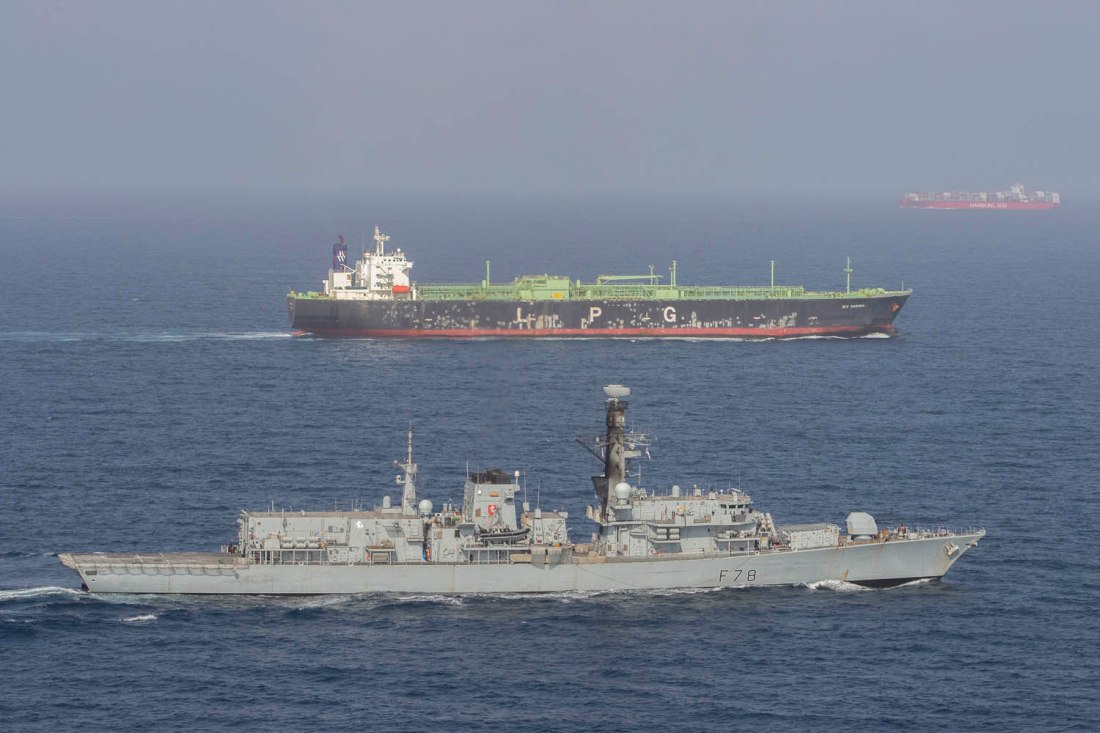
HMS Montrose, her sister frigate HMS Kent and destroyers HM Ships Duncan and Defender – have accompanied British flagged and registered merchant ships in and out of the Gulf amid tensions with Iran.

Grateful seafarers have labelled the Royal Navy vessels ‘guardians of the Gulf’ for their efforts providing protection in the narrow waters separating Iran on the north shore and Oman and the UAE since the beginning of July.

The warships, plus their helicopters, have been used to accompany and watch over merchant shipping to ensure they can pass into and out of the Gulf safely, keeping international trade – especially oil and natural gas – flowing in the face of threats.

Most recently HMS Kent has borne the burden of patrols, spending three weeks in the strait, providing safe passage for in excess of 800,000 tonnes of shipping.

“We are a close-knit team and I am extremely proud of what my sailors have achieved over the last few months,” said Commander Andrew Brown, HMS Kent’s Commanding Officer.

The ship uses her Wildcat helicopter to scour hundreds of square miles of the Gulf for any signs of danger – merchant shipping needs accompanying through an area twice the size of Wales.

“Controlling our helicopter in such a busy area of the world can at times be extremely stressful,” said Leading Aircraft Controller Lewis Jackson. “The constant training we receive enables us to do our job in a calm and safe manner and at an extremely professional level.”

Beyond the physical and mental challenges of the escort mission, the 200-plus sailors and Royal Marines aboard the warships are still contending with demanding temperatures – in the high 30s Celsius by day – even at the end of September.

HMS Duncan, which returned to Portsmouth at the weekend, made 29 runs through the Strait, watching over 1,287,209 tonnes of merchant shipping.

Commander Tom Trent said his ship’s company found the mission challenging but also “very rewarding. We had emails from the ships we helped thanking us for getting them through safely.

“Protecting shipping is what the Royal Navy has done for hundreds of years. The whole operation is a reminder of how critical the Royal Navy is.”

Operations in the Strait of Hormuz to protect British shipping continues on a daily basis.

Source: royalnavy.mod.uk

UK tanker leaves Iranian port after being seized in July

Persian Gulf/SoH

DUBAI (Reuters) – The British-flagged Stena Impero tanker left Iran’s Bandar Abbas port on Friday after being detained since July by Iranian forces and was heading toward international waters.

The Stena Impero was seized by Iran’s Revolutionary Guards in the Strait of Hormuz waterway for alleged marine violations two weeks after Britain detained an Iranian tanker off the territory of Gibraltar. The Iranian ship was released in August.

To continue reading, please click here.

Source: reuters.com

British tanker Stena Impero still held in Iran: owner

Persian Gulf/SoH

STOCKHOLM (Reuters) – Iranian authorities have yet to release the British-flagged tanker Stena Impero even though the vessel, seized by Iranian forces in July, has been cleared to leave port, its Swedish owner said on Wednesday.

“At this point we are simply waiting for the guards onboard to leave and for the ship to receive clearance to sail,” Stena Bulk Chief Executive Erik Hanell said in a text message.

To continue reading, please click here.

Source: reuters.com