Foreign ministers of Red Sea coastal states are set to kick off meetings in Riyadh next week to promote cooperation and economic integration and to ensure maritime security along this international waterway.
The meeting is expected to tackle issues on the responsibility of Red Sea states to prevent the intervention of any foreign country in the affairs of this sensitive area.
Merchant shipping heading through Middle Eastern waters has been placed back on high alert over fears Iran may retaliate to American drone strikes earlier today that killed a top Iranian general.
Iran’s most powerful military commander, General Qasem Soleimani, was killed by a US air strike in Iraq at around 1am this morning.
PETALING JAYA: A ship with 16 Malaysian crew members on board has been seized by Iran’s Revolutionary Guard Corps for fuel smuggling, according to the official Irna news agency.
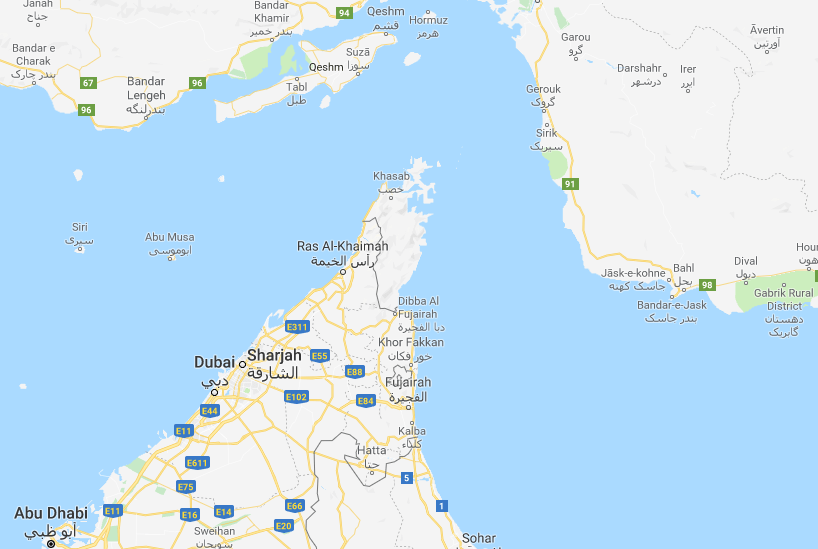
The ship was reported to be carrying nearly 1.3 million litres of fuel. It was not known under which national flag the ship was sailing. It was reportedly seized near Abu Musa Island, near the entrance to the Straits of Hormuz.
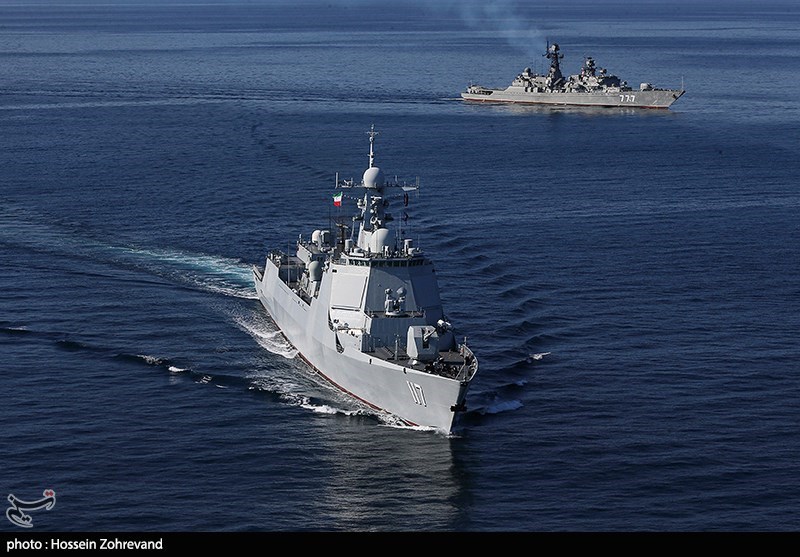
TEHRAN (Tasnim) – After conclusion of a joint naval war game of Iran, Russia and China, a ranking Iranian military commander said the Islamic Republic will continue to stage joint military exercises with other countries in the coming years.
Commander of the Naval Operations Department of the General Staff of the Iranian Armed Forces General Mohammad Ebrahim Dehqani said on Sunday that joint military drills will definitely continue in the coming years.
According to the commander, the joint exercises in future will include other regional countries as well.
He also stressed that the naval exercise of Iran, Russia and China has given the enemies a clear message that any mistake would draw a crushing response from the Iranian Armed Forces.
“Our friends receive an assurance that the region’s maritime security would be ensured by the Islamic Republic of Iran and its allies, and there is no need for alien forces in the region, particularly the Americans,” he said.
Denouncing the presence of American forces as a main factor behind regional insecurity, Dehqani said the US decision to transfer its military forces from the Persian Gulf and the Sea of Oman to the northern parts of the Indian Ocean reveals that “Americans are even incapable of ensuring their own security.”
Iranian, Russian, and Chinese naval units on Sunday wrapped up the joint exercise after three days.
On the final day of the joint drill, the naval forces of the three countries exercised tactics to fight piracy and extinguish vessel fires in the international waters south of Iran.
The war game came amid US efforts to woo countries into a maritime coalition for patrols in the Persian Gulf, which have received lukewarm welcome from its allies.
TEHRAN (Tasnim) – There is no place for American forces in the region anymore, Iranian Navy Commander Rear Admiral Hossein Khanzadi said.
“Today, the era of American free action in the region is over, and they (US forces) must leave the region gradually,” Rear Admiral Khanzadi told reporters on Sunday on the sidelines of a joint naval exercise of Iran, Russia and China, which is underway in the Sea of Oman and the northern parts of the Indian Ocean.
“We believe that regional security does not require the presence of those (foreign) countries, and that regional countries themselves can ensure security together,” he added.
The Iranian Navy commander also expressed hope that more regional states would join Iran in the efforts to ensure security.
He went on to say that friends of Iran and those favoring regional security have welcomed the joint naval drill, while the US and its proxies who seek to impose inappropriate security arrangements on the region would receive “significant messages” from the war game.
Iran, Russia and China are holding a four-day joint naval exercise, dubbed Marine Security Belt, in the Indian Ocean and the Gulf of Oman.
The war game comes amid US efforts to woo countries into a maritime coalition for patrols in the Persian Gulf, which have received lukewarm welcome from its allies.
TOKYO, Dec. 27 (Xinhua) — The Japanese Cabinet on Friday approved the dispatch of Maritime Self-Defense Force (MSDF) personnel to the Middle East amid tensions in the region, despite public opposition and post-war military constraints restricting the nation’s military activities constitutionally.
The planned deployment, backed by the ruling Liberal Democratic Party (LDP) and its coalition ally, Komeito, is to purportedly conduct information-gathering operations and others related to enhancing the safety of commercial shipping in the region.
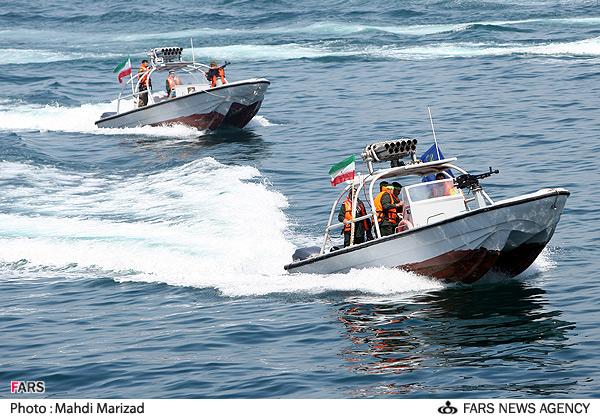
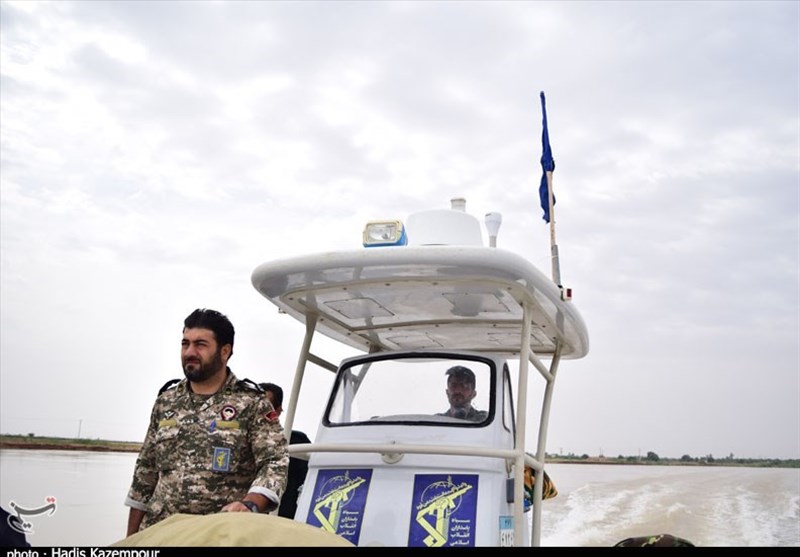
TEHRAN (Tasnim) – The Islamic Revolution Guards Corps (IRGC) Navy called on Iranian fishermen not to respond to foreign warships passing through the Persian Gulf waters, saying they have no right to question Iranian sailors.
In a statement addressed to all Iranian fishermen on Monday, the IRGC Navy said neither the US’ vessels nor those of other countries have the right to inspect, seize or question any of Iranian fishing boats, particularly in Iran’s territorial waters.
The statement further described any move by foreign ships to question Iranian vessels as being “against the national interests and in violation of international law”.
The IRGC Navy also called on all Iranian fishermen not to cooperate with foreign vessels and immediately inform IRGC patrols via Channel 16 VHF if they are questioned by them.
Earlier this month, Commander of the IRGC Navy Rear Admiral Ali Reza Tangsiri highlighted his forces’ powerful presence in the Persian Gulf and said all foreign vessels passing through the waters are closely monitored by the IRGC Navy.
“The IRGC Navy checks and monitors foreign vessels entering the Persian Gulf and questions them about their nationality, the type of the vessels, and their destination,” Rear Admiral Tangsiri told Tasnim.
All foreign vessels, including those belonging to the United States, have always been answerable to the IRGC Navy, the commander added.
He further emphasized that the monitoring of foreign vessels in the Persian Gulf is “an inalienable right” of the Islamic Republic.
“The Persian Gulf belongs to Iran and other littoral states and we have the right to question the vessels because the entrance to the Strait of Hormuz is located in Iran’s territorial waters,” Rear Admiral Tangsiri stated.
On 19 December, Her Majesty’s Ship (HMS) DEFENDER, a UK Royal Navy destroyer operating in the Gulf of Oman in direct support of Combined Task Force 150 (CTF 150), seized 131 kilograms of crystal methamphetamine from a dhow they had been following.
The suspicious vessel was first detected using DEFENDER’s ‘WILDCAT’ shipborne helicopter. DEFENDER then closed the dhow and a team of Royal Marine Commandos in Pacific 24 sea boats boarded and secured the vessel. It was then searched by a Royal Navy boarding team who found 11 packages of narcotics, with an estimated regional wholesale value of $280,000 U.S. dollars.
The Commanding Officer of HMS Defender, Cdr Richard Hewitt MBE said: “I am really proud that Defender has been able to interdict such a significant quantity of drugs and prevent it reaching the streets. Even over the festive season, the Royal Navy is at sea 24/7 working as part of Combined Task Force 150. This has been a real boost for the ship’s company as they face Christmas away from their loved ones.”
HMS DEFENDER’s haul, on their first day working under Combined Maritime Forces, is CTF150’s largest interdiction of crystal methamphetamine for 2019; more than doubling the amount seized so far. It takes CTF150’s overall narcotics seizures this year to $48.5m.
“This is the second narcotics shipment in a week we’ve kept from reaching its destination,” said Commodore Ray Leggatt, Royal Australian Navy, Commander of CTF 150. “With this action, and more to come, we are impacting terrorists’ ability to operate in this region and around the world. Well done to the crew of HMS DEFENDER for their keen eye, skill, and precision in prosecuting this high seas take down.”
Australia assumed command of CTF 150 in early December, with a staff made up of personnel from the Royal Australian, Royal Canadian, and Royal New Zealand navies. HMS DEFENDER’s success under their command follows that of French Ship Courbet last weekend, who seized 3,545kg of hashish with an estimated regional wholesale value of $1.8m.
CTF150 has seen a huge increase in the amount of crystal methamphetamine being smuggled year on year, with 257kg interdicted to date in 2019, versus only 9kg in 2018.
CTF 150’s mission is to disrupt terrorist organisations and their related illegal activities by restricting their freedom of manoeuvre in the maritime domain. The activities of CTF 150 are a critical part of global counter-terrorism efforts, as terrorist organisations are denied a risk-free method of conducting operations or moving personnel, weapons or income-generating narcotics and charcoal.
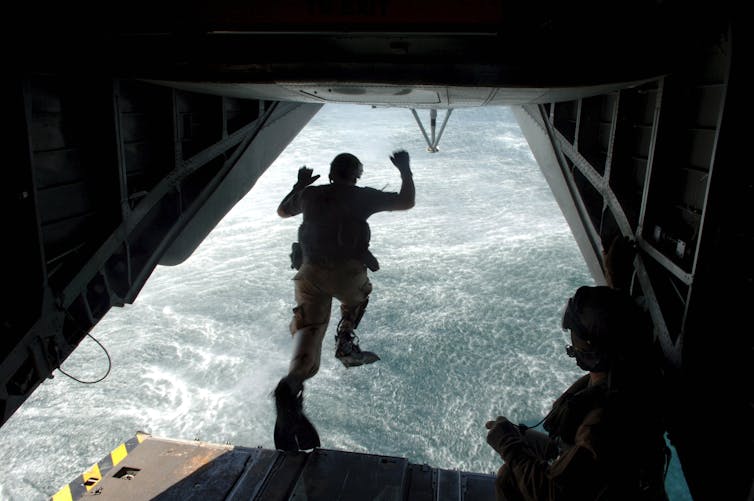
US service members practising water rescue techniques during a routine training exercise off the coast of Djibouti in 2007. EPA/US NAVY/MC1 MICHAEL R. MCCORMICK
The upsurge of Somali piracy after 2005 led to significant international activity in the Horn of Africa. Naval missions, training programmes, capital investment and capacity building projects were among the responses to the threat. States in the region also started to focus on the dangers and opportunities associated with the sea.
Kenya and Djibouti, two states directly affected by piracy, achieved widespread reform of their domestic maritime sectors through new national initiatives and assistance from external partners. Djibouti’s President Ismail Guelleh recently commented during talks with Kenya on security and trade links that
What happens in Somalia has an immediate impact on all of us.
At its height, between 2008 and 2012, it is estimated that Somali piracy cost the Kenyan shipping industry between US$300 million and $400 million every year. This was as a result of increased costs (including insurance) and a decline in coastal tourism. It also damaged Djibouti’s maritime industry, financial sector and international trade.
The upsurge of piracy after 2005 had a number of causes. It grew from poverty and lawlessness in Somalia alongside opportunity and a low risk of getting caught. By 2013 the threat had been reduced. This was due to a combination of naval patrols, private armed guards, self defence measures on board ships and capacity building efforts ashore.
Historically, most states in the Horn of Africa have struggled with limited capacity to address maritime insecurity. Their naval assets, training, human resources, institutional and judicial structures, monitoring and surveillance have all been critically underfunded.
But the international response to piracy – and the investments and partnerships that emerged – have helped some states to improve in these areas.
More importantly perhaps, since the decline in piracy attacks, Kenya and Djibouti have been paying more attention to policies around maritime governance and “blue” economic development. This relates to sustainable use of ocean resources for economic growth, job creation and ocean ecosystem health. The refocus marks a shift from traditional investments related to land based conflict and land borders.
In a recent article, I examine how Kenya and Djibouti reformed their domestic maritime sectors following a decline in acts of piracy. The study sheds new light on the limitations and challenges facing domestic maritime sectors in Africa as well as some of the innovative approaches taken.
A key point is that blue economic growth is not possible without addressing security threats at sea. This includes building a robust maritime security sector, improving ocean health and regulating human activity at sea in a more sustainable way.
International partnerships
Many of the new developments in the region have been supported by international partners. The Djibouti Navy and Coastguard work closely with the US Navy. Together, for example, they are developing capacity for stopping and searching suspicious vessels. This is important in countering the illicit trafficking in people and smuggling of migrants through Djiboutian waters.
Djibouti has also benefited from Chinese direct investment, which accounts for nearly 40% of the funding for its major investment projects. Chinese state-owned firms have built some of Djibouti’s largest maritime related infrastructure projects. These include the Doraleh Multipurpose Port, a new railway connection between Djibouti and Addis Ababa, and the opening of China’s first foreign military facility.
This is a clear example of Beijing prioritising its growing economic and security interests in Africa. And advancing its “massive and geopolitically ambitious” Belt and Road Initiative.
Kenya, too, has received international assistance and investment. This includes support to set up the Regional Maritime Rescue Coordination Centre in Mombasa. Organisations like the International Maritime Organisation have led training for staff from the centre and for the Kenyan Navy.
The United Nations Office on Drugs and Crime has provided law enforcement training for the Kenyan Maritime Police Unit. It also opened a new high-security courtroom in Shimo La Tewa, Mombasa, for cases of maritime piracy and other serious criminal offences.
National refocus
At a national level, there is evidence of a fundamental shift towards building a more secure and sustainable domestic maritime sector.
For example, Kenya has created a new coastguard service. Its job is to police the country’s ocean territory and to ensure that Kenya benefits from its water resources. The country has new naval training partnerships, maritime capacity building projects and an implementation committee to coordinate “blue economic” activities. These include fisheries, shipping, port infrastructure, tourism and environmental protection.
For its part, Djibouti has rapidly developed its maritime sector and recognised the financial benefits of leasing coastal real estate. The country has an ambitious development plan titled “Djibouti Vision 2035”. This sets out its aspiration to become a maritime hub and the “Singapore of Africa”. It’s trading on the fact that it has a similar strategic position along one of the world’s busiest shipping lanes.
All of these approaches require robust laws and regulations governing human activities at sea. They also call for a capable and flexible coastguard and navy to enforce these regulations and secure coastal waters against threats such as piracy, fisheries crime and the illicit smuggling of drugs, weapons and people.
The way forward
There are lessons in the Horn of Africa experience for other regions of Africa facing similar maritime insecurities. One example is the Gulf of Guinea.
The first lesson is that there’s a need to convince coastal states with weak maritime capacities of the untapped potential of the blue economy. Even reputational damage can harm tourism, development and investment in coastal regions. This was clearly illustrated in the case of Kenya.
Blue economic growth needs a safe and secure maritime environment for merchant shipping in particular. It can also help alleviate poverty in coastal regions, provide alternatives to criminal livelihoods, and allow local communities more ownership of issues that affect them.
Ultimately, maritime security and blue economic growth need to be considered as a unified policy issue.
New Delhi, Dec 9 (PTI) India and France will soon launch a joint naval patrolling in the region to protect their strategic interests, including to check large scale illegal fishing, a top commander of the French Navy said on Monday.
Vice admiral Didier Maleterre, who is Joint Commander of the French forces deployed in the Indian Ocean region, also said that the two navies will ink an agreement early next year providing for sharing of classified information for better operational cooperation in the region.




 Maritime Security News